
Origins of Liturgical Polyphony
Liturgical polyphony refers to sacred music that layers multiple independent melodic lines, composed for use in Christian worship services. It grew out of the monophonic chant traditions of the Middle Ages and became one of the defining features of Renaissance sacred music.
Early polyphonic practices
The earliest form of polyphony, organum, added a second voice moving in parallel motion to a plainchant melody, typically at the interval of a fourth or fifth. This practice developed in monasteries and cathedrals as a way to embellish existing chant. The Winchester Troper (c. 1000) contains the earliest surviving notated examples of two-voice polyphony.
Early organum came in different varieties:
- Note-against-note organum: each note in the added voice aligns with one note of the chant
- Melismatic organum: the added voice sings elaborate melodic passages over sustained chant notes
Influence of Gregorian chant
Gregorian chant melodies frequently served as the cantus firmus (the pre-existing melody used as the structural foundation of a polyphonic piece). The chant repertoire gave composers an enormous library of melodic material to build on, and using it preserved the liturgical function and textual meaning of the original chant. The modal system of Gregorian chant also shaped the harmonic character of early polyphonic works.
Development in the medieval period
The Notre Dame school (12th–13th centuries) pushed polyphony into more complex territory. Two composers stand out:
- Léonin is credited with developing organum purum, featuring long sustained chant notes under a florid upper voice
- Pérotin expanded the texture to three and four voices and refined the discant style, where voices move in measured rhythm together
The Notre Dame composers also introduced rhythmic modes, a system of repeating rhythmic patterns based on poetic meters. This was a major step forward because it gave composers a way to organize musical time across multiple voices.
Characteristics of Liturgical Polyphony
Liturgical polyphony combined multiple melodic lines to create layered textures that served specific roles in worship. Its characteristics evolved over centuries, reflecting shifts in musical taste and theological priorities.
Vocal texture and harmony
Polyphonic works typically ranged from two to six independent vocal lines. Early polyphony emphasized consonant intervals (fourths, fifths, and octaves), while later works gradually incorporated thirds and sixths and allowed more controlled use of dissonance. A central challenge for composers was balancing the horizontal dimension (each voice's melodic line) with the vertical dimension (the harmony created when voices sound together).
Use of Latin texts
Nearly all liturgical polyphony set Latin texts from the Roman Catholic tradition. The most commonly set texts came from two categories:
- Mass Ordinary: the five texts that remain the same at every Mass (Kyrie, Gloria, Credo, Sanctus, Agnus Dei)
- Mass Proper: texts that change depending on the feast day or liturgical occasion
Composers also used techniques like troping (adding new words or phrases to existing chant texts) and text overlay (setting different texts simultaneously in different voices).
Rhythmic structures
Rhythmic practice changed significantly over time:
- Early polyphony relied on rhythmic modes, repeating patterns derived from poetic meters
- The Ars Nova period (14th century) introduced mensural notation, which allowed composers to specify rhythmic durations with much greater precision
- Isorhythm emerged as a structural technique: a fixed rhythmic pattern (called a talea) repeats while the pitches change
- By the later Renaissance, rhythmic writing became more flexible and varied, driven by the natural flow of the text
Compositional Techniques
Composers developed several methods for organizing multiple voice parts into coherent musical structures. These techniques evolved throughout the medieval and Renaissance periods.
Cantus firmus technique
A cantus firmus is a pre-existing melody (usually Gregorian chant) that serves as the scaffolding for a new polyphonic composition. It was most often placed in the tenor voice, though composers sometimes moved it to other parts. This technique let composers create original works while maintaining a direct link to the liturgical chant tradition. The cantus firmus could be presented in its original rhythm, or stretched out through augmentation (longer note values) or compressed through diminution (shorter note values).
Imitation and canon
Imitation occurs when one voice introduces a melodic idea and other voices enter with the same or similar material at staggered intervals. It ranges from strict imitation (exact repetition at a different pitch level) to free imitation (the basic shape is recognizable but details vary).
Canon is the strictest form of imitation: voices follow one another at fixed time intervals, maintaining the same melody throughout. Composers added variety through techniques like augmentation, diminution, and inversion (flipping the melody upside down).
Motet structure
The motet evolved considerably across the medieval and Renaissance periods:
- It originated from clausulae (sections of organum), initially featuring different texts in each voice
- In the 14th century, isorhythmic motets used repeating rhythmic patterns (taleae) combined with repeating pitch series (colores) to create intricate structures
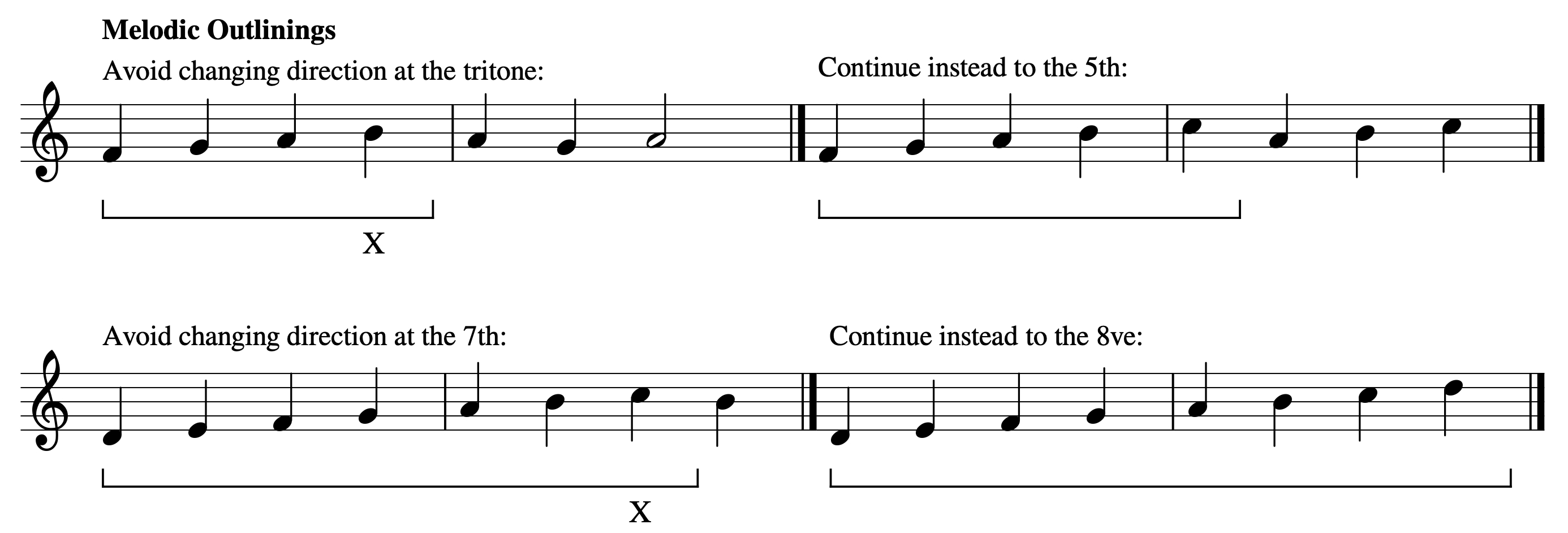
- By the later Renaissance, motets typically employed pervasive imitation, where all voices share the same melodic material, with new musical ideas introduced for each phrase of text
Major Composers and Works
Guillaume de Machaut
Machaut was a French composer and poet of the Ars Nova period (14th century). His Messe de Nostre Dame is the earliest known complete polyphonic setting of the Mass Ordinary by a single composer. He pioneered the use of isorhythm in his motets, building elaborate structures from repeating rhythmic and melodic patterns. Machaut also wrote extensively in secular genres, and his work helped bridge sacred and courtly musical traditions.
John Dunstable
Dunstable was an English composer of the early 15th century whose style had a major impact on Continental music. His approach, known as the contenance angloise ("English manner"), featured smoother harmonies built on thirds and sixths, producing a warmer, fuller sound than was typical on the Continent. His motet Quam pulchra es demonstrates this sweetness of harmony along with the fauxbourdon technique (parallel motion in first-inversion chords). His influence helped shape the Franco-Flemish style that would dominate the next century.
Josquin des Prez
Josquin was a Franco-Flemish composer active in the late 15th and early 16th centuries, widely regarded as the greatest composer of the High Renaissance. He mastered pervasive imitation, a technique where all voices share melodic material in overlapping entries, creating unified and seamless textures. His Missa Pange Lingua is a prime example: the entire Mass grows out of a single plainchant hymn melody, woven through all voices with remarkable variety and expressiveness.
Regional Styles
Liturgical polyphony developed distinct regional characteristics across Europe, shaped by local traditions and cross-pollination as composers traveled and manuscripts circulated.
Franco-Flemish school
This school dominated European sacred music from roughly the mid-15th to mid-16th centuries. Its hallmarks were smooth, flowing counterpoint and pervasive imitation. Composers like Ockeghem (known for extraordinarily long melodic lines and complex canonic writing) and Obrecht (who developed inventive cantus firmus techniques) pushed contrapuntal complexity to new heights. Franco-Flemish composers worked throughout Europe, spreading their techniques to Italy, Spain, and beyond.
English polyphony
English composers cultivated a distinctive sound. The contenance angloise favored fuller harmonies with prominent thirds and sixths, giving the music a warmer quality. Characteristic techniques included fauxbourdon (parallel first-inversion triads) and gymel (two voices moving in parallel thirds). This tradition ran from Dunstable in the early 15th century through Tallis and Byrd in the later 16th century.
Italian polyphonic traditions
Italian polyphony was initially shaped by Franco-Flemish composers working at Italian courts and churches. Over time, a more homophonic style developed, placing greater emphasis on text clarity. Two important schools emerged:
- The Roman School, led by Palestrina, refined a smooth, balanced polyphonic style later called the prima prattica
- The Venetian School, exemplified by Andrea and Giovanni Gabrieli, explored spatial effects and antiphonal writing (choirs placed in different parts of the church, singing back and forth)
Liturgical Contexts
Polyphonic music was composed for specific moments and functions within religious services. Composers tailored their works to suit particular occasions and liturgical requirements.
Mass settings
Polyphonic settings of the Mass Ordinary became increasingly common from the 14th century onward. Several types developed:
- Cyclic Masses (15th century): all five Ordinary movements are unified by a shared musical theme
- Cantus firmus Masses: built on a pre-existing melody, which could be a chant or even a popular song (the L'homme armé tune was used by dozens of composers)
- Parody Masses (popular in the 16th century): rework material from an existing polyphonic piece, such as a motet or chanson
Motets for specific occasions
Motets served a wide range of liturgical and ceremonial purposes:
- Settings for particular saints' days or local patronal feasts
- Votive motets addressing devotional themes or requesting intercession
- State motets composed for important political or ceremonial events

Vespers and other services
In the 16th century, polyphonic settings expanded beyond the Mass to other parts of the daily liturgical cycle:
- Vespers psalms and the Magnificat received elaborate polyphonic treatment
- Hymns and antiphons were often set in alternatim style, alternating polyphonic verses with plainchant
- Lamentations were composed for Holy Week services
- Responsories and other items from the Divine Office also received polyphonic settings
Evolution During the Renaissance
Liturgical polyphony underwent significant changes throughout the Renaissance, reflecting broader shifts in musical style and religious thought.
Shift towards homophony
The late Renaissance saw a gradual move toward clearer textures and more vertical, chord-based writing. Humanist ideals emphasized that listeners should be able to understand the words being sung, which pushed composers toward greater text intelligibility. The Venetian polychoral style combined homophonic blocks of sound with antiphonal effects between separated choirs. By the very end of the 16th century, practices like figured bass and basso continuo began to emerge, pointing toward the Baroque.
Influence of secular music
The boundary between sacred and secular music became increasingly porous:
- Techniques from secular genres like the madrigal and chanson found their way into sacred works
- Word painting (matching musical gestures to the meaning of specific words) became common in sacred polyphony
- Popular melodies served as cantus firmi for Masses, most famously the L'homme armé tune
- By the late Renaissance, sacred and secular styles were thoroughly intertwined
Palestrina and stile antico
Giovanni Pierluigi da Palestrina refined the smooth polyphonic style of the Roman School into what many considered the ideal of Renaissance sacred music. His compositions exemplify balance, clarity, and careful treatment of dissonance. After the Council of Trent (1545–1563) called for reforms in church music to ensure text clarity and devotional propriety, Palestrina's style became a model. In later centuries, his approach was codified as the stile antico ("old style") and held up as the standard for sacred polyphonic writing.
Impact on Later Music
Baroque polyphony vs. Renaissance
The Baroque era brought a shift toward more dramatic, text-driven styles (the stile moderno). Polyphonic techniques continued, but with stronger harmonic directionality and the pull of tonal harmony. The concertato style combined polyphonic voices with new instrumental textures. The fugue emerged as a highly structured polyphonic form, building directly on Renaissance imitative techniques.
Influence on counterpoint
Renaissance polyphonic practice became the foundation of contrapuntal theory for centuries. Johann Joseph Fux's Gradus ad Parnassum (1725) codified Palestrina-style counterpoint into a pedagogical system of "species counterpoint" that is still taught today. Composers like Bach and Mozart studied Renaissance contrapuntal techniques and adapted them within their own harmonic languages.
Revival in the 19th–20th centuries
- The Cecilian movement (19th century) promoted a return to Renaissance polyphonic styles in Catholic church music
- Composers like Bruckner and Brahms incorporated Renaissance contrapuntal techniques into their works
- The early music revival of the 20th century led to renewed scholarly study and historically informed performances of Renaissance polyphony
- 20th-century composers such as Stravinsky and Arvo Pärt drew on Renaissance polyphonic principles to develop new compositional approaches
Notation and Performance Practice
Development of notation systems
The notation of polyphony evolved alongside the music itself:
- Early chant used neumatic notation (shapes above text indicating melodic contour without precise pitch)
- Square notation standardized plainchant writing on a four-line staff
- Mensural notation developed to represent rhythmic durations precisely, enabling the coordination of multiple independent voices
- Music was typically copied into choirbooks (large volumes shared by an ensemble) or partbooks (separate books for each voice part)
Interpretation of rhythm
Several aspects of Renaissance rhythmic notation remain debated among scholars:
- How to interpret proportional signs that indicate tempo relationships between sections
- What the appropriate tactus (basic beat unit) should be for a given piece
- How to handle text underlay (fitting syllables to notes) when the original sources are ambiguous
- How to reconcile notated rhythms with what we know about contemporary performance conventions
Modern performance approaches
Performing Renaissance polyphony today involves navigating several interpretive questions:
- Whether to use period instruments and vocal techniques or modern ones
- How much vibrato is appropriate for historical authenticity
- How the acoustic space (a resonant cathedral vs. a concert hall) affects the sound and pacing
- How to balance historical research with the practical goal of creating a compelling musical experience