
Renaissance string instruments shaped the sound of an entire era. From the soft, intimate tones of viols to the versatile lute, these instruments reflected the period's emphasis on harmony and polyphony, and they laid the groundwork for the ensembles we know today.
The development of bowed, plucked, and struck string instruments expanded the range of musical possibilities. Craftsmen refined their techniques, carefully selecting materials and incorporating decorative elements, while musicians developed sophisticated playing methods that influenced generations of performers after them.
Types of Renaissance strings
String instruments sat at the heart of Renaissance music-making. The period saw three broad categories develop, each with its own construction, sound, and role in performance.
Bowed string instruments
Viols dominated the bowed string family. They came in multiple sizes (treble, alto, tenor, bass) to cover a wide pitch range, much like a vocal ensemble. You can recognize viols by their flat backs, sloping shoulders, and fretted fingerboards. They typically had six or seven strings tuned in fourths with a third in the middle. Their tone was soft and mellow, which made them perfect for consort playing and vocal accompaniment.
Plucked string instruments
The lute was the star of Renaissance plucked instruments. It featured a pear-shaped body, a bent-back pegbox, and multiple courses (pairs) of strings. It evolved from the medieval oud, gradually gaining more strings and a wider range. Other plucked instruments included the cittern, gittern, and early forms of the guitar. Depending on the style and tradition, players used their fingers or a plectrum.
Struck string instruments
The hammered dulcimer gained popularity during the Renaissance. It consisted of a trapezoidal soundbox with strings stretched across its surface, played by striking the strings with small hammers or mallets. The psaltery, a precursor to the dulcimer, was also used but gradually declined. These instruments contributed distinctive timbres to both ensemble and solo performance.
Construction and materials
Instrument making became a highly specialized profession during the Renaissance. The choice of materials and construction methods directly affected an instrument's sound and durability, and makers refined techniques that still influence modern luthiery.
Wood selection and treatment
- Spruce or pine commonly used for soundboards due to their resonant qualities
- Hardwoods like maple, walnut, or fruit woods preferred for backs and sides
- Wood was often aged and seasoned for years before use to enhance stability and tone
- Thin, precisely carved soundboards allowed for optimal vibration and projection
String materials
- Gut strings, made from sheep intestines, were the primary material for most instruments
- Different thicknesses and tensions of gut produced varying tonal qualities
- Metal strings (brass or iron) occasionally used, especially on struck instruments like the dulcimer
- Silk strings sometimes employed for higher registers or specific tonal effects
- String making itself became a specialized craft, with makers guarding their techniques closely
Decorative elements
- Instruments were often adorned with intricate inlays, carvings, or painted designs
- Precious materials like ivory, mother-of-pearl, or exotic woods served as ornamentation
- Rosettes (decorative soundhole covers) on lutes featured complex geometric patterns
- Purfling (decorative edging) protected instrument edges while enhancing aesthetics
- The level of decoration reflected the owner's status and the cultural importance of music
Playing techniques
Renaissance musicians developed sophisticated playing techniques to maximize expressivity. Period treatises and instructional materials give us detailed insight into these methods, many of which laid the groundwork for modern string performance.
Bowing methods
- Underhand bow grip was standard for viol players, allowing subtle dynamic control
- Overhand bow grip was gradually adopted by violin family players for more power and projection
- Bow strokes ranged from long, sustained notes to quick, articulated passages
- Sul ponticello (bowing near the bridge) and sul tasto (bowing over the fingerboard) provided timbral variety
- Tremolo and other ornamental bow techniques added expressive effects
Plucking styles
- A thumb-index finger alternation technique developed for fast passages on the lute
- Right-hand fingers were assigned to specific courses for consistent tone production
- Rasgueado (strumming) appeared in early guitar music and some lute styles
- Pizzicato on bowed instruments was occasionally used for special effects
- Plucking near the bridge or over the fingerboard created tonal variation
Fingering patterns
- Left-hand fingering on fretted instruments was shaped by the instrument's tuning system
- The barré technique (pressing one finger across multiple strings) was essential for complex chords
- Position playing on bowed instruments extended the range and varied the timbre
- Ornaments like trills, mordents, and turns required precise left-hand finger movements
- Double-stops and chords on bowed instruments demanded careful coordination of finger placement and bow control
Notable Renaissance string instruments
The Renaissance saw the development and refinement of many string instruments that formed the basis for various ensemble types and solo repertoire. Many of these instruments evolved directly into their modern counterparts.
Viol family
The viol family included instruments in various sizes: pardessus, treble, tenor, bass, and great bass. All shared flat backs, sloping shoulders, and typically six or seven strings. Their fretted fingerboards allowed for precise intonation and facilitated complex polyphony. Played with an underhand bow grip, viols produced a soft, intimate tone ideal for consort music, with each size covering a range roughly equivalent to a vocal part.

Lute and its variants
The standard Renaissance lute started with 6 to 8 courses of strings (pairs or singles) and evolved to include up to 13 courses by the late Renaissance. Several important variants emerged:
- Theorbo: a large bass lute with an extended neck, developed for continuo playing
- Chitarrone: similar to the theorbo, used in early Baroque opera and chamber music
- Mandora: a smaller lute-like instrument popular for solo and ensemble music
Early violin family
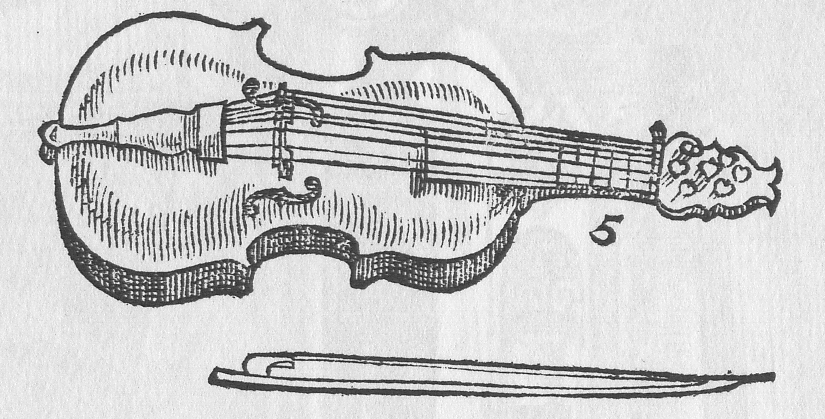
The violin family emerged in the late Renaissance and gradually began replacing viols in some contexts. It included the violin, viola, and cello (originally called the bass violin). These instruments had curved bodies, f-shaped sound holes, and four strings. Played with an overhand bow grip, they produced a brighter, more projecting tone than viols. They first gained popularity in dance music and gradually moved into art music toward the end of the period.
Role in Renaissance music
String instruments were remarkably versatile, appearing across sacred, secular, courtly, and popular settings. Their development paralleled the evolution of musical styles and forms throughout the period.
Court and chamber music
- Viol consorts became a fixture in aristocratic settings for intimate chamber performances
- Lute songs (voice accompanied by solo lute) were a favored genre in courtly entertainment
- Mixed consorts combining different string instruments with winds created rich textures
- Dance music often featured string instruments, especially at court balls and festivities
- Solo virtuoso performances on lute or viol served to impress noble patrons
Sacred music applications
- Viols and lutes accompanied or doubled vocal lines in sacred polyphony
- String ensembles sometimes substituted for voices in liturgical performances
- Plucked strings like the psaltery or harp carried symbolic associations in religious contexts
- Bowed strings were gradually introduced into church music, especially in Italian sacred concertos
- Intabulations (instrumental arrangements of vocal sacred music) were played on lute or viol consort
Folk and popular music
- Fiddles and rebecs (ancestors of the violin) were widely used in folk dance music
- The gittern and early guitar were popular in informal settings and street performances
- The cittern was favored for its loud, bright tone in taverns and outdoor gatherings
- The hurdy-gurdy, though medieval in origin, continued in folk contexts
- Simple plucked instruments like the mandora accompanied popular songs
Influential composers and performers
Many Renaissance musicians specialized in specific string instruments, advancing both technique and repertoire. Composer-performers often wrote idiomatically for their instruments, and the rise of virtuoso players contributed to the growth of solo instrumental music.
Lute virtuosos
- Francesco da Milano, known as "Il Divino," composed intricate lute fantasias and intabulations
- John Dowland, English lutenist and composer, was famous for his melancholic songs and solo lute works
- Vincenzo Galilei (father of the astronomer Galileo) wrote influential treatises on lute playing and music theory
- Simone Molinaro published important collections of lute music, including works by other composers
Viol consort composers
- William Byrd composed numerous works for viol consort, blending sacred and secular styles
- Orlando Gibbons wrote intricate fantasias and In Nomines for viol consorts
- Christopher Tye composed notable In Nomines and other works for viol ensemble
- Alfonso Ferrabosco II introduced Italian influences to English viol consort music
- John Jenkins was extraordinarily prolific, writing over 800 pieces for various viol consort combinations
Early violin family pioneers
- Giovanni Gabrieli included violins in his innovative polychoral works in Venice
- Biagio Marini wrote some of the earliest known solo violin sonatas
- Carlo Farina explored extended techniques for the violin in his Capriccio Stravagante
- Salamone Rossi, a Jewish-Italian composer, wrote trio sonatas featuring violins
- Thomas Baltzar, a German violinist, impressed English audiences with his advanced technique
Evolution from medieval instruments
The transition from medieval to Renaissance instruments was gradual and varied by region. Many Renaissance instruments retained features of their medieval predecessors while incorporating new elements that reflected changing musical tastes.
Refinements in design
- The lute evolved from the oud, gaining more strings and a bent-back pegbox
- The viol family developed from various medieval bowed instruments, becoming standardized in size and shape
- Early violins emerged as a refinement of medieval fiddles, with a more defined body shape
- Soundboards became thinner and more responsive, allowing for greater tonal nuance
- Bridge designs evolved to better transmit string vibrations to the instrument body
Expansion of range
- Additional strings or courses were added to many instruments, extending their pitch range
- Lutes progressed from 4-5 courses in the early Renaissance to 10 or more by the late 16th century
- The viol family expanded to include instruments of various sizes, covering a wide vocal-like range
- Fretted fingerboards allowed for more precise pitch control
- Larger instruments like the bass viol and theorbo extended the lower range capabilities
Improvements in playability
- Refinements in neck shape and string height made instruments more comfortable to play
- Standardization of tunings within instrument families facilitated ensemble playing
- Tied gut frets on lutes and viols allowed for easier adjustment and replacement compared to fixed frets
- Bow designs evolved, with longer bows enabling sustained notes and varied articulations
- Specialized playing techniques (such as the thumb-under lute technique) increased virtuosic possibilities
Symbolism and iconography
String instruments held significant symbolic meaning in Renaissance culture. Their depiction in art and literature reflected societal values, and the choice of instrument often conveyed specific messages about a character's status or a scene's mood.
Depictions in Renaissance art
- Lutes frequently appeared in vanitas paintings, symbolizing the transience of earthly pleasures
- Angels were often portrayed playing viols or lutes in religious paintings, representing heavenly harmony
- Still life paintings featuring musical instruments highlighted music's importance in cultured society
- Outdoor scenes with shepherds typically included rustic instruments like rebecs or simple lutes
- Portraits of nobles holding lutes or viols emphasized their refined tastes and education
Literary references
- Shakespeare used lute metaphors in his plays, often relating to harmony or discord in relationships
- Pastoral poetry frequently mentioned string instruments played by shepherds or nymphs
- Allegorical works used musical instruments to represent virtues or human qualities
- Castiglione's The Book of the Courtier emphasized musical skill as essential for the ideal courtier
- Religious texts sometimes used string instrument imagery to describe heavenly music
Social status associations
- Lute playing was considered an essential skill for courtiers and educated individuals
- Viol consorts were associated with refined chamber music in aristocratic settings
- Simpler instruments like gitterns or fiddles were connected with lower classes or rural life
- Highly decorated instruments served as status symbols for wealthy patrons
- Professional musicians often specialized in specific instruments, building reputations and securing patronage
Regional variations
Different regions in Europe developed distinct traditions in string instrument making and playing. Cultural exchange and trade spread instruments across borders, but regional preferences shaped local musical styles and instrument designs.
Italian string traditions
- Cremona emerged as a center for violin making, with the Amati family pioneering techniques
- Venetian schools developed ornate decoration styles for lutes and other string instruments
- Roman and Neapolitan traditions favored the theorbo for continuo playing in early opera
- The lira da braccio, a bowed instrument held on the arm, remained popular in Italian courts
- Italian makers experimented with new designs that influenced other European traditions
French string innovations
- The air de cour, a genre of lute songs, flourished in French courts
- French lutenists developed the style brisé (broken style), an arpeggiated approach that influenced keyboard music
- French viol players favored a lighter, more agile playing style compared to other regions
- The pardessus de viole, a small treble viol, was introduced for playing violin repertoire
- Composers like Hotman advanced the solo viol repertoire
English consort practices
- Viol consort music reached its peak in England, with composers like William Lawes and John Jenkins
- The chest of viols (a matched set of instruments stored in a single chest) became standard for consort playing
- Lute songs, especially those by John Dowland, became a distinctive English genre
- Mixed consorts combining winds and strings gained popularity in Elizabethan court music
- English writers like Thomas Mace contributed practical guidance on lute design and maintenance
Legacy and influence
Renaissance string instruments and practices significantly shaped the development of Western music. Many techniques and design elements persisted into later periods, and the 20th-century early music revival renewed interest in these instruments.
Impact on Baroque instruments
- Violin family instruments developed during the Renaissance became central to Baroque orchestras
- Lute techniques influenced the development of Baroque guitar and theorbo playing styles
- The viola da gamba continued to be used in Baroque music, especially in France
- Basso continuo practice, often realized on lute or theorbo, evolved from Renaissance accompaniment techniques
- Baroque composers like Bach still wrote for the lute alongside newer instruments
Modern reproductions
- Luthiers specializing in historical instruments create accurate reproductions of Renaissance string instruments
- Modern materials are sometimes used to enhance durability while maintaining historical sound qualities
- Research in iconography and surviving instruments informs contemporary reproductions
- Adjustments are sometimes made to accommodate modern concert venues or playing techniques
- These reproduction instruments allow for authentic performances of Renaissance music
Historical performance practice
- The early music revival movement emphasizes historically informed performance on period instruments
- Research into Renaissance treatises and iconography informs modern playing techniques
- Ensembles specializing in Renaissance music typically use reproductions of period string instruments
- Academic programs in historical performance train musicians in Renaissance playing styles
- Recording projects and concerts featuring Renaissance string instruments have broadened public awareness of this repertoire