
Graph connectivity is all about how vertices link up in a network. It's crucial for understanding how information or resources can flow through a system. Connected graphs allow full reachability, while disconnected ones have isolated parts.
Components are the building blocks of graphs. They're like islands of connectivity within the larger structure. Counting and analyzing these components helps us grasp the overall layout and potential of the graph.
Graph Connectivity
Concept of graph connectedness
- Graph connected when path exists between any two vertices enabling full reachability
- Path defined as sequence of vertices with adjacent pairs linked by edges (A-B-C-D)
- Connectedness crucial for many algorithms and applications (network routing, social network analysis)
Connected vs disconnected graphs
- Connected graphs allow reaching every vertex from any other forming single component
- Disconnected graphs contain at least two unreachable vertices resulting in multiple components
- Connectedness determined through graph traversal algorithms like Depth-First Search (DFS) or Breadth-First Search (BFS)
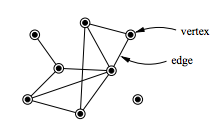
Components in graphs
- Connected component represents maximal connected subgraph with no external connections
- Isolated vertices have no incident edges each forming separate component (standalone nodes)
Number of graph components
- Component counting employs graph traversal algorithms (DFS, BFS)
- Process: initialize count, perform traversal from unvisited vertex, increment count for each new component
- Time complexity for both DFS and BFS approaches
Properties of connected components
- Components form disjoint sets with no shared vertices
- All graph edges contained within components none between different components
- Every vertex in component reachable from all others within same component
- Component graphs represent each component as single vertex useful for analyzing disconnected graph structure