
Stoicism, an ancient Greek philosophy, teaches that true happiness comes from focusing on what we can control: our thoughts and actions. It argues that external circumstances, like wealth or status, don't determine our well-being.
By accepting what we can't change and cultivating virtues like wisdom and self-control, Stoics believe we can find inner peace. This approach to life offers practical tools for dealing with modern challenges and finding contentment.
Stoic Philosophy for Happiness
Central Tenets and Implications
- Stoicism is a school of Hellenistic philosophy founded in Athens by Zeno of Citium in the early 3rd century BC
- Emphasizes ethics, logic, and the natural world as the three main areas of philosophical inquiry
- The central tenet of Stoicism is that virtue (wisdom, justice, courage, and self-control) is the only true good and the key to achieving eudaimonia, or a life of fulfillment and flourishing
- External events and material possessions are considered indifferent to one's happiness
- Stoics believe that the path to happiness lies in:
- Accepting the present moment as it is
- Not allowing oneself to be controlled by the desire for pleasure or fear of pain
- Using one's mind to understand the world and to do one's part in nature's plan
- Stoicism teaches that the only things within our control are our own thoughts, beliefs, and actions
- Everything else, including health, wealth, and reputation, is ultimately beyond our control and should not be the basis for our happiness or sense of self-worth
Achieving Inner Peace and Contentment
- The Stoic concept of apatheia, or equanimity in the face of both positive and negative events, is central to achieving inner peace and contentment
- Involves maintaining a calm and rational state of mind, regardless of external circumstances
- Stoics argue that we should focus our energy and attention on the internals, as they are the only things that truly matter for our happiness and well-being
- By mastering our own thoughts and actions, we can achieve inner peace and resilience, regardless of external circumstances
- Attempting to control or change externals is seen as a futile and ultimately frustrating endeavor
- Externals are subject to the whims of fortune and the actions of others
- Stoics advise accepting externals as they are and adapting our attitudes and responses accordingly
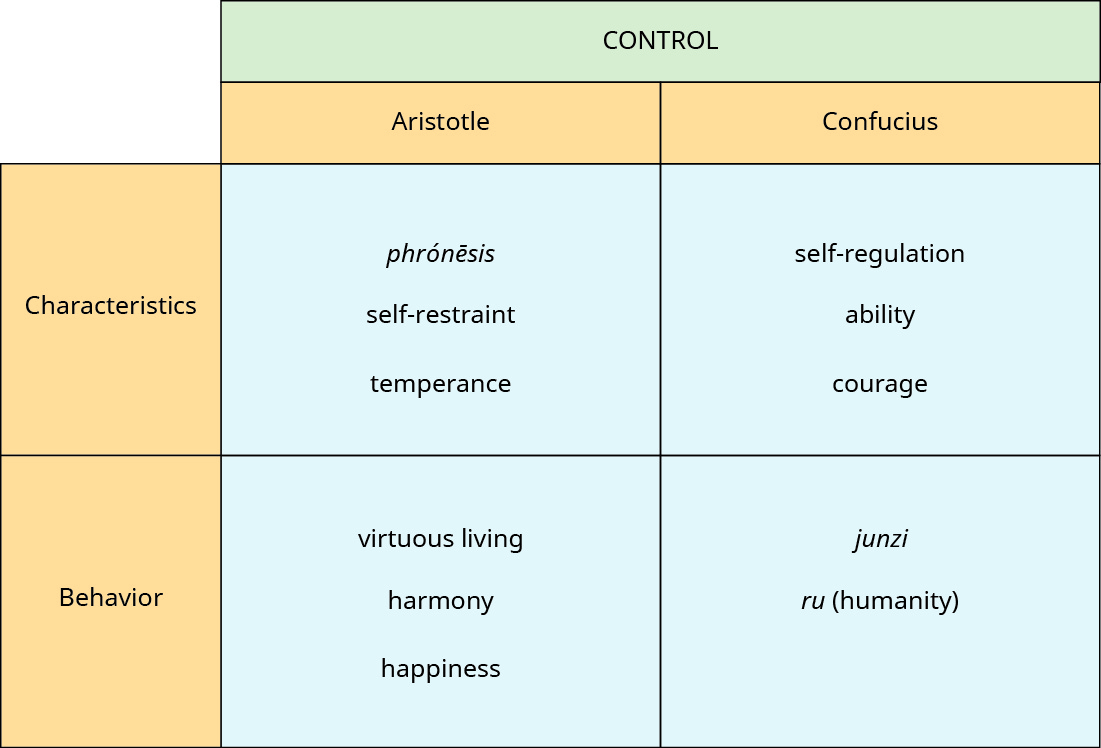
Control vs Non-Control in Stoicism
Internals (Within Our Control)
- Stoicism divides all aspects of life into two categories: things that are within our control (internals) and things that are not within our control (externals)
- Internals include our own:
- Thoughts
- Beliefs
- Judgments
- Attitudes
- Actions
- These are the only things that truly belong to us and that we have the power to change or influence
- Stoics argue that we should focus our energy and attention on the internals, as they are the only things that truly matter for our happiness and well-being

Externals (Not Within Our Control)
- Externals encompass everything else, such as our:
- Bodies
- Possessions
- Relationships
- Reputations
- Opinions of others
- While we may influence these things to some degree, we do not have complete control over them
- Attempting to control or change externals is seen as a futile and ultimately frustrating endeavor
- Externals are subject to the whims of fortune and the actions of others
- Stoics advise accepting externals as they are and adapting our attitudes and responses accordingly
Stoic Principles for Modern Life
Applying Stoicism to Challenges and Adversity
- The Stoic practice of distinguishing between internals and externals can be applied to modern-day challenges (job loss, relationship difficulties, health issues)
- By focusing on what is within our control (thoughts, attitudes, actions) and accepting what is not, we can maintain perspective and resilience in the face of adversity
- Stoicism encourages the development of virtues (wisdom, justice, courage, self-control)
- These virtues can be cultivated through daily practice and reflection
- Serve as a guide for decision-making in both personal and professional contexts
- The Stoic concept of living in accordance with nature can be interpreted as:
- Living in harmony with one's own values and principles
- Contributing to the greater good of society
- Helps individuals make decisions aligned with their core beliefs that promote well-being of themselves and others
Reason, Logic, and Mortality in Decision-Making
- Stoicism emphasizes the importance of reason and logic in decision-making, rather than being swayed by emotions or external pressures
- By approaching challenges and choices with a clear and rational mind, individuals can make more informed and effective decisions
- The Stoic practice of memento mori, or reflecting on one's own mortality, can help individuals:
- Prioritize their goals and values
- Make the most of their limited time on earth
- Lead to more meaningful and fulfilling decision-making, both in the short and long term