
Field extensions are like building blocks in algebra, letting us create bigger fields from smaller ones. They're crucial for understanding how numbers and polynomials behave in different mathematical worlds.
This topic dives into the types of extensions, how to build them, and their properties. We'll explore algebraic and transcendental extensions, learn to construct new fields, and see how the degree of an extension shapes its structure.
Field extensions and properties
Definition and key characteristics
- A field extension is a field that contains a given base field as a subfield
- If E is an extension field of F, then F ⊆ E
- The base field F and the extension field E have the same characteristic
- The characteristic is the smallest positive integer p such that p · 1 = 0, or 0 if no such integer exists
- If α ∈ E is the root of some polynomial f(x) ∈ F[x], then F(α) is the smallest subfield of E containing both F and α
Types of field extensions
- Algebraic extensions
- If every element of E is the root of some polynomial with coefficients in F, then E is an algebraic extension of F
- Example: The field of complex numbers () is an algebraic extension of the field of real numbers () because every complex number is a root of a polynomial with real coefficients
- Transcendental extensions
- If E is not an algebraic extension of F, then E is a transcendental extension of F
- Example: The field of rational functions is a transcendental extension of because x is not the root of any polynomial with rational coefficients
Constructing field extensions
Using polynomials
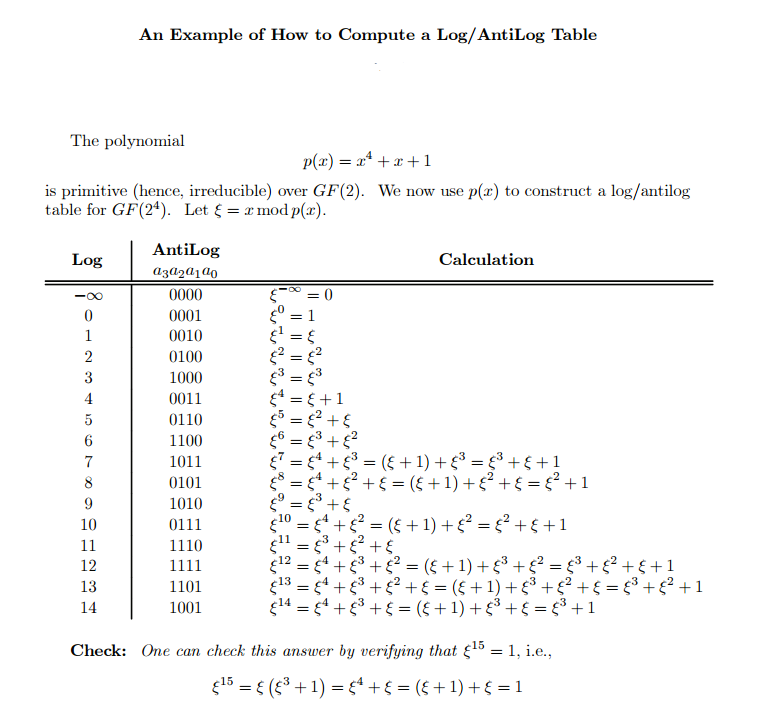
- Given a field F and a polynomial f(x) ∈ F[x], the quotient ring F[x]/(f(x)) is a field extension of F if and only if f(x) is irreducible over F
- Example: is isomorphic to the field of complex numbers , which is an extension of
- The field extension F(α) can be constructed by adjoining a root α of an irreducible polynomial f(x) ∈ F[x] to the base field F
- Example: is constructed by adjoining , a root of the irreducible polynomial , to
Using rational expressions
- If E is an extension field of F and α ∈ E, then F(α) consists of all rational expressions in α with coefficients in F
- Example: The field consists of all rational expressions in with rational coefficients, such as
Degree of field extensions
Definition and properties
- The degree of a field extension E over F, denoted [E:F], is the dimension of E as a vector space over F
- If E is a finite extension of F, then [E:F] is finite
- If [E:F] = n, then every element of E can be uniquely expressed as a linear combination of n basis elements with coefficients in F
- The degree formula: If F ⊆ K ⊆ E are fields, then [E:F] = [E:K] · [K:F]
Quadratic extensions
- If [E:F] = 2, then E = F(√d) for some d ∈ F that is not a perfect square in F
- Example: is a quadratic extension of with degree 2
Base field vs extension field
Automorphisms and Galois groups
- If E is an extension field of F, then every F-linear map from E to E is either the zero map or an automorphism of E that fixes every element of F
- The set of all F-automorphisms of E forms a group under composition, called the Galois group of E over F, denoted Gal(E/F)
- Example: The Galois group of over is , where is the automorphism that maps to
Galois extensions and the Fundamental Theorem
- If E is a finite extension of F, then |Gal(E/F)| ≤ [E:F]
- If equality holds, then E is called a Galois extension of F
- The Fundamental Theorem of Galois Theory establishes a correspondence between the subgroups of Gal(E/F) and the intermediate fields between F and E, for a Galois extension E of F
- Example: For the Galois extension over , the Fundamental Theorem provides a one-to-one correspondence between the subgroups of the Galois group and the intermediate fields , , , and