
Reflective Practice and Action Research
Reflective practice and action research give teachers a structured way to study and improve their own teaching. Rather than relying on intuition alone, these approaches use self-examination and systematic data collection to figure out what's working, what isn't, and what to change next.
This section covers the two main approaches (reflective practice and action research), how they work in practice, and the professional development strategies that support them.
Reflective Practice
Defining Reflective Practice
Reflective practice means critically examining your own teaching experiences, beliefs, and decisions to draw insights you can act on. It's not just thinking about how a lesson went. It's a deliberate, ongoing cycle of self-observation and self-evaluation where you ask why something happened, not just what happened.
The goal is to move from automatic, habitual teaching toward intentional teaching. When you reflect systematically, you start noticing patterns in your classroom that you'd otherwise miss.
Types of Reflection
Reflection-in-action happens during teaching. You notice students look confused mid-lesson, so you pause and try a different explanation on the spot. This type of reflection requires you to read the room in real time and adjust accordingly.
Reflection-on-action happens after the lesson is over. You sit down and think back on what went well, what fell flat, and why. This is where you can be more analytical because you're not under the pressure of a live classroom. Donald Schön, who coined both terms, considered this distinction central to how professionals develop expertise.
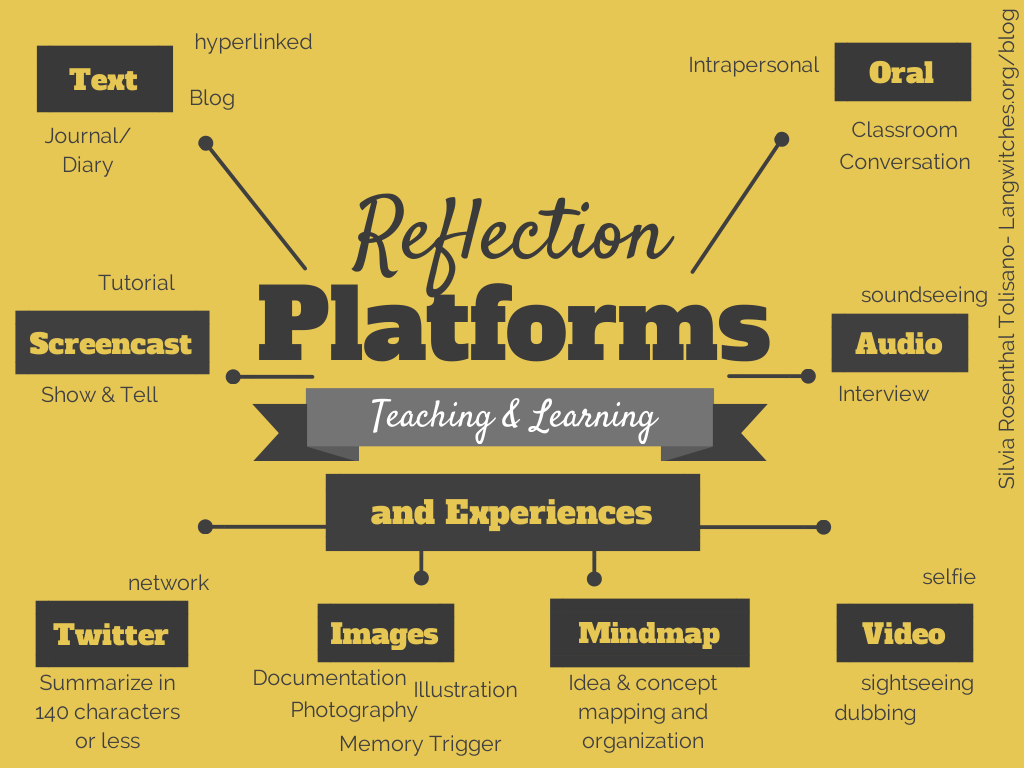
Two common tools support ongoing reflection:
- Reflective journals are written records where teachers document observations, questions, and insights over time. Reviewing entries from weeks or months ago can reveal growth patterns and recurring challenges you might not notice day to day.
- Critical incidents are specific classroom moments that stand out because something unexpected or significant happened. Analyzing these moments in depth helps you understand turning points in student learning or breakdowns in your approach.
Benefits of Reflective Practice
- Builds self-awareness so you can honestly recognize your strengths and the areas where you need to grow
- Creates a habit of inquiry and curiosity that drives continuous professional development
- Sharpens problem-solving and decision-making, since you're regularly practicing the skill of analyzing complex classroom situations
- Strengthens teacher-student relationships by pushing you to consider student perspectives and respond with greater empathy
Action Research
Understanding Action Research
Action research is a form of systematic inquiry that teachers conduct in their own classrooms. Unlike traditional academic research done by outside researchers, action research is carried out by the teacher, for the teacher, focused on a real problem they want to solve.
For example, a teacher might notice that students consistently struggle with reading comprehension in science. Instead of guessing at a fix, they design a small study to test whether a specific strategy (like structured note-taking) actually improves outcomes. The key distinction from casual trial-and-error is that action research involves planned data collection and analysis.

The Action Research Process
Action research follows a cyclical process. Each cycle builds on what you learned in the previous one, so your understanding deepens over time.
- Plan — Identify a specific problem or question. Formulate a clear research question (e.g., "Does using exit tickets improve quiz scores in my 8th-grade math class?"). Then design your approach: what intervention you'll try, what data you'll collect, and over what timeframe.
- Act — Implement the planned intervention or strategy in your classroom.
- Observe — Collect data using methods appropriate to your question. This could include student assessment scores, classroom observations, student surveys, or interview notes.
- Reflect — Analyze the data you collected. What patterns do you see? Did the intervention work? What surprised you? Use your conclusions to decide whether to refine the strategy, try something different, or expand what's working.
Then the cycle repeats. Most action research projects go through at least two or three cycles before the teacher reaches solid conclusions.
Data-Driven Decision Making
Action research is grounded in using evidence rather than assumptions to guide instructional choices. Teachers collect various types of data (student performance metrics, behavioral observations, student feedback) and look for patterns that reveal whether a strategy is effective.
This matters because teaching involves enormous complexity. A lesson might feel successful, but assessment data could tell a different story. Conversely, a lesson that felt rocky might actually produce strong learning gains.
- Data-driven decisions let you make targeted adjustments to instruction, curriculum, or classroom management based on what the evidence actually shows
- Tracking data across multiple cycles creates accountability and lets you measure real progress over time
- Over time, this approach builds a culture of continuous improvement where decisions are justified by evidence, not just habit or preference
Professional Development Strategies
Peer Observation
Peer observation pairs teachers to watch each other teach and then provide constructive feedback. This is different from administrative evaluation because the purpose is collaborative learning, not performance rating.
- Gives you a window into how colleagues handle challenges you also face, which can spark new ideas for your own classroom
- Creates space for honest, professional conversations about teaching practice
- Builds a supportive learning community where teachers regularly share strategies and reflect together
- Works best when both the observer and the observed teacher agree on a specific focus area beforehand (e.g., questioning techniques, student engagement, transitions between activities)
Self-Assessment
Self-assessment asks you to evaluate your own performance, knowledge, and skills against specific standards or criteria. It puts the responsibility for professional growth squarely in your hands.
- Helps you set concrete, personal goals for improvement rather than relying solely on external feedback
- Reveals gaps between where you are and where you want to be, which makes professional development planning more targeted
- Can take many forms: self-evaluation rubrics, teaching portfolios, reflective writing, or video review of your own lessons
- Works best as a regular practice rather than a one-time exercise, since your teaching evolves and new areas for growth emerge over time
Connecting the pieces: Reflective practice, action research, peer observation, and self-assessment all reinforce each other. Reflection gives you questions worth investigating. Action research gives you a method to investigate them. Peer observation and self-assessment provide additional perspectives and data to inform the whole process.