AP Cybersecurity Unit 2 Cheatsheet: Securing Spaces

AP Cybersecurity Unit 2 Cheatsheet: Securing Spaces

Start with the first 3 sections of the Unit 2 one-page cheatsheet below. The full sheet is a PDF you can print.

Social Engineering Tactics

Psychological manipulation to trick targets into desired actions:

  • Pretexting: Create believable reason to contact target
  • Authority: Impersonate someone with power or relay their instructions
  • Intimidation: State negative consequences if demands aren't met
  • Consensus: Create social pressure ("everyone else is doing it")
  • Scarcity: Create sense of limited availability
  • Familiarity: Pretend to know someone close to target
  • Urgency: Create deadline requiring quick action to avoid harm
Risk Assessment Framework

Risk = Threat exploits Vulnerability to compromise Asset

Three factors determine likelihood:

  • Target value (adversaries target high-value assets)
  • Exploit difficulty (well-documented exploits = more adversaries can execute)
  • Adversary motivation & capabilities

Severity measured by: Financial cost, reputational impact, operational disruption

Assessment types:

  • Quantitative: Numeric scale (1–10) or financial ($10K risk)
  • Qualitative: Low/medium/high/severe

Documentation must include: Assets & value, threats, vulnerabilities, exploitation details, damage severity, likelihood, final rating

Risk Management Strategies

StrategyAction
AvoidStop the risky activity (only if not core mission)
TransferPlace burden on another entity (insurance, govt, consumers)
MitigateImplement controls to reduce likelihood or impact
AcceptAcknowledge residual risk; absolute security is impossible

Residual risk = risk remaining after avoidance, transference, mitigation. Organizations favor cost-effective solutions where implementation cost < expected loss.

The rest of the Unit 2 sheet

6 more sections are on the one-page PDF:

  • Adversary Types & Motivations

  • Security Control Types & Functions

  • Physical Attacks & Vulnerabilities

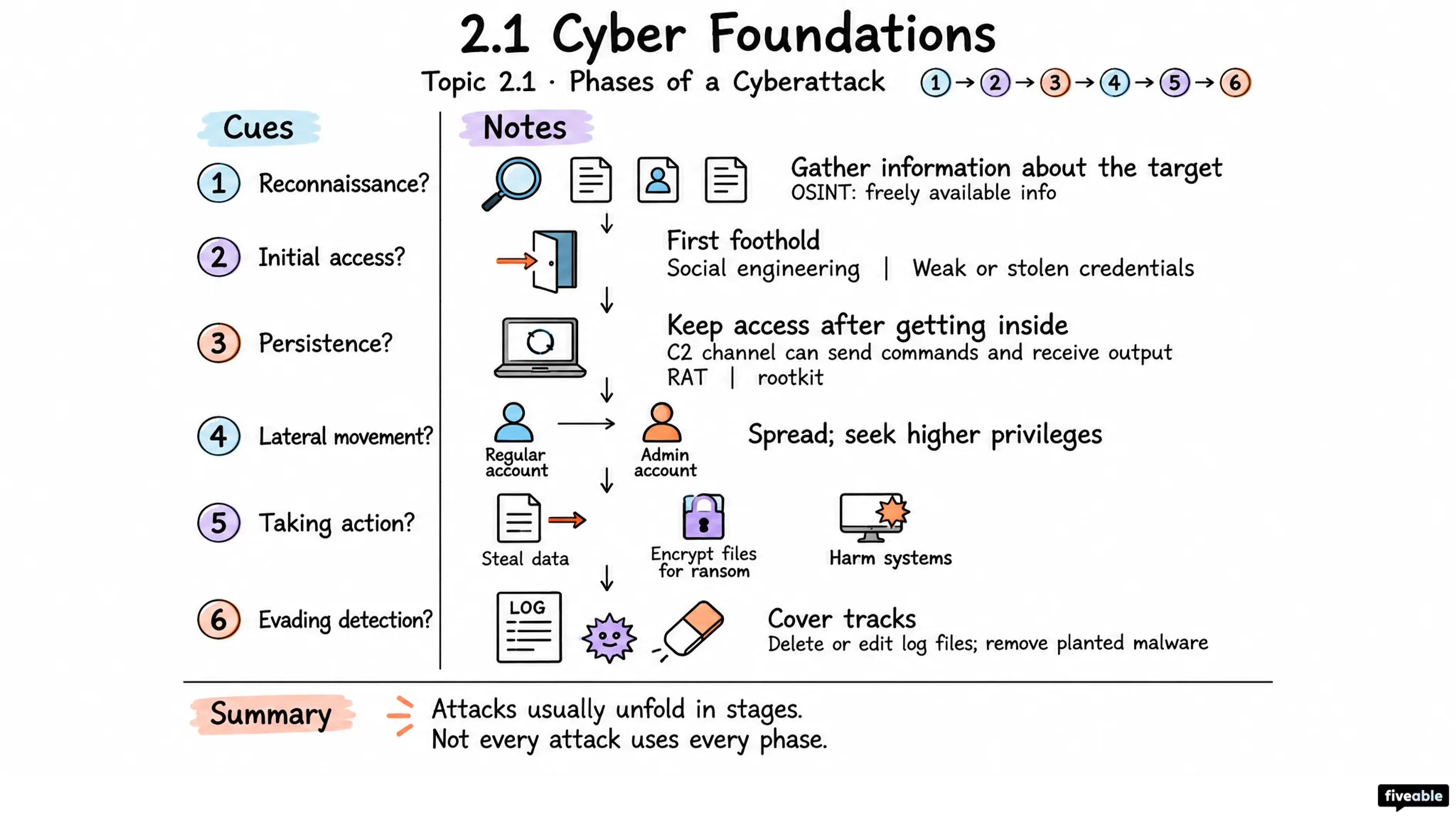
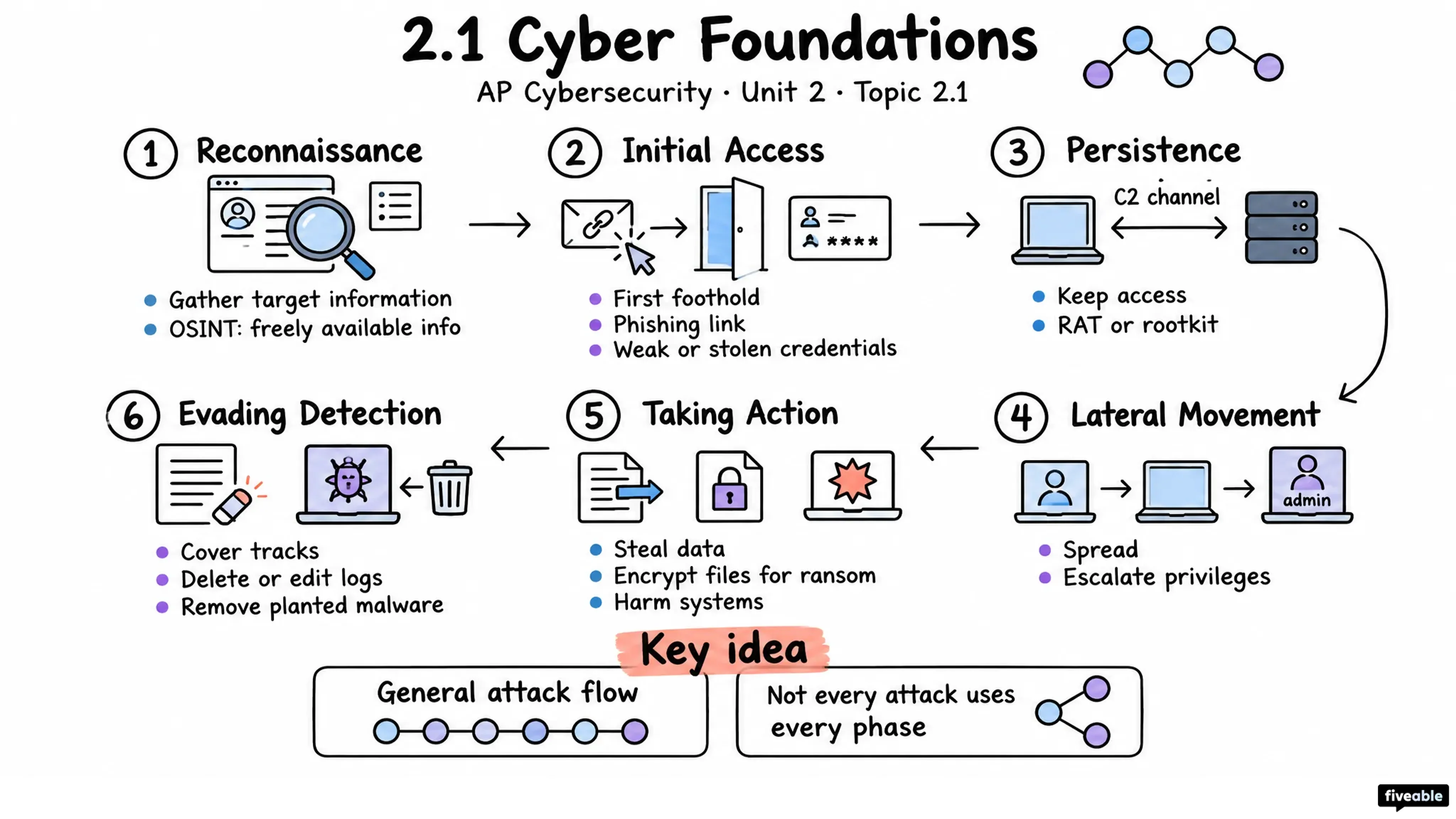
  • Attack Phases (Not All Used Every Time)

  • Defense-in-Depth Strategy

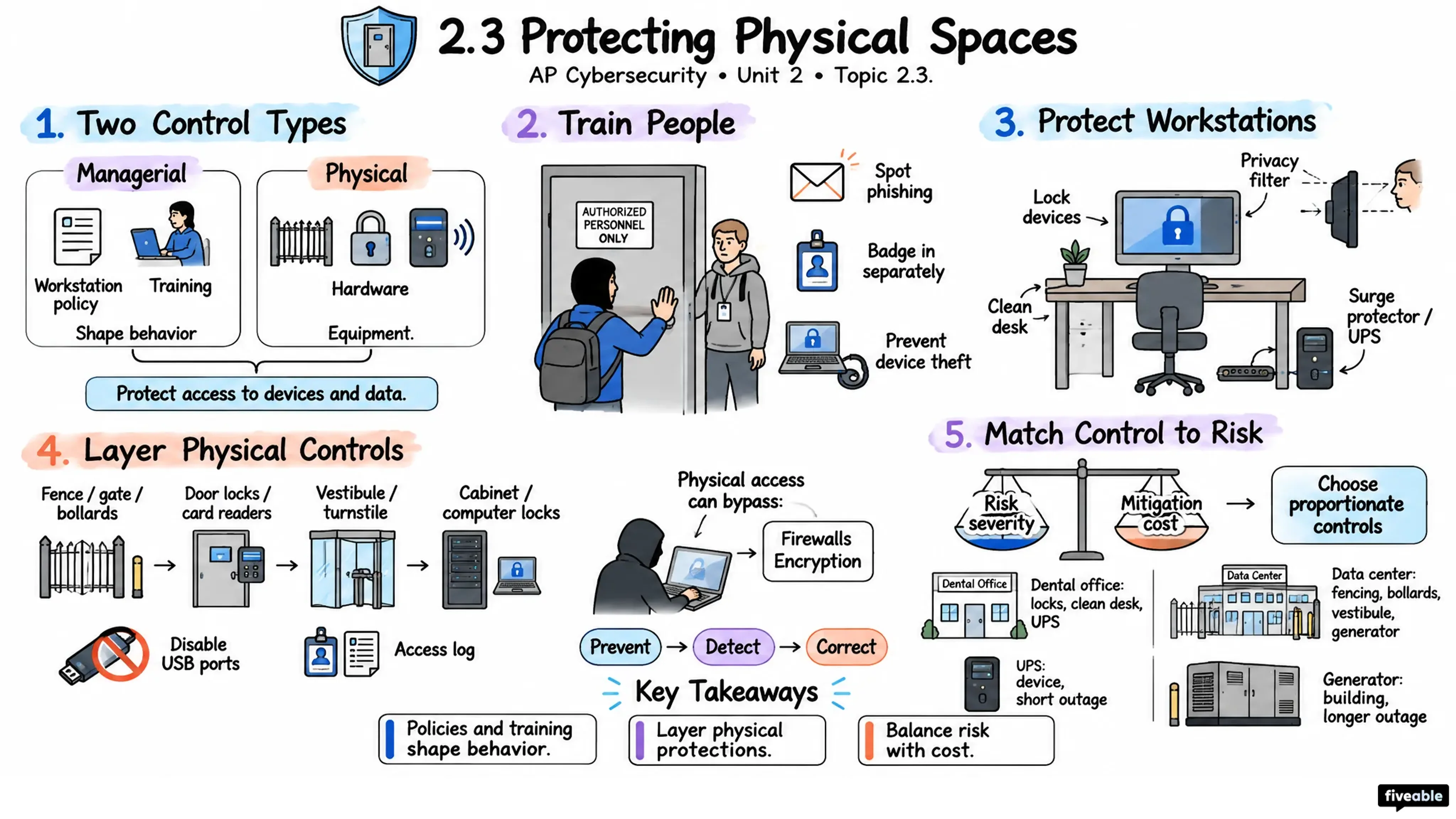
  • Protecting & Detecting Physical Spaces

Made by you

Visual Cheatsheets

Pick a Unit 2 topic and a format: flowchart, comparison chart, vocab sheet, Cornell notes and more. Ready in about a minute.

Printable PDF · from the Fiveable shop

AP Cybersecurity Unit 2 Cheatsheet

1 page · Securing Spaces · PDF

Visual Cheatsheets

One topic, the format you pick, ready in about a minute

Format

Topic

Takes 30–60 seconds

Preview: Standard

Unit 2: Securing Spaces, topic by topic

Each topic has a full study guide. See the whole unit.