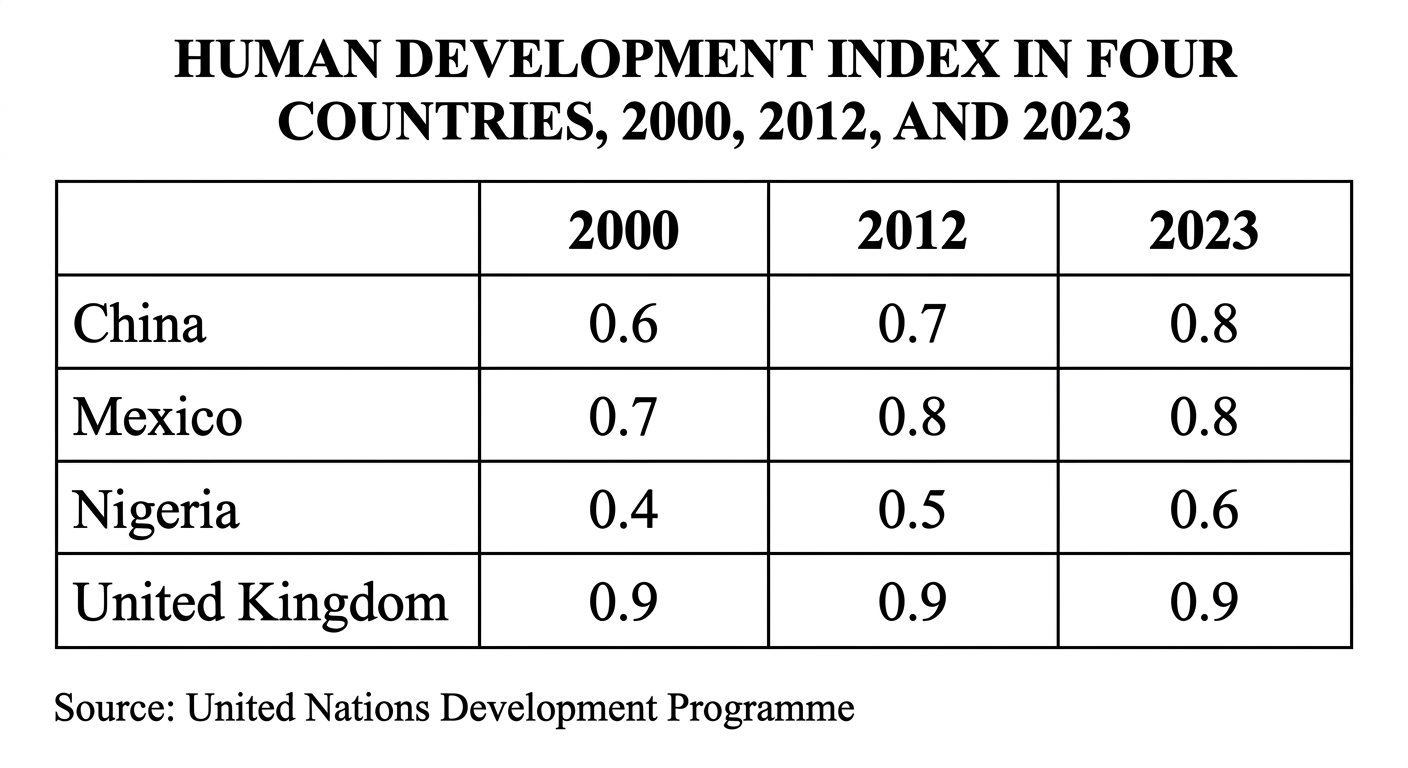
Step 1: Build your methods vocabulary (Topic 1.1)Review the difference between empirical and normative claims and between correlation and causation. Make a quick reference card listing Freedom House, HDI, GDP per capita, Gini Index, and Corruption Perceptions Index with one sentence on what each measures. Practice identifying which index you would cite to support a specific claim about a course country.
Step 2: Understand the four core concepts (Topic 1.2)Write out definitions of state, regime, government, and nation without looking at notes. Then match each concept to two course-country examples. Use the Fiveable topic guide for 1.2 to check your definitions and fill any gaps.
Step 3: Map the democracy-authoritarianism spectrum (Topics 1.3-1.4)Draw a spectrum and place all six course countries on it using the five indicators: rule of law, media, elections, transparency, and participation. Then review democratization by tracing Mexico's transition from PRI dominance and Nigeria's shift after military rule. Note what electoral design tools (proportional representation, gender quotas) support democratization.
Step 4: Connect sources of authority and regime change to course countries (Topics 1.5-1.6)Create a table with all six countries, their primary source of authority, and one key transition example. Focus on Iran's 1979 Revolution as a sudden regime change and UK elections as routine government change. Review the Fiveable topic guides for 1.5 and 1.6 to confirm your country-specific details.
Step 5: Review federal vs. unitary systems, legitimacy, and stability (Topics 1.7-1.10)Confirm which countries are federal and which are unitary, then explain one reason for each structure. Review sources of legitimacy and match each to a course country. Finally, for Topic 1.10, identify one internal actor per country that either bolsters or threatens stability. Use the Fiveable topic guides for 1.7 through 1.10 and practice applying these concepts to short comparison scenarios.