Fiveable

♾️AP Calculus AB/BC Unit 9 Review

QR code for AP Calculus AB/BC practice questions

9.4 Defining and Differentiating Vector-Valued Functions

♾️AP Calculus AB/BC
Unit 9 Review

9.4 Defining and Differentiating Vector-Valued Functions

Written by the Fiveable Content Team • Last updated September 2025
Verified for the 2026 exam
Verified for the 2026 examWritten by the Fiveable Content Team • Last updated September 2025
♾️AP Calculus AB/BC
Unit & Topic Study Guides
Pep mascot

9.4 Defining and Differentiating Vector-Valued Functions

So far in this unit, we’ve been delving deep into the functions of parametric equations. Now, we’re taking this knowledge and talking about vector-valued functions!

Pep mascot
more resources to help you study

↖️ Vector Review

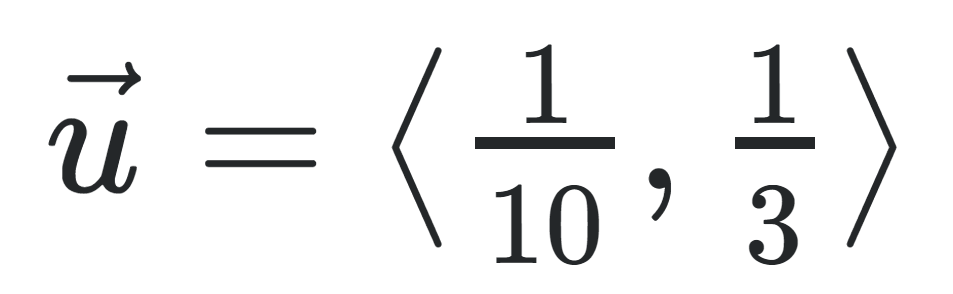
A vector is a quantity that has both direction and magnitude. Magnitude refers to the length of a vector. All vectors have horizontal and vertical components. They are written and defined based on these two components. For example, a vector with a horizontal component of 5 and a vertical component of 4 would be written as <5,4><5, 4> . While there are a couple of other methods of writing vectors, this kind of notation is used most frequently on the AP Calculus BC Exam!

Untitled
Example of Vector Notation. Image Courtesy of LaTeX Stack Exchange

Every vector is drawn with a head and a tail. The tail of the vector is the point at which the vector originates. If there is no additional information given, we can assume that the vector originates from (0,0) and that the tail of the vector is at (0,0). The head of the vector is the final point of the vector. In diagrams, the head of the vector is represented with an arrowhead.

Untitled
Illustration of a Vector. Image Courtesy of Labster

The magnitude of the vector can be calculated based on the horizontal and vertical components of the vector. Let’s find the magnitude of the vector we used earlier, <5,4><5,4>. This vector has a horizontal component of 5 and a vertical component of 4. We can find the magnitude by using the Pythagorean theorem and calculating for the hypotenuse. The Pythagorean theorem is a2+b2=c2a^2 + b^2=c^2. In this scenario, a=5a = 5 and b=4b=4. Therefore, c=41c= \sqrt{41}. The magnitude of our vector is 41\sqrt{41}. The magnitude of the vector is written as ‖𝑣‖.

We can also calculate the direction of the vector from its horizontal and vertical components. We know that tan(θ)=vertical componenthorizontal componenttan(θ)= \frac{\text{vertical component}}{\text{horizontal component}}. For our example vector from earlier, tan(θ)=45tan(θ)= \tfrac{4}{5}. Using inverse tangent, we can calculate that θ=0.675θ= 0.675.

Untitled
Magnitude and Direction of Vectors. Image Courtesy of Study.com

We have now seen that we can calculate the magnitude and direction of a vector given its horizontal and vertical components. Similarly, we can also calculate the horizontal and vertical components from the magnitude and direction of the vector.


📐 Vector-Valued Functions

Think of r(t)r(t) as a vector composed of the two parametric functions f(t)f(t) and g(t)g(t). We can write the vector as r(t)=<f(t),g(t)>r(t)=<f(t), g(t)>. If we wanted to differentiate this vector-valued function, we can write the derivative of the function as r(t)=<f(t),g(t)>r'(t) = <f'(t), g'(t)>. Normal derivation rules apply to vector-valued functions! These rules are summarized in the image below.

maxresdefault.jpg
Derivatives of Vector-Valued Functions. Image Courtesy of the Algebros

✏️ Vector-Valued Functions Walkthrough

Let’s do a quick example!

r(t)=<4t2,7t7>r(t) = <4t^2, 7t^7>

Find r(4)r'(4).

Since we are asked to find r(4)r'(4), let’s begin by finding r(t)r'(t). We do this by taking the derivative of each of the components. We can start with the horizontal component, 4t24t^2. The derivative of 4t24t^2 with respect to tt is 8t8t.

The vertical component of r(t)r(t) is 7t77t^7. The derivative of 7t77t^7 with respect to tt is 49t649t^6.

Now, let’s put it all together!

r(t)=<8t,49t6>r'(t) = <8t, 49t^6>

We can then substitute $$$tfor4tofindfor 4 to findr’(4)$$.

r(4)=<8(4),49(4)6>r'(4) = <8(4), 49(4)^6>

And now we simplify!

r(2)=<32,200704>r'(2) = < 32, 200704>

Now that we know a bit about vectors and vector-valued functions, let’s amp it up and try some practice problems :)


🤔 Practice Problems with Vector-Valued Functions

We have to two practice problems embedded in this study guide for you!

💭 Vector Practice Problem 1

Find r(2)r'(2) given that

r(t)=<4sin(5t),7cos(2t2)>r(t) = <4sin(5t), 7cos(2t^2)>

Let’s begin by finding the derivative of each of the components. We can start with the horizontal component, 4sin(5t)4sin(5t). The derivative of 4sin(5t)4sin(5t) with respect to tt is 20cos(5t)20cos(5t).

The vertical component of r(t)r(t) is 7cos(2t2)7cos(2t^2). The derivative of 7cos(2t2)7cos(2t^2) with respect to tt is 28tsin(2t2)-28tsin(2t^2).

Now, let’s put it all together!

r(t)=<20cos(5t),28tsin(2t2)>r'(t) = <20cos(5t), -28tsin(2t^2)>

We can then substitute tt for 2.

r(2)=<20cos(10),56sin(8)>r'(2) = <20cos(10), -56sin(8)>

All that’s left to do is simplify!

r(2)=<16.781,255.404>r'(2) = < -16.781, -255.404>

Great work! Let’s try another practice problem.

💭 Vector Practice Problem 2

A particle moves along a path so that its position at any given time where t0t≥0 is given by (4sin(t),4cos(t))(4sin(t), 4 cos(t)). Find the particle’s velocity vector at t=π4t=\tfrac{π}{4}.

Here’s the solution!

A particle’s velocity vector is the first derivative of its position vector.

Therefore, v(t)=<dxdt,dydt>v(t)=<\tfrac{dx}{dt}, \tfrac{dy}{dt}>. To find the particle’s velocity vector at t=π4t=\tfrac{π}{4}, we can begin by taking the first derivative of the position vector.

We can start with the horizontal component, 4sin(t)4sin(t). The derivative of 4sin(t)4sin(t) with respect to tt is 4cos(t)4cos(t).

The vertical component of r(t)r(t) is 4cos(t)4cos(t). The derivative of 4cos(t)4cos(t) with respect to tt is 4sin(t)-4sin(t).

Like earlier, let’s put it all together!

r(t)=<4cos(t),4sin(t)>r'(t) = <4cos(t), -4sin(t)>

We can then substitute tt for π4\tfrac{π}{4}.

r(π4)=<4cos(π4),4sin(π4)>r'(\tfrac{π}{4}) = <4cos(\tfrac{π}{4}), -4sin(\tfrac{π}{4})>

All that’s left to do is simplify!

r(π4)=<22,22>r'(\tfrac{π}{4}) = < 2\sqrt{2}, -2\sqrt{2}>

As you keep practicing, solving these problems will get easier and easier! Like always, practice is key. 🔑

You got this!!

Vocabulary

The following words are mentioned explicitly in the College Board Course and Exam Description for this topic.

TermDefinition
derivativeThe instantaneous rate of change of a function at a specific point, representing the slope of the tangent line to the function at that point.
vector-valued functionFunctions that output vectors rather than scalar values, where each component is a function of the same independent variable.

Frequently Asked Questions

How do I find the derivative of a vector-valued function?

Take the derivative component-wise. If r(t) = , then r′(t) = , and r″(t) = . r′(t) is the velocity vector; |r′(t)| is the speed. The unit tangent T(t) = r′(t)/|r′(t)| when |r′(t)| ≠ 0. You can use the same rules as for scalar functions: sum/difference, constant multiple, product and chain rules apply component-wise (and via vector product/inner-product rules when those appear). Differentiability of r means each component is differentiable (limit definition extends to vectors). For motion problems, velocity = r′, acceleration = r″, and total distance = ∫ |r′(t)| dt. This matches the AP CED objective CHA-3.H (calculate derivatives of vector-valued functions). For examples and extra practice, see the topic study guide (https://library.fiveable.me/ap-calculus/unit-9/defining-differentiating-vector-valued-functions/study-guide/z7ZmELI67oVaf9UpfEEM) and Tons of practice questions at (https://library.fiveable.me/practice/ap-calculus).

What's the formula for differentiating vector functions?

If r(t) = (or in 2D), differentiate component-wise: - Velocity (first derivative): v(t) = r′(t) = . - Acceleration (second derivative): a(t) = r″(t) = . - Speed: |v(t)| = sqrt[(x′(t))^2 + (y′(t))^2 + (z′(t))^2]. - Unit tangent: T(t) = v(t) / |v(t)| (when |v(t)| ≠ 0). You can justify these with the vector limit definition r′(t) = lim_{h→0} (r(t+h)-r(t))/h—the limit splits into limits of components. Product and chain rules work the same way (apply component-wise and use vector-scalar rules). For AP BC, you’ll be expected to compute v, a, speed, and T and use them in motion/context problems (CED CHA-3.H.1). For review see the Topic 9.4 study guide (https://library.fiveable.me/ap-calculus/unit-9/defining-differentiating-vector-valued-functions/study-guide/z7ZmELI67oVaf9UpfEEM) and practice problems (https://library.fiveable.me/practice/ap-calculus).

When do I use vector derivatives vs regular derivatives?

Use vector derivatives whenever your function gives a position or quantity as a vector of components that depend on a parameter (usually t). If r(t) = then r′(t) = —you differentiate component-wise. That vector derivative is the velocity; r″(t) is acceleration. Use regular (single-variable) derivatives when you have a scalar function y = f(x) or when you need dy/dx from parametric pieces: dy/dx = (dy/dt)/(dx/dt). Quick rules to pick: - Position given as r(t) → take vector derivatives (velocity/acceleration, tangent vector, speed = |r′(t)|). - Scalar quantity (area, y(x), one variable) → use regular derivatives. - For mixed expressions use vector product/chain rules analogs (they extend from single-variable rules; see CHA-3.H in the CED). If you want practice, review Topic 9.4 study guide (https://library.fiveable.me/ap-calculus/unit-9/defining-differentiating-vector-valued-functions/study-guide/z7ZmELI67oVaf9UpfEEM) and try problems on the AP practice page (https://library.fiveable.me/practice/ap-calculus).

Can someone explain how to differentiate r(t) = <3t², sin(t), e^t> step by step?

Think of r(t) = <3t^2, sin t, e^t> as a position vector with three component functions. Differentiate component-wise (AP CED CHA-3.H: extend single-variable rules to vectors). Step-by-step: - x(t) = 3t^2 → x'(t) = 6t - y(t) = sin t → y'(t) = cos t - z(t) = e^t → z'(t) = e^t So the velocity vector v(t) = r'(t) = <6t, cos t, e^t>. If you need acceleration, differentiate again component-wise: - x''(t) = 6 - y''(t) = -sin t - z''(t) = e^t So a(t) = r''(t) = <6, -sin t, e^t>. If asked for speed, compute |v(t)| = sqrt((6t)^2 + (cos t)^2 + (e^t)^2). No product/chain tricks were needed here—just apply basic derivative rules to each component. For quick review on AP vector derivatives check the Topic 9.4 study guide (https://library.fiveable.me/ap-calculus/unit-9/defining-differentiating-vector-valued-functions/study-guide/z7ZmELI67oVaf9UpfEEM) and hit up practice problems (https://library.fiveable.me/practice/ap-calculus).

I don't understand how to take derivatives of vector functions - is it just component by component?

Yes—you differentiate a vector-valued function component-wise. If r(t) = , then r′(t) = (this follows from the limit definition applied to each component). That derivative is the velocity vector; r″(t) = is acceleration. Speed = ||r′(t)||, and the unit tangent T(t) = r′(t)/||r′(t)|| when the curve is smooth (||r′(t)|| ≠ 0). All the single-variable rules extend component-wise: product and chain rules apply (e.g., d/dt[f(t)u(t)] = f′(t)u(t)+f(t)u′(t) for scalar f and vector u), and you can compute second derivatives by differentiating components again. For AP BC, be ready to use these ideas for velocity/acceleration, tangent vectors, and smoothness (Topic 9.4). For a quick refresher, see the Topic 9.4 study guide (https://library.fiveable.me/ap-calculus/unit-9/defining-differentiating-vector-valued-functions/study-guide/z7ZmELI67oVaf9UpfEEM). For more practice, check Fiveable’s unit and practice question pages (https://library.fiveable.me/ap-calculus/unit-9, https://library.fiveable.me/practice/ap-calculus).

What's the difference between differentiating scalar functions and vector-valued functions?

Short answer: the processes are the same idea but you work component-wise and keep vector rules in mind. Details: a vector-valued function r(t) = ⟨x(t), y(t), z(t)⟩ is differentiable exactly when each component is differentiable. You differentiate each component: r′(t)=⟨x′(t), y′(t), z′(t)⟩ (limit definition and basic rules extend to vectors). Interpretations: r(t) is position, r′(t) is velocity (vector), |r′(t)| is speed (scalar), and r″(t) is acceleration. For curvature/tangent work use the velocity to get the tangent vector and normalize for the unit tangent T(t)=r′(t)/|r′(t)| when |r′(t)|≠0. Product and chain rules hold but apply to components (and for dot/cross products use their product rules). A “smooth” curve means r′(t) is continuous and not zero. For AP BC review, see Topic 9.4 in the CED (CHA-3.H) and the Fiveable study guide (https://library.fiveable.me/ap-calculus/unit-9/defining-differentiating-vector-valued-functions/study-guide/z7ZmELI67oVaf9UpfEEM). For more practice, check the AP Calc practice bank (https://library.fiveable.me/practice/ap-calculus).

How do I solve vector derivative problems on the AP exam?

On the AP, solving vector-derivative problems is mostly mechanical—do everything component-wise and keep track of units. Steps you’ll use every time: - Write r(t) = and differentiate each component: r′(t)= (velocity). CHA-3.H in the CED. - Speed = |r′(t)| = sqrt(x′(t)^2+...). If they ask for unit tangent, T(t)=r′(t)/|r′(t)|. - Acceleration = r″(t) = derivative of r′(t) component-wise. Use product and chain rules as with scalar functions. - For second derivative dy/dx or d^2y/dx^2 in parametric form use dy/dx = (y′/x′) and d^2y/dx^2 = (x′y″ − y′x″)/(x′)^3. - Check smoothness: x′ and y′ not both zero when dividing by x′ or forming unit tangent. On the exam, always show the component work and include units/context when motion is involved. For review see the Topic 9.4 study guide (https://library.fiveable.me/ap-calculus/unit-9/defining-differentiating-vector-valued-functions/study-guide/z7ZmELI67oVaf9UpfEEM) and try practice problems (https://library.fiveable.me/practice/ap-calculus).

Do I use the same derivative rules like product rule and chain rule for vector functions?

Yes—the same derivative ideas carry over, but applied component-wise and with a few vector-specific forms. - Component-wise: if r(t) = , then r′(t) = (this is how you get velocity/acceleration). (CED: CHA-3.H) - Product rule: for a scalar p(t) and vector r(t), (p r)′ = p′ r + p r′. For dot or cross products of two vector functions u(t), v(t): (u·v)′ = u′·v + u·v′ and (u×v)′ = u′×v + u×v′. - Chain rule: if r is a vector function of a scalar s and s = s(t), then d/dt[r(s(t))] = r′(s(t))·s′(t) (differentiate the vector components and multiply by s′(t)). - Limits/derivative definition and smoothness carry over; always check components for differentiability. For more AP-aligned review, see the Topic 9.4 study guide (https://library.fiveable.me/ap-calculus/unit-9/defining-differentiating-vector-valued-functions/study-guide/z7ZmELI67oVaf9UpfEEM) and Unit 9 overview (https://library.fiveable.me/ap-calculus/unit-9). Practice problems are at (https://library.fiveable.me/practice/ap-calculus).

Why does my calculator give me weird answers when I try to differentiate vector functions?

Usually your calculator is “weird” because it’s treating the whole vector like one expression instead of differentiating component-wise. For a vector r(t) = you must compute r′(t) = (velocity) and r″(t) = (acceleration). Common calculator mistakes: - Entering angle brackets or commas incorrectly so the device thinks it’s one symbolic object. - Using a numeric derivative routine (d/dx) that approximates slopes at a point instead of giving symbolic component derivatives. - Wrong variable or mode (degree vs. radian for trig in components). - Forgetting chain/product rules when components have nested functions. On the AP exam you’re expected to do component-wise differentiation and use product/chain rules as needed (CED CHA-3.H.1). If you want step practice, check the Topic 9.4 study guide (https://library.fiveable.me/ap-calculus/unit-9/defining-differentiating-vector-valued-functions/study-guide/z7ZmELI67oVaf9UpfEEM) and hundreds of practice problems (https://library.fiveable.me/practice/ap-calculus).

I missed class on vector derivatives - how do they work exactly?

Vector derivatives work just like single-variable derivatives but done component-wise. If r(t) = ⟨x(t), y(t), z(t)⟩, then r′(t) = ⟨x′(t), y′(t), z′(t)⟩ (limit definition applies component-wise). r′ is the velocity vector; |r′(t)| is speed. r″(t) = ⟨x″, y″, z″⟩ is acceleration. The tangent direction is r′(t); the unit tangent T(t) = r′(t)/|r′(t)| when |r′(t)| ≠ 0 (smooth curve). Standard rules extend: product rule and chain rule hold for vector-valued functions (apply components or use vector rules). For second derivative d²y/dx² of a parametric curve use (d/dt (dy/dx))/(dx/dt) = (y″ x′ − y′ x″)/(x′)³. AP focus: be able to compute these, interpret velocity/acceleration, and use limit definition when needed (CED CHA-3.H). For step-by-step examples and AP-style practice, see the topic study guide (https://library.fiveable.me/ap-calculus/unit-9/defining-differentiating-vector-valued-functions/study-guide/z7ZmELI67oVaf9UpfEEM) and practice problems (https://library.fiveable.me/practice/ap-calculus).

When would I need to find the derivative of a parametric curve written as a vector?

You need the derivative of a parametric curve written as a vector whenever you want the curve’s instantaneous motion or direction—basically anytime you care about velocity, tangent lines, speed, or acceleration. If r(t) = ⟨x(t), y(t), z(t)⟩ then r′(t) = ⟨x′(t), y′(t), z′(t)⟩ (component-wise differentiation). Use r′(t) to: - find the tangent line: point r(t0) and direction r′(t0); - get speed: |r′(t)| (for arc length or how fast the particle moves); - get acceleration: r″(t) for concavity/force problems; - compute dy/dx for a parametric plane curve: (dy/dt)/(dx/dt); - check smoothness: r′(t) ≠ 0 on an interval. These are exactly the CHA-3.H skills on the AP BC CED. For a short study guide and examples on computing these derivatives and using them in motion problems, see the Topic 9.4 study guide (https://library.fiveable.me/ap-calculus/unit-9/defining-differentiating-vector-valued-functions/study-guide/z7ZmELI67oVaf9UpfEEM). For extra practice, Fiveable has lots of AP Calc problems (https://library.fiveable.me/practice/ap-calculus).

What does it mean when they ask for r'(t) in vector notation?

r′(t) means the derivative of a vector-valued position function r(t) = ⟨x(t), y(t), z(t)⟩ (or ⟨x(t), y(t)⟩) taken component-wise. In vector notation r′(t) = ⟨x′(t), y′(t), z′(t)⟩. Interpretation: r′(t) is the velocity vector (tangent vector) to the parametric curve at time t. Its magnitude |r′(t)| is the speed. You find r′(t) using the same derivative rules you know (sum, product, chain) applied to each component—e.g., differentiate x(t), y(t) separately. If asked for a unit tangent, T(t) = r′(t)/|r′(t)| once r′(t) ≠ 0. This is exactly what the AP CED expects for CHA-3.H: extend single-variable derivative rules to vector functions and identify velocity/acceleration (r″(t)). For a quick review see the Topic 9.4 study guide (https://library.fiveable.me/ap-calculus/unit-9/defining-differentiating-vector-valued-functions/study-guide/z7ZmELI67oVaf9UpfEEM) and try practice problems (https://library.fiveable.me/practice/ap-calculus).

How do I know if I'm supposed to find the derivative of each component separately?

Yes—when you differentiate a vector-valued function r(t) = you differentiate each component separately: r′(t) = . The limit/derivative rules from single-variable calculus extend component-wise (CHA-3.H.1). So velocity = r′(t), acceleration = r″(t) found by differentiating components again, and speed = |r′(t)|. Two quick reminders: - If you want dy/dx for a parametric curve, use (dy/dt)/(dx/dt)—not the vector derivative. - If dx/dt and dy/dt are both 0 at a point, the curve may not be smooth there (tangent direction might be undefined). This is exactly what the CED means by “component-wise differentiation.” For a short study refresher see the Topic 9.4 study guide (https://library.fiveable.me/ap-calculus/unit-9/defining-differentiating-vector-valued-functions/study-guide/z7ZmELI67oVaf9UpfEEM). For extra practice, try problems on the Unit 9 page (https://library.fiveable.me/ap-calculus/unit-9) or the AP practice bank (https://library.fiveable.me/practice/ap-calculus).

Is there a shortcut for differentiating vector-valued functions or do I have to do each part?

Short answer: yes—differentiate vector-valued functions component-wise. If r(t) = ⟨x(t), y(t), z(t)⟩ then r′(t) = ⟨x′(t), y′(t), z′(t)⟩. That’s the main “shortcut” the AP expects (CED CHA-3.H: extend single-variable rules to vectors). What else to know (quick list): - Velocity = r′(t); acceleration = r″(t); speed = |r′(t)|; tangent vector = r′(t); unit tangent = r′(t)/|r′(t)| when |r′| ≠ 0. - Product rule: d/dt [f(t)·r(t)] = f′(t)r(t) + f(t)r′(t) for scalar f. - Chain rule: for r(u(t)), d/dt r = r′(u(t))·u′(t) (apply to each component). - Use usual single-variable rules on each component (power, trig, exp, etc.). If you want practice, the topic study guide walks through examples (https://library.fiveable.me/ap-calculus/unit-9/defining-differentiating-vector-valued-functions/study-guide/z7ZmELI67oVaf9UpfEEM) and there are 1000+ practice problems at (https://library.fiveable.me/practice/ap-calculus).

I'm confused about notation - what's the difference between r'(t) and dr/dt for vectors?

They're the same thing: r'(t) and dr/dt both mean "the derivative of the vector-valued position function r(t)." For a position vector r(t) = , you can read either notation as the componentwise derivative r'(t) = dr/dt = . On the AP CED this is exactly extending single-variable derivative rules to vectors (CHA-3.H.1): interpret r'(t) as the velocity vector, r''(t) as acceleration, and |r'(t)| as speed. You can define r'(t) with the same limit definition used for real functions, and use the same product and chain rules componentwise. For quick practice and AP-style problems on differentiating vector functions, see the Topic 9.4 study guide (https://library.fiveable.me/ap-calculus/unit-9/defining-differentiating-vector-valued-functions/study-guide/z7ZmELI67oVaf9UpfEEM) and more practice questions at (https://library.fiveable.me/practice/ap-calculus).