AP Business Unit 1 Cheatsheet: Businesses, Competition, and New Ideas

AP Business Unit 1 Cheatsheet: Businesses, Competition, and New Ideas

Start with the first 4 sections of the Unit 1 one-page cheatsheet below. The full sheet is a PDF you can print.

Business Fundamentals: Definition & Value

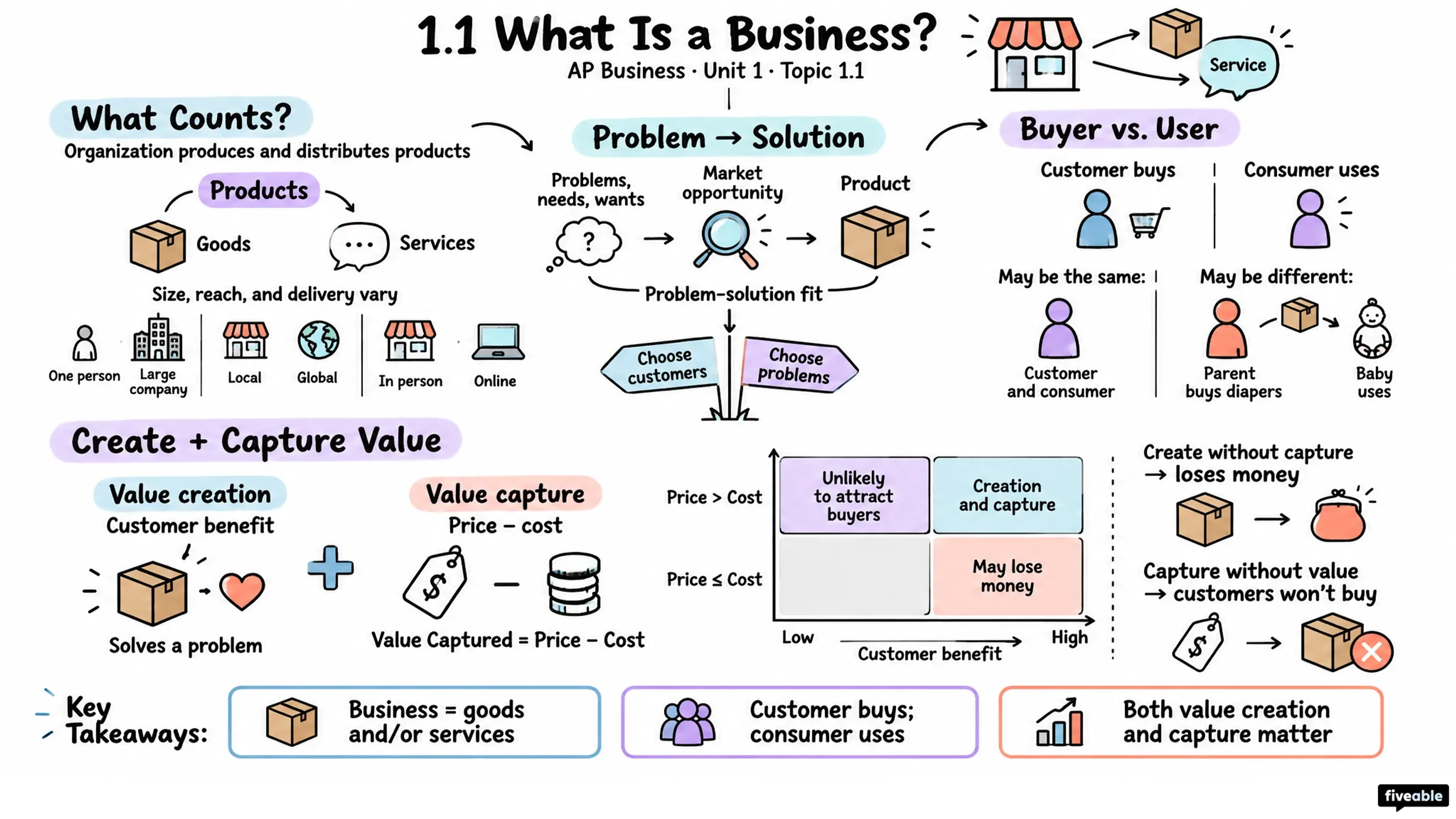
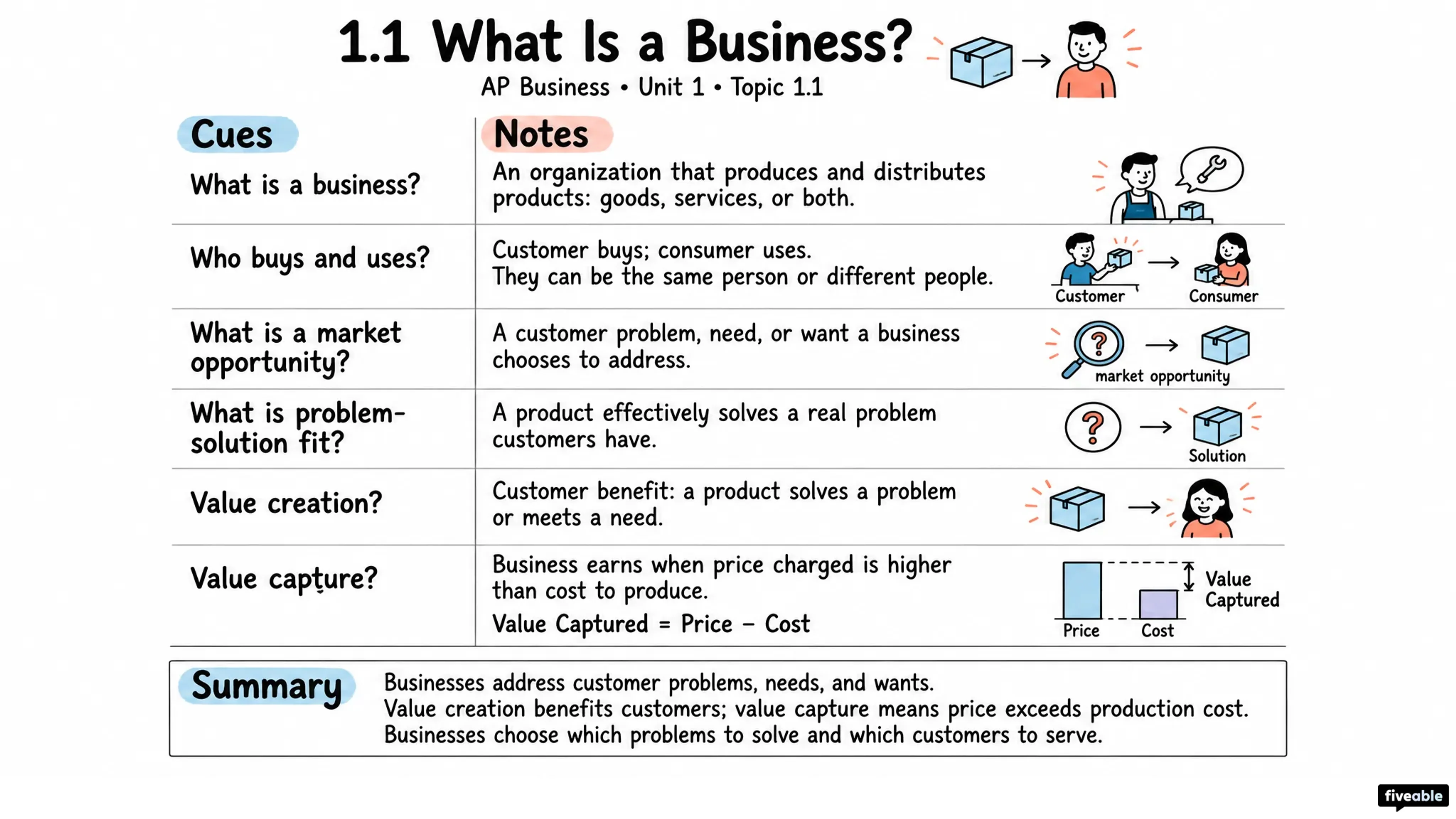
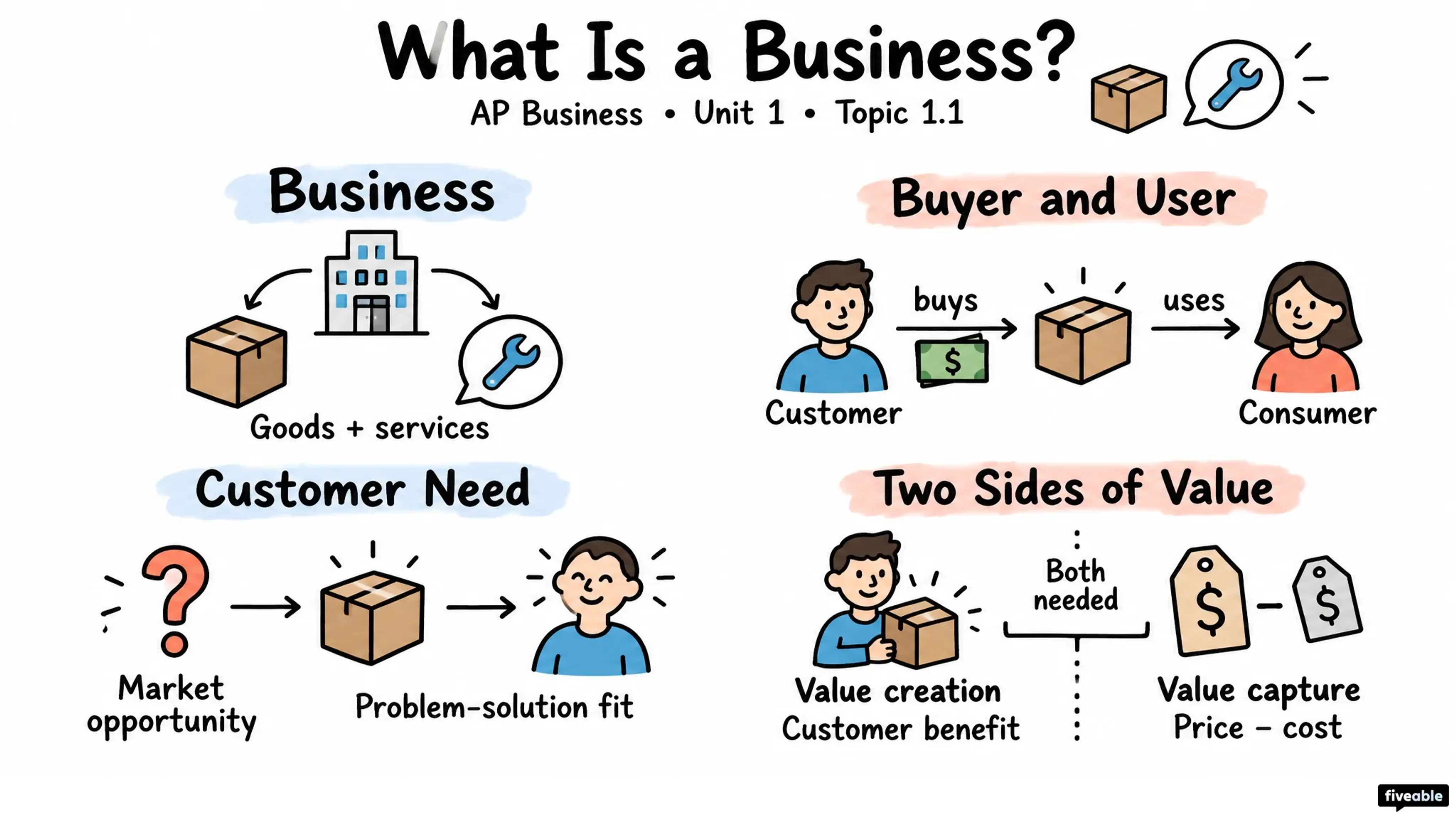
Business: Organization producing and distributing goods and/or services of any size (local to global, face-to-face or virtual).

Customer vs. Consumer:

  • Customer: Buys the product
  • Consumer: Uses the product (may not be the buyer)

Problem-Solution Fit: Business identifies a customer problem, need, or want and develops a product to address it. Businesses must choose which problems and customers to serve.

Value Creation: Providing a product that responds to customer problems, needs, or wants.

Value Capture: Charging customers a price higher than production cost to earn profit.
Markets & Competitive Advantage

Market: Physical or virtual space where sellers (businesses) and buyers (customers) interact. Can be local, regional, or global.

Market Price: Established when sellers seek higher prices and buyers seek lower prices; competitive interaction tends to settle on a prevailing price.

Competitive Advantage: Ability to outperform rivals, leading to increased market share and profits.

Differentiated Products: Products with distinguishing features that set them apart from rivals.

Barriers to Entry: Obstacles making it difficult for new firms to compete—patents, regulations, limited supplier access, high startup costs, low prices from scale.

Monopoly: Market with only one business producing a unique good/service; no competition.

PESTEL Framework & Market Evaluation

FactorDefinition & Examples
PoliticalPolicies, trade rules, taxes, subsidies, mandates, bans, stability
EconomicStability, household income, inflation, unemployment, interest rates
SocialDemographics, cultural norms, lifestyle trends, population growth
TechnologicalInternet access, automation, production tech, innovation rate
EnvironmentalGeography, resource access, waste policies, consumer perspectives
LegalEmployment, consumer protection, health/safety, IP, antitrust laws

Market Entry: Business enters when PESTEL factors align with business model and target customers.

Viability Changes: Shifts in PESTEL factors affect customer needs, production feasibility, and operating costs.

Competitive Strategies by Market Type

Highly Competitive Markets (commodities): Seek advantage through efficiency and lowest possible price.

Differentiated Product Markets: Seek advantage by demonstrating superiority through:

  • Higher quality
  • Unique features
  • Better customer service
  • Lower prices
  • More effective marketing

Monopoly Position: Protect by maintaining barriers to entry (IP rights, regulations, resource control, scale advantages).

The rest of the Unit 1 sheet

5 more sections are on the one-page PDF:

  • Vision, Mission, Values & Competencies

  • Business Goals & Organization Types

  • Entrepreneurship & Design Thinking

  • Business Ethics & Stakeholder Impact

  • Organization Structure & Supply Chains

Made by you

Visual Cheatsheets

Pick a Unit 1 topic and a format: flowchart, comparison chart, vocab sheet, Cornell notes and more. Ready in about a minute.

Printable PDF · from the Fiveable shop

AP Business with Personal Finance Unit 1 Cheatsheet

1 page · Businesses, Competition, and New Ideas · PDF

Visual Cheatsheets

One topic, the format you pick, ready in about a minute

Format

Topic

Takes 30–60 seconds

Preview: Standard

Unit 1: Businesses, Competition, and New Ideas, topic by topic

Each topic has a full study guide. See the whole unit.