8.5 Unit 8 Required Works

🖼AP Art History Unit 8 Review
8.5 Unit 8 Required Works
🖼 AP Art History
8.1
Materials, Processes, and Techniques in South, East, and Southeast Asian Art
8.2
Purpose and Audience in South, East, and Southeast Asian Art
8.3
Interactions Within and Across Cultures in South, East, and Southeast Asian Art
8.4
Theories and Interpretations of South, East, and Southeast Asian Art
8.5
Unit 8 Required Works
TLDR
Unit 8 of AP Art History covers 21 required works from South, East, and Southeast Asia spanning about 300 BCE to 1980 CE, from the Great Stupa at Sanchi to Chairman Mao en Route to Anyuan. These works show how Buddhism, Hinduism, Islam, and regional traditions shaped architecture, painting, sculpture, and ceramics across a deeply interconnected region. Learn each work's title, culture, date, medium, function, and how cultural exchange and belief systems shaped its form.
Unit 8 covers 21 required works from South, East, and Southeast Asia and makes up about 8% of the AP Art History exam.
Linking the 21 Asian Works to Belief and Trade
- Know the identifying information for all 21 works: title, culture or location, date, and medium. Attribution questions reward precise details.
- Tie each work to a belief system or cultural practice when relevant, such as Buddhism, Hinduism, Islam, Daoism, Confucianism, or Shinto.
- Use trade and cultural exchange as evidence. The Silk Route and maritime networks spread religions, materials, and styles across Asia and beyond.
- Practice comparison both within Unit 8 and across units, focusing on how works convey meaning through form, function, content, and context.
- Watch how materials and techniques shape meaning, from ink painting on silk to high-fire porcelain to woodblock printing.
The Required Works
Religious architecture and sacred sites




- Great Stupa at Sanchi. Located in Madhya Pradesh, India, this Buddhist monument comes from the Maurya and late Sunga Dynasty era, roughly 300 BCE to 100 CE. Builders used stone masonry, with sandstone covering the dome. It is a big hemispherical stupa and among the oldest major Buddhist sites in India. Its shape supports Buddhist worship and practice.
- Longmen caves. Luoyang, China. Northern Wei through Tang and Song Dynasties. 493-1127 CE. Limestone. Rock-cut caves filled with thousands of Buddhist sculptures and inscriptions. This kind of rock-cut Buddhist site spans from India through Central Asia to China, showing how Buddhism traveled along trade routes.
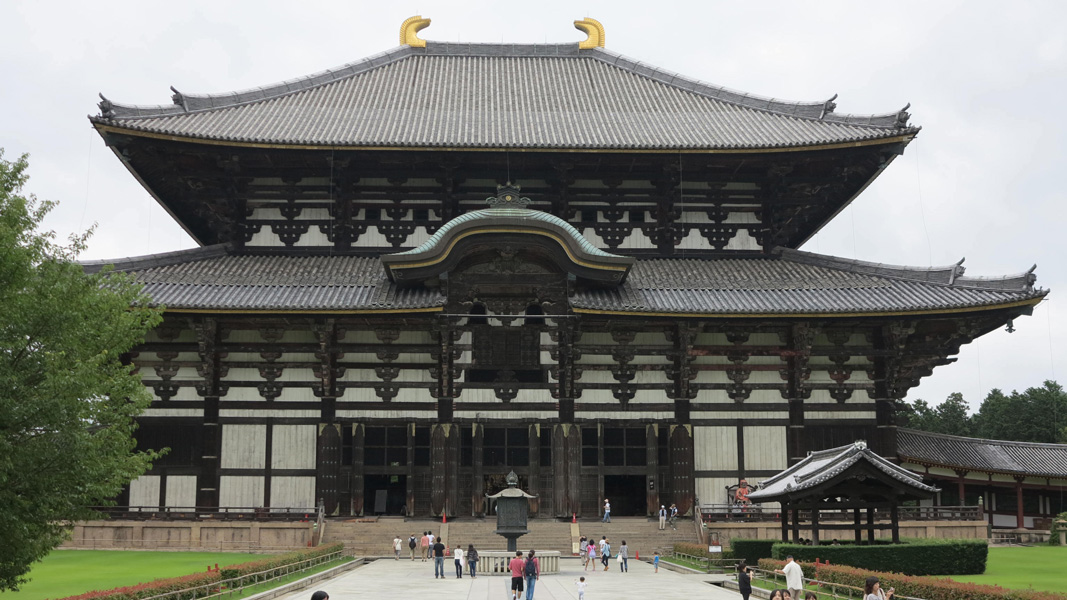
- Todai-ji. Nara, Japan. Made by many artists, among them the sculptors Unkei and Keikei and their Kei School workshop. Dated to 743 CE and reconstructed around 1700 CE. The sculpture uses bronze and wood, while the architecture uses wood with a roof of ceramic tile. This large Buddhist temple complex holds a monumental Buddha. Buddhism came into Japan from Korea and China, and it took hold partly because the court sponsored it.
- Borobudur Temple. Found in Central Java, Indonesia, and built under the Sailendra Dynasty between about 750 and 842 CE. Builders used masonry of volcanic stone. It ranks among the biggest Buddhist temples anywhere and is covered in extensive narrative relief carving. It shows how Indic religion and art spread into Southeast Asia.
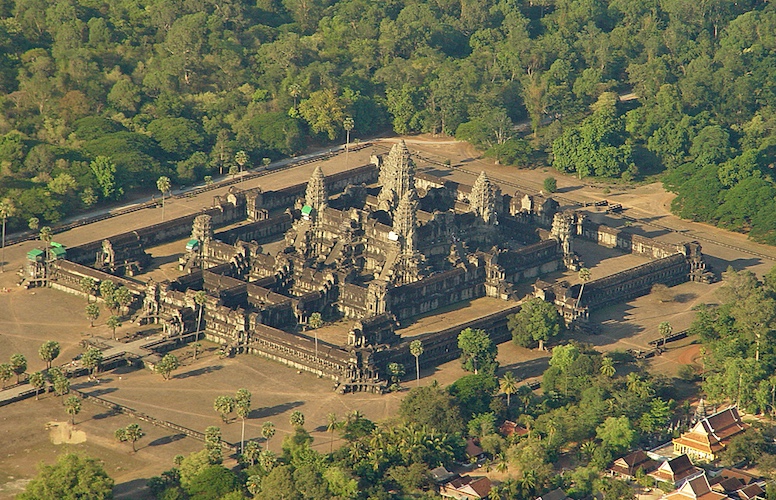
- Angkor, the temple of Angkor Wat, and the city of Angkor Thom. Cambodia. Hindu, Angkor Dynasty. c. 800-1400 CE. Stone masonry, sandstone. A vast temple and city complex of the Khmer Empire, known for extensive relief carving. It is a strong comparison work for relief carving in places of worship in other regions.
- Lakshmana Temple. Khajuraho, India. Hindu, Chandella Dynasty. c. 930-950 CE. Sandstone. A Hindu temple with intricate carved imagery, an important example of Indian temple architecture and the iconic figural tradition of Hindu art.
- Forbidden City. Beijing, China. Built in the Ming Dynasty in the 15th century CE and added to afterward. Materials include stone masonry, marble, brick, wood, and ceramic tile. This imperial palace complex arranged its spaces to show the rank and power of the Chinese court. Asian architecture is mostly secular here, yet it still communicates social order.
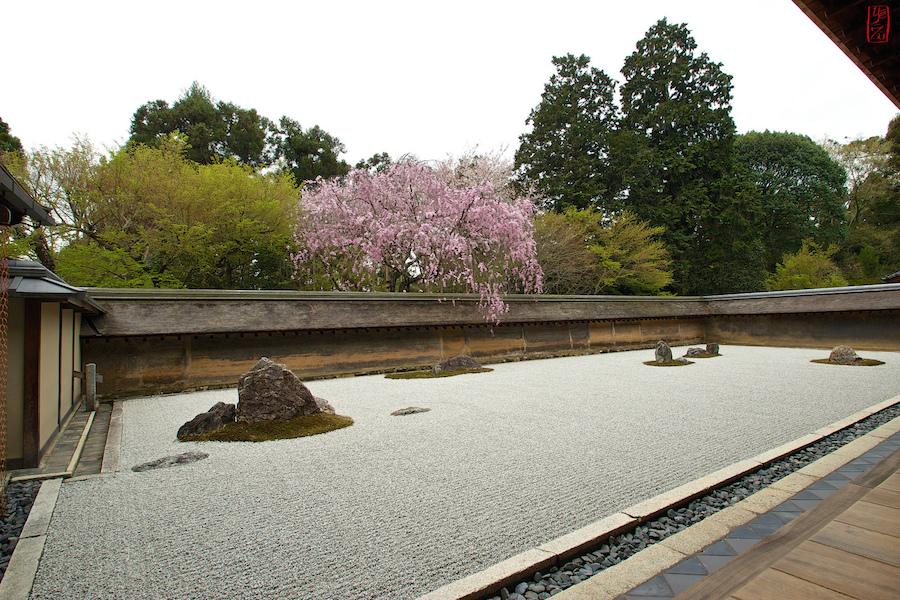
- Ryoan-ji. Kyoto, Japan. Muromachi period. Founded around 1480 CE, though the garden's present layout probably comes from the 18th century CE. Medium: rock garden. Carefully placed stones sit on raked gravel in this Zen garden. The Zen rock garden is a distinctly Asian art form tied to Zen Buddhist sensibilities.
- Taj Mahal. Agra, Uttar Pradesh, India. Constructed under the direction of Ustad Ahmad Lahori, the emperor's architect, from 1632 to 1653 CE. It uses stone masonry and marble set with inlaid precious and semiprecious stones, plus gardens. This marble mausoleum and garden complex illustrates Islamic architecture in South Asia, with nonfigural decoration and calligraphy created under Mughal patronage.
Painting, scrolls, and prints


- Funeral banner of Lady Dai (Xin Zhui). Han Dynasty, China. c. 180 BCE. Painted silk. A painted silk banner from Lady Dai's tomb, connected to Han beliefs about the afterlife and the journey of the soul.
- Travelers among Mountains and Streams. Fan Kuan. c. 1000 CE. Ink and colors on silk. A monumental Chinese landscape painting. East Asian religions emphasize human connection to the natural world, and ink landscape painting is a major Chinese tradition.
- Night Attack on the Sanjo Palace. Japan, Kamakura period, around 1250 to 1300 CE. A handscroll in ink and color on paper. This narrative handscroll depicts a battle. It is a leading example of Japanese narrative handscroll painting.
- Portrait of Sin Sukju (1417-1475). Made by the Imperial Bureau of Painting in about the 15th century CE. A hanging scroll in ink and color on silk. This Korean portrait shows a high official. China strongly shaped Korean traditions, including Confucian values that appear in official portraits like this one.
- Jahangir Preferring a Sufi Shaikh to Kings. Bichitr. c. 1620 CE. Watercolor, gold, and ink on paper. A Mughal court painting using rich symbolism. It reflects the courtly art of the Mughal Empire and the adoption of paper for paintings.
- White and Red Plum Blossoms. By Ogata Korin, around 1710 to 1716 CE. Made with ink, watercolor, and gold leaf on paper. These paired Japanese screens set plum branches beside a stylized stream against a gold ground. They reflect the graceful decorative designs typical of East Asian decorative arts.
- Under the Wave off Kanagawa (Great Wave). Katsushika Hokusai. From the series Thirty-six Views of Mount Fuji. 1830-1833 CE. Polychrome woodblock print; ink and color on paper. A famous Japanese woodblock print. Japanese woodblock printing is a distinctive art form, and works like this influenced Western artists after Japan opened for trade in the 19th century.
- Chairman Mao en Route to Anyuan. The artist is unknown, and the image follows an oil painting by Liu Chunhua. Made around 1969 CE as a color lithograph. This mass-produced picture promoted Mao Zedong and shows art made to carry a political message during the Cultural Revolution.
Sculpture, metalwork, and ceramics


- Terra cotta warriors from the mausoleum of the first Qin emperor of China. Qin Dynasty. c. 221-209 BCE. Painted terra cotta. A large army of life-size painted ceramic figures buried with the first Qin emperor, expressing imperial power and beliefs about the afterlife.
- Gold and jade crown. From the Silla Kingdom in Korea's Three Kingdoms period, fifth to sixth century CE. A metalwork piece. The gold and jade crown is linked to Silla royalty. Its costly materials and design signal the power and beliefs of Silla rulers.
- Shiva as Lord of Dance (Nataraja). A Hindu work from Tamil Nadu, India, made under the Chola Dynasty around the 11th century CE. Material: cast bronze. It portrays Shiva dancing inside a circle of flames. This iconic figural image expresses Hindu ideas about cosmic cycles and is a leading example of Chola bronze casting.
- The David Vases. Yuan Dynasty, China. 1351 CE. White porcelain with cobalt-blue underglaze. A pair of blue-and-white porcelain vases. Chinese blue-and-white porcelain was so admired internationally that ceramic centers in Iran, Turkey, and Europe made their own versions.
Identifying and Comparing the 21 Unit 8 Works
Attribution and Identification: Many questions ask you to identify a work or place it in the right culture and period. Lock in the title, culture or location, date, and medium for each of the 21 works. Use visual clues like medium and style to support an attribution. For example, cobalt-blue underglaze on white porcelain points toward Chinese blue-and-white ceramics, and a polychrome woodblock print points toward Japanese printmaking.
Visual and Contextual Analysis: Practice connecting what you see to why it was made. Link form to function: the hemispherical shape of a stupa supports Buddhist practice, a Zen rock garden supports quiet contemplation, and the layout of the Forbidden City organizes space to express court hierarchy. Always back claims with specific evidence from form, function, content, or context.
Free Response: Free-response questions in this unit often ask you to compare how different works convey meaning. A common mistake is explaining one work, then explaining a second work, but never comparing them. To support a stronger score, state a clear similarity or difference in how the two works convey meaning, support it with specific evidence, and explain why that comparison matters. You can compare works inside Unit 8 or reach across units, such as comparing relief carving at Angkor Wat with relief carving at a European cathedral.
Common Trap: Do not treat "secular" art in Asia as having no religious content. Religious ideas often carry into secular forms, such as Hindu deities in courtly painting or Zen sensibilities in ceramics and flower arranging.
Common Misconceptions
- Misconception: The David Vases are named after a European who simply collected art at random.Actually: The David Vases are not named after a European who simply collected art at random. They are Yuan Dynasty Chinese porcelain. Focus on the medium, the cobalt-blue underglaze, and their place in the long history of admired Chinese blue-and-white ceramics rather than memorizing collector legends.
- Misconception: Blue-and-white porcelain like The David Vases is Ming Dynasty work.Actually: Blue-and-white porcelain like The David Vases is Yuan Dynasty work, not Ming. Keep the dynasty straight: the vases are dated 1351 CE, in the Yuan period.
- Misconception: Chairman Mao en Route to Anyuan is the original oil painting.Actually: Chairman Mao en Route to Anyuan is a color lithograph, not the original oil painting. The required work is the mass-produced lithograph based on Liu Chunhua's oil painting, which matters because its purpose was wide political distribution.
- Misconception: Asian art was isolated.Actually: Asian art was not isolated. Trade routes like the Silk Route and maritime networks connected these regions to each other and to West Asia and Europe, spreading religions, materials, and styles in both directions.
- Misconception: Every temple or palace here is purely religious.Actually: Not every temple or palace here is purely religious. The Forbidden City is an imperial palace, and the Taj Mahal is a tomb with gardens, so match each work to its actual function instead of assuming all major architecture is a place of worship.
- Misconception: The Great Wave is a one-off painting.Actually: The Great Wave is one print in a series, not a one-off painting. It comes from Hokusai's Thirty-six Views of Mount Fuji and is a polychrome woodblock print, which is why many impressions exist.
Related AP Art History Guides
See Fiveable more often in Google
Mark Fiveable as a preferred source and Google is more likely to show you our guides in Top Stories, with a "preferred" badge in AI Mode and AI Overviews.