
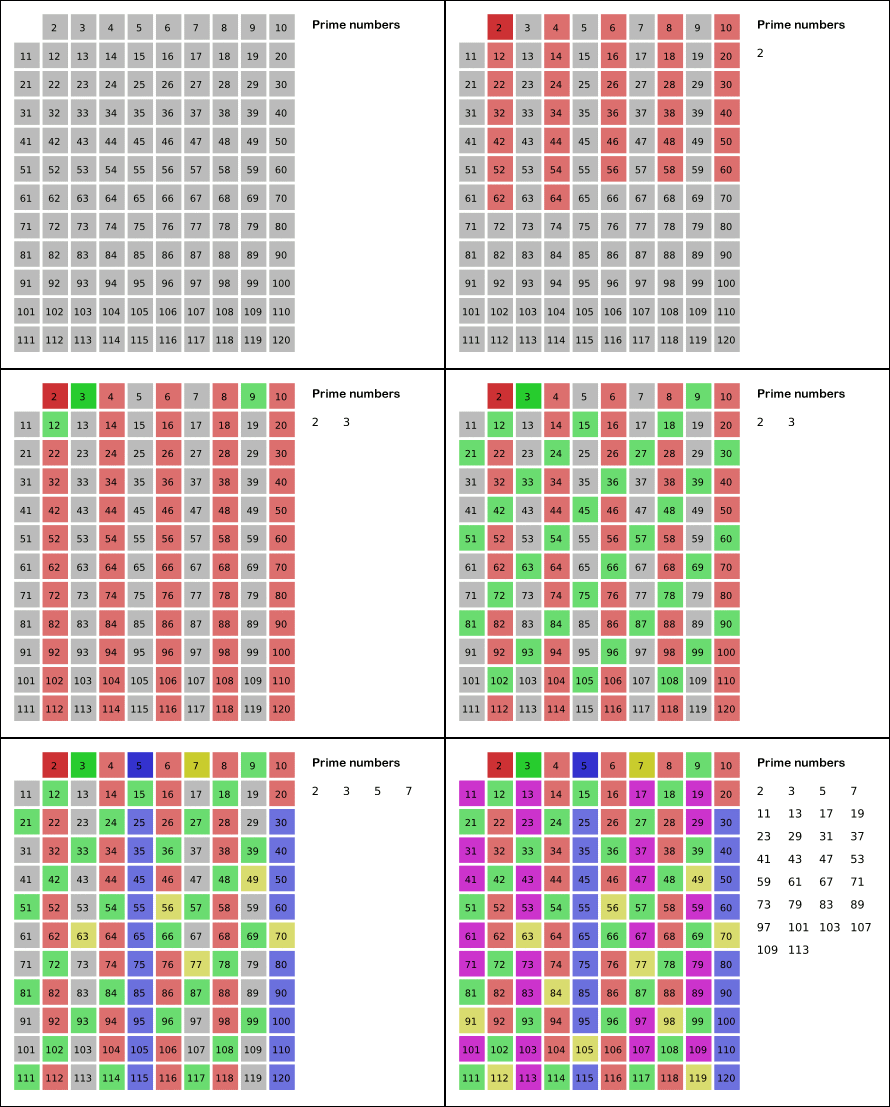
The Sieve of Eratosthenes is a powerful tool for finding prime numbers. It works by systematically eliminating composite numbers, leaving only primes. This method is efficient and forms the basis for more advanced sieving techniques.
Analyzing the sieve's complexity reveals its efficiency, with a time complexity of O(n log log n). Various optimizations, like segmentation and wheel factorization, improve its practical performance while maintaining its fundamental approach to prime generation.
Sieve of Eratosthenes and Variants
Classic Sieve and Segmented Approach
- Sieve of Eratosthenes systematically eliminates composite numbers to find primes up to a given limit
- Algorithm starts by marking all multiples of 2 as composite, then proceeds with odd numbers
- Optimization involves only checking up to the square root of the maximum number
- Segmented sieve divides the range into smaller intervals to improve cache efficiency
- Segmented approach reduces memory usage allows sieving of larger ranges
Advanced Sieving Techniques
- Wheel factorization extends the concept of skipping even numbers to larger prime wheels
- Wheels based on products of small primes (2, 3, 5, 7) eliminate more composites in initial stages
- Sieve of Sundaram uses a different approach generating odd primes through index manipulation
- Sundaram's method marks indices representing sums of the form
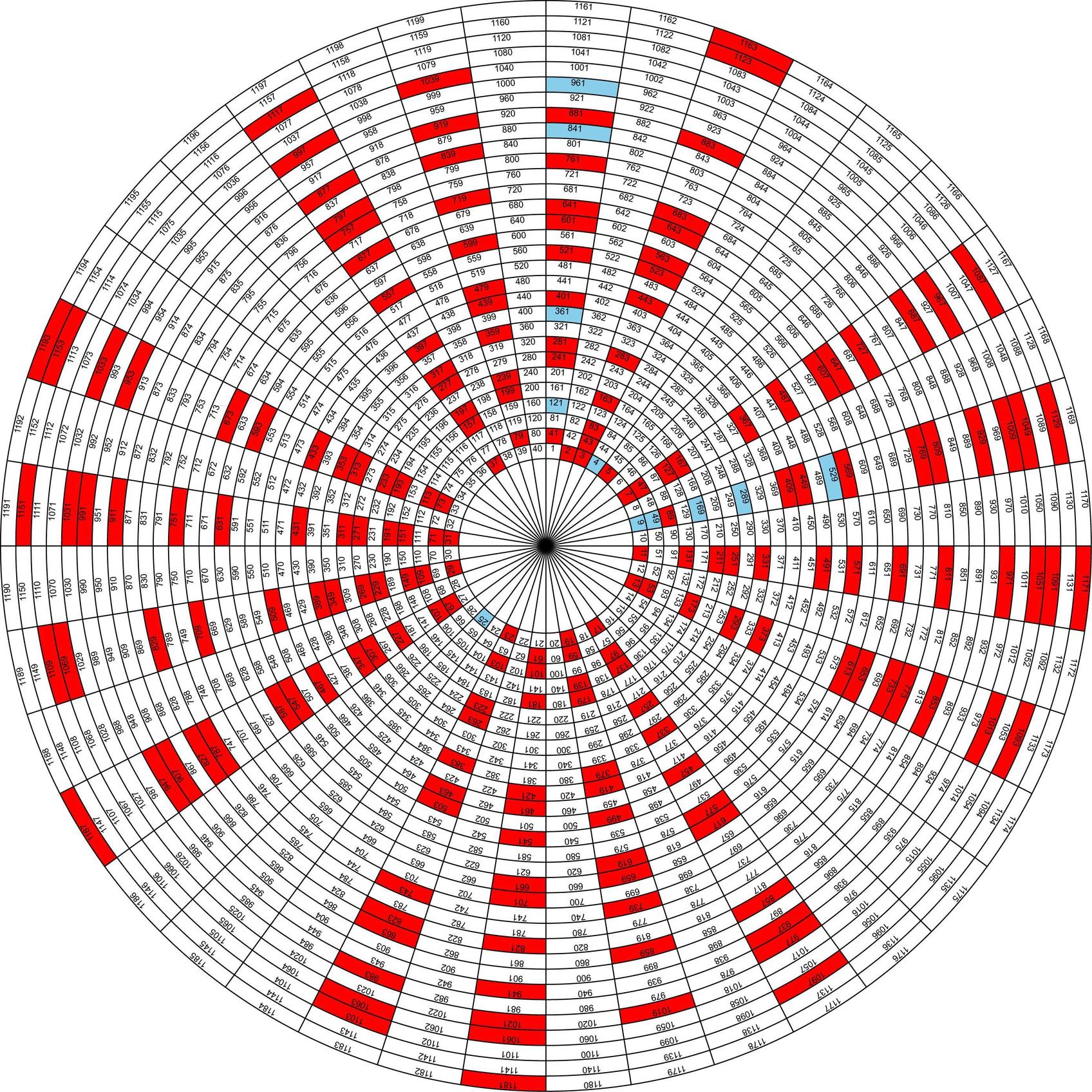
- Sieve of Atkin improves efficiency by using quadratic forms to generate prime candidates
- Atkin's sieve reduces the number of operations needed for large prime generation
Complexity Analysis
Time Complexity Evaluation
- Basic Sieve of Eratosthenes has a time complexity of
- Derivation of time complexity involves summing harmonic series of prime reciprocals
- Segmented sieve maintains the same asymptotic complexity but improves practical runtime
- Wheel factorization reduces the constant factor in time complexity
- Sieve of Atkin achieves theoretical time complexity of but with larger constant factors
Space Efficiency Considerations
- Standard Sieve of Eratosthenes requires space to store boolean array
- Bit manipulation techniques reduce space usage to bytes
- Segmented sieve limits space complexity to by processing intervals
- Sieve of Sundaram uses space but generates primes up to
- Space-time tradeoffs exist between different sieve variants depending on implementation details