7.5 Family background and educational outcomes

👥Sociology of Education Unit 7 Review
7.5 Family background and educational outcomes
👥 Sociology of Education
Family background is one of the strongest predictors of how well a student does in school. Socioeconomic status, parental education, family structure, and the home environment all shape a child's academic trajectory. Understanding these connections is central to the sociology of education because they reveal how inequality gets reproduced through everyday family life and institutional structures.
This section covers the major dimensions of family background that influence educational outcomes, from income and parenting practices to neighborhood effects and intergenerational inequality. It also examines key theories (especially Bourdieu's cultural capital) and the policy interventions designed to narrow these gaps.
Family socioeconomic status
Family socioeconomic status (SES) refers to the economic and social resources available to a family, including income, wealth, education level, and occupational prestige. SES is one of the most consistent predictors of educational outcomes. Children from higher-SES families typically achieve better grades, score higher on standardized tests, and attain more years of education than their lower-SES peers.
SES doesn't affect outcomes through a single pathway. Instead, it works through several interconnected mechanisms: access to material resources, the quality of the home learning environment, and the degree and type of parental involvement.

Top images from around the web for Parental income and wealth
Socialization in the Schooling Process – Sociology of Education in Canada View original
Is this image relevant?
Educational Research and Reviews - analyzing parental involvement dimensions in early childhood ... View original
Is this image relevant?
Theories in the Sociology of Education – Sociology of Education in Canada View original
Is this image relevant?
Socialization in the Schooling Process – Sociology of Education in Canada View original
Is this image relevant?
Educational Research and Reviews - analyzing parental involvement dimensions in early childhood ... View original
Is this image relevant?
Parental income and wealth
Parental income is the money earned through employment or other sources, while wealth includes accumulated assets like property, savings, and investments. These are related but distinct: a family can have moderate income but significant wealth (or vice versa), and both matter for education.
- Higher income and wealth allow families to invest directly in education through private tutoring, extracurricular activities, better-resourced school districts, and technology at home.
- Low-income families often face concrete financial barriers. A student who can't afford a graphing calculator, reliable internet access, or a school field trip fee is at a tangible disadvantage.
- Wealth provides a safety net during economic shocks (job loss, medical emergencies), which helps maintain stability in a child's learning environment.
Parental education levels
Parental education, particularly maternal education, is one of the strongest predictors of a child's academic performance and eventual attainment. This relationship holds across countries and contexts.
- More educated parents tend to hold higher expectations for their children's schooling and engage in learning-oriented practices at home, such as reading to children and helping with homework.
- They also possess what researchers call "navigational knowledge" of the education system. They know how to advocate for their child, request specific teachers or programs, and interpret report cards or test scores.
- The effect of parental education operates partly through income (more education usually means higher earnings) but also independently through the home intellectual environment.
Occupational prestige of parents
Occupational prestige refers to the social status and respect associated with different jobs, typically based on the education required, income earned, and authority held.
- Parents in high-prestige occupations (physicians, attorneys, professors) serve as role models, making ambitious educational and career goals feel attainable to their children.
- These occupations also come with professional networks that can provide children with internships, mentorship, and insider knowledge about career pathways.
- Occupational prestige shapes how families interact with schools. Teachers and administrators may (consciously or not) treat families differently based on perceived social standing.
Family structure and stability
Family structure describes the composition of the household (two-parent, single-parent, blended, multigenerational), while stability refers to the consistency of family relationships and living arrangements over time. Both matter for educational outcomes, though the mechanisms are different.
Children from stable, two-parent households tend to have better educational outcomes on average, but this is largely because two-parent households tend to have more income, more time, and more consistency. Individual circumstances vary enormously, and the quality of parenting matters more than household composition alone.
Two-parent vs. single-parent households
- Two-parent households generally have greater financial resources and can divide the labor of supervising homework, attending school events, and maintaining routines.
- Single parents often face significant time and resource constraints. Working multiple jobs or irregular hours makes it harder to help with schoolwork or attend parent-teacher conferences.
- That said, research consistently shows that the quality of the parent-child relationship and the parenting practices used are stronger predictors of outcomes than whether there are one or two parents in the home.
Divorce and family disruption
Divorce, separation, and remarriage can negatively affect children's academic achievement, though effects vary by age, the level of conflict involved, and the support systems available.
- Family disruption causes emotional distress that can interfere with concentration and motivation at school.
- It often disrupts established routines, changes schools or neighborhoods, and reduces the time and energy parents have for educational involvement.
- Children who experience multiple family transitions (repeated moves, new partners, changing households) are at greater risk for academic difficulties than those who experience a single, stable transition.
Number of siblings and birth order
The number of siblings and a child's position among them influence how parental resources get distributed.
- In larger families, each child typically receives less individual attention and financial investment in education. This is sometimes called the resource dilution model.
- Firstborn children often benefit from a period of undivided parental attention and tend to have higher parental expectations placed on them.
- Later-born children may benefit from having older siblings who can help with schoolwork, though they may also receive less direct parental investment.
Parental involvement in education
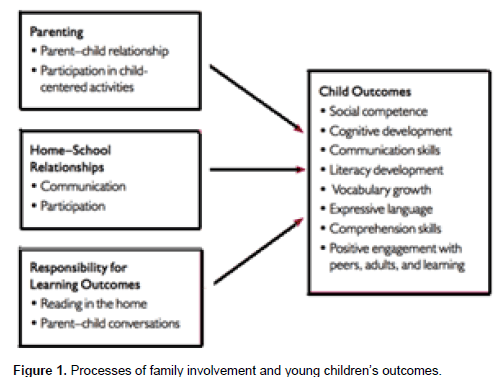
Parental involvement encompasses the many ways parents engage with their children's learning, both at home and at school. Decades of research confirm that parental involvement is positively associated with academic achievement, motivation, and attainment.
The effects of involvement are strongest when it is developmentally appropriate (helping a 6-year-old read vs. micromanaging a 16-year-old's homework), aligned with what the school is teaching, and responsive to the child's individual needs.
Parental expectations and aspirations
- Parental expectations are the beliefs parents hold about what their children can and will achieve academically.
- High expectations, when communicated clearly and paired with emotional support, motivate children to set ambitious goals and persist through challenges.
- Expectations that are unrealistically high or disconnected from support can backfire, creating anxiety rather than motivation. The combination of high expectations and practical support is what drives outcomes.
Parental monitoring of schoolwork
Parental monitoring means supervising academic progress, helping with homework, and making sure school responsibilities are met.
- Effective monitoring requires parents to know what's being assigned, maintain communication with teachers, and provide guidance without taking over.
- Consistent monitoring helps children develop study habits, organizational skills, and the ability to seek help when they're struggling.
- Monitoring tends to be most effective in elementary and middle school. By high school, a shift toward autonomy support (checking in rather than hovering) tends to produce better results.

Parental participation in school activities
Participation in school activities like parent-teacher conferences, volunteering, and attending school events signals to children that education matters and builds relationships with teachers and staff.
- Active participation keeps parents informed about their child's progress and allows them to advocate for their child's needs.
- Children whose parents participate in school activities tend to have better attendance, higher achievement, and more positive attitudes toward school.
- Participation rates are shaped by structural factors like work schedules, transportation, language barriers, and whether parents feel welcomed by the school. Lower participation doesn't necessarily mean lower valuing of education.
Home learning environment
The home learning environment includes the physical and psychological features of the home that support cognitive development. This covers everything from the books on the shelf to the conversations at the dinner table.
A stimulating and nurturing home environment builds language skills, problem-solving abilities, and curiosity. The quality of this environment is shaped by parental education, income, cultural values, and the time parents have available.
Cognitive stimulation in the home
Cognitive stimulation refers to activities and experiences that promote intellectual development: reading together, doing puzzles, playing educational games, visiting museums, and having substantive conversations.
- Children who are exposed to cognitively stimulating activities from an early age build stronger foundations in language, reasoning, and creativity.
- The "word gap" research (Hart & Risley, 1995) found that by age 3, children from professional families had heard roughly 30 million more words than children from low-income families. While the exact numbers have been debated, the underlying pattern of differential exposure is well-documented.
Access to educational resources
Access to books, computers, learning materials, and quiet study space in the home directly supports academic success.
- Children with a wide variety of resources at home can explore interests, practice skills, and supplement what they learn in school.
- The digital divide is a significant dimension of this: students without reliable internet or a personal computer face real disadvantages, especially as schools increasingly rely on digital platforms.
- Disparities in home resources are a concrete mechanism through which the achievement gap between socioeconomic groups is maintained.
Exposure to language and literacy
Early exposure to language and literacy through reading aloud, storytelling, and rich conversation is one of the strongest predictors of reading readiness and later academic success.
- Children in language-rich homes develop larger vocabularies, stronger comprehension skills, and greater comfort with the kind of formal language used in school.
- The type of talk matters, not just the quantity. Extended conversations where children are asked open-ended questions and encouraged to elaborate build deeper language skills than simple directives.
- Parents can support literacy development by reading with children regularly and providing a variety of reading materials at appropriate levels.
Cultural capital and social class
Cultural capital refers to the knowledge, skills, tastes, and dispositions that are valued by dominant institutions (including schools) and that can be converted into social and economic advantages. Social class encompasses the economic, social, and cultural resources that shape a family's lifestyle, values, and opportunities.
The uneven distribution of cultural capital across social classes is a central mechanism through which educational inequality is reproduced.
Bourdieu's theory of cultural capital
Pierre Bourdieu, a French sociologist, developed the concept of cultural capital to explain how social class advantages translate into educational success. This is one of the most influential frameworks in the sociology of education.
Bourdieu identified three forms of cultural capital:
- Embodied: internalized knowledge, skills, and dispositions (e.g., knowing how to speak in formal registers, comfort with authority figures, familiarity with "high culture")
- Objectified: physical cultural goods like books, art, and instruments
- Institutionalized: formal credentials and qualifications (degrees, diplomas)
Schools, Bourdieu argued, are not neutral institutions. They reward the cultural capital of dominant groups while treating it as universal merit. A child who arrives at school already familiar with the language, behavior, and knowledge the school values has a built-in advantage.
Transmission of cultural capital
Cultural capital is passed from parents to children through everyday socialization, not just formal instruction.
- Families with high cultural capital expose children to museums, travel, music lessons, and dinner-table conversations about current events. These experiences build the knowledge and dispositions that schools reward.
- Parents with high cultural capital also know the "rules of the game" in education. They understand how to communicate with teachers, request gifted testing, or navigate college admissions.
- This transmission reinforces class differences because children from privileged backgrounds inherit the very resources that the education system treats as markers of individual talent.
Social class differences in parenting practices
Annette Lareau's research identified two distinct parenting logics tied to social class:
- Concerted cultivation (middle and upper class): Parents actively organize children's leisure time around structured activities (sports teams, music lessons, academic enrichment). They encourage children to question authority, negotiate with adults, and develop a sense of entitlement to institutional attention.
- Accomplishment of natural growth (working class and poor): Parents provide love, food, and safety but give children more unstructured free time. Children develop greater independence and creativity in play, but they are less practiced at the institutional interactions that schools reward.
Neither approach is inherently better for child development, but schools are structured to reward concerted cultivation. Children raised with this approach arrive at school already knowing how to advocate for themselves and meet institutional expectations.
Neighborhood and community effects
Where a family lives shapes educational outcomes beyond what family-level factors alone can explain. Neighborhood effects operate through the quality of local schools, the presence of role models, peer group influences, and access to community institutions.

Neighborhood socioeconomic composition
The socioeconomic makeup of a neighborhood has measurable effects on children's educational trajectories.
- Children in high-poverty neighborhoods are more likely to attend under-resourced schools with less experienced teachers, fewer advanced courses, and lower overall expectations.
- Affluent neighborhoods typically offer access to better-funded schools, more enrichment opportunities, and a peer culture oriented toward college attendance.
- The Moving to Opportunity (MTO) study found that children who moved from high-poverty to lower-poverty neighborhoods at young ages showed meaningful gains in college attendance and adult earnings, suggesting that neighborhood context has causal effects on outcomes.
Peer influences and role models
The people children interact with in their neighborhoods shape their aspirations and behaviors.
- Exposure to adults who have succeeded through education makes academic achievement feel like a realistic path.
- Positive peer groups reinforce pro-school attitudes and behaviors.
- In disadvantaged neighborhoods, a scarcity of college-educated role models and the presence of negative peer influences (gang involvement, substance use) can undermine educational engagement. This isn't about individual character; it's about the opportunity structure of the environment.
Access to community resources and institutions
Libraries, community centers, youth programs, and after-school activities provide learning opportunities beyond the classroom.
- Well-resourced communities offer enrichment programs (tutoring, summer camps, arts programs) that supplement school-based learning and keep children engaged during out-of-school time.
- In under-resourced communities, the absence of these institutions means children have fewer supports and fewer constructive alternatives during non-school hours.
- This uneven distribution of community resources is another mechanism through which neighborhood-level inequality translates into individual educational disadvantage.
Intergenerational transmission of inequality
Intergenerational transmission of inequality describes how social and economic advantages (or disadvantages) pass from parents to children, creating persistent patterns across generations. Education is one of the primary channels through which this transmission occurs: a parent's educational attainment shapes their income, which shapes their child's school quality, which shapes the child's attainment, and so on.
Social reproduction theory
Social reproduction theory, associated with Bourdieu and Jean-Claude Passeron (in their work Reproduction in Education, Society and Culture, 1977), argues that the education system doesn't just reflect existing inequalities; it actively reproduces and legitimizes them.
- Schools reward the cultural capital of dominant groups and frame this as meritocratic selection. Students who lack the "right" cultural knowledge are seen as less capable rather than differently prepared.
- The hidden curriculum (the implicit norms, values, and behavioral expectations embedded in schooling) tends to align with middle- and upper-class culture, putting working-class students at a systematic disadvantage.
- From this perspective, schools function as sorting mechanisms that give the appearance of fair competition while systematically favoring those who start with more resources.
Cumulative advantage and disadvantage
Small early differences in resources and opportunities compound over time, leading to widening gaps. This is sometimes called the Matthew effect ("the rich get richer").
- A child from a privileged background receives high-quality preschool, enrichment activities, and strong parental support. Each advantage builds on the last, creating a compounding trajectory of success.
- A child from a disadvantaged background faces poverty, limited resources, and family instability. Each challenge makes the next one harder to overcome, and gaps widen with each passing year.
- By the time students reach high school, the cumulative effects of these diverging trajectories can be enormous, even if the students started with similar innate abilities.
Breaking the cycle of poverty through education
Education is widely viewed as the most viable pathway to upward social mobility, and for many individuals, it works. Access to quality education can provide the knowledge, skills, and credentials needed for economic advancement.
However, education alone cannot break the cycle of poverty if the structural conditions that produce unequal access remain in place. Addressing the cycle requires tackling:
- Inequitable school funding systems that tie resources to local property wealth
- Residential segregation that concentrates disadvantage
- Labor market discrimination that limits returns on education for marginalized groups
The sociological insight here is that individual effort through education is necessary but not sufficient. Structural change is also required.
Interventions and policy implications
Reducing educational inequalities tied to family background requires interventions at multiple levels: individual, family, school, and community. The most effective approaches address both proximate factors (parenting practices, student motivation) and structural factors (school funding, neighborhood conditions).
Early childhood education programs
Programs like Head Start and state-funded pre-K target children from disadvantaged backgrounds during the critical early years of development.
- High-quality early childhood education enhances cognitive and social-emotional skills, improves school readiness, and narrows achievement gaps at kindergarten entry.
- Long-term studies of programs like the Perry Preschool Project and the Abecedarian Project show lasting effects on high school graduation, college attendance, employment, and even reduced involvement with the criminal justice system.
- Expanding access to affordable, high-quality early education remains one of the most evidence-supported policy levers for promoting educational equity.
Parental engagement initiatives
These initiatives aim to support parents as active participants in their children's education, recognizing that many barriers to involvement are structural rather than motivational.
- Examples include parent education programs, home visiting services (like the Nurse-Family Partnership), and school-based activities designed to build home-school partnerships.
- Effective initiatives are culturally responsive, meaning they build on families' existing strengths and cultural practices rather than imposing a single model of "good" parenting.
- They also address practical barriers: providing translation services, scheduling events at times that accommodate working parents, and offering childcare during school meetings.
Addressing structural inequalities in schools and communities
Structural interventions target the systems and institutions that produce unequal opportunities in the first place.
- School funding reform: Moving away from property-tax-based funding toward more equitable formulas that direct resources to high-need schools.
- Desegregation efforts: Policies like controlled choice plans, magnet schools, and regional integration programs that reduce the concentration of poverty in particular schools.
- Place-based initiatives: Community-level investments (such as the Harlem Children's Zone model) that combine high-quality schools with health services, after-school programs, and family support in disadvantaged neighborhoods.
These structural approaches recognize that family background effects on education are not inevitable. They are produced by specific social arrangements, and they can be changed by different ones.
See Fiveable more often in Google
Mark Fiveable as a preferred source and Google is more likely to show you our guides in Top Stories, with a "preferred" badge in AI Mode and AI Overviews.