
Crystallization and precipitation are key separation processes in chemical engineering. These techniques form solid particles from liquid solutions, but differ in speed, product purity, and particle characteristics. Understanding their fundamentals is crucial for optimizing industrial separations and product quality.
Factors like temperature, pressure, and pH influence solubility, driving crystallization and precipitation. The metastable zone is vital for controlled crystal growth. Key steps include generating supersaturation, nucleation, crystal growth, agglomeration, and product recovery. Mastering these concepts enables efficient separations across industries.
Fundamentals of Crystallization and Precipitation
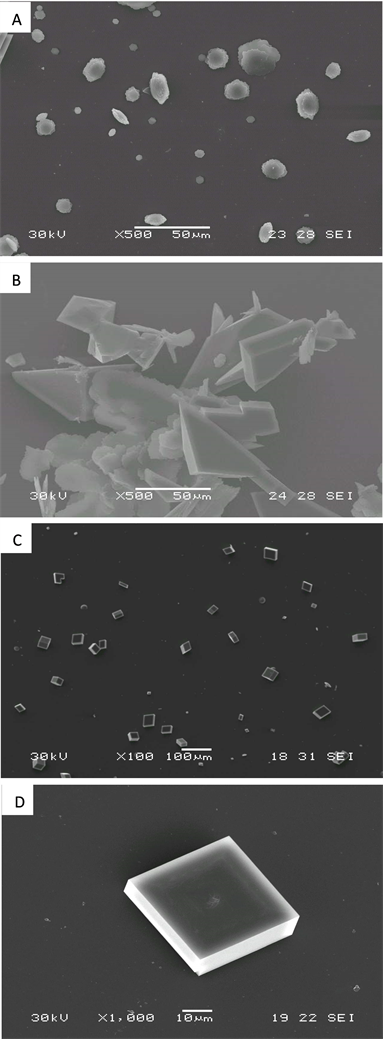
Crystallization vs precipitation
- Crystallization forms solid crystals from homogeneous solution in supersaturated conditions purifies and separates solids (sugar refining)
- Precipitation rapidly forms solid phase from liquid solution through chemical reaction yields smaller, less organized particles (water treatment)
- Key differences:
- Crystallization slower than precipitation creates larger, more uniform crystals
- Crystallization typically produces purer products than precipitation
Factors affecting solubility
- Temperature increases solubility for most solids some exhibit inverse solubility (calcium carbonate)
- Pressure primarily affects gas solubility in liquids increases with higher pressure (carbonated beverages)
- pH influences weak acid/base solubility affects amphoteric compounds (aluminum hydroxide)
- Common ion effect decreases solubility when shared ion present (calcium carbonate in hard water)
- Solvent composition polarity affects solute solubility (oil in water vs hexane)
- Particle size smaller particles have higher solubility due to increased surface area (nanoparticles)
- Supersaturation solution contains more dissolved solute than equilibrium allows drives crystallization/precipitation

Metastable zone in crystallization
- Region between solubility curve and spontaneous nucleation curve
- Supersaturated state where crystals grow without spontaneous nuclei formation
- Width affected by cooling rate, agitation, impurities
- Significance:
- Determines optimal crystal growth conditions
- Controls nucleation rate and crystal size distribution
- Enables seeded crystallization techniques (sugar crystallization)
Key steps of crystallization
-
Generate supersaturation:
- Cooling crystallization lowers solution temperature (ice cream making)
- Evaporative crystallization removes solvent (salt production)
- Anti-solvent addition reduces solubility (pharmaceutical crystallization)
- Chemical reaction produces less soluble compound (precipitation of silver chloride)
-
Nucleation:
- Primary nucleation forms new crystals without existing crystals
- Homogeneous spontaneous formation in pure solution
- Heterogeneous induced by foreign particles/surfaces
- Secondary nucleation forms new crystals with existing crystals present
- Primary nucleation forms new crystals without existing crystals
-
Crystal growth:
- Solute molecules diffuse to crystal surface
- Surface integration of molecules into crystal lattice
- Growth rate affected by supersaturation, temperature, impurities
-
Agglomeration and breakage:
- Agglomeration clusters smaller crystals into larger particles
- Breakage fractures crystals due to collisions or mechanical stress
-
Separation and recovery:
- Filtration/centrifugation separates crystals from mother liquor
- Washing removes impurities from crystal surface
- Drying removes residual moisture