
🇪🇺AP European History Unit 8 Review
8.6 Fascism and Totalitarianism
8.6 Fascism and Totalitarianism
Unit & Topic Study Guides
Unit 1 – Renaissance and Exploration
Unit 2 – Age of Reformation
Unit 3 – Absolutism and Constitutionalism
Unit 4 – Scientific, Philosophical, and Political Developments
Unit 5 – Conflict, Crisis, and Reaction in the Late 18th Century
Unit 6 – Industrialization and Its Effects
Unit 7 – 19th Century Perspectives and Political Developments
Unit 8 – 20th Century Global Conflicts
Unit 9 – Cold War and Contemporary Europe
AP European History Exam
Historical Thinking Skills
Subject Guides
Exam Skills
Thematic Guides
The DBQ
Frequently Asked Questions

What caused fascism and totalitarianism in AP European History?
Fascism and totalitarianism rose after World War I because postwar bitterness, economic instability, fear of communism, and shaky new democracies left people open to radical solutions. Fascist leaders like Mussolini and Hitler used propaganda, charismatic leadership, terror, and nationalism to seize control, while Stalin built a totalitarian state in the Soviet Union through rapid economic modernization, purges, and forced labor camps. Knowing the causes of these regimes and the costs of Stalin's policies is the core of this topic.

Why This Matters for the AP European History Exam
This topic connects directly to one of the biggest ideas in Unit 8: how economic collapse and total war reshaped the relationship between the individual and the state. You will see fascism, communism, and democracy treated as competing answers to the crises of the interwar years, which makes this a strong source of causation and comparison questions.
On the exam, you can use this material to:
- Explain the causes of fascist and totalitarian regimes in multiple-choice questions and short-answer prompts.
- Build causation arguments that link World War I, the Treaty of Versailles, and the Great Depression to the rise of dictatorships.
- Compare how Mussolini, Hitler, Franco, and Stalin gained and held power.
- Support essay arguments about ideology, propaganda, and state power with specific evidence.
Key Takeaways
- Fascism had roots before World War I but spread because of postwar bitterness, the rise of communism, uncertain new democracies, and economic instability.
- Fascist dictatorships rejected democratic institutions, used modern technology and propaganda, promoted charismatic leaders, and glorified war and nationalism.
- Mussolini and Hitler rose to power by exploiting postwar bitterness and economic instability, using terror, and manipulating weak, unpopular democracies.
- Franco's alliance with Italian and German fascists in the Spanish Civil War served as a testing ground for World War II and led to authoritarian rule in Spain into the mid-1970s.
- After democracies failed, authoritarian dictatorships also took power in central and eastern Europe during the interwar period.
- Stalin pushed rapid, centralized economic modernization in the Soviet Union, with severe consequences including the liquidation of the kulaks, famine in Ukraine, purges, and an oppressive political system.
Factors That Led to Fascist and Totalitarian Regimes
The aftermath of World War I created conditions that radical movements could exploit. Several forces pushed Europeans toward authoritarian solutions.
- Postwar bitterness and the Treaty of Versailles: Harsh peace terms, reparations, and territorial losses fueled resentment, especially in Germany. This anger gave nationalist and radical movements an audience.
- Economic instability: Hyperinflation, unemployment, and later the Great Depression of the 1930s shook European democracies. People struggling to survive were more willing to listen to leaders who promised stability and recovery.
- Fear of communism: The Russian Revolution of 1917 frightened the middle class, property owners, and military elites. Fascist leaders presented themselves as a shield against communist revolution.
- Weak democratic transitions: Many new governments, especially in central and eastern Europe, never built stable democratic institutions. Fragile, unpopular democracies were easier for authoritarians to undermine.
How Fascist Dictatorships Took Power
Propaganda and Modern Technology
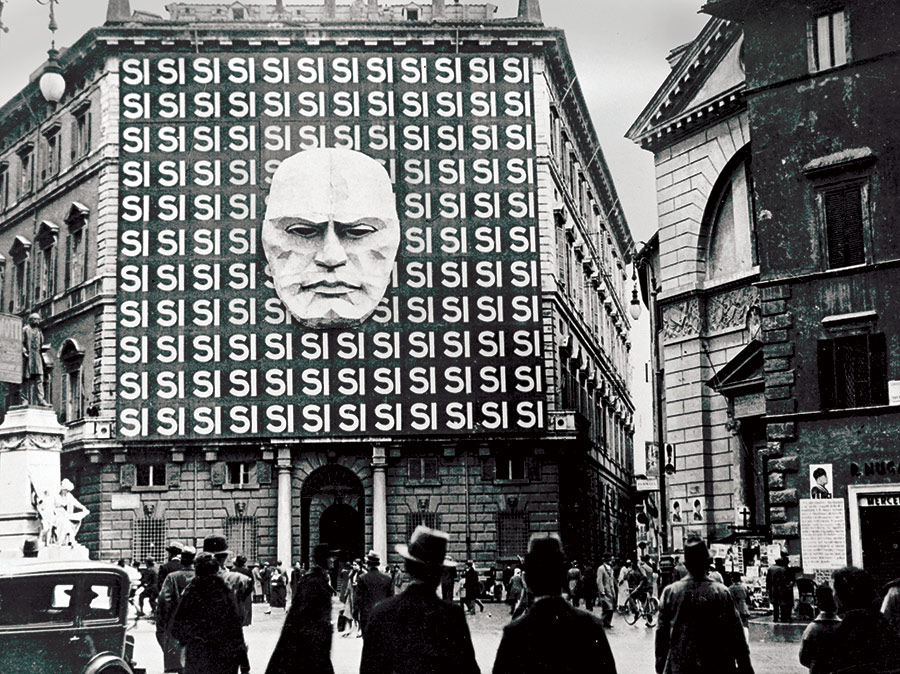
Fascist regimes leaned heavily on propaganda and new technology to control public opinion and reject democratic institutions. The illustrative tools associated with this include radio, architecture, and a cult of personality, along with figures like Joseph Goebbels and filmmaker Leni Riefenstahl.
- Rallying the nation: Propaganda promised unity, economic recovery, and restored national pride to people who felt humiliated by defeat and the peace settlement.
- Defining the enemy: Fascist messaging often cast Jews, communists, and other minorities as threats to the nation. In Nazi Germany, antisemitic propaganda was central to the regime's ideology.
- Controlling media: The state controlled newspapers, radio, and film so only the approved message reached the public.
These propaganda examples help illustrate how fascism worked, but for the exam the key point is the pattern: rejecting democracy, glorifying war and nationalism, and attracting the disillusioned.
Charismatic Leaders and the Cult of Personality
Fascist regimes built up a charismatic leader presented as the embodiment of national strength, standing above democratic institutions.
- Benito Mussolini (Italy): Took power after the March on Rome in 1922 and promised to restore Italy's greatness and bring stability.
- Adolf Hitler (Germany): Exploited dissatisfaction with the Weimar Republic, promised to restore German pride and military strength, then dismantled democratic institutions to build a totalitarian state.
- Francisco Franco (Spain): Led an authoritarian movement during the Spanish Civil War (1936-1939). Because the Western democracies did not intervene, the conflict became a testing ground for World War II. With support from Hitler and Mussolini, Franco established authoritarian rule that lasted from 1936 into the mid-1970s.
Authoritarianism in Central and Eastern Europe
Fascism and authoritarian rule were not limited to Italy, Germany, and Spain. After democracies failed to take hold, authoritarian dictatorships rose across central and eastern Europe during the interwar period. Examples include Poland, Hungary, and Romania, where economic hardship, resentment over the postwar settlement, and weak institutions opened the door to authoritarian rule.
Stalin's Totalitarian Rule in the Soviet Union
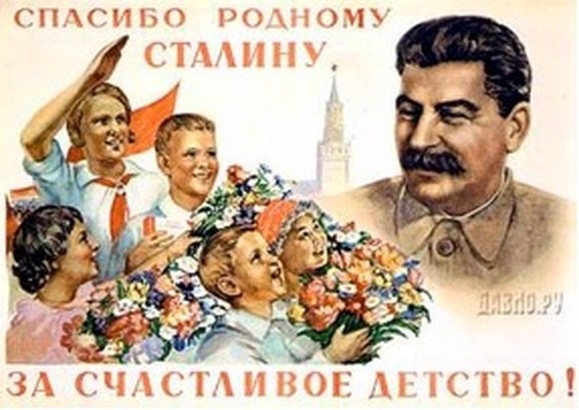
After Lenin's death, Joseph Stalin took control and launched a centralized program of rapid economic modernization. The results transformed the Soviet economy but came at a brutal human cost.
- Rapid economic modernization: Stalin used collectivization and the Five Year Plans to push the Soviet Union from an agrarian society toward an industrial power, emphasizing heavy industry.
- Liquidation of the kulaks: The land-owning peasantry and other groups labeled enemies of the state were targeted and destroyed.
- Famine in Ukraine: Collectivization and state policy contributed to a devastating famine.
- Purges and an oppressive system: The Great Purges removed political rivals through execution and imprisonment, while gulags (forced labor camps) and secret police created a system of fear and control.
Stalin's regime shows how a communist totalitarian state and fascist regimes shared methods of repression even though their ideologies differed. That contrast is exactly the kind of comparison the exam rewards.
How to Use This on the AP European History Exam
MCQ
Expect documents, posters, speeches, or charts tied to the interwar years. Be ready to identify the causes listed above and to recognize how propaganda and charismatic leadership functioned. Watch for questions that ask you to connect the Treaty of Versailles or the Great Depression to the rise of dictators.
Free Response
For causation prompts, line up the chain clearly: World War I and the peace settlement, then economic instability, fear of communism, and weak democracies, leading to fascist and authoritarian regimes. For comparison prompts, contrast how Mussolini, Hitler, Franco, and Stalin gained and used power, and note that fascism and Soviet communism were rival ideologies that still shared tools of repression.
Common Trap
Use specific evidence, not just "people were angry." Naming the March on Rome, the Five Year Plans, the Spanish Civil War, or the purges shows the precise knowledge that earns evidence points.
Common Misconceptions
- Fascism and communism were the same thing. They were rival ideologies, and the rise of communism actually helped fascists recruit by giving them an enemy. They shared authoritarian methods but had opposing goals.
- Fascism appeared only because of one leader's charisma. Charismatic leadership mattered, but the deeper causes were postwar bitterness, economic instability, fear of communism, and failing democracies.
- The Spanish Civil War was a side event. It was a testing ground for World War II, the Western democracies chose not to intervene, and it produced authoritarian rule in Spain that lasted into the mid-1970s.
- Stalin's modernization was a clean success story. Industrial output rose, but it came with the liquidation of the kulaks, famine in Ukraine, purges, gulags, and secret police.
- Authoritarian regimes only emerged in Germany, Italy, and Spain. Authoritarian dictatorships also took power across central and eastern Europe, including places like Poland, Hungary, and Romania, after democracies failed.
Related AP European History Guides
Vocabulary
The following words are mentioned explicitly in the AP® course framework for this topic.Term | Definition |
|---|---|
authoritarian dictatorship | A system of government in which power is held by a single leader or small group with little regard for constitutional limits or democratic processes. |
charismatic leaders | Political figures who attract followers through personal magnetism and appeal rather than through institutional authority, often used by fascist regimes to consolidate power. |
collectivization | Stalin's policy of consolidating individual peasant farms into large state-controlled collective farms (kolkhozes) to increase agricultural production. |
Communism | A political and economic ideology emphasizing collective ownership and state control that competed with democracy and fascism in 20th-century Europe. |
cult of personality | A system of promoting and glorifying a leader through propaganda and ideology, making the leader appear infallible and worthy of absolute devotion. |
democratic institutions | The systems, structures, and processes that support democratic governance, including representative legislatures, constitutional protections, and rule of law, which fascist regimes rejected and dismantled. |
economic instability | A period of economic uncertainty, inflation, unemployment, and financial crisis that created conditions favorable to the rise of authoritarian movements in post-World War I Europe. |
economic modernization | The process of transforming an economy through industrialization, technological advancement, and reorganization of production systems. |
Fascism | An authoritarian political ideology that emerged in the early 20th century, characterized by extreme nationalism, rejection of democracy, centralized autocratic government, and often the glorification of war and a charismatic leader. |
Five Year Plan | Stalin's centralized economic program that set ambitious production targets for Soviet industry and agriculture over five-year periods. |
Franco | Francisco Franco, Spanish military leader who led fascist forces during the Spanish Civil War and established an authoritarian dictatorship in Spain. |
Great purges | Stalin's campaign of terror in the 1930s involving mass arrests, executions, and deportations of perceived political rivals and enemies of the state. |
Gulags | Soviet labor camps where political prisoners and other perceived enemies of the state were imprisoned under brutal conditions. |
Hitler | Adolf Hitler, German Nazi dictator who rose to power in 1933 by exploiting economic crisis and national humiliation, establishing a totalitarian fascist regime. |
interwar period | The period between World War I (1918) and World War II (1939), characterized by political instability, economic crisis, and the rise of authoritarian regimes across Europe. |
kulaks | Land-owning peasants in the Soviet Union who were targeted for liquidation during Stalin's collectivization policies. |
Mussolini | Benito Mussolini, Italian fascist dictator who rose to power in 1922 by exploiting postwar discontent and established the first fascist totalitarian state in Europe. |
nationalism | A political ideology emphasizing loyalty to one's nation and national interests, which emerged as a reaction to Napoleonic expansion. |
postwar bitterness | The widespread resentment and disillusionment among populations following World War I, stemming from economic hardship, national humiliation, and the failure of peace settlements to meet expectations. |
propaganda | Systematic dissemination of information, often misleading or biased, designed to promote a particular political ideology or leader and manipulate public opinion. |
secret police | A covert law enforcement agency used to suppress opposition and maintain state control through surveillance and intimidation. |
Spanish Civil War | A conflict from 1936-1939 in Spain between fascist forces led by Franco and republican/leftist forces, which served as a testing ground for fascist military tactics and ideologies before World War II. |
terror | The systematic use of violence, intimidation, and fear by authoritarian regimes to suppress opposition and maintain control over the population. |
totalitarian rule | A system of government in which the state exercises complete control over all aspects of public and private life, eliminating individual freedoms and political opposition. |
totalitarianism | A system of government that seeks to control all aspects of public and private life, using propaganda, terror, and modern technology to maintain absolute power over the state and its citizens. |
Frequently Asked Questions
What caused fascism and totalitarianism in AP European History?
Fascism and totalitarianism grew after World War I because of postwar bitterness, economic instability, fear of communism, weak democratic transitions, and disillusionment with existing governments.
What are the main features of fascism in AP Euro?
Fascist regimes rejected democratic institutions, promoted charismatic leaders, used propaganda and modern technology, glorified nationalism and military strength, and appealed to people frustrated by instability.
How did Mussolini and Hitler rise to power?
Mussolini and Hitler exploited postwar bitterness, economic instability, fear of communism, and weak democracies. They used propaganda, intimidation, and legal or political manipulation to gain authority and weaken democratic institutions.
Why was the Spanish Civil War important for AP Euro?
The Spanish Civil War became a testing ground for World War II because Franco received support from Italian and German fascists while Western democracies did not intervene. Franco then established authoritarian rule in Spain from 1936 into the mid-1970s.
How was Stalin totalitarian?
Stalin built a totalitarian system through centralized economic modernization, collectivization, Five Year Plans, purges, secret police, gulags, and repression of perceived enemies of the state. His policies modernized industry but had severe human consequences.
How is Topic 8.6 tested on the AP European History exam?
AP Euro questions can ask you to explain causes of fascist and totalitarian regimes, compare dictatorships, connect the Treaty of Versailles or Great Depression to political extremism, or use propaganda and state power as evidence in essays.