7.8 19th-Century Culture and Arts

🇪🇺AP European History Unit 7 Review
7.8 19th-Century Culture and Arts
🇪🇺 AP European History
7.1
Context of 19th Century Politics
7.2
Nationalism
7.3
National Unification and Diplomatic Tensions
7.4
Darwinism and Social Darwinism
7.5
The Age of Progress and Modernity
7.6
New Imperialism: Motivations and Methods
7.7
Imperialism’s Global Effects
7.8
19th-Century Culture and Arts
7.9
Causation in 19th Century Perspectives and Political Developments
TLDR
Between 1815 and 1914, European art moved through three big shifts: Romanticism rejected Neoclassical order to focus on emotion, nature, and individuality; Realism turned to ordinary people and social problems; and modern art (Impressionism, Post-Impressionism, and Cubism) pushed past realistic representation toward subjective and abstract expression. For AP European History, you should be able to explain these continuities and changes and connect each movement to the industrialization, revolutions, and intellectual shifts happening around it.
Why This Matters for the AP European History Exam
This topic supports a skill the exam loves: explaining continuity and change over time in European artistic expression. Art movements here are not just names to memorize. They are evidence you can use to show how cultural life reacted to industrialization, political revolutions, and changing ideas about reason, emotion, and human nature.
You can use this material to:
- Build evidence for arguments about cultural and intellectual change in the 19th century.
- Compare movements (for example, how Realism reacted against Romanticism).
- Connect art to bigger Unit 7 themes like nationalism, progress, modernity, and the shift toward a realist worldview after 1848.
Treat specific artists and works as illustrative examples you can pull into a response, not as required names you must list.
Key Takeaways
- Romanticism broke with Neoclassical forms and rationalism, emphasizing emotion, intuition, nature, individuality, the supernatural, and national histories.
- Romantic writers explored similar themes while responding to the Industrial Revolution and political revolutions.
- Realism rejected idealized subjects and depicted the lives of ordinary people, drawing attention to social problems.
- Modern art (Impressionism, Post-Impressionism, and Cubism) moved beyond realistic representation toward the subjective, abstract, and expressive.
- Modern art often provoked audiences who believed art should reflect shared, idealized values like beauty and patriotism.
- After the revolutions of 1848, European culture shifted toward a more realist and materialist worldview, which helps explain the move from Romanticism to Realism.
Comparison of Art Movements (Renaissance to 19th Century)
This table puts the 19th-century movements in context with earlier styles you studied in Units 1 and 2. The earlier periods are background; the focus of this topic is Romanticism, Realism, and modern art.
| Period | Key Features | Example Artists |
|---|---|---|
| Renaissance | Revival of classical antiquity, humanism, realistic perspective | Leonardo da Vinci, Michelangelo, Raphael |
| Mannerism | Elongated figures, exaggerated proportions, emotional tension | El Greco, Parmigianino |
| Baroque | Dramatic light and shadow, emotion, grandeur, movement | Caravaggio, Rembrandt, Peter Paul Rubens |
| Neoclassicism | Return to classical forms and rationality, order, idealized beauty | Jacques-Louis David, Jean-Auguste-Dominique Ingres |
| Romanticism | Emotion, intuition, the sublime, nature, nationalism | Francisco Goya, Caspar David Friedrich, Eugene Delacroix |
| Realism | Ordinary people, social issues, rejection of idealization | Gustave Courbet, Jean-Francois Millet, Honore Daumier |
| Modern art | Abstraction, subjectivity, self-expression (Impressionism, Post-Impressionism, Cubism) | Claude Monet, Pablo Picasso, Paul Cezanne |
Key Art Movements (1815-1914)
Romanticism


Romanticism reacted against the Neoclassical emphasis on order and reason. It valued emotion, intuition, and individual expression, often exploring the sublime, the supernatural, nature's power, and national histories.
- Characteristics: emotion, nature, individuality, intuition, the supernatural, national histories.
- Example artists: Francisco Goya, Caspar David Friedrich, J. M. W. Turner, John Constable, Eugene Delacroix.
- Example composers: Ludwig van Beethoven, Frederic Chopin, Richard Wagner, Pyotr Ilyich Tchaikovsky.
- Example writers: Johann Wolfgang von Goethe, William Wordsworth, Lord Byron, Mary Shelley, Victor Hugo.
Romantic writers explored emotion, nature, and revolution while responding directly to the changes brought by the Industrial Revolution and various political revolutions.
Realism
Realism reacted against the idealization of Romanticism. Realist painters and writers depicted everyday life with accuracy, focusing on ordinary people, especially the lower and working classes, and drawing attention to social problems like poverty and inequality.
- Characteristics: depiction of everyday life, attention to social problems, rejection of idealization.
- Example artists and authors: Gustave Courbet, Jean-Francois Millet, Honore Daumier, Honore de Balzac, Charles Dickens, George Eliot, Fyodor Dostoevsky, Leo Tolstoy, Emile Zola, Thomas Hardy.
This shift fits the broader move after 1848 toward a realist and materialist worldview.
Modern Art
Modern art moved beyond realistic representation toward abstraction, subjectivity, and personal expression. It includes Impressionism, Post-Impressionism, and Cubism, and it often provoked audiences who thought art should reflect shared, idealized values like beauty and patriotism.
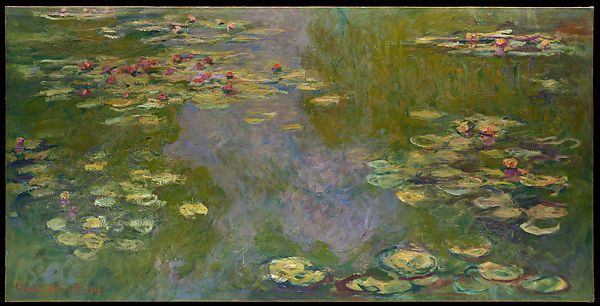
Impressionism focused on capturing fleeting effects of light, color, and movement, often painting outdoors to catch momentary scenes of modern life.
- Characteristics: loose brushstrokes, emphasis on light and color, capturing fleeting moments.
- Example artists: Claude Monet, Edgar Degas.
Post-Impressionism built on Impressionism but emphasized structure, emotion, and personal expression through color and form.
- Characteristics: greater focus on structure, emotion, and symbolic content.
- Example artists: Vincent van Gogh, Paul Cezanne.
Cubism broke from traditional perspective by showing subjects from multiple angles and reducing them to geometric shapes.
- Characteristics: fragmented subjects, geometric forms, multiple perspectives.
- Example artist: Pablo Picasso.
For the exam, you do not need to track every sub-style. Knowing that modern art as a whole moved from representational to subjective and abstract is the main point.
Continuities and Changes in Artistic Expression (1815-1914)
Continuities:
- Art kept reflecting societal values, political ideas, and social conditions.
- The human condition stayed a central subject.
- Classical ideals still shaped European art, even as new movements challenged them.
Changes:
- Romanticism broke with Neoclassical rationalism, emphasizing intuition, emotion, and individuality.
- Realism rejected idealized subjects and focused on ordinary people and social problems.
- Modern art moved away from representation toward abstraction, experimentation, and subjective interpretation.
These shifts mirror larger changes in European society, including industrialization, political revolutions, and new philosophical ideas about reason, emotion, and human nature.
How to Use This on the AP European History Exam
Free Response
When a prompt asks about continuity and change in culture or intellectual life, use these movements as evidence. A strong move is to show the chain: Romanticism reacts against Neoclassicism, Realism reacts against Romanticism, and modern art breaks from realistic representation altogether. Tie each step to a cause, such as industrialization, the revolutions of 1848, or new ideas about the irrational.
Using Sources Effectively
Stimulus questions often include a painting, a passage, or an art critic's reaction. Look for clues:
- Emotion, nature, the sublime, or national history points to Romanticism.
- Ordinary people, workers, or social problems points to Realism.
- Abstraction, distortion, fragmented forms, or audience outrage points to modern art.
You can also use the detail that modern art provoked viewers who wanted beauty and patriotism to explain why a source might criticize an artwork.
Common Trap
Do not just label a movement. Explain why it appeared and what it reacted against. The exam rewards reasoning about cause and change, not memorized lists of artists.
Common Misconceptions
- Realism is not just "more detailed Romanticism." It was a deliberate rejection of Romantic idealization, focused on ordinary life and social problems.
- Romanticism is not the same as Neoclassicism. Romanticism broke with Neoclassical order and rationalism to stress emotion and intuition.
- Modern art being abstract does not mean it was meaningless. It deliberately moved past representation to express subjective and emotional ideas, which is exactly why it shocked audiences expecting beauty and patriotism.
- The artists and works listed here are illustrative examples, not a required checklist. You will not be asked to recall a specific set of names, but you should be able to describe each movement's traits.
- This topic centers on artistic expression. Broader social topics like 19th-century feminism and debates over women's status connect to other parts of the course, so keep your focus here on continuity and change in the arts.
Related AP European History Guides
Vocabulary
The following words are mentioned explicitly in the AP® course framework for this topic.Term | Definition |
|---|---|
abstract art | Art that moves away from recognizable representation to emphasize subjective expression, form, and expressive qualities. |
Cubism | An early 20th-century visual art movement that radically shifted aesthetic standards by depicting objects from multiple perspectives simultaneously. |
Impressionism | A modern art movement that moved beyond realistic representation to emphasize subjective perception, light, and color through loose brushwork. |
materialism | A philosophical worldview emphasizing material conditions, economic factors, and physical reality as the primary drivers of social and historical change. |
Neoclassical | An artistic style based on classical Greek and Roman forms that emphasized reason, order, and idealized representation. |
Post-Impressionism | A modern art movement that built upon Impressionism but emphasized subjective expression, form, and symbolic content over accurate representation. |
Realism | A 19th-century intellectual and artistic movement emphasizing objective observation of reality and rejection of idealization or romanticism. |
representational art | Art that aims to depict subjects in a recognizable, realistic manner that reflects shared idealized values. |
Romanticism | An artistic and intellectual movement that emphasized emotion, intuition, nature, individuality, and the supernatural in reaction against Neoclassical rationalism. |
Frequently Asked Questions
What is AP Euro 7.8 about?
AP Euro Topic 7.8 focuses on continuities and changes in European artistic expression from 1815 to 1914. The main movements are Romanticism, Realism, and modern art such as Impressionism, Post-Impressionism, and Cubism.
How was Romanticism different from Neoclassicism?
Romanticism broke with Neoclassical order and rationalism by emphasizing emotion, intuition, nature, individuality, the supernatural, and national histories.
What did Realism emphasize in 19th-century art and literature?
Realism focused on ordinary people and social problems. Realist artists and writers rejected idealized subjects and often responded to the effects of industrialization and social inequality.
What made modern art different in AP European History?
Modern art moved beyond realistic representation toward subjective, abstract, and expressive forms. Impressionism, Post-Impressionism, and Cubism challenged audiences who expected art to reflect idealized beauty or patriotism.
Do I need to memorize every artist for AP Euro 7.8?
No. Artist names are useful examples, but the bigger task is explaining how artistic expression changed over time and how movements responded to broader political, industrial, and intellectual shifts.
How should I use 19th-century art movements on an AP Euro FRQ?
Use the movements as evidence for continuity and change. Explain what each movement reacted against, connect it to context such as industrialization or political revolutions, and show how artistic expression shifted over time.