generate your own visual cheatsheets
📞 Intro to Public Speaking Cheatsheets
Browse AI-generated Intro to Public Speaking cheatsheets with one-page visual study aids for the key formulas, concepts, and definitions you need for your exam review.
AI-generated one-pagers for a single topic. Make your own, or browse what other students have made.
choose a topic in Intro to Public Speaking
add custom requests (optional)

Unit 1 - 1.1 Fundamentals of Public Speaking

Unit 1 - 1.2 Communication Models and Processes

Unit 1 - 1.3 Historical and Contemporary Perspectives on Public Speaking

Unit 1 - 1.4 Types of Speeches and Speaking Contexts

Unit 2 - 2.1 Understanding Speech Anxiety and Its Causes

Unit 2 - 2.2 Techniques for Managing Speech Anxiety

Unit 2 - 2.3 Building Self-Confidence as a Speaker

Unit 3 - 3.1 Importance of Audience Analysis

Unit 3 - 3.2 Methods of Gathering Audience Information

Unit 3 - 3.3 Adapting Speech Content and Delivery to the Audience

Unit 3 - 3.4 Cultural Considerations in Public Speaking

Unit 4 - 4.1 Criteria for Selecting Effective Speech Topics

Unit 4 - 4.2 Narrowing and Focusing Topics

Unit 4 - 4.3 Research Methods and Source Evaluation

Unit 4 - 4.4 Ethical Considerations in Research and Topic Selection

Unit 5 - 5.1 Basic Speech Structure

Unit 5 - 5.2 Organizational Patterns for Different Speech Types

Unit 5 - 5.3 Creating Effective Outlines

Unit 5 - 5.4 Developing Clear Main Points and Subpoints

Unit 6 - 6.1 Crafting Attention-Grabbing Introductions

Unit 6 - 6.2 Developing Memorable Conclusions

Unit 6 - 6.3 Creating Smooth Transitions Between Speech Sections

Unit 7 - 7.1 Types of Supporting Materials

Unit 7 - 7.2 Integrating Evidence and Examples

Unit 7 - 7.3 Logical Reasoning and Argumentation

Unit 7 - 7.4 Addressing Counterarguments

Unit 8 - 8.1 Principles of Effective Language Use

Unit 8 - 8.2 Rhetorical Devices and Figurative Language

Unit 8 - 8.3 Adapting Language to the Audience and Context

Unit 9 - 9.1 Components of Nonverbal Communication

Unit 9 - 9.2 Vocal Delivery Techniques

Unit 9 - 9.3 Body Language and Gestures

Unit 9 - 9.4 Managing Stage Presence and Eye Contact

Unit 10 - 10.1 Types and Functions of Visual Aids

Unit 10 - 10.2 Designing Effective Visual Aids

Unit 10 - 10.3 Integrating Technology in Presentations

Unit 10 - 10.4 Best Practices for Using Visual Aids

Unit 11 - 11.1 Goals and Types of Informative Speeches

Unit 11 - 11.2 Strategies for Effective Explanation and Description

Unit 11 - 11.3 Enhancing Audience Understanding and Retention

Unit 12 - 12.1 Theories of Persuasion

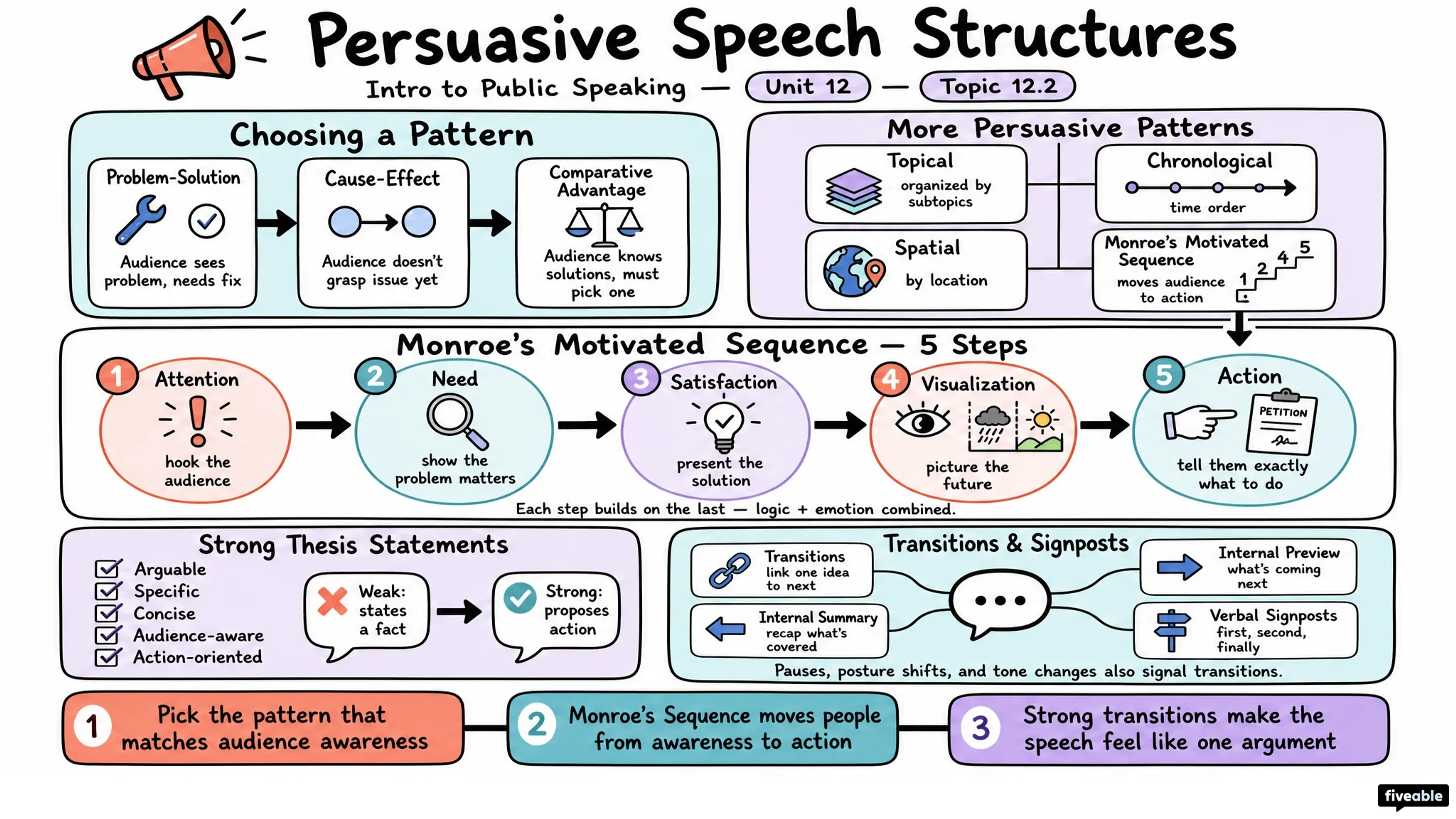
Unit 12 - 12.2 Persuasive Speech Structures

Unit 12 - 12.3 Ethical Persuasion Techniques

Unit 12 - 12.4 Analyzing and Appealing to Different Audiences

Unit 13 - 13.1 Types of Special Occasion Speeches

Unit 13 - 13.2 Techniques for Impromptu Speaking

Unit 13 - 13.3 Adapting to Various Speaking Situations

Unit 14 - 14.1 Active Listening Techniques

Unit 14 - 14.2 Barriers to Effective Listening

Unit 14 - 14.3 Providing and Receiving Constructive Feedback

Unit 15 - 15.1 Ethical Responsibilities of Public Speakers

Unit 15 - 15.2 Plagiarism and Proper Citation in Speeches

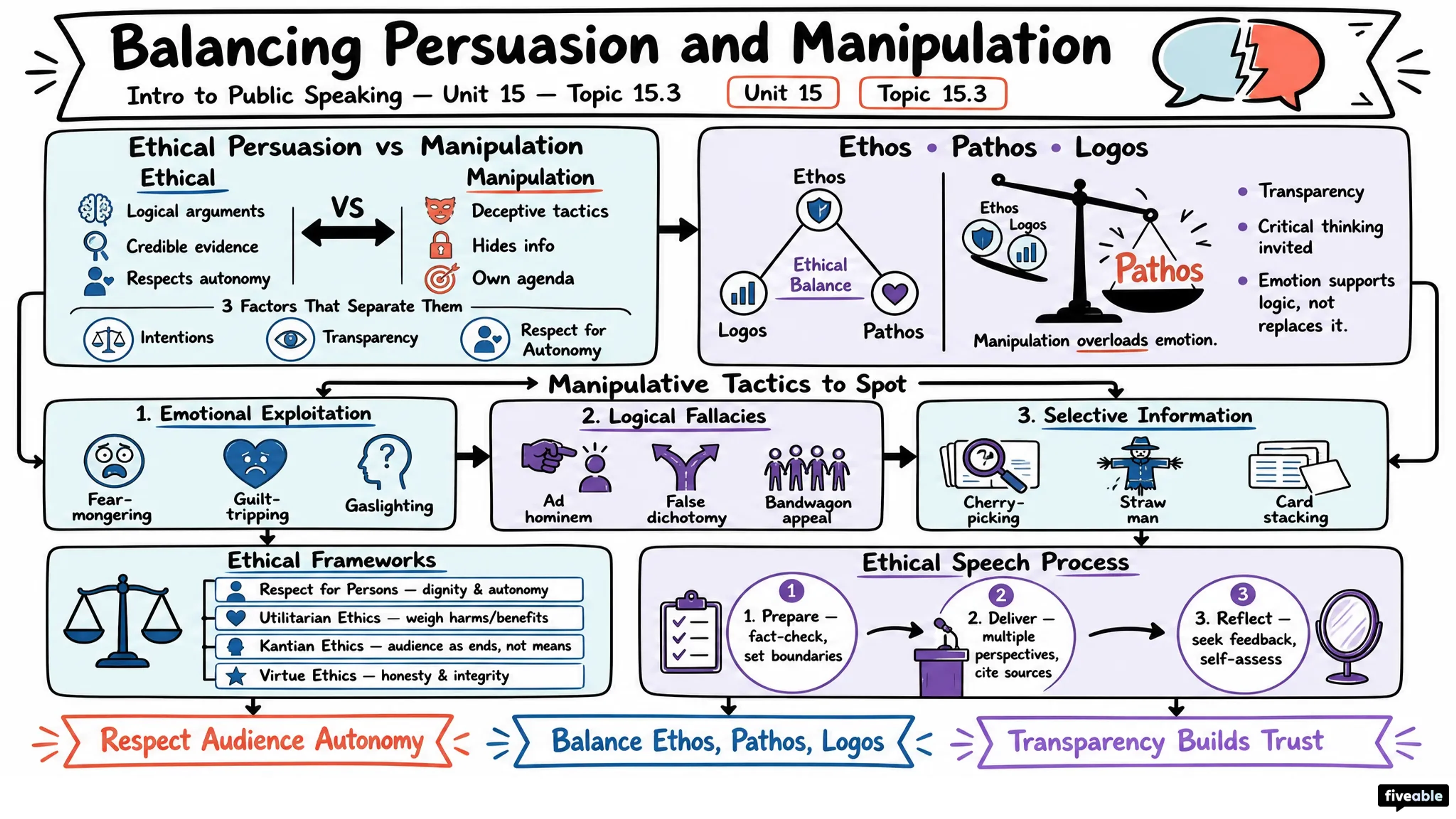
Unit 15 - 15.3 Balancing Persuasion and Manipulation

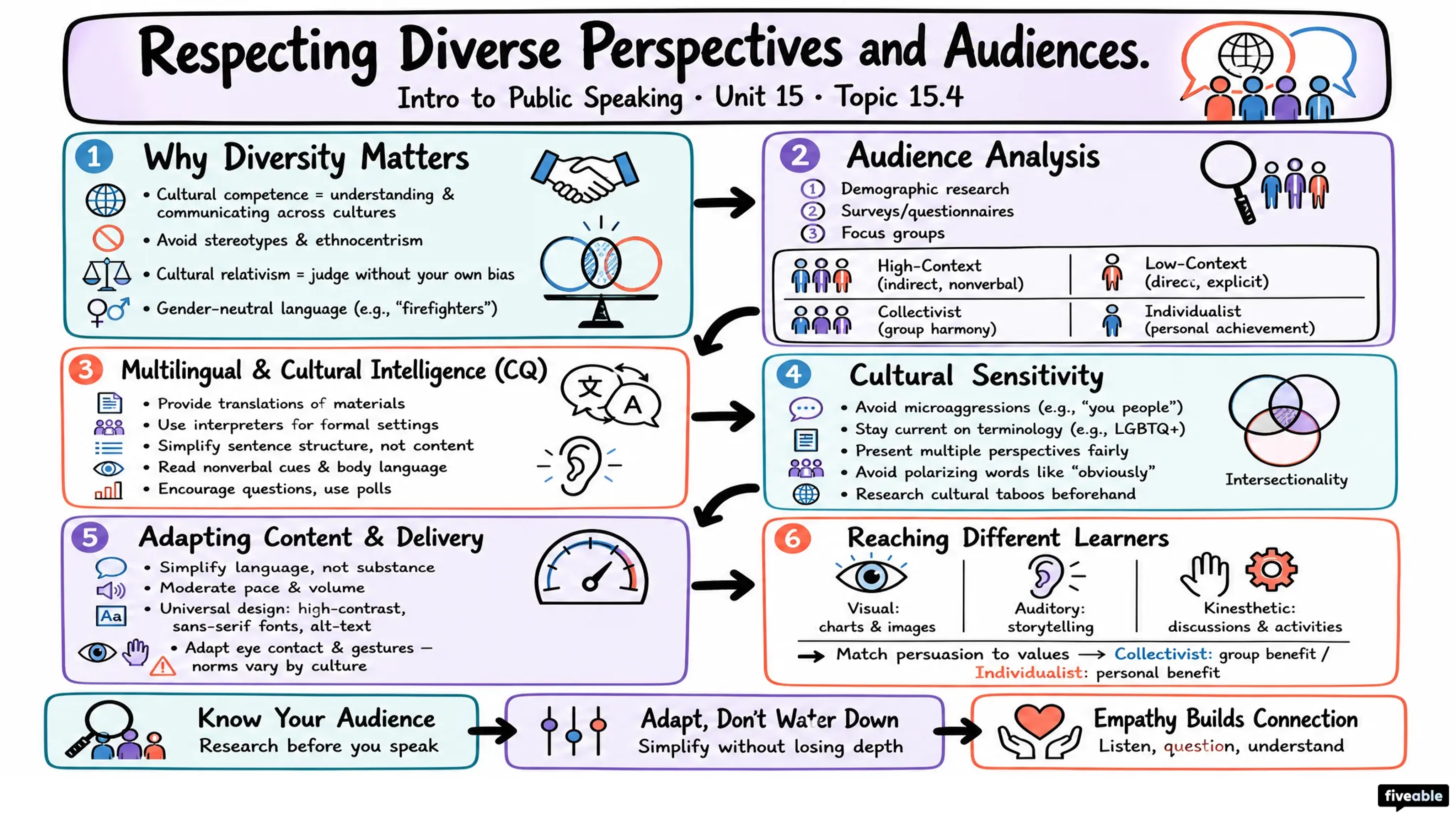
Unit 15 - 15.4 Respecting Diverse Perspectives and Audiences
A cheatsheet condenses a whole course into the facts you actually need on exam day. The Intro to Public Speaking cheatsheets on this page summarize the key formulas, concepts, and definitions from each unit so you can review the entire course at a glance.
They work best as a final review: skim the one-page summary, spot the units you want to strengthen, then go deeper with the Intro to Public Speaking study guides. The visual cheatsheets in the gallery are organized by unit, and you can generate your own for any topic you want a quick refresher on.