AMSCO guided notes
Note taking is hard. Guided notes makes it easy. Follow along with questions that match the newest edition of every AMSCO textbook. Just answer as you read.
491 chapters across 10 AP subjects
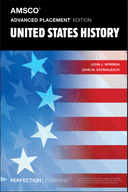


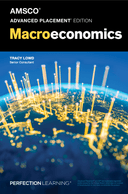
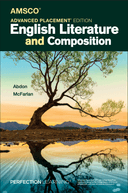
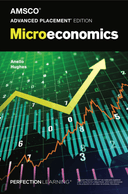


See How It Works
Read the textbook on the left, answer guided questions on the right
AMSCO Textbook
Your Guided Notes

AP US History Guided Notes
AMSCO 6.3 - Westward Expansion: Social and Cultural Development
Learning Objectives
- Explain the causes and effects of the settlement of the West from 1877 to 1898.
I. The Closing of the Frontier
A. Turner's Frontier Thesis
1. What was Frederick Jackson Turner's frontier thesis and what cultural values did he argue the frontier promoted?
2. How did Turner describe the evolutionary process of frontier settlement?
B. Role of Towns and Cities
1. How did frontier cities and towns challenge Turner's evolutionary view of frontier development?
2. What role did urban markets and railroads play in frontier development after 1865?
C. American Without a Frontier
1. Why did Turner view the closing of the frontier as troubling for American society?
2. What major population movement characterized the 1890s and what does it reveal about American priorities?
II. American Indians in the West
1. What were the major differences among American Indian groups in the West in 1865?
A. Reservation Policy
1. What was the basis of Andrew Jackson's Indian removal policy and why did it fail?
2. How did the federal government attempt to control Plains Indian movements through the reservation system?
B. Indian Wars
1. What conflicts arose between American Indians and settlers in the late 1800s, and what were the causes?
2. How did the Indian Appropriation Act of 1871 change the federal government's relationship with American Indian tribes?
3. What were the consequences of the buffalo slaughter for Plains Indian culture and way of life?
C. Ghost Dancers and Wounded Knee
1. What was the Ghost Dance movement and how did the federal government respond to it?
D. Assimilationists
1. What was the assimilationist approach to American Indian policy and what methods did reformers use?
E. Dawes Severalty Act (1887)
1. What were the goals of the Dawes Act and how did it attempt to transform American Indian society?
2. What were the actual outcomes of the Dawes Act for American Indian lands and populations?
F. Changes in the 20th and 21st Centuries
1. How did federal Indian policy change during the New Deal era and what does this reveal about earlier policies?
III. Mexican Americans in the Southwest
1. How did Mexican independence and the Santa Fe Trail affect economic development in the Southwest?
2. What happened to Mexican landowners' property rights after the Mexican War despite legal guarantees?
3. What types of work did Mexican Americans perform in the West and what drew them to the region?
IV. The Conservation Movement
1. What concerns sparked the conservation movement and what role did art and photography play?
2. How did the Forest Reserve Act of 1891 and Forest Management Act of 1897 change federal land policy?
3. How did the goals of conservationists differ from those of preservationists like John Muir?
Key Terms
Frederick Jackson Turner
"The Significance of the Frontier in American History" (1893)
Little Big Horn
Ghost Dance movement
assimilationists
Helen Hunt Jackson
Dawes Act of 1887
Indian Reorganization Act
Santa Fe Trail
deforestation
Yosemite
Yellowstone
Forest Reserve Act of 1891
Forest Management Act of 1897
conservationists
preservationists
John Muir
Sierra Club
What Are AMSCO Guided Notes?
AMSCO textbooks are dense. Really dense. They pack years of history, complex economic theories, and psychological concepts into chapters that can feel overwhelming. Reading passively means forgetting most of what you just read by the time you flip the page.
Guided notes change how you interact with the textbook. Instead of highlighting everything (or nothing), you have specific questions to answer as you read. These questions are designed to pull out the most important information—the stuff that actually shows up on AP exams.
Why Guided Notes Work Better Than Regular Notes
Taking notes from a textbook is hard because you don't know what's important until you've already read everything. You end up either copying too much or missing key details. Guided notes solve this by telling you exactly what to look for before you start reading.
When you answer a question while reading, you're doing something called active recall. Your brain has to process the information, find the answer, and write it down. This creates stronger memories than just reading and highlighting.
Each set of guided notes includes:
- Essential questions that frame the chapter's main themes
- Section-by-section questions that follow the textbook structure
- Key terms you need to know for the AP® exam
- Learning objectives built around AP® course expectations
How to Use These Guided Notes
Before You Read
Look at the essential questions and learning objectives first. These tell you what the chapter is really about and what you should focus on. Skim the section titles and questions to get a mental map of where you're headed.
While You Read
Work through one section at a time. Read until you find the answer to a question, write it down, then move to the next question. Keep your answers brief—you're not rewriting the textbook, you're extracting the key points.
After You Read
Review the key terms at the end. Can you define each one? Go back to the essential questions—can you answer them now? Your completed guided notes become your study guide for that chapter.
Matched to the Newest AMSCO Editions
AMSCO updates their textbooks regularly to match changes in AP curricula. Our guided notes are built for the current editions, so the section numbers and questions align with what you're actually reading. No hunting around trying to match outdated notes to new chapter structures.
We cover the most popular AMSCO textbooks: AP US History, AP European History, AP World History, AP US Government, AP Psychology, AP Human Geography, AP Macroeconomics, AP Microeconomics, AP English Language, and AP English Literature.
Print or Export to Google Docs
You can view any chapter right here on the site. If you want to write on physical paper (which many students prefer), print the guided notes directly from your browser. If you'd rather type your answers, export to Google Docs and fill them in digitally.
Student Workspace + Printing lets you print and export unlimited guided notes to study on paper. Teachers on Teacher Workspace + Printing can do the same for a whole class, an easy way to give students structured note-taking tools without creating everything from scratch.
Making the Most of Your Study Time
The goal isn't to fill in every blank as fast as possible. It's to actually understand and remember what you're reading. Take your time with each section. If you don't understand something, re-read it before moving on.
Your completed guided notes are valuable. Keep them organized by chapter so you can review before unit tests and the AP exam. When it's time to study, you'll have a condensed version of everything important from each chapter.
Stop reading passively and hoping information sticks. Guided notes give your brain something to do while you read, and that makes all the difference when exam day comes.