
Earthquakes shake buildings, but how do we predict their effects? Single-degree-of-freedom (SDOF) systems simplify complex structures into manageable models. These systems use mass, stiffness, and damping to represent a building's key properties and analyze its response to ground motion.
SDOF analysis forms the foundation of earthquake engineering. By solving equations of motion and applying various solution methods, engineers can estimate a structure's behavior during seismic events. This knowledge helps design safer buildings and assess existing ones for earthquake resistance.
Single-Degree-of-Freedom Systems in Earthquake Engineering
Components of SDOF systems
- SDOF system characterizes structural behavior with single coordinate represents primary motion direction (lateral displacement)
- Mass (m) models inertial properties resists acceleration (building floors, bridge deck)
- Stiffness (k) represents system's ability to resist deformation returns to equilibrium (columns, beams)
- Damping (c) dissipates energy reduces vibration amplitude over time (structural connections, material properties)
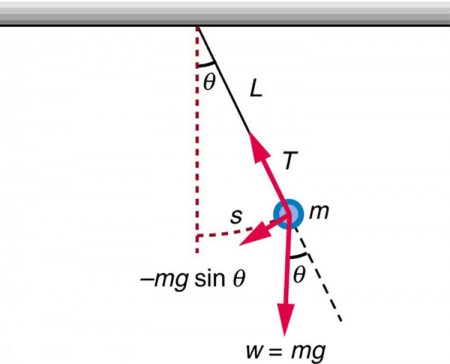
- Simple pendulum exemplifies SDOF motion single point mass swings in arc
- Mass-spring-damper system demonstrates interplay of SDOF components
- Single-story building simplified as SDOF assumes rigid floor diaphragm

Equation of motion for ground motion
- Newton's Second Law forms basis for deriving equation
- Inertial force opposes acceleration
- Damping force opposes velocity
- Elastic restoring force opposes displacement
- Ground motion force external excitation
- Equation balances forces
- Relative motion separates total displacement from ground movement
- represents absolute displacement of mass
- denotes ground displacement caused by earthquake
Solution methods for SDOF systems
- Duhamel integral method solves linear systems using convolution
- gives displacement response
- Numerical integration techniques solve complex nonlinear systems
- Central Difference Method uses finite difference approximations
- Newmark's Method assumes acceleration variation within time step
- Runge-Kutta Method provides high-accuracy solution for ODEs
- Free vibration solution characterizes system's inherent dynamic properties
- Natural frequency determines oscillation rate
- Damped natural frequency accounts for damping effect
- Damping ratio quantifies energy dissipation
SDOF response to ground excitations
- Harmonic excitation produces steady-state response amplified at resonance
- Earthquake excitation analyzed through time history or response spectrum methods
- Displacement response tracks structural deformation
- Velocity response indicates energy content
- Acceleration response relates to inertial forces
- Natural period influences response magnitude duration
- Damping ratio affects peak response energy dissipation
- Ground motion frequency content determines excitation effectiveness
- Peak response values assess maximum demands (drift, base shear)
- Ductility demand evaluates inelastic deformation capacity
- Energy dissipation quantifies system's ability to absorb seismic input