
Component-based design is a powerful approach to software development. It breaks down complex systems into reusable, self-contained units called components. This modular approach enhances maintainability, promotes code reuse, and allows for faster development.
Components are designed to be reusable, replaceable, and encapsulated. They interact through well-defined interfaces, promoting loose coupling. Techniques like aggregation, delegation, and inheritance are used to compose components, while patterns like publish-subscribe facilitate communication between them.
Benefits of component-based design
- Promotes modular development, allowing for parallel work and faster time-to-market
- Enhances maintainability by breaking down complex systems into manageable, self-contained units
- Facilitates code reuse across projects, reducing development effort and improving consistency
Characteristics of components
Reusability of components
- Components are designed to be reusable across multiple applications or systems
- Well-defined interfaces and encapsulation enable seamless integration and reuse
- Reusability reduces development time, cost, and maintenance effort
Replaceability vs extensibility
- Replaceability allows components to be easily swapped with alternative implementations
- Enables flexibility and adaptability to changing requirements
- Supports system evolution and upgrades without impacting other components
- Extensibility enables components to be extended or customized without modifying their core functionality
- Allows for adding new features or behaviors while preserving backward compatibility
- Supports domain-specific customization and adaptation
Encapsulation of components
- Components encapsulate their internal implementation details and expose only necessary interfaces
- Encapsulation hides complexity and promotes information hiding
- Provides a clear separation between the component's internal workings and its external interactions
- Enables independent development, testing, and maintenance of components
Defining component interfaces
Specifying component contracts
- Component contracts define the expected behavior and responsibilities of a component
- Contracts specify the input/output data types, preconditions, postconditions, and invariants
- Clear contracts facilitate understanding, usage, and integration of components
- Examples of contract specifications include interface definitions (IDL) and API documentation
Designing for loose coupling
- Loose coupling minimizes dependencies between components
- Components interact through well-defined interfaces rather than direct dependencies
- Loose coupling enables flexibility, maintainability, and independent evolution of components
- Techniques for achieving loose coupling include dependency injection (DI) and inversion of control (IoC)
Component composition techniques
Aggregation vs delegation
- Aggregation involves composing components by containing them within another component
- The containing component owns and manages the lifecycle of the contained components
- Aggregation establishes a "has-a" relationship between components
- Delegation involves composing components by forwarding requests to other components
- The delegating component relies on the delegated component to perform specific tasks
- Delegation establishes a "uses-a" relationship between components
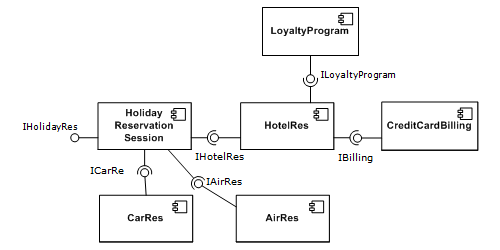
Inheritance in component design
- Inheritance allows components to inherit properties and behavior from a base component
- Inheritance promotes code reuse and specialization of components
- Subclasses can override or extend the functionality of the base component
- Inheritance should be used judiciously to avoid tight coupling and complexity
Component interaction patterns
Publish-subscribe model
- The publish-subscribe model enables loose coupling between components
- Components can publish events or messages without knowledge of the subscribers
- Subscribers register their interest in specific events and receive notifications when they occur
- Publish-subscribe supports asynchronous communication and decouples components
Observer pattern
- The observer pattern allows components to be notified of changes in the state of another component
- The observed component maintains a list of observers and notifies them when its state changes
- Observers can react to the changes and perform necessary actions
- The observer pattern promotes loose coupling and enables dynamic registration and deregistration of observers
Mediator pattern
- The mediator pattern facilitates communication and coordination between components
- A mediator component acts as an intermediary, encapsulating the interaction logic between components
- Components communicate with the mediator rather than directly with each other
- The mediator pattern reduces dependencies between components and centralizes complex interaction logic
Component lifecycle management
Component creation strategies
- Component creation strategies define how components are instantiated and initialized
- Common strategies include:
- Eager initialization: Components are created and initialized upfront
- Lazy initialization: Components are created on-demand when first accessed
- Dependency injection: Components are created and injected by an external container
- The choice of creation strategy depends on factors such as performance, resource utilization, and dependency management
Component destruction considerations
- Component destruction involves properly releasing resources and cleaning up when a component is no longer needed
- Considerations for component destruction include:
- Releasing allocated memory and system resources
- Unregistering event listeners and observers
- Notifying dependent components of the component's destruction
- Proper destruction ensures efficient resource utilization and prevents memory leaks
Testing component-based systems
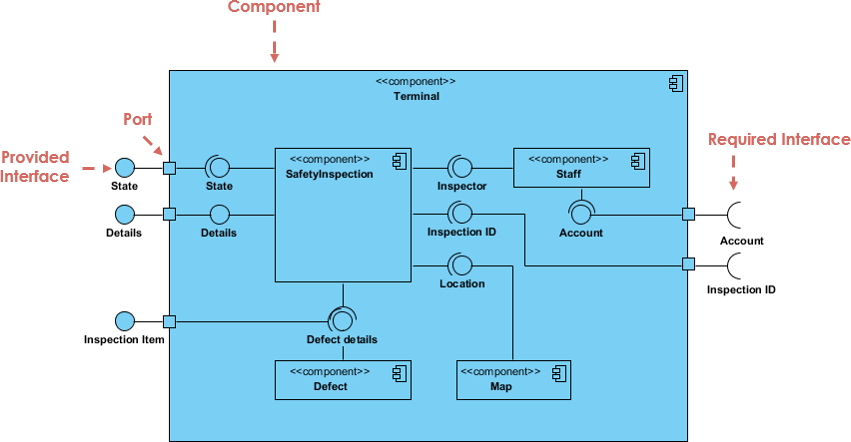
Unit testing components
- Unit testing focuses on testing individual components in isolation
- Each component is tested independently to verify its functionality and behavior
- Unit tests ensure that components meet their specifications and handle edge cases correctly
- Mocking and stubbing techniques are used to isolate components from their dependencies during testing
Integration testing challenges
- Integration testing verifies the interaction and compatibility between components
- Challenges in integration testing component-based systems include:
- Managing complex component dependencies and interactions
- Handling asynchronous behavior and timing issues
- Dealing with different component versions and configurations
- Integration testing requires careful planning, test case design, and simulation of real-world scenarios
Best practices for component design
Cohesion vs coupling
- Cohesion refers to the degree to which a component's responsibilities are closely related and focused
- High cohesion indicates that a component has a single, well-defined purpose
- Cohesive components are easier to understand, maintain, and reuse
- Coupling refers to the degree of interdependence between components
- Low coupling minimizes dependencies and enables independent development and testing
- Loosely coupled components are more flexible and adaptable to changes
- Strive for high cohesion within components and low coupling between components
Granularity of components
- Granularity refers to the level of detail and scope of a component
- Fine-grained components have a narrow scope and perform specific tasks
- Fine-grained components are more reusable but may introduce performance overhead
- Examples include utility functions and data access components
- Coarse-grained components have a broader scope and encapsulate higher-level functionality
- Coarse-grained components are less reusable but offer better performance and simplify interactions
- Examples include business logic components and service facades
- Choose the appropriate granularity based on the system's requirements and design goals
Naming conventions for components
- Consistent and meaningful naming conventions improve code readability and maintainability
- Use descriptive names that reflect the component's purpose and responsibility
- Follow established naming conventions for the programming language and framework being used
- Examples of naming conventions include:
- PascalCase for component class names (CustomerService)
- camelCase for component methods and properties (getCustomerDetails)
- Prefix interfaces with "I" (ICustomerRepository)
Challenges of component-based design
Performance overhead considerations
- Component-based design introduces performance overhead due to component interactions and communication
- Factors contributing to performance overhead include:
- Serialization and deserialization of data between components
- Network latency and communication protocols
- Increased memory footprint due to component instantiation and lifecycle management
- Performance optimization techniques, such as caching and lazy loading, can help mitigate performance overhead
Versioning and compatibility issues
- Component versioning is crucial for managing the evolution of component-based systems
- Compatibility issues arise when components are updated or replaced with newer versions
- Challenges related to versioning and compatibility include:
- Maintaining backward compatibility with existing components and systems
- Handling breaking changes and API modifications
- Managing dependencies and ensuring smooth integration of component upgrades
- Versioning strategies, such as semantic versioning (SemVer), can help address compatibility concerns
Debugging composite applications
- Debugging component-based systems can be challenging due to the distributed nature of components
- Challenges in debugging composite applications include:
- Tracing and isolating issues across multiple components and their interactions
- Handling asynchronous behavior and timing-related bugs
- Reproducing and diagnosing issues in complex component hierarchies
- Effective debugging techniques for component-based systems include:
- Logging and tracing mechanisms to capture component interactions and state changes
- Monitoring and profiling tools to identify performance bottlenecks and resource utilization
- Debugging frameworks and tools specific to the component technology being used