generate your own visual cheatsheets
🌠 Astrophysics I Cheatsheets
Browse AI-generated Astrophysics I cheatsheets with one-page visual study aids for the key formulas, concepts, and definitions you need for your exam review.
AI-generated one-pagers for a single topic. Make your own, or browse what other students have made.
choose a topic in Astrophysics I
add custom requests (optional)

Unit 1 - 1.1 Fundamental concepts and scales in astrophysics

Unit 1 - 1.2 Historical development of astronomy and astrophysics

Unit 1 - 1.3 Overview of the universe and its constituents

Unit 1 - 1.4 Basic mathematical and physical principles in astrophysics

Unit 2 - 2.1 Kepler's laws and orbital dynamics

Unit 2 - 2.2 Two-body and many-body problems

Unit 2 - 2.3 Tidal forces and Roche limits

Unit 3 - 3.1 Electromagnetic spectrum and radiative processes

Unit 3 - 3.2 Blackbody radiation and stellar spectra

Unit 3 - 3.3 Atomic and molecular spectroscopy

Unit 3 - 3.4 Doppler effect and radial velocity measurements

Unit 4 - 4.1 Stellar structure and energy transport

Unit 4 - 4.2 Stellar atmosphere models and opacity

Unit 4 - 4.3 Stellar nucleosynthesis and energy generation

Unit 4 - 4.4 Equations of stellar structure

Unit 5 - 5.1 Main sequence stars and the Hertzsprung-Russell diagram

Unit 5 - 5.2 Post-main sequence evolution and giant stars

Unit 5 - 5.3 Stellar death: planetary nebulae and supernovae

Unit 5 - 5.4 Compact objects: white dwarfs, neutron stars, and black holes

Unit 6 - 6.1 Types of binary systems and their evolution

Unit 6 - 6.2 Mass transfer and accretion in binary systems

Unit 6 - 6.3 Eclipsing binaries and spectroscopic binaries

Unit 6 - 6.4 Pulsating variables and cataclysmic variables

Unit 7 - 7.1 Composition and phases of the interstellar medium

Unit 7 - 7.2 Interstellar dust and extinction

Unit 7 - 7.3 Heating and cooling processes in the ISM

Unit 8 - 8.1 Molecular clouds and star-forming regions

Unit 8 - 8.2 Stages of star formation and protostellar evolution

Unit 8 - 8.3 Formation and evolution of protoplanetary disks

Unit 9 - 9.1 Detection methods for exoplanets

Unit 9 - 9.2 Characteristics and classification of exoplanets

Unit 9 - 9.3 Planetary system formation and dynamics

Unit 9 - 9.4 Habitability and the search for life in the universe

Unit 10 - 10.1 Structure and components of the Milky Way

Unit 10 - 10.2 Galactic dynamics and rotation

Unit 10 - 10.4 The galactic center and its supermassive black hole

Unit 11 - 11.1 Galaxy classification and properties

Unit 11 - 11.2 Galaxy formation and evolution

Unit 11 - 11.3 Galaxy clusters and large-scale structure

Unit 12 - 12.1 Types and characteristics of active galactic nuclei

Unit 12 - 12.2 Accretion processes and jet formation

Unit 12 - 12.3 Supermassive black holes and their role in galaxy evolution

Unit 13 - 13.1 Fundamentals of Big Bang cosmology

Unit 13 - 13.2 Cosmic microwave background radiation

Unit 13 - 13.3 Expansion of the universe and Hubble's law

Unit 13 - 13.4 Nucleosynthesis and the early universe

Unit 14 - 14.1 Evidence for dark matter in galaxies and clusters

Unit 14 - 14.2 Dark matter candidates and detection methods

Unit 14 - 14.3 Cosmic acceleration and dark energy models

Unit 15 - 15.1 Telescopes and detectors across the electromagnetic spectrum

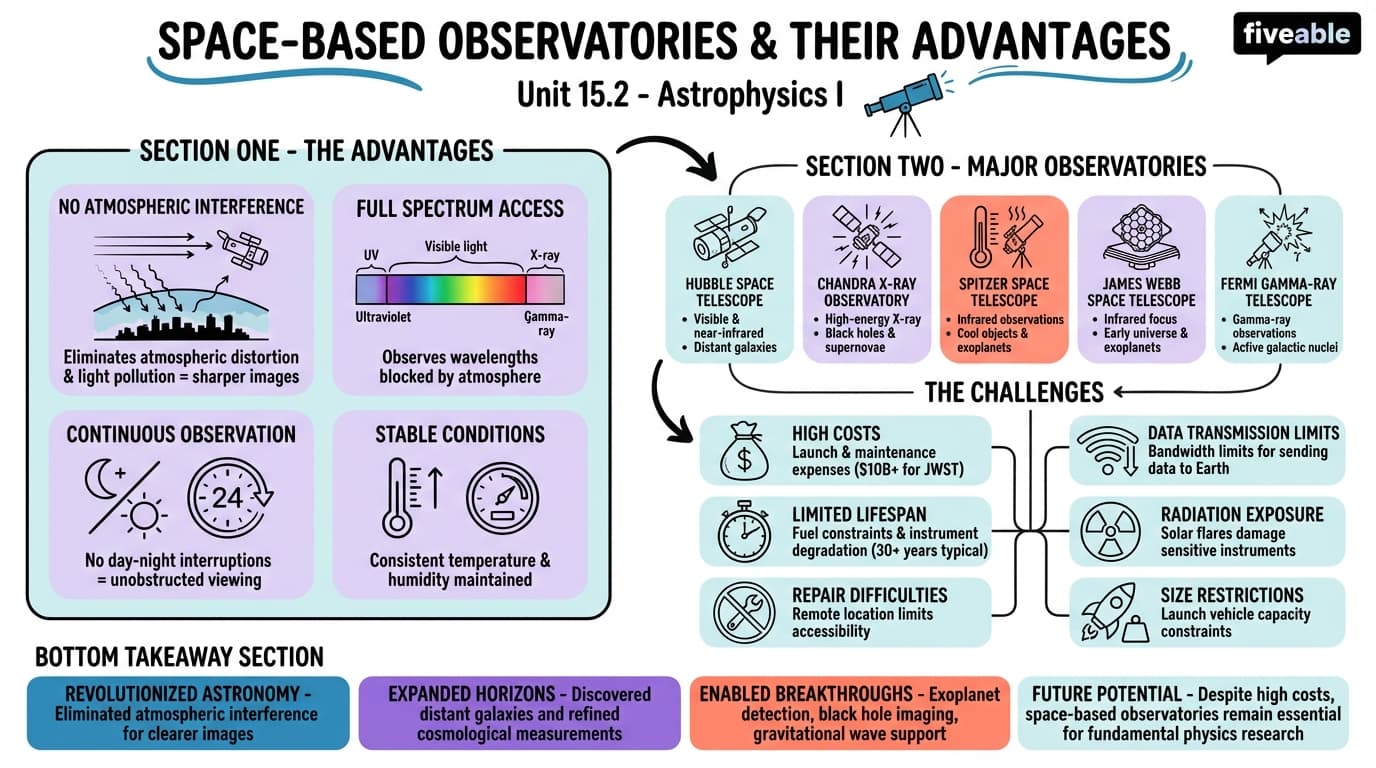
Unit 15 - 15.2 Space-based observatories and their advantages

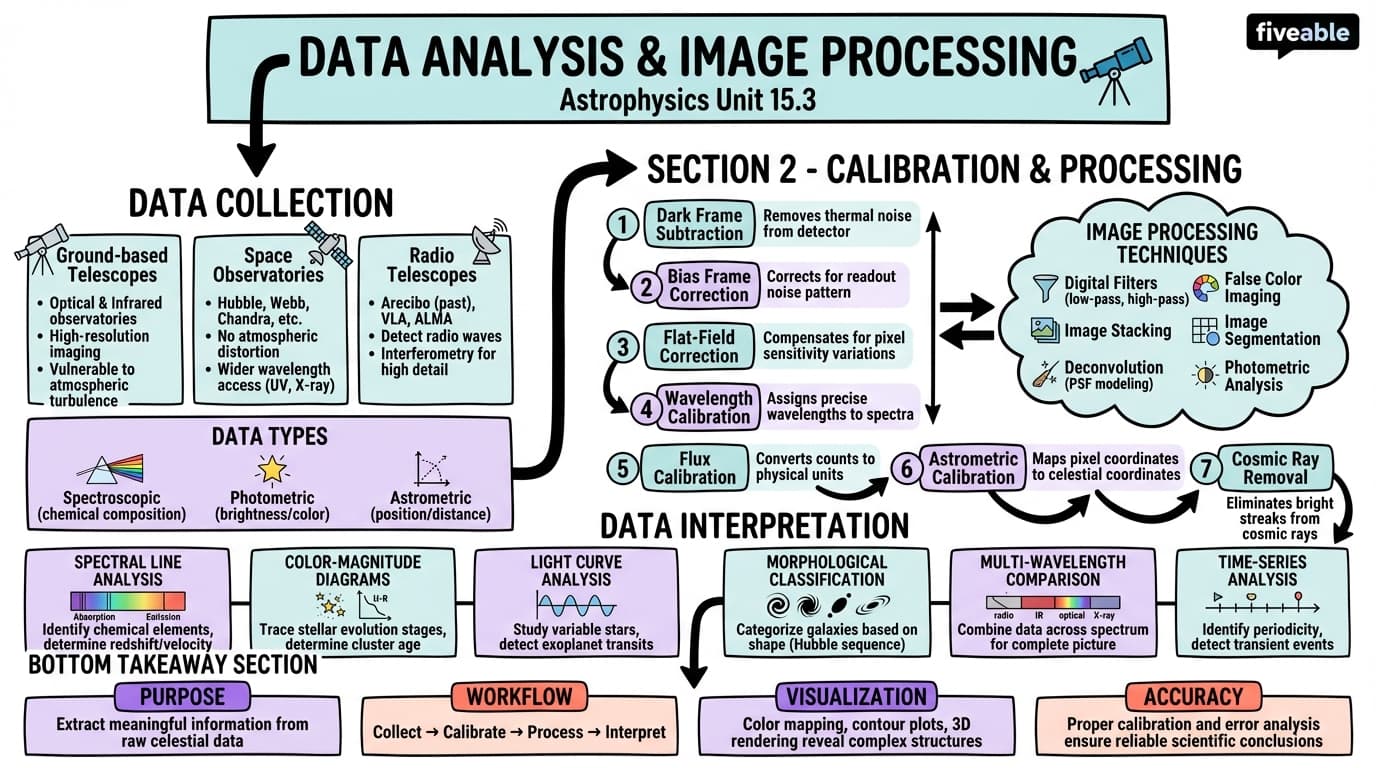
Unit 15 - 15.3 Data analysis and image processing techniques

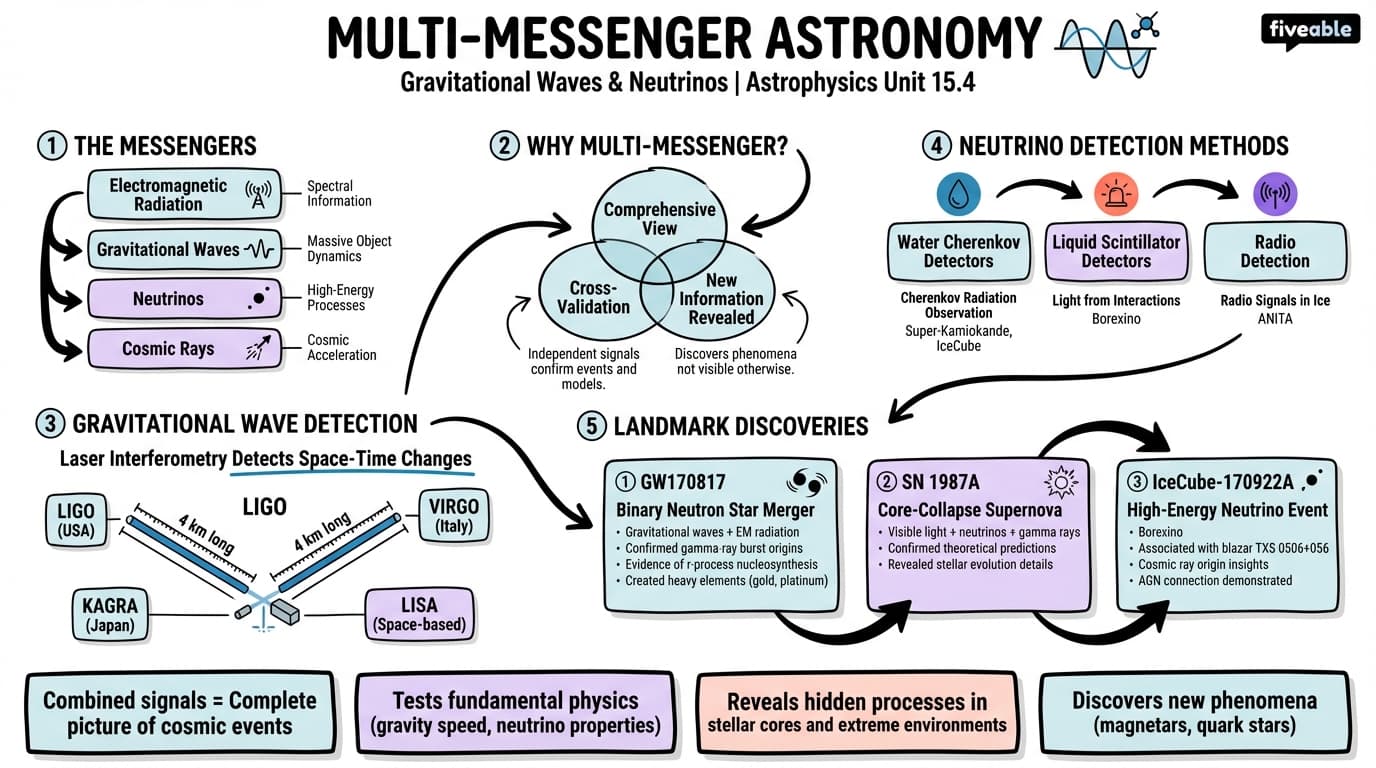
Unit 15 - 15.4 Multi-messenger astronomy: gravitational waves and neutrinos
A cheatsheet condenses a whole course into the facts you actually need on exam day. The Astrophysics I cheatsheets on this page summarize the key formulas, concepts, and definitions from each unit so you can review the entire course at a glance.
They work best as a final review: skim the one-page summary, spot the units you want to strengthen, then go deeper with the Astrophysics I study guides. The visual cheatsheets in the gallery are organized by unit, and you can generate your own for any topic you want a quick refresher on.