AP Spanish Literature Single Text Analysis Essay Practice
29 Single Text Analysis Essays written in the AP format. Pick one, read the passage and the full prompt, and write your essay in Spanish. Fiveable scores each Single Text Analysis Essay response part by part on the AP rubric.
Your first scored response is included. A plan unlocks unlimited scoring.
29 questions
sorted by unit
Medieval didactic prose, gender hierarchy in marriage
Unit 1: Unit 1 – La época medieval
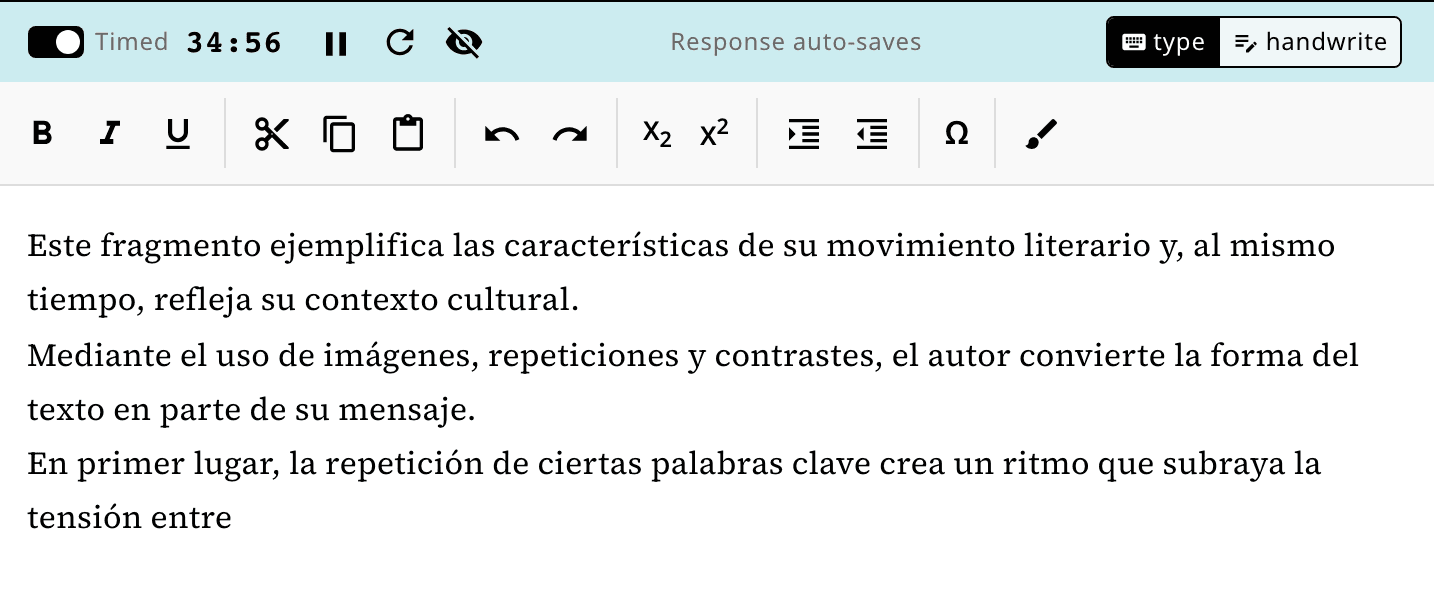
Analiza cómo el fragmento del Exemplo XXXV de El Conde Lucanor representa las características de la prosa didáctica medieval y el contexto sociocultural de la península ibérica durante la Edad Media. En tu ensayo debes comentar los recursos literarios de la prosa didáctica medieval. Debes incluir ejemplos del texto que apoyen tus ideas.
Luego que ellos fincaron solos en casa, assentáronse a la mesa, et ante que ella ubiasse a dezir cosa cató el novio en derredor de la mesa, et vio un perro et díxol' ya cuanto bravamente:
-¡Perro, danos agua a las manos!
El perro non lo fizo. Et él encomençósse a ensañar et díxol' más bravamente que les diesse agua a las manos. Et el perro non lo fizo. Et desque vio que lo non fazía, levantóse muy sañudo de la mesa et metíó mano a la espada et endereçó al perro. Cuando el perro lo vio venir contra sí, començó a foír, et él en pos él, saltando amos por la ropa et por la mesa et por el fuego, et tanto andido en pos de'l fasta que lo alcançó, et cortól' la cabeça et las piernas et los braços, et fízolo todo pedaços et ensangrentó toda la casa et toda la mesa et la ropa.
Et assí, muy sañudo et todo ensangrentado, tornóse a sentar a la mesa et cató en derredor, et vio un gato et díxol' quel' diesse agua a manos; et porque non lo fizo, díxole:
-¡Cómo, don falso traidor!, ¿et non vistes lo que fiz al perro porque non quiso fazer lo quel' mandé yo? Prometo a Dios que si un punto nin más conmigo porfías, que esso mismo faré a ti que al perro.
El gato non lo fizo, ca tampoco es su costumbre de dar agua a manos, como del perro. Et porque non lo fizo, levantóse et tomól' por las piernas et dio con él a la pared et fizo de'l más de çient pedaços, et mostrándol' muy mayor saña que contra el perro.
Et assí, bravo et sañudo et faziendo muy malos contenentes, tornóse a la mesa et cató a todas partes. La muger, quel' vio esto fazer, tovo que estava loco o fuera de seso, et non dizía nada.
Et desque ovo catado a cada parte, et vio un su cavallo que estava en casa, et él non avía más de aquél, et díxol' muy bravamente que les diesse agua a las manos; el cavallo non lo fizo. Desque vio que lo non fizo, díxol':
-¡Cómo, don cavallo!, ¿cuidades que porque non he otro cavallo, que por esso vos dexaré si non fizierdes lo que yo vos mandare? Dessa vos guardat, que si por vuestra mala ventura non faierdes lo que yo vos mandare, yo juro a Dios que tan mala muerte vos dé como a los otros; et non ha cosa viva en el mundo que non faga lo que yo mandare, que esso mismo non le faga. El cavallo estudo quedo. Et desque vio que non fazía su mandado, fue a él et cortól' la cabeça con la mayor saña que podía mostrar, et despedaçólo todo.
Cuando la muger vio que matava el cavallo non aviendo otro et que dizía que esto faría a quiquier que su mandado non cumpliesse, tovo que esto ya non se fazía por juego, et ovo tan grand miedo, que non sabía si era muerta o biva.
Et él assí, vravo et sañudo et ensangrentado, tornóse a la mesa, jurando que si mil cavallos et omnes et mugeres oviesse en casa quel' saliessen de mandado, que todos serían muertos. Et assentósse et cató a cada parte, teniendo la espada sangrienta en el regaço; et desque cató a una parte et a otra et non vio cosa viva, bolvió los ojos contra su muger muy bravamente et díxol' con grand saña, teniendo la espada en la mano:
-Levantadvos et datme agua a las manos.
La muger, que non esperava otra cosa sinon que la despedaçaría toda, levantóse muy apriessa et diol' agua a las manos.
Don Juan Manuel
Conde Lucanor, Exemplo XXXV
(1335)
Dominio público. Texto: es.wikisource.org (“Conde Lucanor/Ejemplo 35”).
What the Single Text Analysis Essay asks
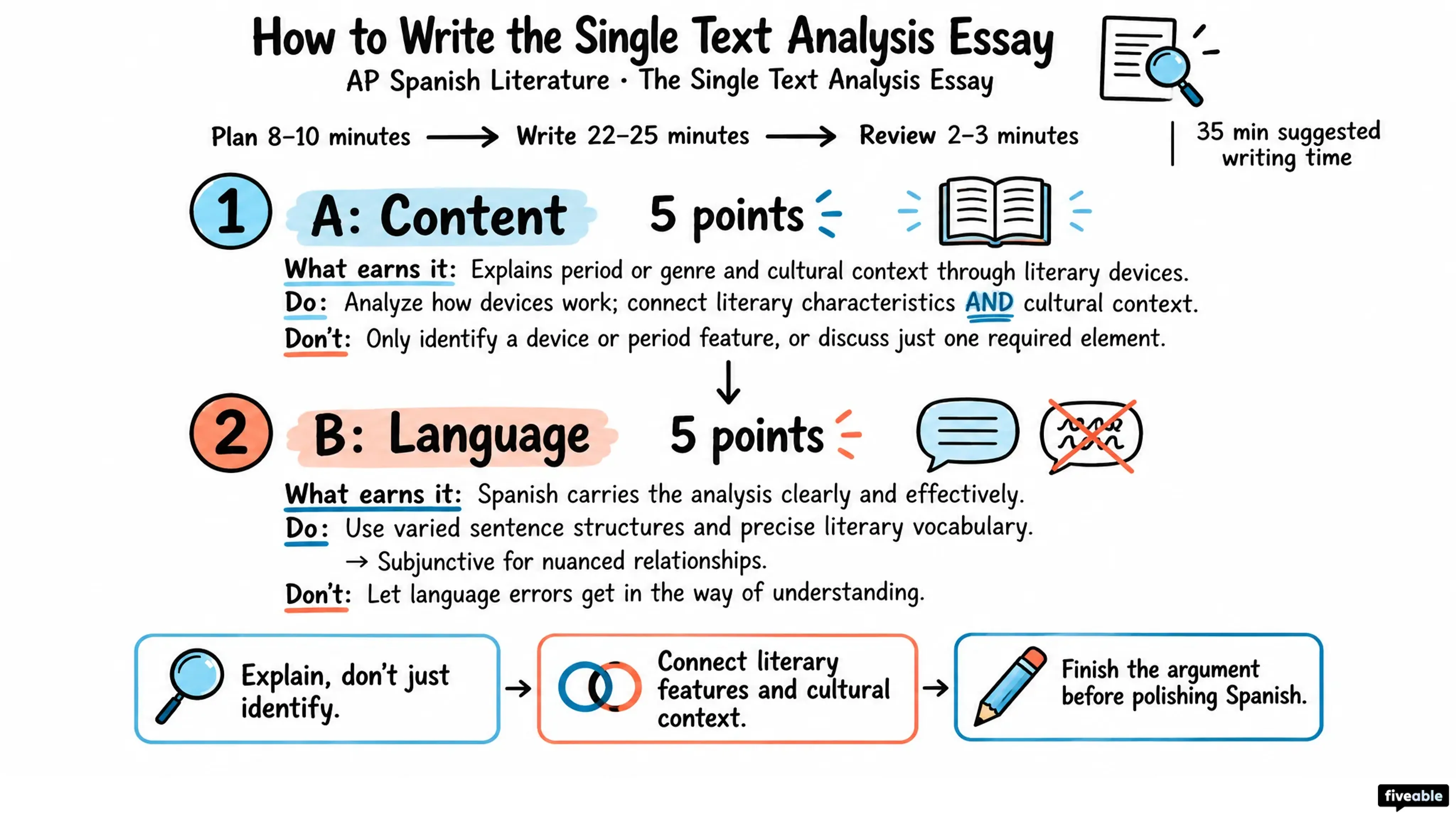
The Analysis of a Single Text is FRQ 3 on the AP Spanish Literature exam. You write an essay in Spanish on how one passage represents a period, movement, genre, or technique and its cultural context, using the author’s literary devices as evidence.
- 35 min
- suggested writing time
- 10 points
- across rows A and B
- 17.5%
- of your exam score
Part A: Content
How the text reflects its period or genre and cultural context, through its literary devices
5 pts
Part B: Language
How well your Spanish carries the analysis
5 pts
Single Text Analysis Essay skill sheet
Every rubric point on one page: what earns it, what to do and what to avoid. Tap the sheet to see it full size.
How Single Text Analysis Essay practice works
Each question follows the exam’s format, from the full prompt to a score on every part.
Read the passage and prompt
The passage and the full prompt, in Spanish, laid out the way the exam shows them.
Write on a 35-minute timer
The time to plan for on exam day. Pause it or turn it off, and your response saves as you go.
Submit for a score out of 10
Your response is scored against the scoring guidelines written for that question. Your first score is included.
Questions about the Single Text Analysis Essay
How many responses can I get scored?
You can read every question without a plan. Your first scored response is included. A plan unlocks unlimited scoring.
Do I need to cover both the period and the cultural context?
Yes. The prompt asks for both, and the top content scores need both.
How is this different from the Text Comparison Essay?
This essay analyzes one passage. The Text Comparison, FRQ 4, asks you to compare how two texts develop a shared theme. The exam gives each essay 35 minutes.
Is my Spanish scored separately?
Yes. Content is row A and language is row B, each worth 5 points. Imperfect Spanish can still earn full content credit.
Are these real College Board questions?
No. We wrote them in the AP format, with the same prompt structure the exam uses.
More AP Spanish Literature practice
Text Comparison Essay practice
Text Comparison Essays with both texts and the full prompt.
AP Spanish Literature FRQs
Every FRQ type for AP Spanish Literature, with practice for each.
Write your first Single Text Analysis Essay
Pick one from the list, or let us choose for you.
Teaching AP Spanish Literature? Assign these Single Text Analysis Essays to your class