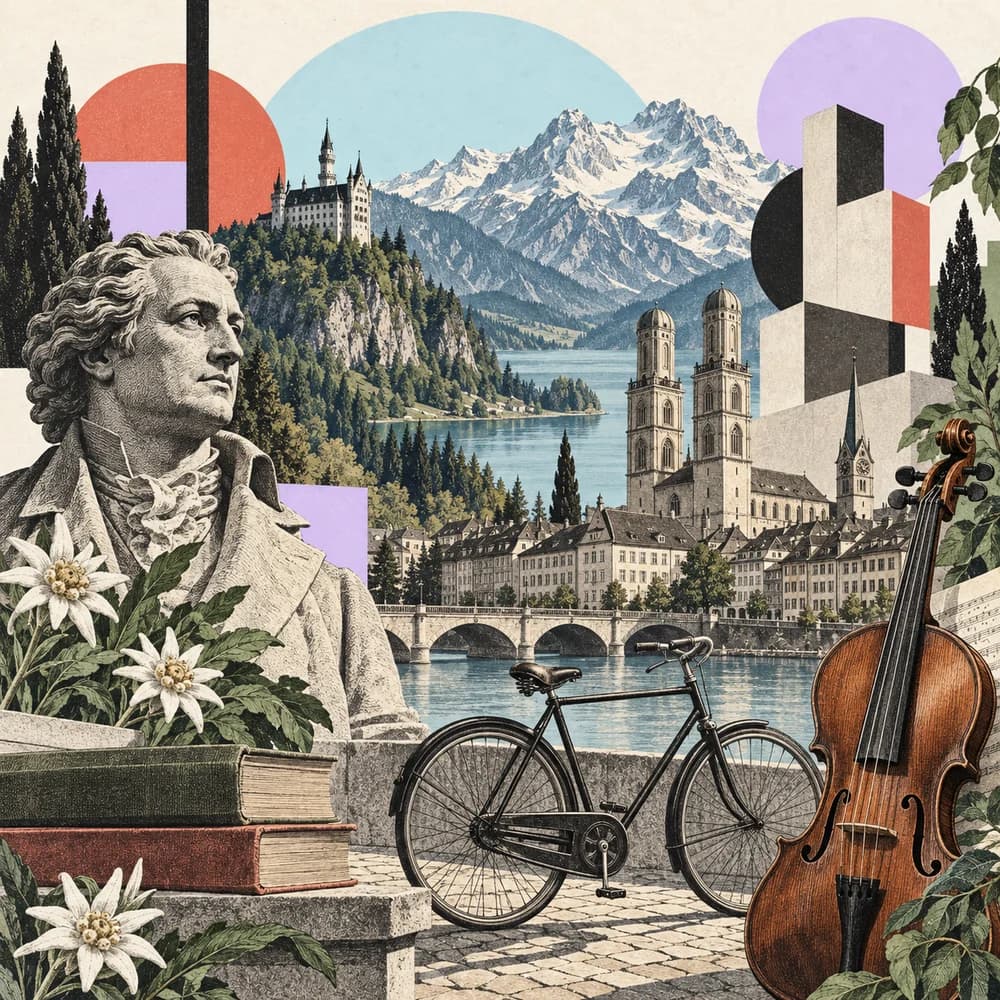
Architecture in Germany, Austria, and Switzerland reflects political systems, religious authority, and social values across centuries. Key styles include Romanesque (rounded arches, thick walls), Gothic (pointed arches, soaring height, stained glass), Baroque (ornate decoration, grandeur, emotional impact), Jugendstil (organic forms, floral ornament, ca. 1900), and Bauhaus (functional minimalism, form follows function, founded 1919 by Walter Gropius). Postwar architecture includes both modernist reconstruction and deliberate preservation debates, as seen in the rebuilding of the Frauenkirche in Dresden. Contemporary sustainable design, including the Passivhaus standard, shows how architecture responds to current environmental values. For the exam, be ready to describe a building's style, explain what it reveals about its era, and use vocabulary such as der Baustil, die Stadtplanung, and der Wiederaufbau.
Can you name one building or architectural style from each of the following periods: medieval, Baroque, early 20th century, and postwar? Can you explain in German what each reveals about its historical context?