7.6 New Imperialism: Motivations and Methods

🇪🇺AP European History Unit 7 Review
7.6 New Imperialism: Motivations and Methods
🇪🇺 AP European History
7.1
Context of 19th Century Politics
7.2
Nationalism
7.3
National Unification and Diplomatic Tensions
7.4
Darwinism and Social Darwinism
7.5
The Age of Progress and Modernity
7.6
New Imperialism: Motivations and Methods
7.7
Imperialism’s Global Effects
7.8
19th-Century Culture and Arts
7.9
Causation in 19th Century Perspectives and Political Developments
New Imperialism (roughly 1815 to 1914) was the period when European nations rapidly expanded control over Asia and Africa, driven by economic, political, and cultural motives. They wanted raw materials and markets, competed with rival powers for strategic advantage, and justified rule by claiming cultural and racial superiority.
New Imperialism in AP Euro
In AP European History, New Imperialism refers to the intensification of European control in Asia and Africa from 1815 to 1914. The motives were economic, political, and cultural: European states wanted raw materials and markets, strategic positions and national prestige, and ideological justifications rooted in claims of cultural and racial superiority.
The methods were different from the motives. Technologies like advanced weapons, steamships, the telegraph, photography, and quinine helped Europeans build and govern empires. On the exam, keep that distinction clear: motives explain why Europeans expanded; methods explain how expansion became easier.
Why This Matters for the AP European History Exam
This topic supports two kinds of historical thinking you will use across the AP European History exam: causation and continuity and change over time. You should be able to explain why European powers expanded into Asia and Africa and how new technologies enabled that expansion.
Imperialism connects to other Unit 7 themes like nationalism, national rivalries, and Social Darwinism, so it shows up in questions that ask you to link ideas across topics. The motives here (economic, political, cultural) and the methods (technology and direct or indirect control) give you concrete evidence to build arguments and analyze sources about European interaction with the wider world.
Key Takeaways
- European imperialism in this era was driven by three main motive types: economic (raw materials and markets), political and strategic (national rivalries and key positions), and cultural (claims of superiority).
- National rivalries and strategic concerns pushed European states to compete for colonies, especially in Africa and Asia.
- Even as European colonies in the Americas broke free politically, Europeans turned to colonizing Africa and Asia for resources and markets.
- Imperialists justified expansion using ideas of cultural and racial superiority, including Social Darwinism, the "White Man's Burden," and the mission civilisatrice.
- Advanced weaponry gave Europeans a military edge, while transportation and communication technologies made empires easier to build and run.
- Medical advances, such as quinine for malaria, let Europeans survive in regions that had blocked earlier expansion.
The Three Motivations for New Imperialism
European expansion in this period grew out of overlapping economic, political, and cultural motivations. They often reinforced each other rather than working alone.
Economic Motivations
The Second Industrial Revolution increased Europe's demand for raw materials and for new markets to sell manufactured goods. Colonies were seen as sources of materials and as outlets where European products could be sold. This search for resources and markets was a central driver of colonization in Africa and Asia.
Political and Strategic Motivations
National rivalries and strategic concerns fueled competition for colonies. European states wanted to keep pace with their rivals, secure useful positions, and protect trade routes and access points. Holding colonies also became tied to a nation's prestige and global standing.
The Suez Canal is a useful application here: it shows why control of strategic routes mattered for maintaining influence over global commerce. Treat it as an example of strategic motivation, not as a required term for this topic.
Cultural and Ideological Motivations
Imperialists justified overseas rule by claiming cultural and racial superiority. Social Darwinism applied "survival of the fittest" to human societies and was used to argue that Europeans had the right to rule others. The mission civilisatrice (France's "civilizing mission") and the "White Man's Burden" framed colonial control as a moral duty to "civilize" non-European peoples. These ideas worked as justifications for expansion and exploitation.
How Technology Enabled Imperialism
Industrial and technological developments made European control of global empires possible. Three categories matter most for this topic.
Weaponry
Advanced weaponry ensured a European military advantage over colonized areas. Examples include the Minié ball, the breech-loading rifle, and the machine gun. These weapons let smaller European forces overpower larger but less heavily armed populations.
Transportation and Communication
Communication and transportation technologies helped create and expand empires. Steamships moved troops, goods, and resources faster and farther. The telegraph allowed rapid communication between European capitals and distant colonies, which made governing and responding to crises easier. Photography also shaped how Europeans saw and presented colonized regions.
Medicine
Advances in medicine enabled European survival in Africa and Asia. Quinine helped treat malaria, which had previously blocked European movement into much of Africa. Louis Pasteur's germ theory of disease, anesthesia and antiseptics, and public health projects also improved survival and made longer-lasting colonies possible.
How to Use This on the AP European History Exam
Causation
Practice sorting motives into economic, political/strategic, and cultural categories. A strong causation answer usually shows that these motives worked together. For example, the demand for raw materials (economic) combined with rivalry between states (political) and claims of superiority (cultural).
Continuity and Change
Be ready to compare this period with earlier expansion. Both earlier and later imperialism involved economic, political, and cultural ambitions, but the scale, speed, and technological tools of the late 19th century were new. Use the technology categories (weapons, transport, communication, medicine) as concrete evidence of change.
Using Sources Effectively
When a source defends imperialism, look for the justification it uses. Texts like Kipling's "The White Man's Burden" or appeals to a civilizing mission reveal cultural and racial superiority arguments. Naming the type of justification strengthens your analysis of point of view and purpose.
Common Trap
Do not list technology as a motive. Technology is a method that enabled imperialism. The motives are economic, political, and cultural. Keeping these separate helps you answer prompts precisely.
Old Imperialism vs. New Imperialism
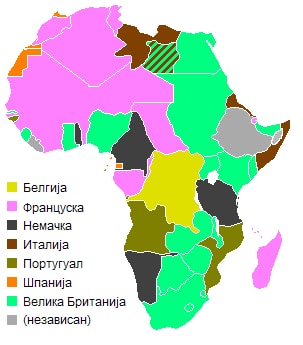
Comparing the two phases of European expansion is a useful way to show change over time. The table below summarizes common contrasts. Treat the specific examples as illustrations, not as required terms for this topic.
| Feature | Old Imperialism (c. 16th to early 19th century) | New Imperialism (late 19th to early 20th century) |
|---|---|---|
| Main focus | Trading posts, resource extraction, spreading Christianity | Direct and indirect control of large territories |
| Economic driver | Wealth from gold, spices, and luxury goods | Industrial raw materials and markets for manufactured goods |
| Regions | Americas, parts of Asia and Africa | Heavy push into Africa and Asia |
| Justifications | Religious conversion, wealth, glory | Cultural and racial superiority, including Social Darwinism |
One important continuity: even as European colonies in the Americas gained political independence, European powers shifted their imperial energy toward Africa and Asia.
Common Misconceptions
- Misconception: Technology was a motive.Actually: Technology was a method, not a motive. Steamships, machine guns, the telegraph, and quinine made imperialism possible, but the reasons for expanding were economic, political, and cultural.
- Misconception: New Imperialism was only about money.Actually: New Imperialism was not only about money. Economic motives mattered, but strategic rivalry and cultural claims of superiority were just as important and often connected.
- Misconception: Social Darwinism was real science.Actually: Social Darwinism was a justification, not real science. It misused "survival of the fittest" to defend racial hierarchy and European rule.
- Misconception: European colonies in the Americas were already breaking away during this era.Actually: New Imperialism focused on Asia and Africa, not on rebuilding empire in the Americas.
- Misconception: Medical advances caused imperialism.Actually: Medical advances did not cause imperialism, but they removed a major barrier. Treatments like quinine let Europeans survive in areas that had blocked earlier expansion.
- Misconception: A civilizing mission accurately described what colonization did.Actually: A "civilizing mission" was how imperialists described their goals, not an accurate description of what colonization did. In practice, expansion was tied to control and exploitation.
Related AP European History Guides
Practice Questions for 7.6
1 of 10
Source A: Friedrich von Bernhardi, Germany and the Next War, 1911. "War is a biological necessity... The strong nation must conquer the weak to secure the space necessary for its expanding population."
Source B: Lord Cromer, Modern Egypt, 1908. "The occupation of Egypt was forced upon England by the necessity of safeguarding the route to India and preventing rival powers from dominating the Suez."
Which of the following best characterizes how these authors differ in their justification of imperial expansion?
A.
Source A justifies expansion through religious missionary zeal, while Source B justifies it through geopolitical strategic defense.
B.
Source A justifies expansion through the need for raw materials, while Source B justifies it through the desire for new markets.
C.
Source A justifies expansion through the desire for new markets, while Source B justifies it through religious missionary zeal.
D.
Source A justifies expansion through Social Darwinist struggle, while Source B justifies it through geopolitical strategic defense.
Vocabulary
The following words are mentioned explicitly in the AP® course framework for this topic.Term | Definition |
|---|---|
advanced weaponry | Superior military technology including rifles, machine guns, and ammunition that provided Europeans with military dominance over colonized populations. |
anesthesia | Medical innovation that prevented pain during surgery, improving survival rates and enabling more effective medical treatment in colonial contexts. |
antiseptics | Substances used to kill or inhibit microorganisms, reducing infection rates and improving medical outcomes for Europeans in Africa and Asia. |
breech-loading rifle | A firearm loaded from the rear of the barrel, allowing faster firing rates and giving European soldiers a significant military advantage. |
communication and transportation technologies | Innovations such as steamships and telegraphs that enabled Europeans to maintain control over vast imperial territories and coordinate colonial administration. |
cultural superiority | The belief held by European imperialists that their civilization and culture were more advanced and civilized than those of colonized peoples. |
European national rivalries | Competition and tensions between European nations that motivated them to acquire colonies and expand their global influence and power. |
germ theory of disease | Louis Pasteur's scientific theory that diseases are caused by microorganisms, leading to improved medical practices that increased European survival in tropical climates. |
imperialism | The policy of extending a country's power and influence through colonization, military force, or other means over foreign territories and peoples. |
machine gun | An automatic weapon capable of rapid continuous fire, providing European forces with overwhelming firepower against colonized peoples. |
markets for manufactured goods | Overseas territories and populations where European nations could sell their industrial products and expand their commercial influence. |
Minié ball | A type of bullet used in 19th-century rifles that improved accuracy and firepower for European military forces. |
Mission civilisatrice | The French concept that European nations had a civilizing mission to bring European culture, religion, and institutions to colonized territories. |
nationalism | A political ideology emphasizing loyalty to one's nation and national interests, which emerged as a reaction to Napoleonic expansion. |
photography | A visual recording technology that documented colonial territories and peoples, supporting imperial knowledge and control. |
public health projects | Organized medical and sanitation initiatives implemented in colonial territories that improved European health and survival rates. |
quinine | A drug derived from tree bark that prevented and treated malaria, enabling European survival and settlement in tropical African and Asian regions. |
racial superiority | The racist ideology used by European imperialists to justify their dominance over non-European peoples based on claims of biological and racial hierarchy. |
raw materials | Unprocessed natural resources extracted from colonies and foreign lands that were used in European commercial and industrial enterprises. |
Social Darwinism | A pseudo-scientific ideology that applied evolutionary concepts to human societies, claiming that some races and nations were naturally superior and destined to dominate others. |
steamships | Steam-powered vessels that enabled faster, more reliable transportation of troops, goods, and officials across oceans to support imperial expansion. |
strategic concerns | Military and geopolitical considerations that influenced European nations' decisions to establish colonies in strategic locations. |
technological advances | Innovations in weaponry, communication, transportation, and medicine that gave Europeans military, logistical, and health advantages during imperial expansion. |
telegraph | An electrical communication technology that transmitted messages over long distances, revolutionizing information transfer during industrialization. |
The White Man's Burden | A concept used to justify European imperialism as a moral duty to civilize and develop non-European territories and peoples. |
Frequently Asked Questions
What was New Imperialism in AP Euro?
New Imperialism was the period from 1815 to 1914 when European powers intensified control over territories in Asia and Africa. It was driven by economic, political, and cultural motives and enabled by industrial-era technology.
What were the main motives for New Imperialism?
The main motives were economic demand for raw materials and markets, political and strategic rivalry among European states, and cultural justifications based on claims of European superiority.
What is the difference between motives and methods of imperialism?
Motives explain why European states expanded, such as markets, resources, prestige, or ideology. Methods explain how they expanded, such as using advanced weapons, steamships, telegraphs, medicine, and direct or indirect rule.
How did technology enable New Imperialism?
Technology made imperial control easier. Weapons gave European armies military advantages, steamships and railroads moved people and goods, telegraphs sped communication, and quinine helped Europeans survive malaria-prone regions.
Why was Social Darwinism important to New Imperialism?
Social Darwinism was used to justify imperialism by falsely applying ideas about competition and hierarchy to human societies. It supported claims that Europeans had a right or duty to rule non-European peoples.
How is New Imperialism different from Old Imperialism?
Old Imperialism focused more on trading posts, maritime empires, religious conversion, and colonies in the Americas. New Imperialism involved faster, deeper control over large territories in Africa and Asia, supported by industrial technology and racialized ideology.