AP Computer Science P Unit 5 Cheatsheet: Impact of Computing

AP Computer Science P Unit 5 Cheatsheet: Impact of Computing

Start with the first 3 sections of the Unit 5 one-page cheatsheet below. The full sheet is a PDF you can print.

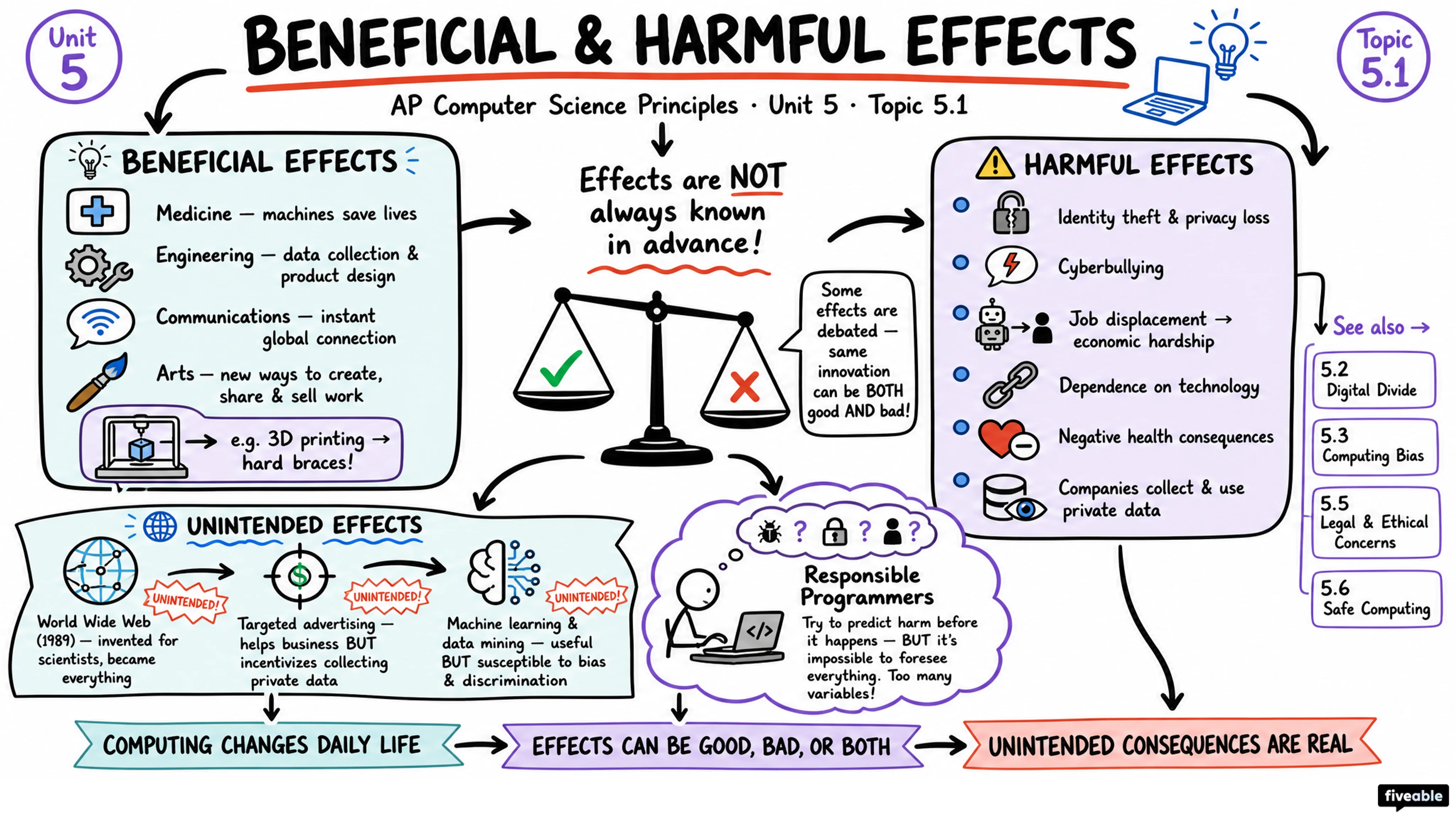
Beneficial & Harmful Effects

Core idea: Computing innovations create both intended and unintended consequences. The same effect can be beneficial to one group and harmful to another.

  • Unanticipated effects: Creators cannot predict all uses or impacts in advance
  • Dual nature: A single innovation (e.g., social media, targeted ads, machine learning) may help some while harming others
  • Examples:
    • Web: designed for scientists → global communication platform
    • Targeted ads: business tool → privacy invasion & discrimination
    • Machine learning: medical breakthroughs → discriminatory algorithms
  • Programmer responsibility: Consider unintended uses and harmful potential, though impossible to foresee all outcomes
  • Positive spillover: Innovations often advance unrelated fields (medicine, arts, engineering)
  • Scale matters: Rapid sharing with many users amplifies unintended impacts beyond programmer control
Digital Divide

Definition: Unequal access to computing devices and the Internet based on socioeconomic, geographic, or demographic factors.

  • Variation factors:
    • Income level
    • Geographic location (rural vs. urban)
    • Age, race, ethnicity
    • Country/region
  • Scope: Affects both groups and individuals globally and locally
  • Consequences: Creates issues of equity, access, and influence
  • Who influences it: Individuals, organizations, governments all play roles in widening or narrowing the divide
  • Ethical concern: Unequal access raises fundamental fairness questions about who benefits from computing

Computing Bias

Definition: Algorithms and systems can reflect existing human biases, which may be introduced intentionally or unintentionally through the algorithm's design or through the data it uses.

  • Sources of bias:
    • Biased algorithms (logic written by humans with assumptions)
    • Biased training data (historical inequities baked in)
  • Pervasiveness: Bias can enter at any stage—design, coding, data collection, testing
  • Programmer duty: Actively work to identify and reduce bias as a way to combat existing human prejudices
  • Real-world impact: Biased systems can discriminate in hiring, lending, criminal justice, healthcare

The rest of the Unit 5 sheet

5 more sections are on the one-page PDF:

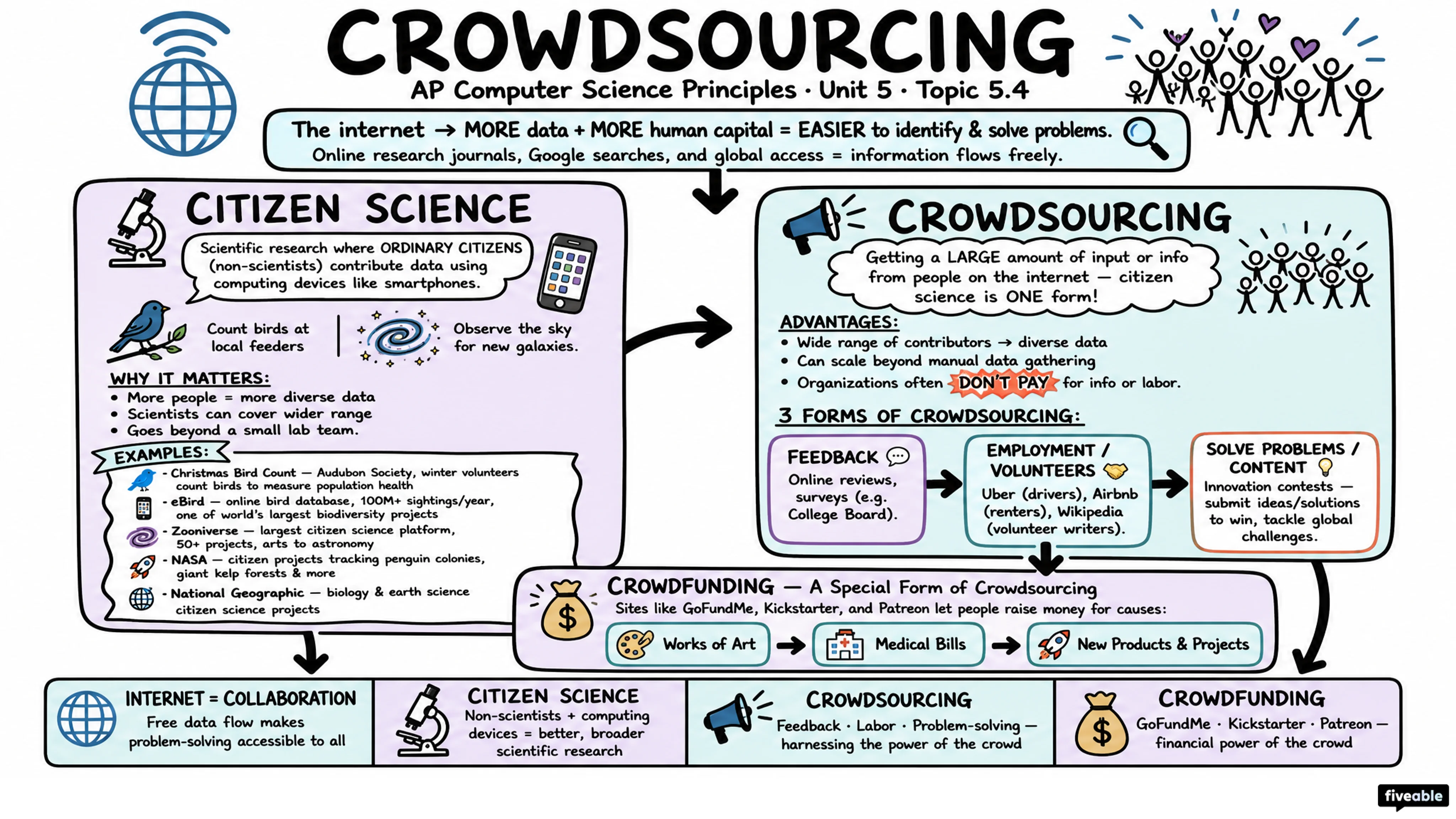
  • Crowdsourcing & Citizen Science

  • Intellectual Property & Legal Use

  • Personally Identifiable Information (PII)

  • Protection & Authentication

  • Malware, Viruses & Unauthorized Access

Made by you

Visual Cheatsheets

Pick a Unit 5 topic and a format: flowchart, comparison chart, vocab sheet, Cornell notes and more. Ready in about a minute.

Printable PDF · from the Fiveable shop

AP Computer Science Principles Unit 5 Cheatsheet

1 page · Impact of Computing · PDF

Visual Cheatsheets

One topic, the format you pick, ready in about a minute

Format

Topic

Takes 30–60 seconds

Preview: Standard

Unit 5: Impact of Computing, topic by topic

Each topic has a full study guide. See the whole unit.