Art in this region was made for Buddhist, Hindu, Islamic, Confucian, Daoist, and Shinto contexts, as well as for secular courts and literati patrons. Knowing who commissioned a work, for what religious or social purpose, and for what audience explains its iconography, scale, and setting. Architecture is frequently religious in function, and secular courtly art often carries religious content.
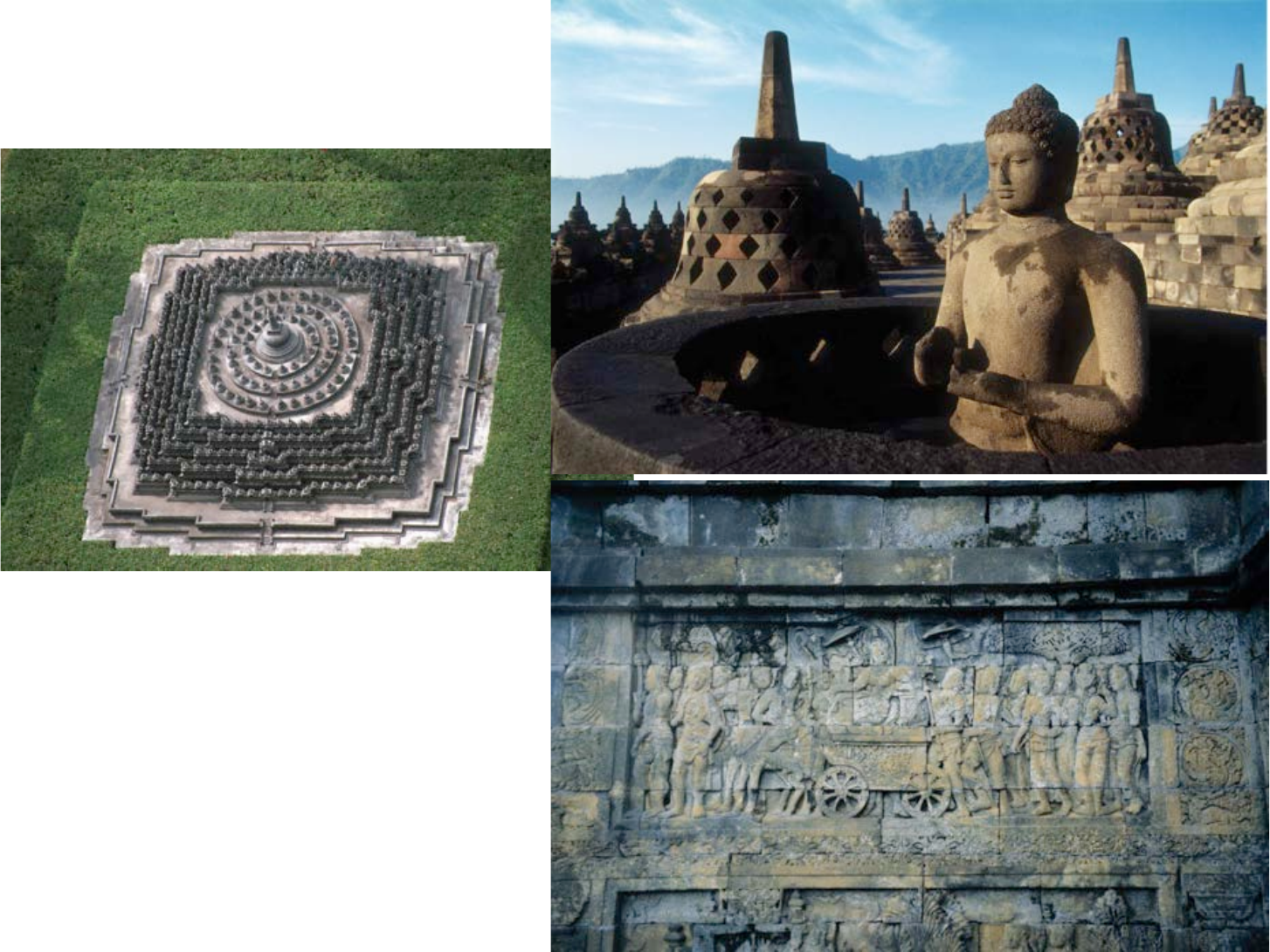
- Stupa components and circumambulation: The Great Stupa at Sanchi consists of an anda (solid dome), harmika (square railing at the top), yasti (mast), vedika (outer railing), and toranas (gateways with jataka reliefs). Worshippers perform pradakshina, walking clockwise around the structure as a devotional act.
- Hindu temple architecture: A Hindu temple's garbhagriha (inner sanctuary) houses the deity's image, the shikhara (tower) marks the sacred space, and the mandapa (hall) provides space for worshippers. The Kandariya Mahadeva temple exemplifies this program.
- Nataraja iconography: The Chola dynasty cast bronze Shiva as Nataraja, dancing within a ring of flames (prabhamandala), one foot on the demon of ignorance, four arms holding symbolic objects. Each element encodes Hindu cosmological meaning about creation, destruction, and rebirth.
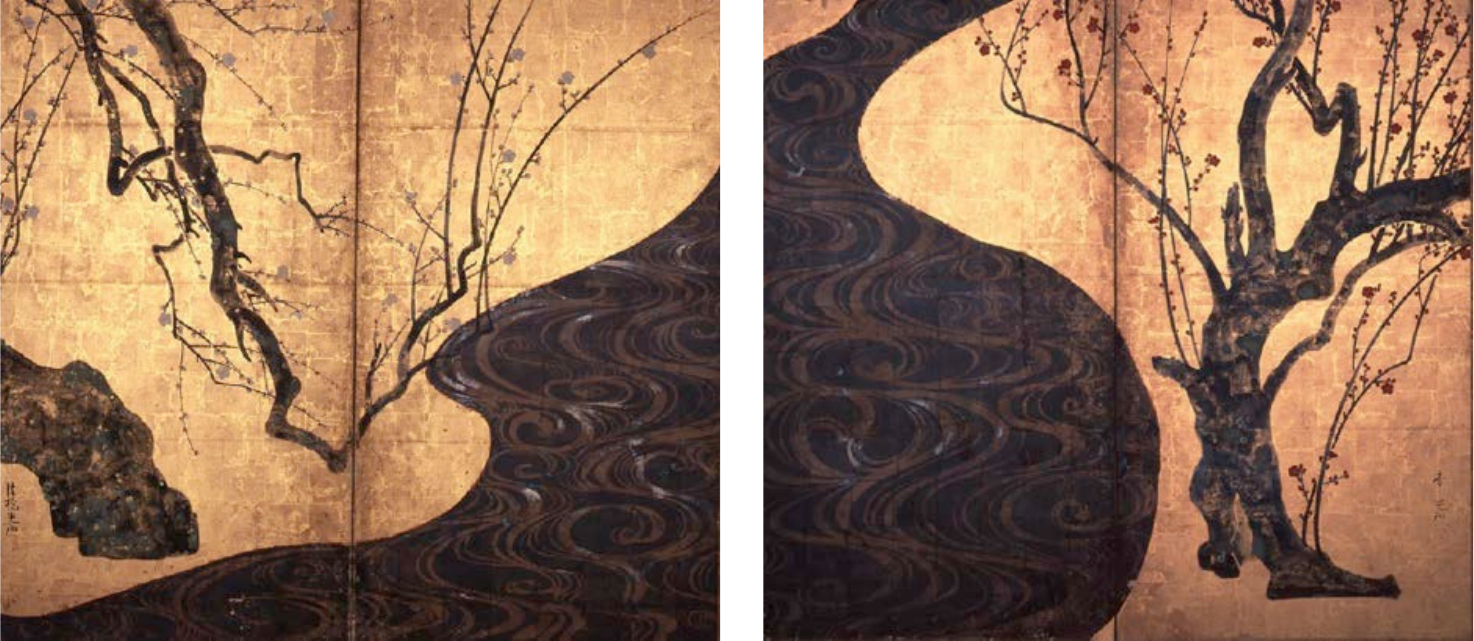
- Literati painting: Scholar-artists in China and Japan painted landscapes as a refined cultural practice, not for commercial sale. Works like Travelers among Mountains and Streams juxtapose mountain-water (shan shui) imagery with poetry, reflecting Neo-Confucian and Daoist values.
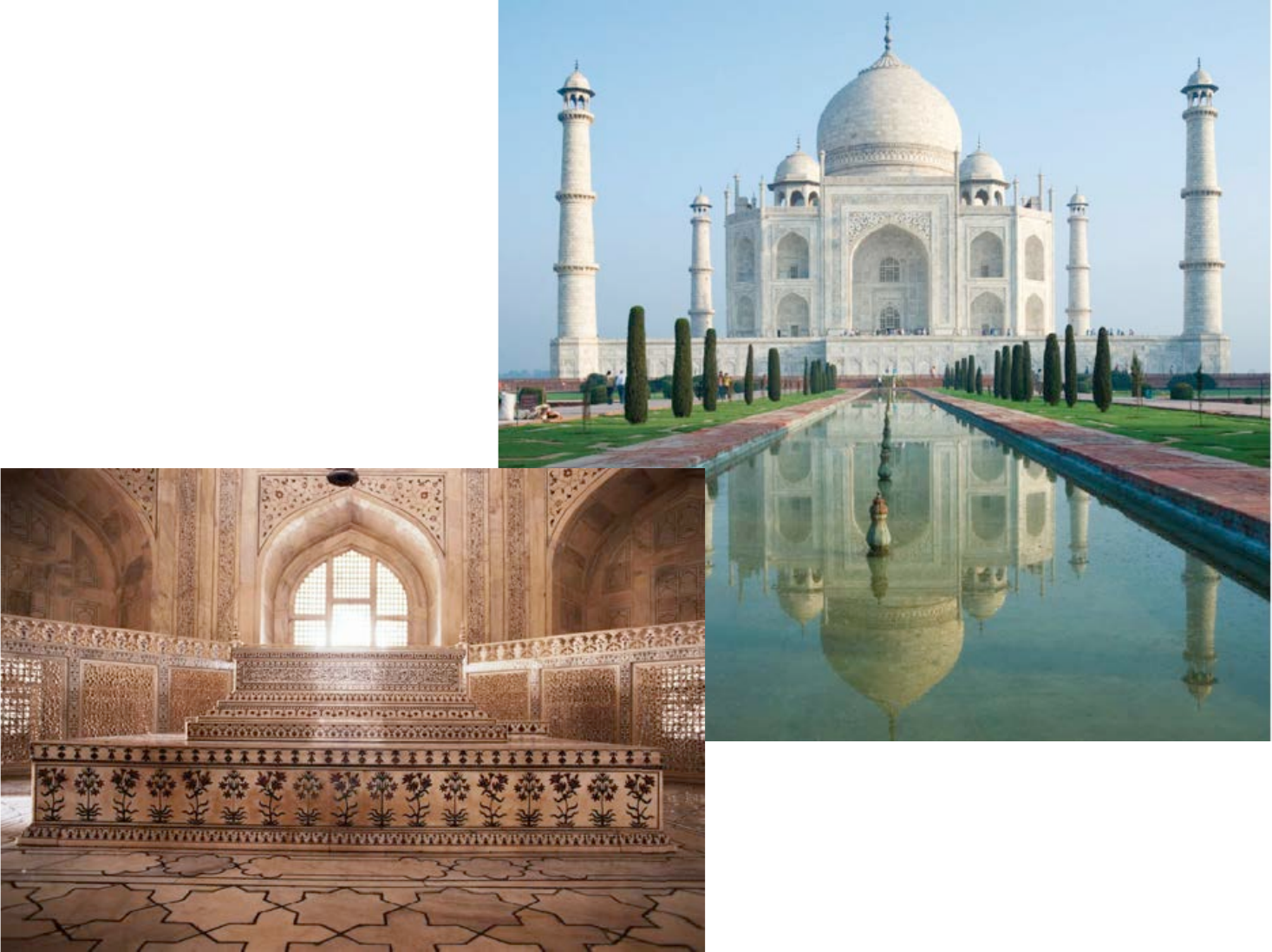
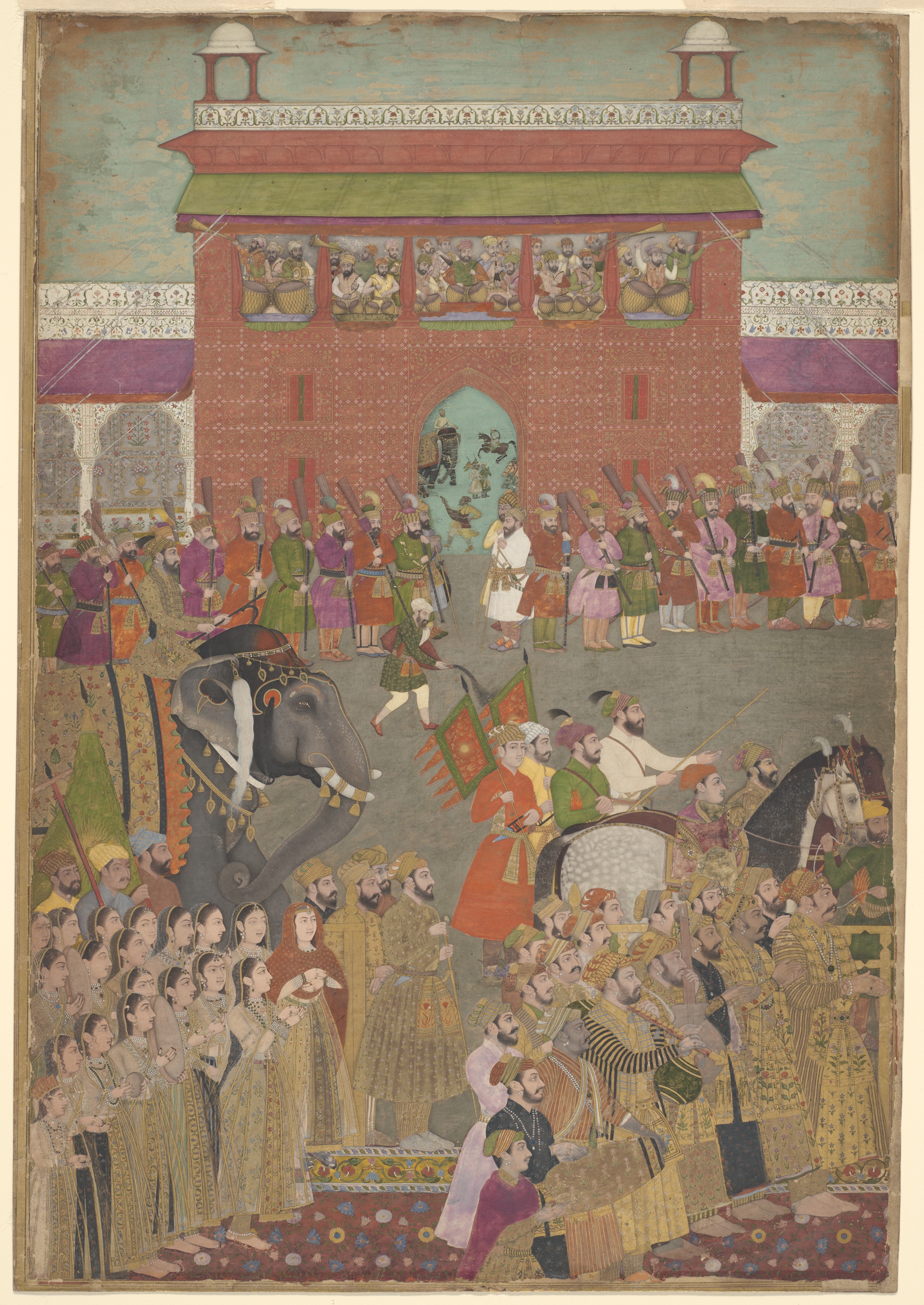
- Islamic architecture in South and Southeast Asia: Mughal architecture takes secular forms (forts, palaces) and religious forms (mosques, tombs). The Taj Mahal is a funerary monument combining a charbagh garden, pietra dura inlay, and calligraphic decoration to express Mughal imperial and Islamic spiritual power.
For each required work in Topic 8.2, can you identify the patron or audience, the religious or social purpose, and at least one iconographic element that encodes that purpose?
| Tradition | Architectural or art form | Key iconographic feature | Purpose |
|---|
| Buddhism | Stupa (Great Stupa at Sanchi) | Anda, toranas with jatakas | House relics, support circumambulation |
| Hinduism | Temple (Kandariya Mahadeva) | Shikhara, garbhagriha, erotic sculpture | Sacred dwelling of deity |
| Islam (Mughal) | Tomb (Taj Mahal) | Charbagh, pietra dura, calligraphy | Funerary monument, imperial prestige |
| Confucianism | Imperial palace (Forbidden City) | Axial plan, Hall of Supreme Harmony | Reinforce imperial hierarchy |
| Zen Buddhism | Rock garden (Ryoan-ji) | Karesansui, raked gravel, 15 rocks | Meditation, wabi-sabi aesthetics |