5.5 Sectional Conflict: Regional Differences

🇺🇸AP US History Unit 5 Review
5.5 Sectional Conflict: Regional Differences
🇺🇸 AP US History
5.1
Contextualizing Period 5
5.2
Manifest Destiny
5.3
The Mexican–American War
5.4
The Compromise of 1850
5.5
Sectional Conflict: Regional Differences
5.6
Failure of Compromise
5.7
Election of 1860 and Secession
5.8
Military Conflict in the Civil War
5.9
Government Policies during the Civil War
5.10
Reconstruction
5.11
Failure of Reconstruction
5.12
Comparison in Period 5, 1844-1877
As the United States expanded westward, differences between North and South intensified. Slavery was the central issue, but immigration patterns, economic systems, party politics, and cultural values also deepened sectional tensions before the Civil War.
Key Takeaways
- German and Irish Catholic immigrants settled mostly in Northern cities, widening regional differences and prompting the rise of the Know-Nothing Party.
- In California, Mexican Americans, Californios, and Chinese immigrants faced discrimination, while Americans sought to take over Mexican and Native lands.
- Northern industry and free labor contrasted with Southern cotton plantations and enslaved labor, while the Free Soil Movement opposed slavery's expansion for economic reasons.
- Abolitionists used newspapers, speeches, and books to challenge slavery, while the Underground Railroad helped escapees reach freedom.
- John C. Calhoun defended slavery as a 'positive good,' while publications on both sides intensified the debate and Southerners banned anti-slavery literature.
Immigration Changes the North
The mid-19th century brought waves of new immigrants to America's shores, dramatically changing the demographic makeup of Northern cities and widening the cultural divide between regions.
- Germans and Irish Catholics came to the United States in large numbers during the 1840s and 1850s
- Most settled in Northern cities where industrial jobs were available
- Immigrants often lived in ethnic neighborhoods where they preserved their cultures
- Many faced discrimination and economic hardship
- This immigration pattern widened the demographic gap between North and South
Nativist Response to Immigration
The rapid influx of immigrants, particularly Catholics from Ireland and Germany, sparked a powerful backlash among many native-born Americans who feared cultural, religious, and economic changes.
- Nativism - belief that native-born Americans needed protection from immigrants
- The American Party (Know-Nothing Party) emerged in response to immigration
- Know-Nothings advocated:
- Restrictions on immigration
- Longer waiting periods for citizenship
- Limiting immigrants' political power
- Temperance movement gained support partly due to anti-immigrant sentiment
- Anti-Catholic prejudice was especially strong, as many immigrants practiced Catholicism
Western Racial Tensions
In the newly acquired western territories, racial conflicts emerged as diverse populations competed for resources and opportunity, often resulting in discrimination against non-white residents.
- In California, significant backlash against non-white residents
- Mexican Americans and Californios faced discrimination despite treaty protections
- Chinese immigrants, who came during the Gold Rush, experienced severe discrimination
- Many white Americans viewed these groups as job competition
- Land disputes were common as Americans sought to take over Mexican and Native lands
Economic Differences Between Regions
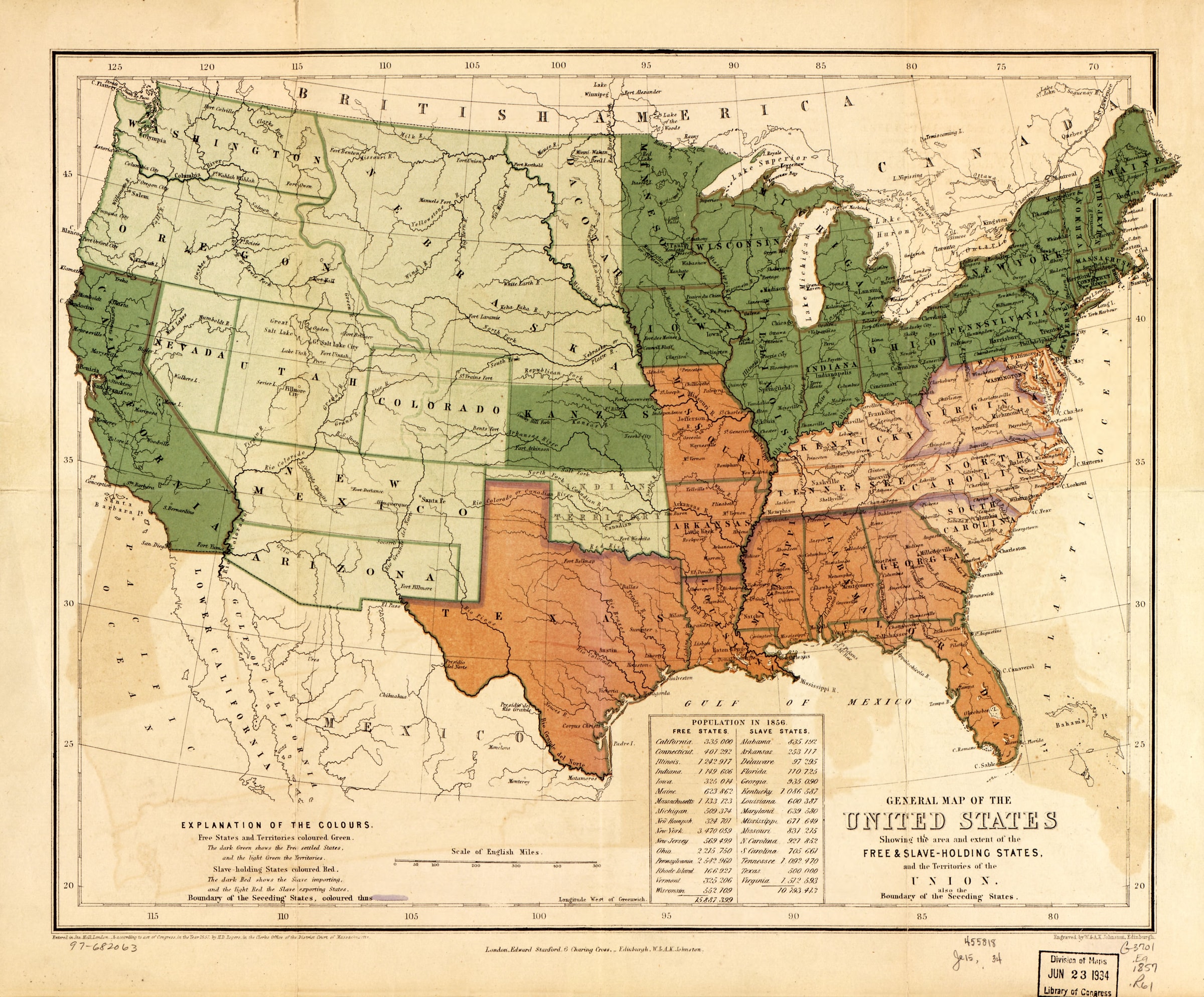
North and South developed drastically different economic systems by the mid-19th century, creating conflicting interests and values that made political compromise increasingly difficult.
-
Northern economy increasingly based on:
- Manufacturing and industry
- Free labor and wage system
- Urban centers and factories
- Investment in railroads and infrastructure
- Diverse agriculture on small farms
-
Southern economy relied on:
- Agricultural exports, especially cotton
- Plantation system
- Enslaved labor force
- Limited manufacturing
- Rural population patterns
-
The Free Soil Movement opposed slavery's expansion for economic reasons
- Many Northerners believed slavery undermined the free labor market
- Argued that slavery prevented economic opportunities for non-slaveholding whites
- Did not necessarily oppose slavery on moral grounds
The Abolitionist Movement
Though initially a small minority, abolitionist activists grew increasingly vocal and influential in Northern society, using various tactics to fight against slavery and raise awareness about its horrors.
-
Though a minority in the North, abolitionists grew more vocal and influential
-
Key abolitionists and their contributions:
- William Lloyd Garrison published The Liberator newspaper
- Frederick Douglass, escaped slave, published North Star and gave powerful speeches
- Harriet Beecher Stowe wrote Uncle Tom's Cabin (1852), which dramatically increased Northern sympathy for slaves
-
Abolitionist actions:
- Underground Railroad helped escapees reach freedom, especially after Fugitive Slave Act
- John Brown led violent attacks in Kansas and at Harper's Ferry
- Northern states passed Personal Liberty Laws to undermine the Fugitive Slave Act
Southern Defense of Slavery
As Northern criticism of slavery intensified, Southerners developed increasingly elaborate arguments to defend the institution, seeing attacks on slavery as threats to their way of life, economy, and social order.
-
Southerners developed multiple arguments to defend slavery:
- Racial theories claiming African inferiority based on pseudoscience
- Religious arguments that slavery was sanctioned by the Bible
- Paternalistic claim that slavery benefited and "civilized" enslaved people
- John C. Calhoun's argument that slavery was a "positive good" rather than a necessary evil
- Constitutional protection of property rights applied to enslaved people
- State sovereignty allowed states to determine their own institutions
-
Southern response to criticism:
Growing Division Through Literature
Books and publications on both sides of the slavery debate further polarized public opinion, with influential works shaping how Americans viewed the moral and political issues at stake.
-
Books and publications intensified the debate over slavery
-
Anti-slavery works:
- Uncle Tom's Cabin by Harriet Beecher Stowe (1852)
- Narrative of the Life of Frederick Douglass (1845)
- The Anti-Slavery Examiner periodical by William Lloyd Garrison
-
Pro-slavery works:
- "The Institution of Slavery as It Exists in the United States" (1857)
- "An Essay on Slavery and Abolitionism" (1837)
-
Southern reaction to anti-slavery literature was intense:
- Banned Hinton Helper's "The Impending Crisis of the South" (1857)
- Created laws against distributing abolitionist materials
- Developed stronger pro-slavery arguments in response
The sectional differences between North and South created a widening cultural and ideological gap that made compromise increasingly difficult. By the 1850s, Americans in different regions were developing fundamentally different understandings of their nation's future, with contrasting visions of economic development, citizenship, and human freedom. These differences would eventually prove too great to resolve through normal political channels, setting the stage for the conflict to come.
🎥 Watch: AP US History - Road to the Civil War
Practice Questions for 5.5
1 of 10
A Northern manufacturer argues that allowing slavery to expand into western territories would flood labor markets with unpaid workers, undercutting wages for free laborers and preventing economic opportunity for non-slaveholding whites. This argument most directly illustrates which regional tension?
A.
The incompatibility between slavery expansion and Northern free labor market principles
B.
Southern planters' constitutional right to expand slavery into new states
C.
The need for federal protection of slaveholders' property rights in western territories
D.
The moral superiority of Northern industrial labor over Southern agricultural work
Vocabulary
The following words are mentioned explicitly in the AP® course framework for this topic.Term | Definition |
|---|---|
abolitionists | Activists who opposed slavery on moral grounds and worked to end the institution entirely. |
anti-Catholic | Opposition to or discrimination against Roman Catholicism and its followers, particularly prevalent in 19th-century America against Irish and German immigrants. |
enslaved labor | Labor performed by people who are held in bondage and forced to work without compensation or freedom. |
ethnic communities | Neighborhoods or settlements where people of the same national origin or cultural background lived together, often preserving their native languages and customs. |
free labor | Labor performed by workers who are paid wages and are free to leave their employment, as opposed to enslaved labor. |
free-soil movement | A political movement that opposed the expansion of slavery into new territories and states, arguing that slavery was incompatible with free labor. |
immigration | The process of people moving into a country or region with the intention to settle permanently. |
manufacturing | The production of goods in factories using industrial methods, which became a major driver of economic growth in the Northern United States. |
nativism | A political movement that favors native-born citizens over immigrants and seeks to restrict immigration and immigrant rights. |
racial doctrines | Theories and beliefs used to justify racial hierarchies and the enslavement of African Americans based on claims of racial superiority. |
states' rights | The principle that individual states retain sovereignty and the right to govern themselves on matters not delegated to the federal government. |
Frequently Asked Questions
What were the main regional differences between the North and South before the Civil War?
Before the Civil War the North and South differed in economy, society, politics, and culture—differences that fueled sectional conflict on AP exam prompts (useful for DBQs/LEQs). - Economy: North industrialized (factories, wage/free labor, urban growth); South depended on cotton, plantations, and enslaved labor (CED KC-5.2.I.A). - Labor & ideology: North’s free-labor and Free Soil ideas opposed slavery’s expansion; abolitionists were a visible minority pushing moral arguments and the Underground Railroad (KC-5.2.I.B). - Immigration & cities: Large Irish and German immigration created urban ethnic enclaves and nativist backlash/Know-Nothings in the North (CED LO E). - Society/politics: South had an elite plantation culture defending slavery with racial doctrines and states’ rights (KC-5.2.I.C); political fights produced Compromise of 1850, Fugitive Slave Law, rise of Republicans and “Fire-Eaters.” - Culture/legal conflict: Northern laws, press, and parties increasingly opposed slavery’s spread—heightening crises tested on short answers and essays. For a focused review, see the Fiveable Topic 5.5 study guide (/apush/unit-5/sectional-conflict-before-civil-war/study-guide/Klx3eOhZBS11qtWKIvH2) and practice questions (/practice/ap-us-history).
Why did so many Irish and German immigrants come to America in the 1800s?
Most Irish and German immigrants came to the U.S. in the mid-1800s because of strong push and pull factors. Push: the Irish faced the Potato Famine (1845–1852) and extreme poverty; many Germans fled crop failures, economic hardship, and the failed 1848 revolutions. Pull: the U.S. offered jobs in expanding Northern factories, available farmland in the West, and the chance for political or religious freedom. Many settled in urban ethnic enclaves (Irish Catholic neighborhoods, German communities) where they preserved language, churches, and customs. Their arrival helped shape northern cities and provoked a nativist backlash (Know-Nothing movement)—a key CED point under Topic 5.5 (LO E and KC-5.1.II). This content shows up on AP tasks like short answers and DBQs; review the Topic 5.5 study guide for focused notes (/apush/unit-5/sectional-conflict-before-civil-war/study-guide/Klx3eOhZBS11qtWKIvH2) and practice questions (/practice/ap-us-history).
What is the free-soil movement and how was it different from abolition?
The free-soil movement opposed the expansion of slavery into new western territories because many Northerners believed slavery threatened “free labor”—wage workers’ economic opportunities and social mobility. It gave rise to the Free Soil Party (1848) and argued slavery should not spread, so free white workers could compete fairly (KC-5.2.I.A). Free-soilers typically didn’t call for immediate abolition where slavery already existed. Abolitionism, by contrast, was a moral and political movement that sought the immediate end of slavery everywhere. Abolitionists (Black and white) used moral arguments, activism (e.g., Underground Railroad), petitions, and sometimes radical rhetoric (think William Lloyd Garrison) to end the institution itself (KC-5.2.I.B). On the AP exam, expect questions linking free-soil ideology to Republican Party formation and sectional tensions (Topic 5.5). For a quick review, see the Topic 5.5 study guide (/apush/unit-5/sectional-conflict-before-civil-war/study-guide/Klx3eOhZBS11qtWKIvH2) and practice questions (/practice/ap-us-history).
I'm confused about why Northerners cared about slavery if they weren't all abolitionists - can someone explain?
Short answer: most Northerners opposed the expansion of slavery without being full abolitionists because of free-labor ideology, economic self-interest, and political concerns. They believed slavery threatened “free labor”—wage earners’ ability to rise economically—so allowing slavery into new territories would undercut northern workers and small farmers (Free Soil ideas, KC-5.2.I.A). Many also felt slavery was morally wrong but weren’t committed to immediate emancipation; others resisted the South’s political power (Fugitive Slave Law and territorial fights made slavery a national issue). Abolitionists were a visible minority, but their activism made the issue unavoidable (KC-5.2.I.B). For AP prep, use this to answer short-answer or LEQ prompts by naming the free-soil argument, economic interest, and political power struggle, and cite specific laws/events (Compromise of 1850, Fugitive Slave Law). Review Topic 5.5 on Fiveable for targeted notes (/apush/unit-5/sectional-conflict-before-civil-war/study-guide/Klx3eOhZBS11qtWKIvH2) and practice questions (/practice/ap-us-history).
How did nativism affect Irish and German immigrants in the mid-1800s?
Nativism in the mid-1800s—an anti-immigrant, especially anti-Catholic, movement—hurt Irish and German newcomers by fueling social, economic, and political exclusion. Many native-born Protestants blamed immigrants for taking jobs and “threatening” American culture, leading to workplace discrimination, violence (e.g., riots), and exclusion from certain jobs. Politically, nativists formed the Know-Nothing movement to limit immigrant voting power and push laws restricting naturalization and holding office. Nativism pushed Irish and German communities into dense urban ethnic enclaves where they preserved language, Catholic churches, and schools—helpful for survival but slowing broader social acceptance. For AP exam prep, link this to CED KC-5.1.II.A/B (immigrant settlement and anti-Catholic nativism) and use the Topic 5.5 study guide (/apush/unit-5/sectional-conflict-before-civil-war/study-guide/Klx3eOhZBS11qtWKIvH2). For broader review and practice, see Unit 5 (/apush/unit-5) and practice questions (/practice/ap-us-history).
What arguments did Southerners use to defend slavery as a "positive good"?
Southerners argued slavery was a "positive good" using economic, social, racial, and constitutional claims. Economically they said cotton and the Southern plantation system were efficient and vital to national prosperity, and that enslaved labor provided stability unlike wage labor. Socially they claimed slavery civilized Africans—providing food, housing, and Christian instruction—and kept a paternal social order. Racial doctrines (Social Darwinism/white supremacy) framed Black people as inherently suited to enslavement. Politically and legally defenders insisted slavery was protected by the Constitution and by states' rights, so Northern attacks threatened Southern liberty. These arguments countered Northern free-labor and abolitionist moral claims (CED KC-5.2.I.C). For more Topic 5.5 review, see the Fiveable study guide (/apush/unit-5/sectional-conflict-before-civil-war/study-guide/Klx3eOhZBS11qtWKIvH2) and practice questions (/practice/ap-us-history).
Why did immigrants from Europe mostly settle in ethnic communities instead of spreading out?
Because new arrivals faced language barriers, unfamiliar customs, and frequent discrimination, settling with people from their homeland made practical sense. Ethnic enclaves (Irish, German, Catholic immigrant communities) let immigrants keep language and religion, share housing and jobs, send remittances, and use mutual-aid societies to navigate urban factory work. Chain migration—one family member brings others—reinforced these neighborhoods. Nativism and groups like the Know-Nothing movement also pushed immigrants together by limiting political and economic opportunities, so enclaves became safe spaces and power bases. These patterns are exactly what the CED highlights (KC-5.1.II.A and II.B). On the AP exam you might use this for an SAQ or DBQ about immigration, urbanization, or partisan conflicts; see the Topic 5.5 study guide for review (/apush/unit-5/sectional-conflict-before-civil-war/study-guide/Klx3eOhZBS11qtWKIvH2). For more practice, try Fiveable’s APUSH practice questions (/practice/ap-us-history).
How did the North's manufacturing economy create tension with the South's plantation system?
The North’s manufacturing economy and the South’s plantation system clashed because they rested on opposite labor and economic models. Northern factories depended on free wage labor, urban growth, and expanding markets; many Northerners argued slavery undercut free labor by depressing wages and blocking opportunity, fueling the Free Soil and free-labor arguments in the 1840s–50s (CED KC-5.2.I.A). Abolitionists added moral pressure, while Southern defenders insisted slavery was a positive good tied to racial doctrine and states’ rights (KC-5.2.I.C). Economically, the North wanted protective tariffs and internal improvements that boosted industry; the South favored low tariffs and protection for cotton exports. Those conflicting interests made compromise harder (Compromise of 1850, Fugitive Slave Law) and pushed politics toward the Republican Party (1850s). For a concise AP-focused review, see the Topic 5.5 study guide (/apush/unit-5/sectional-conflict-before-civil-war/study-guide/Klx3eOhZBS11qtWKIvH2) and practice questions (/practice/ap-us-history).
What's the difference between anti-slavery and abolitionist movements?
Short answer: “Anti-slavery” and “abolitionist” overlap but aren’t identical. Anti-slavery is a broad label for people who opposed the spread or influence of slavery—like Free-Soilers who wanted to keep new territories free because they believed slavery threatened free labor and white economic opportunity (CED KC-5.2.I.A). Many anti-slavery Northerners didn’t call for immediate emancipation; they wanted to limit slavery’s expansion. Abolitionists, by contrast, demanded the immediate end of slavery everywhere on moral grounds. They were a smaller but highly visible group (CED KC-5.2.I.B): figures like William Lloyd Garrison, Black activists, the Underground Railroad, and some who aided escapes or endorsed radical tactics. On the AP exam, distinguish motivations and tactics—economic/free-labor vs. moral/abolitionist arguments—in short answers, DBQs, and LEQs. For a Topic 5.5 refresher, see the Fiveable study guide (/apush/unit-5/sectional-conflict-before-civil-war/study-guide/Klx3eOhZBS11qtWKIvH2) and practice questions (/practice/ap-us-history).
How do I write a DBQ essay about sectional differences leading to the Civil War?
Start with a clear thesis that answers how regional differences over slavery caused tension and establishes a line of reasoning (e.g., economic, social/ideological, and political causes). Contextualize briefly: industrializing North vs. cotton South, Manifest Destiny, and rising immigration/nativism. Use at least four documents to support each part of your argument (CED keywords: free labor/free-soil ideology, abolitionism, Fugitive Slave Law, Compromise of 1850, Republican Party, defenders of slavery). For two documents, explain sourcing (author’s POV, audience, purpose, historical situation) and use that to strengthen claims (e.g., abolitionist vs. Southern planter). Add at least one specific outside fact (Kansas-Nebraska Act, Dred Scott, or 1850 compromises) beyond the documents. End by showing complexity: trade-offs, overlapping causes, or how political institutions failed to resolve sectional conflict. Practice this structure with timed DBQs and use the Topic 5.5 study guide (/apush/unit-5/sectional-conflict-before-civil-war/study-guide/Klx3eOhZBS11qtWKIvH2) and 1000+ practice questions (/practice/ap-us-history).
Did the Constitution actually protect slavery like Southerners claimed?
Short answer: Southern defenders had a point but overstated it. The Constitution never uses the word “slavery,” but several clauses protected slaveholders’ interests: the Three-Fifths clause (affecting representation), the Fugitive Slave Clause (requiring return of escaped people), and the clause delaying any federal ban on the international slave trade until 1808. Other provisions (like the Commerce Clause) were ambiguous and later interpreted in ways that sometimes limited federal interference. So the document gave legal and political cover that reinforced slavery’s national reach, even though it didn’t explicitly enshrine the institution. That Constitutional ambiguity helped fuel sectional conflict and appears often on AP questions about causes of the Civil War (see KC-5.2.I.C). For more on how this fits Topic 5.5, check the Fiveable study guide (/apush/unit-5/sectional-conflict-before-civil-war/study-guide/Klx3eOhZBS11qtWKIvH2) and practice DBQ/LEQ prompts on Fiveable (/practice/ap-us-history).
What were the effects of Irish and German immigration on American culture between 1844-1877?
Between 1844–1877, large Irish and German migrations reshaped American culture, cities, and politics. Both groups settled in urban ethnic enclaves, kept language/religion (especially Catholicism), built parishes and parochial schools, and supplied most industrial and canal/railway labor—fuelling northern urban growth. Politically, Irish immigrants tended to back Democratic urban machines; many Germans (including political refugees of 1848) were artisans who leaned toward Free Soil and later Republican free-labor ideas, and some were active abolitionists. Their presence sparked a strong nativist reaction: anti-Catholic movements and the Know-Nothing Party aimed to limit immigrant influence. Culturally, these immigrants broadened American religious pluralism, changed labor politics, and intensified debates over free labor vs. slavery (useful for short-answer or LEQ prompts on regional tensions). For review, see the Topic 5.5 study guide (/apush/unit-5/sectional-conflict-before-civil-war/study-guide/Klx3eOhZBS11qtWKIvH2) and practice questions (/practice/ap-us-history).
Why were some Northerners against slavery expansion but not slavery itself?
Many Northerners opposed slavery’s expansion but not slavery itself because of free-labor ideology and economic self-interest. They feared slavery in new territories would undercut white workers, concentrate land and power in slaveholding elites, and block opportunities for free laborers—so they backed the Free Soil movement/Free Soil Party that wanted to stop slavery’s spread while leaving it where it already existed (CED KC-5.2.I.A). Abolitionists opposed slavery on moral grounds and wanted immediate end; they were a visible minority in the North (KC-5.2.I.B). On the AP exam, be ready to distinguish free-soil/free-labor motives from moral abolitionism in short-answer or LEQ prompts. For more review, check the Topic 5.5 study guide (/apush/unit-5/sectional-conflict-before-civil-war/study-guide/Klx3eOhZBS11qtWKIvH2) and practice questions (/practice/ap-us-history).
How did the Underground Railroad and abolitionist activities increase sectional tensions?
Abolitionists and the Underground Railroad raised sectional tensions by turning slavery into a public, moral crisis rather than just a regional economic issue. Abolitionists (white and Black, like William Lloyd Garrison and Frederick Douglass) published fiery anti-slavery pamphlets, lectured widely, and helped enslaved people escape via the Underground Railroad—actions the South saw as direct threats to its labor system and honor. Northern resistance to the Fugitive Slave Law (part of the Compromise of 1850)—through personal-liberty laws, jury nullification, and vigilance committees—provoked Southern demands for stronger federal protection of slavery. High-profile events (violent resistance, the John Brown raid) and moral campaigning helped build the Free-Soil/Republican coalition and pushed moderates toward polarizing positions, making compromise harder. Useful for AP essays/DBQs: use these as causes/evidence of rising sectional conflict (see the Topic 5.5 study guide: /apush/unit-5/sectional-conflict-before-civil-war/study-guide/Klx3eOhZBS11qtWKIvH2). For more practice questions, try: /practice/ap-us-history.
What role did the anti-Catholic nativist movement play in limiting immigrant political power?
The anti-Catholic nativist movement used cultural fear and political organization to limit immigrant power. Nativists promoted the idea that Irish and German Catholics threatened “American” (Protestant) values, pushed for longer naturalization waiting periods and literacy or voting restrictions at the local level, and backed candidates who blocked Catholic political influence. They formed the Know-Nothing Party in the 1850s, winning local and state offices and passing policies that curtailed immigrant access to patronage, schools, and municipal jobs. Nativist mobs sometimes intimidated immigrant voters and disrupted political meetings, reducing turnout. In AP terms, this is nativism (KC-5.1.II.B)—a cultural backlash that turned into organized political power to restrict newcomers. For more on Topic 5.5 and examples you can use on the exam, see the Fiveable study guide (/apush/unit-5/sectional-conflict-before-civil-war/study-guide/Klx3eOhZBS11qtWKIvH2) and try practice questions (/practice/ap-us-history).
See Fiveable more often in Google
Mark Fiveable as a preferred source and Google is more likely to show you our guides in Top Stories, with a "preferred" badge in AI Mode and AI Overviews.