7.3 The Spanish-American War

🇺🇸AP US History Unit 7 Review
7.3 The Spanish-American War
🇺🇸 AP US History
7.1
Context: America in the World
7.2
Imperialism: Debates
7.3
The Spanish-American War
7.4
The Progressives
7.5
World War I: Military and Diplomacy
7.6
World War I: Home Front
7.7
1920s: Innovations
7.8
1920s: Cultural and Political Controversies
7.9
The Great Depression
7.10
The New Deal
7.11
Interwar Foreign Policy
7.12
World War II: Mobilization
7.13
World War II: Military
7.14
Postwar Diplomacy
7.15
Comparison in Period 7
The Spanish-American War marked a turning point in American history, shifting the United States from a continental power toward an overseas empire. Though the conflict lasted only a few months in 1898, it redefined America's role on the world stage and gave the nation new territorial possessions in the Caribbean and Pacific.
The Cuban Revolt Against Spain
By the 1890s, Cuba had been fighting for independence from Spanish colonial rule. The island's proximity to Florida (just 90 miles away) and its valuable sugar plantations made it of particular interest to American businesses and politicians.
In 1895, Cuban rebels launched a revolution against Spanish rule, employing guerrilla tactics and a scorched earth policy to damage plantations and infrastructure. Their strategy was designed to either force Spain to withdraw or provoke American intervention on their behalf.
Spain responded by sending General Valeriano Weyler to crush the rebellion. Nicknamed "The Butcher," Weyler implemented a brutal reconcentration policy that forced Cuban civilians into military-controlled camps. Conditions in these camps were appalling, with thousands dying from disease, starvation, and unsanitary conditions. These humanitarian abuses would soon catch American attention.
Yellow Journalism Inflames American Opinion
While tensions grew in Cuba, American newspapers competed for readers through sensationalist reporting that became known as yellow journalism. Two newspaper titans—William Randolph Hearst of the New York Journal and Joseph Pulitzer of the New York World—dramatically inflamed public opinion with emotional, often exaggerated stories of Spanish atrocities.
These papers published graphic illustrations of Spanish cruelty and wrote sympathetic accounts of Cuban suffering. The yellow press effectively stirred American emotions and built public pressure for intervention, with some newspapers openly advocating for war.
Catalysts for War
Several key incidents pushed America toward declaring war:
The De Lome Letter
In February 1898, the New York Journal published a private letter written by Spanish Ambassador Enrique Dupuy de Lome. In the letter, de Lome described President McKinley as "weak" and "a would-be politician." The publication of this diplomatic indiscretion outraged Americans and embarrassed Spain, leading to de Lome's resignation but further damaging Spanish-American relations.
The USS Maine Explosion
To protect American citizens and interests in Cuba, President McKinley sent the battleship USS Maine to Havana harbor in January 1898. On February 15, the ship mysteriously exploded, killing 266 American sailors. Without waiting for an investigation, American newspapers immediately blamed Spain with headlines screaming "Remember the Maine, To Hell with Spain!"
Although later investigations suggested the explosion was likely caused by an internal coal bunker fire rather than Spanish sabotage, the incident became a rallying cry for war. The yellow press had successfully pushed American public opinion toward intervention.
Declaration of War
Despite Spain's agreement to most American demands, including a ceasefire in Cuba, the momentum for war had become unstoppable. On April 20, 1898, Congress passed a joint resolution demanding Spanish withdrawal from Cuba and authorizing military intervention.
This resolution included the important Teller Amendment, which declared that the United States had no intention of exercising sovereignty over Cuba—the island would be free and independent once peace was restored. Four days later, on April 25, Congress officially declared war on Spain.
A "Splendid Little War"
The Spanish-American War lasted just 114 days. American forces quickly defeated Spanish troops in both the Caribbean and Pacific theaters:
The Philippine Campaign
Commodore George Dewey led the Asiatic Squadron to a decisive victory at Manila Bay on May 1, destroying the entire Spanish fleet without losing a single American ship. American troops later captured Manila with assistance from Filipino nationalists led by Emilio Aguinaldo, who had been fighting for independence from Spain.
The Caribbean Campaign
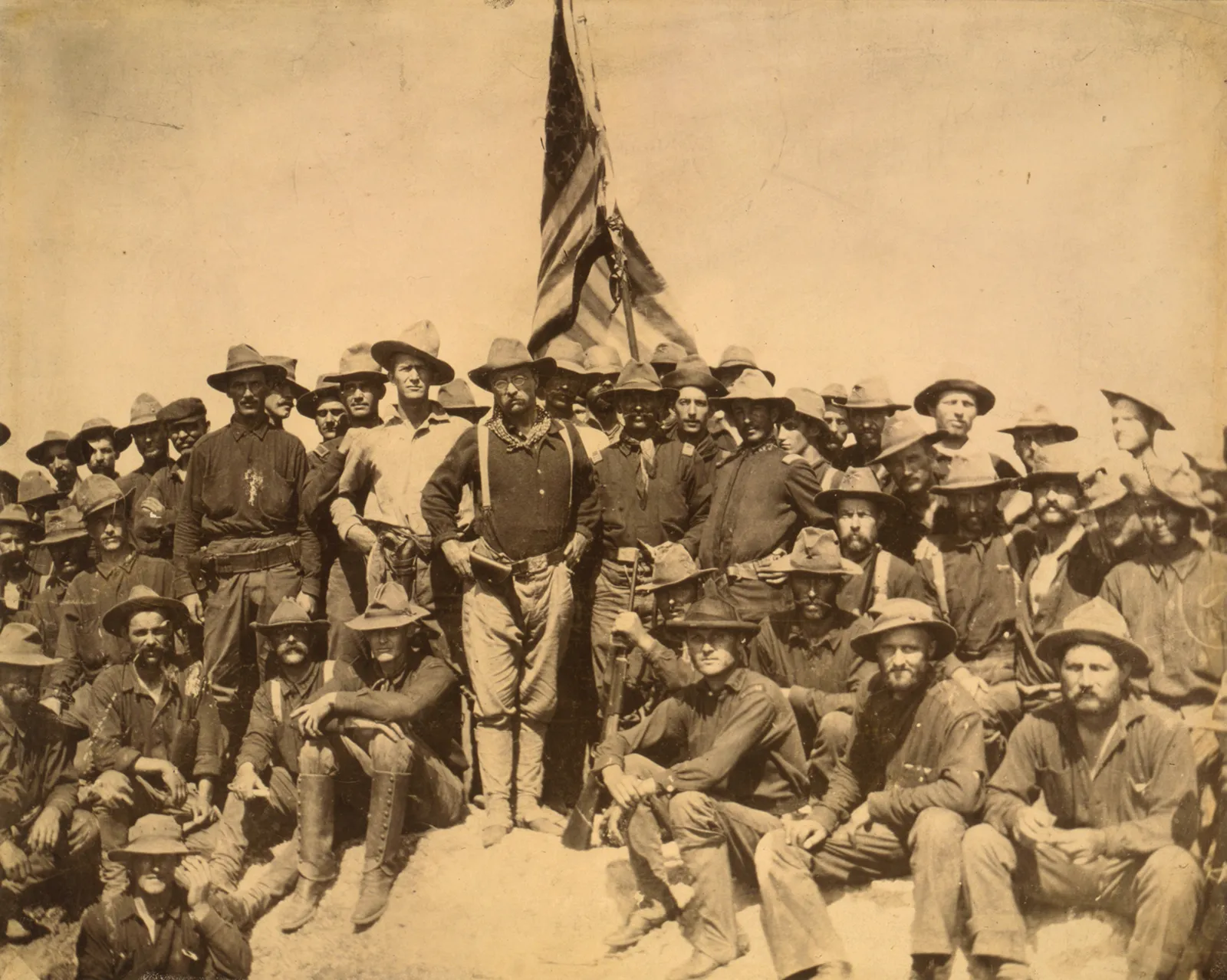
In Cuba, American forces including Theodore Roosevelt's volunteer cavalry regiment (the "Rough Riders") won victories at San Juan Hill and El Caney. The American navy destroyed Spain's Caribbean fleet when it attempted to escape Santiago harbor.
By August 1898, Spain had no choice but to sign an armistice, ending what Secretary of State John Hay called "a splendid little war."
Treaty of Paris and Imperial Acquisitions
The war officially ended with the Treaty of Paris, signed on December 10, 1898. The terms dramatically expanded American territorial holdings:
- Cuba gained independence (though under significant American influence)
- The United States annexed Puerto Rico and Guam
- The Philippines were ceded to the United States for $20 million
Additionally, while not technically part of the Spanish-American War, the United States also annexed Hawaii in 1898, further extending American power into the Pacific.
Consequences of the War
The Spanish-American War had far-reaching consequences for American foreign policy and global standing:
The Philippine-American War
Perhaps the most troubling aftermath was the Philippine-American War (1899-1902). Filipino nationalists who had expected independence felt betrayed when the United States decided to colonize their islands. Led by Emilio Aguinaldo, they launched a guerrilla campaign against American occupation.
The ensuing conflict was much longer and bloodier than the Spanish-American War, with atrocities committed on both sides. Approximately 4,200 American soldiers, 20,000 Filipino combatants, and as many as 200,000 Filipino civilians died before resistance was suppressed. This brutal colonial war highlighted the contradictions in American imperialism.
Expanded American Influence in Asia
The acquisition of the Philippines and Guam gave the United States naval bases and coaling stations that enabled greater American involvement in Asian affairs. Soon after, America participated in suppressing the Boxer Rebellion in China (1899-1901) and advocated for the Open Door Policy to ensure American commercial access to Chinese markets.
New Role in the Caribbean
The war also solidified American dominance in the Caribbean. Through the Platt Amendment of 1901, which modified the Teller Amendment, the United States maintained significant control over Cuban affairs, including the right to intervene in Cuban politics and the establishment of the naval base at Guantanamo Bay.
The Spanish-American War transformed the United States into a colonial power with territories spanning the globe. While brief in duration, this conflict fundamentally altered America's international position and set the stage for the nation's emergence as a world power in the 20th century. The debates over imperialism that began before the war would continue long after, as Americans grappled with their new role on the world stage and the responsibilities that came with empire.
Vocabulary
The following words are mentioned explicitly in the AP® course framework for this topic.Term | Definition |
|---|---|
involvement in Asia | Increased American political, military, and economic engagement in Asian affairs following the Spanish-American War. |
island territories | Overseas possessions acquired by the United States, including lands in the Caribbean and Pacific regions. |
nationalist movement | A political movement seeking independence or self-determination for a particular nation or people, such as the Filipino independence movement. |
Spanish-American War | A conflict in 1898 between the United States and Spain that resulted in American victory and territorial expansion. |
U.S. acquisition | The process by which the United States obtained control of new territories as a result of the Spanish-American War. |
Frequently Asked Questions
What was the Spanish-American War and why did it happen?
The Spanish-American War (1898) was a short conflict in which the U.S. defeated Spain and then acquired overseas territories. It began after U.S. support for Cuban independence, sensational “yellow” journalism, and the mysterious explosion of the USS Maine in Havana Harbor pushed public pressure for intervention. Militarily, volunteers like the Rough Riders and leaders such as Theodore Roosevelt became famous. The war’s aftermath—the 1898 Treaty of Paris—gave the U.S. Puerto Rico, Guam, and the Philippines and led to Cuban independence with U.S. limits (Platt Amendment). That victory expanded U.S. involvement in Asia (Philippine–American War, Emilio Aguinaldo), fed debates about American imperialism (Anti-Imperialist League vs. annexationists), and influenced policies like the Open Door and naval growth (Great White Fleet). For AP prep, focus on causes and the war’s political/geographic effects (CED KC-7.3.I.C). Review the topic study guide (/apush/unit-7/spanish-american-war/study-guide/oTnk4443gyjW9WwKdPbK) and practice questions (/practice/ap-us-history).
What territories did the US get after winning the Spanish-American War?
After the U.S. victory in the Spanish-American War (1898) the Treaty of Paris gave the U.S. three main territorial gains: Puerto Rico and Guam (both ceded to the U.S.), and the Philippines (ceded for $20 million). Cuba was technically granted independence from Spain but the U.S. imposed the Platt Amendment, making Cuba a U.S. protectorate in practice. The U.S. then suppressed a Filipino nationalist movement in the Philippine–American War. These outcomes (Treaty of Paris, Platt Amendment, Philippine–American War, Guam, Puerto Rico, Philippines) are core CED facts you should know for Topic 7.3. For a focused review, see the Topic 7.3 study guide (/apush/unit-7/spanish-american-war/study-guide/oTnk4443gyjW9WwKdPbK). Want practice questions on this unit? Check the AP practice bank (/practice/ap-us-history).
Why did America fight Spain in 1898?
The U.S. went to war with Spain in 1898 because a mix of humanitarian, economic, strategic, and ideological reasons pushed policymakers and public opinion toward intervention. Americans were outraged by reports of Spanish repression in Cuba (amplified by yellow journalism) and reacted strongly after the USS Maine exploded in Havana harbor—an event that sped calls for action. Business interests wanted stable Caribbean and Cuban markets; naval thinkers like Mahan argued for a stronger overseas presence; and expansionist/“civilizing” rhetoric (American imperialism, Social Darwinist ideas) made acquiring overseas territories attractive. Victory produced the Treaty of Paris (1898), gave the U.S. Guam, Puerto Rico, and the Philippines, and led to the Philippine–American War and debates (Anti-Imperialist League). Outcomes like the Platt Amendment and increased involvement in Asia connect directly to Topic 7.3 (see the Fiveable study guide (/apush/unit-7/spanish-american-war/study-guide/oTnk4443gyjW9WwKdPbK)). For AP prep, be ready to use documents, source analysis, and evidence about causes/effects in DBQs and LEQs; practice problems are at (/practice/ap-us-history).
How did the Spanish-American War change America's role in the world?
The Spanish-American War marked a turning point: the U.S. moved from continental power to overseas imperial power. After the 1898 Treaty of Paris the U.S. acquired Puerto Rico, Guam, and (controversially) the Philippines, and asserted influence over Cuba (Platt Amendment). That expansion increased U.S. involvement in Asia (Open Door Policy, intervention in China) and led to the Philippine–American War as Filipinos under Emilio Aguinaldo resisted annexation. Domestically it sparked debates (American imperialism vs. the Anti-Imperialist League) and legal questions (Insular Cases). Militarily and diplomatically, leaders like Theodore Roosevelt projected power (Great White Fleet, Roosevelt Corollary/protectorate moves). For AP exam prep, make sure you can explain effects and use specific evidence (Treaty of Paris, Platt Amendment, Philippine–American War) in short answers, DBQs, or LEQs—the Topic 7.3 study guide is helpful (/apush/unit-7/spanish-american-war/study-guide/oTnk4443gyjW9WwKdPbK). For broader review see the unit page (/apush/unit-7) and practice questions (/practice/ap-us-history).
What's the difference between the Spanish-American War and the Philippine-American War?
Short answer: The Spanish–American War (1898) was a brief international war between the U.S. and Spain over Spain’s empire (especially Cuba). U.S. victory produced the Treaty of Paris (1898) and turned the U.S. into an overseas power—gaining Puerto Rico, Guam, and the Philippines and creating Cuba’s dependent status (Platt Amendment). The Philippine–American War (1899–1902) followed: it was an American campaign to suppress Filipino independence efforts after the U.S. annexed the Philippines. Filipino leader Emilio Aguinaldo led a nationalist resistance against U.S. rule; the conflict was about imperialism vs. self-determination and ended with U.S. colonial control and controversial debates (Anti-Imperialist League, Insular Cases). For AP prep: this distinction is central to Topic 7.3 (Learning Objective C); review the Topic 7.3 study guide (/apush/unit-7/spanish-american-war/study-guide/oTnk4443gyjW9WwKdPbK) and practice questions (/practice/ap-us-history).
Can someone explain the Philippine insurrection in simple terms - I'm so confused?
Short version: after the Spanish-American War the U.S. got the Philippines in the 1898 Treaty of Paris. Filipinos led by Emilio Aguinaldo had fought Spain for independence and expected self-rule—instead the U.S. annexed the islands. That sparked the Philippine–American War (often called the Philippine insurrection in older sources): Filipino nationalists waged a guerrilla campaign for independence; U.S. forces used large-scale military campaigns and policies to suppress the movement. The conflict showed a key effect of the war: the U.S. acquired overseas territories, increased involvement in Asia, and suppressed a nationalist movement in the Philippines (CED KC-7.3.I.C). It also fueled debate at home (Anti-Imperialist League) and legal questions about colonial status (Insular Cases). For AP prep, be ready to explain these effects and link them to the Treaty of Paris and debates over American imperialism (see the Topic 7.3 study guide: /apush/unit-7/spanish-american-war/study-guide/oTnk4443gyjW9WwKdPbK). For extra practice, try problems at (/practice/ap-us-history).
What were the main effects of the Spanish-American War on US foreign policy?
The Spanish-American War shifted U.S. foreign policy from continental to overseas power. The Treaty of Paris (1898) gave the U.S. Puerto Rico, Guam, and the Philippines, expanding presence in the Caribbean and Pacific and prompting the Philippine–American War as the U.S. suppressed Filipino nationalist efforts (Emilio Aguinaldo). Cuba became a U.S. protectorate under the Platt Amendment, signaling informal empire and interventionism. Politically and ideologically, the war sparked the American imperialism vs. Anti-Imperialist League debate. Strategically, it accelerated naval expansion and global policing (Mahan’s ideas, Roosevelt’s “big stick,” Great White Fleet) and pushed the U.S. into Asia diplomacy (Open Door Policy in China). For AP exam use: cite these specific developments and documents (Treaty of Paris, Platt Amendment, Roosevelt’s speeches) when explaining effects (CED KC-7.3.I.C). Review this topic’s study guide (/apush/unit-7/spanish-american-war/study-guide/oTnk4443gyjW9WwKdPbK) and practice questions (/practice/ap-us-history).
How do I write a DBQ essay about American imperialism and the Spanish-American War?
Start with a clear thesis that answers the DBQ prompt (claim + line of reasoning). Contextualize briefly: late-19th c. industrialization, closing frontier, Social Darwinism/missionary motives, and naval ideas from Mahan. Use at least four documents to support your argument and accurately describe their content (not just quote). For two documents explain sourcing—author’s POV, purpose, audience, or historical situation (e.g., Yellow press, Roosevelt’s rhetoric, Puck cartoons). Bring in at least one specific outside fact (Treaty of Paris 1898, Philippine–American War, Platt Amendment, Annexation of Hawaii, Open Door policy, Great White Fleet, Anti-Imperialist League). Structure: intro with thesis, one body paragraph per category of cause/effect (economic, strategic/military, ideological/political), weave docs + outside evidence, counterargument, short conclusion. Remember DBQ rules: thesis, contextualization, use ≥4 docs, source two docs, outside evidence, demonstrate complexity (cause/effect or multiple perspectives). For Topic 7.3 review, see the Fiveable study guide (/apush/unit-7/spanish-american-war/study-guide/oTnk4443gyjW9WwKdPbK); practice DBQs at (/practice/ap-us-history).
Did the US become an imperial power after the Spanish-American War?
Short answer: Yes—the U.S. became an imperial power after the Spanish-American War, but it was contested at home. Why: The 1898 Treaty of Paris transferred Puerto Rico, Guam, and the Philippines to U.S. control and increased U.S. involvement in Asia (KC-7.3.I.C). The U.S. then suppressed Filipino independence (Philippine–American War; Emilio Aguinaldo), passed the Platt Amendment that put Cuba under U.S. protectorate-style limits, and pursued policies like the Open Door in China and Roosevelt’s “big stick” diplomacy (Great White Fleet). Those moves created formal territorial control and informal imperial influence. They sparked the Anti-Imperialist League and major domestic debate (Annexation of the Philippines). For AP exam: you should be able to explain these effects (CED Topic 7.3 Learning Objective C) and use specific examples (Treaty of Paris, Platt Amendment, Philippine–American War) in SAQs/DBQs. Study the Topic 7.3 guide (/apush/unit-7/spanish-american-war/study-guide/oTnk4443gyjW9WwKdPbK) and practice questions (/practice/ap-us-history).
What happened to Cuba and the Philippines after Spain lost the war?
After Spain lost the war (1898) the Treaty of Paris gave the U.S. control of former Spanish colonies: Cuba became nominally independent but the U.S. imposed the Platt Amendment (1901), which made Cuba a U.S. protectorate—limiting Cuban sovereignty and allowing U.S. intervention and a naval base at Guantánamo. Spain ceded Puerto Rico and Guam to the U.S., and sold the Philippines to the U.S. for $20 million. In the Philippines, Filipino leader Emilio Aguinaldo had declared independence from Spain; instead the U.S. annexed the islands, sparking the Philippine–American War as nationalists resisted U.S. rule. These outcomes expanded U.S. involvement in the Caribbean and Asia and fueled debates over American imperialism (Anti-Imperialist League opposed annexation). For more detail, review the Topic 7.3 study guide (/apush/unit-7/spanish-american-war/study-guide/oTnk4443gyjW9WwKdPbK) and practice questions (/practice/ap-us-history).
Why did Filipinos fight against American rule if we freed them from Spain?
Even though the U.S. defeated Spain, many Filipinos fought U.S. rule because they wanted full independence, not a new colonial master. Filipino leaders like Emilio Aguinaldo had declared independence in 1898 and expected self-government. But the Treaty of Paris (1898) handed the Philippines to the U.S., and U.S. leaders moved toward annexation instead of recognizing Filipino sovereignty. That led to the Philippine–American War (1899–1902), a suppression of a nationalist movement as the CED puts it. Americans were divided—imperialists argued for strategic bases and markets, while the Anti-Imperialist League opposed annexation—so the conflict shows how American imperialism clashed with Filipino nationalism. For AP study, link these events to the Treaty of Paris, annexation debates, and figures like Aguinaldo (see the Topic 7.3 study guide: /apush/unit-7/spanish-american-war/study-guide/oTnk4443gyjW9WwKdPbK). Want practice questions on this period? Try /practice/ap-us-history.
How did the Spanish-American War lead to more US involvement in Asia?
After the Spanish-American War the U.S. acquired Pacific islands (Guam, the Philippines) by the Treaty of Paris (1898), which forced America into direct governance and conflict in Asia (the Philippine–American War vs. Emilio Aguinaldo). Holding the Philippines gave the U.S. a base for trade and naval power in East Asia, pushing policymakers to protect markets (Open Door Policy) and to expand the navy (Great White Fleet/ Mahanian ideas). Politically, the Platt Amendment and debates over annexation showed how victory shifted U.S. policy from regional to global—military presence plus diplomatic initiatives meant deeper involvement in Asian affairs. For AP prep, note these cause–effect links and use CED keywords (Treaty of Paris, Philippine–American War, Open Door Policy) when writing short answers or essays. Review the Topic 7.3 study guide (/apush/unit-7/spanish-american-war/study-guide/oTnk4443gyjW9WwKdPbK) and the unit overview (/apush/unit-7); practice questions are at (/practice/ap-us-history).
What were the consequences of America acquiring overseas territories in 1898?
When the U.S. acquired overseas territories in 1898 (Treaty of Paris), it had several major consequences. Politically and legally, the U.S. became an imperial power: Puerto Rico and Guam became U.S. possessions, Cuba was effectively a U.S. protectorate under the Platt Amendment, and the annexation of the Philippines led to the Philippine–American War (Emilio Aguinaldo resisted U.S. rule). Economically and globally, the U.S. expanded involvement in Asia (Open Door Policy) and invested in a stronger navy and show-of-force diplomacy (Great White Fleet). Domestically, debates over American imperialism produced the Anti-Imperialist League and court rulings (Insular Cases) about rights in new territories. For AP prep, this topic shows up in DBQs/LEQs about causes and effects of U.S. expansion—use specific evidence (Treaty of Paris, Platt Amendment, Philippine–American War) and analyze multiple perspectives. For a targeted review, see the Topic 7.3 study guide (/apush/unit-7/spanish-american-war/study-guide/oTnk4443gyjW9WwKdPbK) and practice questions (/practice/ap-us-history).
I missed class - what's the connection between the Spanish-American War and American imperialism?
Short answer: the Spanish-American War was the turning point that turned U.S. expansion into overt overseas imperialism. The 1898 victory and the Treaty of Paris gave the U.S. Guam, Puerto Rico, and the Philippines and expanded involvement in Asia (CED KC-7.3.I.C). That led to the Philippine–American War (Emilio Aguinaldo) as the U.S. suppressed Filipino nationalism, domestic debates (Anti-Imperialist League vs. imperialists), and new policies like the Platt Amendment for Cuba and the Insular Cases. Politically and militarily, leaders like Theodore Roosevelt pushed a bigger global role (Rough Riders, Great White Fleet) while the Open Door Policy tried to protect U.S. access to Asian markets. For the AP exam, be ready to explain causes and effects (LO C) and use specific evidence like Treaty of Paris, Platt Amendment, and the Philippine–American War. Review this topic study guide (/apush/unit-7/spanish-american-war/study-guide/oTnk4443gyjW9WwKdPbK) and practice questions (/practice/ap-us-history).
Was the suppression of the Philippine independence movement justified after the Spanish-American War?
Short answer: It depends—but most historians judge the suppression as unjustified politically and morally, though it had strategic motives. Why: After the Treaty of Paris (1898) the U.S. kept the Philippines instead of recognizing Emilio Aguinaldo’s independence; that led to the Philippine–American War (1899–1902). Supporters argued strategic reasons (naval bases, access to Asia per Mahan, Open Door goals) and racial/“civilizing” justifications; opponents (Anti-Imperialist League) argued it violated republican ideals and Filipino self-determination. The conflict also produced controversial policies and the Insular Cases that limited constitutional rights in territories. For the AP exam: you’d evaluate causes and effects (CED KC-7.3.I.C) and use evidence like the Treaty of Paris, Aguinaldo’s movement, the Philippine–American War, and Anti-Imperialist critiques. For more review and sources to build a DBQ/LEQ argument, see the Topic 7.3 study guide (/apush/unit-7/spanish-american-war/study-guide/oTnk4443gyjW9WwKdPbK) and try practice questions (/practice/ap-us-history).