8.5 Decolonization After 1900

🌍AP World History: Modern Unit 8 Review
8.5 Decolonization After 1900
🌍 AP World History: Modern
8.1
Setting the Stage for the Cold War and Decolonization
8.2
The Cold War
8.3
Effects of the Cold War
8.4
Spread of Communism After 1900
8.5
Decolonization After 1900
8.6
Newly Independent States After 1900
8.7
Global Resistance to Established Power Structures After 1900
8.8
End of the Cold War
8.9
Causation in the Age of the Cold War and Decolonization
Decolonization after 1900 is the process where colonies in Asia, Africa, and the Caribbean gained independence from European empires, especially after World War II. Some new nations negotiated their freedom peacefully, while others won it through armed struggle, and regional, religious, and ethnic movements also challenged colonial rule and the borders empires left behind.
Decolonization AP World History Definition
In AP World History, decolonization is the process by which colonies gained independence from imperial powers, especially after World War II. Topic 8.5 focuses on comparing methods of independence, including negotiated independence, armed struggle, and regional or ethnic movements that challenged colonial borders.
The fastest exam move is to name the colonial power, identify the method, and explain the result. India and Ghana are strong examples of negotiated independence, while Algeria, Vietnam, and Angola show independence through armed struggle.
Why This Matters for the AP World History Exam
This topic is built around comparison: you should be able to explain how different peoples pursued independence and why their methods differed. That skill shows up across the exam, from multiple-choice sets that use documents and maps about anti-colonial movements to free-response prompts that ask you to compare processes or analyze causation.
Decolonization also connects forward and backward in the course. It links to earlier imperialism in Unit 6 and to Cold War rivalries in this unit, since superpower competition often shaped how independence played out. Being able to sort movements into categories like negotiated versus armed struggle gives you ready-made evidence for comparison and causation arguments.
Key Takeaways
- Anti-imperialist feeling grew after World War II, and weakened European powers faced rising pressure to give up their empires.
- Nationalist leaders and parties in Asia and Africa pushed for different levels of self-rule, from limited autonomy to full independence.
- Some colonies negotiated independence, like India and the Gold Coast (Ghana); others fought armed struggles, like Algeria, Angola, and Vietnam.
- Regional, religious, and ethnic movements challenged both colonial rule and the borders empires drew, sometimes seeking autonomy or separation.
- Cold War rivalry often shaped outcomes, especially where communist or anti-communist forces got involved.
- For comparison questions, sort movements by method, colonial power, and leadership so you can quickly line up similarities and differences.
Defining Decolonization
Decolonization is the process through which former colonies, mainly in Asia, Africa, and the Caribbean, gained independence from European imperial powers. This sped up after World War II as anti-colonial sentiment grew worldwide and imperial powers faced economic strain and mounting pressure to break apart their empires.
The path to independence varied widely. Some countries achieved it through negotiation, while others turned to armed struggle. Regional, religious, and ethnic movements also pushed back against colonial rule and the boundaries empires had drawn. Either way, decolonization reshaped global politics, created new nations, and forced former imperial powers to redefine their roles in the world.
Paths to Independence Across the World
The examples below are illustrative cases you can use as evidence. They are not a required list, but they show the range of methods peoples used to pursue independence.
India: Nonviolent Resistance and Partition
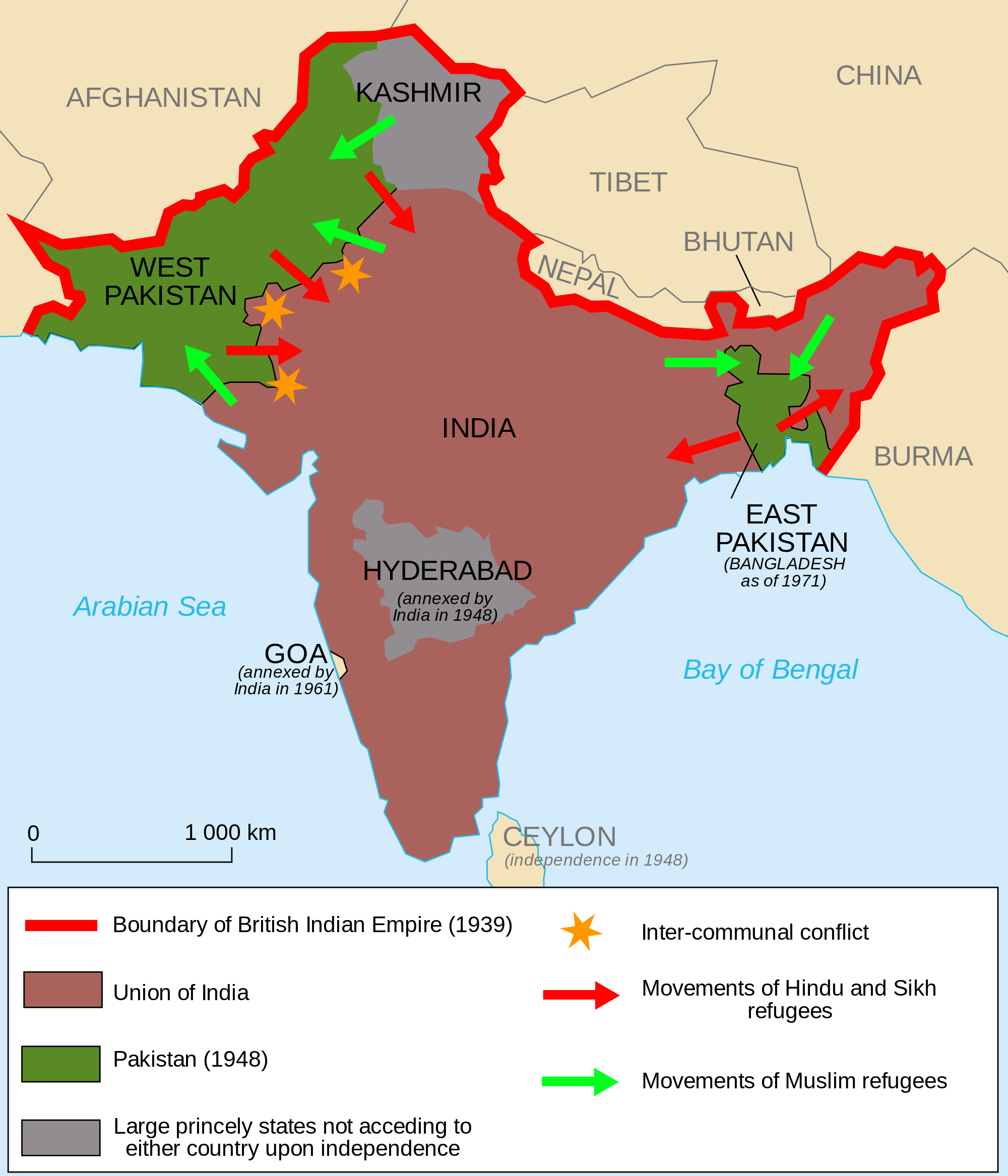
The independence movement in India had been growing since the early 20th century, especially after Britain failed to grant self-rule following Indian contributions in World War I.
- The Indian National Congress, led by Mohandas Gandhi, used nonviolent methods such as civil disobedience and boycotts to protest British rule.
- In 1947, India gained independence through negotiation. Religious tensions between Hindus and Muslims led to the partition of India and Pakistan, which caused widespread violence and displacement.
Gandhi's strategy of nonviolent resistance influenced later civil rights movements and marked a shift in how anti-colonial struggles could be waged.
Ghana (British Gold Coast): Political Organization and Protest
Ghana was the first sub-Saharan African country to gain independence from colonial rule.
- Kwame Nkrumah, a Western-educated leader, organized the Convention People's Party to demand self-rule.
- Through strikes, boycotts, and political organizing, Ghana negotiated its independence from Britain in 1957, largely without bloodshed.
Algeria: Guerrilla Warfare Against French Rule
Decolonization in Algeria was among the most violent of the post-World War II era.
- The National Liberation Front (FLN) launched a guerrilla war against French forces in 1954.
- The war involved urban bombings, harsh reprisals, and massacres, and French society was bitterly divided over it.
- Algeria gained independence in 1962 after the Evian Accords and mounting pressure.
This is a clear example of independence achieved through armed struggle rather than negotiation.
French West Africa: Political Reform and Gradual Negotiation
In contrast to Algeria, many French colonies in West Africa followed a negotiated path to independence.
- French policies shifted after World War II, allowing more local participation in governance.
- By 1960, territories such as Senegal, Niger, and Mali gained independence with limited violence.
Vietnam (French Indochina): Nationalism and War
Vietnam's decolonization was long and complex.
- Ho Chi Minh, a communist and nationalist leader, formed the Viet Minh to fight for Vietnamese independence.
- After defeating the French at the Battle of Dien Bien Phu in 1954, Vietnam was temporarily divided into a communist North and an anti-communist South.
- Continued U.S. involvement led to the prolonged Vietnam War, which ended in reunification in 1975.
Vietnam shows how Cold War dynamics shaped decolonization, especially in regions where communism took root.
Nigeria: Independence and Ethnic Tensions
Nigeria, rich in natural resources and home to diverse ethnic groups, gained independence from Britain in 1960.
- Political tensions soon emerged among the Igbo, Hausa-Fulani, and Yoruba groups.
- In 1967, the Igbo-led southeast tried to secede as Biafra, sparking a civil war.
- The Biafran War lasted until 1970 and caused mass famine and death.
Biafra is a useful example of a regional and ethnic movement that challenged the borders left behind by empire.
Angola: Colonial War and Civil Conflict
Angola's decolonization was part of a broader wave of anti-Portuguese resistance.
- Independence movements clashed with Portuguese forces starting in the 1960s.
- Portugal's Carnation Revolution in 1974 ended authoritarian rule and triggered decolonization.
- Angola declared independence in 1975 but was quickly plunged into a civil war between rival factions, often backed by Cold War superpowers.
Comparative Overview of Decolonization Movements
| Region/Country | Colonial Power | Method of Independence | Key Leader(s) | Nature of Struggle |
|---|---|---|---|---|
| India | Britain | Negotiation | Gandhi, INC | Nonviolent, Partition |
| Ghana | Britain | Negotiation | Kwame Nkrumah | Peaceful Protests |
| Algeria | France | Armed Struggle | FLN | Guerrilla Warfare |
| Vietnam | France | Armed Struggle | Ho Chi Minh | Cold War Proxy Conflict |
| French W. Africa | France | Negotiation | Léopold Senghor (Senegal) | Gradual Decolonization |
| Nigeria | Britain | Negotiation | Nnamdi Azikiwe, others | Civil War Post-Independence |
| Angola | Portugal | Armed Struggle | MPLA, UNITA, FNLA | Colonial and Civil War |
Broader Themes of Decolonization
- Nationalist movements were shaped by both Western education and traditional leadership.
- Cold War rivalries influenced outcomes, especially where communism or U.S. intervention played a role.
- New nations often struggled with ethnic division, border disputes, and economic dependence, which frequently traced back to imperial boundaries and earlier resource exploitation.
- Not every independence or separatist movement succeeded. The Quebecois separatist movement in Canada, for example, did not break away but still reflected a broader push for self-determination.
How to Use This on the AP World History Exam
Comparison
The core skill here is comparison. Practice sorting movements by method (negotiated versus armed struggle), colonial power, and type of leadership. A quick mental chart lets you state both a similarity and a difference fast, which is exactly what comparison prompts reward.
Causation
Be ready to explain causes and effects. World War II weakened European powers and boosted anti-imperialist feeling, which helped trigger decolonization. Effects include new states, redrawn borders, population displacement, and ongoing conflicts. Cold War competition is a frequent cause that shaped how independence unfolded.
Using Sources Effectively
Multiple-choice sets often pair documents, speeches, or maps with anti-colonial movements. Use what you know about negotiated versus armed paths, and about regional, religious, and ethnic movements, to figure out a source's point of view and purpose.
Common Trap
When you write about a country, name the colonial power and the method of independence explicitly. Vague claims like "they wanted freedom" do not earn evidence points. Tie each example to a specific process.
Common Misconceptions
- Decolonization was not always peaceful. India and the Gold Coast negotiated independence, but Algeria, Angola, and Vietnam involved armed struggle.
- Independence did not automatically bring stability. Many new states faced ethnic conflict, border disputes, and economic dependence afterward, as in Nigeria and Angola.
- Decolonization was not driven only by colonized peoples. Weakened European powers, shifting global power, and Cold War pressures all played a role.
- Not every movement aimed at full national independence. Some regional, religious, and ethnic movements sought autonomy or separation within existing states, like the Quebecois separatist movement.
- Gandhi's nonviolence is famous, but it was one method among many, not the standard path that every colony followed.
zation in AP World History?
Decolonization is the process by which colonies gained independence from imperial powers. In AP World 8.5, the focus is mostly on independence movements after World War II.
What are the main methods of decolonization?
The main methods were negotiated independence and armed struggle. Some movements also challenged colonial borders through regional, religious, or ethnic demands for autonomy or separation.
What are examples of negotiated independence?
India negotiated independence from Britain in 1947, though partition created major displacement. Ghana, formerly the British Gold Coast, negotiated independence in 1957 under Kwame Nkrumah's leadership.
What are examples of armed struggle during decolonization?
Algeria fought France, Vietnam fought France before later Cold War conflict, and Angola fought Portuguese rule before independence and civil conflict.
How did the Cold War affect decolonization?
Cold War rivalry shaped many independence movements because the United States and Soviet Union often backed different sides. Vietnam and Angola are strong examples of decolonization becoming tied to Cold War politics.
How should I compare decolonization movements on AP World FRQs?
Compare the method, colonial power, leadership, and outcome. For example, India and Ghana both negotiated independence from Britain, while Algeria and Vietnam used armed struggle against French rule.
Related AP World History Guides
Vocabulary
The following words are mentioned explicitly in the AP® course framework for this topic.Term | Definition |
|---|---|
armed struggle | The use of military force and violent conflict by colonized peoples to achieve independence from imperial rule. |
autonomy | Self-governance or the right of a region or group to control its own affairs while potentially remaining within a larger political structure. |
colonial rule | The political control and governance exercised by a colonial power over a territory and its indigenous population. |
ethnic movements | Organized efforts by people sharing common ethnic or cultural identity to challenge colonial rule or pursue autonomy. |
imperial boundaries | Political borders established by imperial powers that often divided ethnic, religious, or regional groups. |
imperial rule | The political control and governance exercised by an imperial power over colonized territories and peoples. |
independence | The state of being free from colonial or imperial rule and having sovereign control over one's own government and territory. |
nationalist leaders | Political figures who led movements seeking autonomy or independence from imperial rule in colonized territories. |
nationalist parties | Political organizations that mobilized populations to pursue independence or autonomy from colonial powers. |
negotiated independence | The process by which colonies achieved independence through diplomatic agreements and peaceful negotiations with imperial powers. |
regional movements | Organized efforts by people in specific geographic areas to challenge colonial rule or seek greater autonomy. |
religious movements | Organized efforts based on religious identity or principles that challenged colonial rule or sought independence. |
secessionist movement | An organized effort by a group to separate from an existing political entity and establish independent governance. |
Frequently Asked Questions
What is decolonization in AP World History?
Decolonization is the process by which colonies gained independence from imperial powers. In AP World 8.5, the focus is mostly on independence movements after World War II.
What are the main methods of decolonization?
The main methods were negotiated independence and armed struggle. Some movements also challenged colonial borders through regional, religious, or ethnic demands for autonomy or separation.
What are examples of negotiated independence?
India negotiated independence from Britain in 1947, though partition created major displacement. Ghana, formerly the British Gold Coast, negotiated independence in 1957 under Kwame Nkrumah's leadership.
What are examples of armed struggle during decolonization?
Algeria fought France, Vietnam fought France before later Cold War conflict, and Angola fought Portuguese rule before independence and civil conflict.
How did the Cold War affect decolonization?
Cold War rivalry shaped many independence movements because the United States and Soviet Union often backed different sides. Vietnam and Angola are strong examples of decolonization becoming tied to Cold War politics.
How should I compare decolonization movements on AP World FRQs?
Compare the method, colonial power, leadership, and outcome. For example, India and Ghana both negotiated independence from Britain, while Algeria and Vietnam used armed struggle against French rule.