8.10 20th-Century Cultural, Intellectual, and Artistic Developments

🇪🇺AP European History Unit 8 Review
8.10 20th-Century Cultural, Intellectual, and Artistic Developments
🇪🇺 AP European History
8.1
Context of 20th Century Global Conflicts
8.2
World War I
8.3
The Russian Revolution and Its Effects
8.4
Versailles Conference and Peace Settlement
8.5
Global Economic Crisis: The Great Depression
8.6
Fascism and Totalitarianism
8.7
Europe During the Interwar Period
8.8
World War II
8.9
The Holocaust
8.10
20th-Century Cultural, Intellectual, and Artistic Developments
8.11
Continuity and Changes in the Age of Global Conflict
In the first half of the 20th century, the optimism that defined 19th-century Europe broke down. World War I, new physics like relativity and quantum mechanics, and changing roles for women all challenged the belief that science, reason, and progress would steadily improve life.
Why This Matters for the AP European History Exam
This topic supports a key shift in modern European thought: the move from confidence in progress toward doubt and uncertainty. You can use it to explain causation (how WWI and new science changed ideas), continuity and change (from 19th-century optimism to 20th-century disillusionment), and to bring in cultural and intellectual evidence on free-response questions about the early 20th century.
It connects directly to total war, the interwar period, and the rise of fascism and communism, so the ideas here often show up as background or evidence across Unit 8 rather than as an isolated set of facts.
Key Takeaways
- The 19th-century faith in steady progress began breaking down even before World War I, and the war accelerated that collapse.
- New physics, especially relativity and quantum mechanics, challenged the certainty of the Newtonian universe and weakened faith in objective knowledge.
- The same scientific breakthroughs that raised doubts also provided the knowledge needed to develop nuclear weapons and nuclear power.
- World War I created a "lost generation" marked by disillusionment and cynicism, which shaped art and literature.
- The world wars expanded women's involvement in military, political, and economic life, and helped fuel demands for political rights including suffrage.
- Disillusionment and questioning of traditional beliefs created an environment where extremist ideologies could gain support.
Advancements in Physics
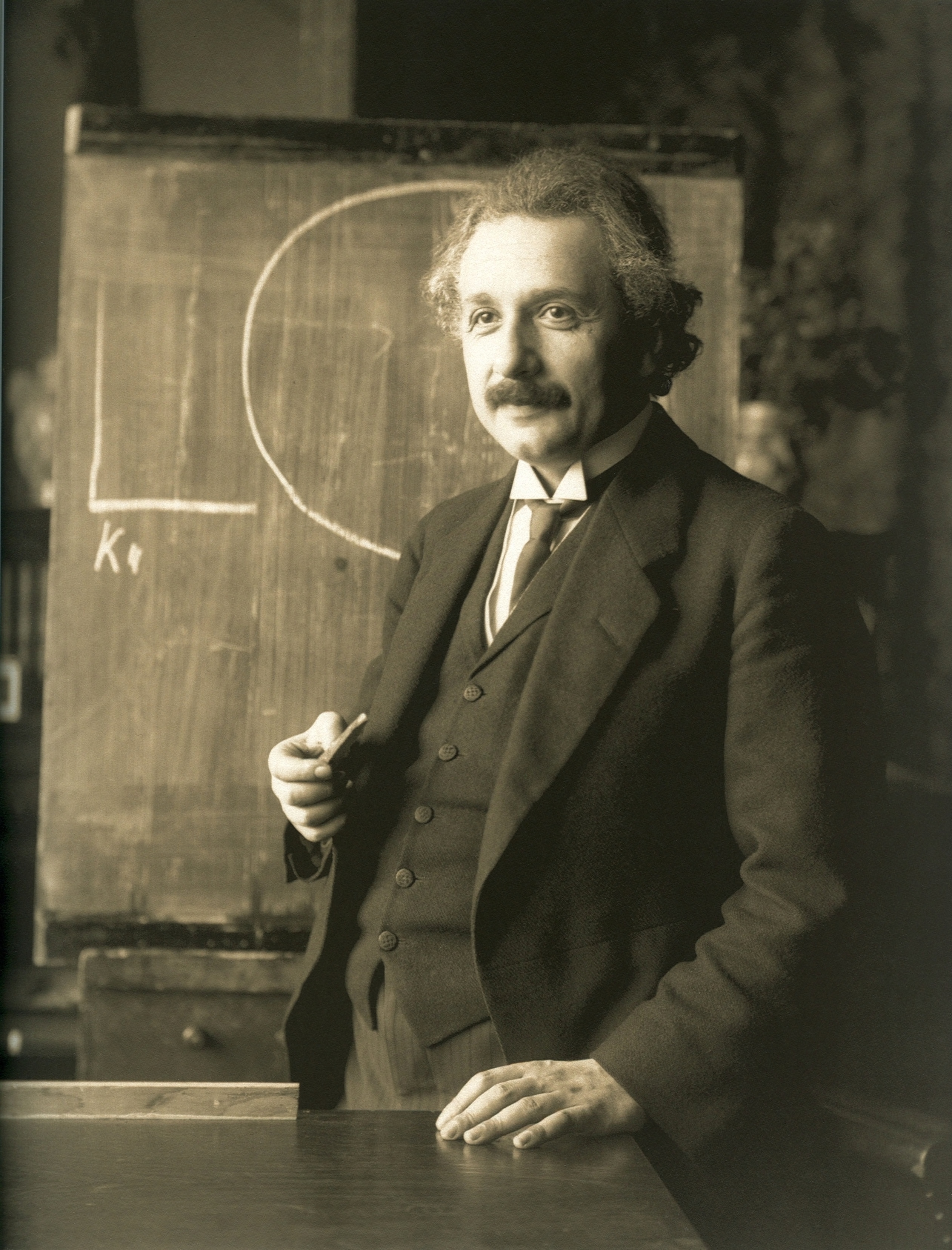

Before World War I, most Europeans were confident that science and technology could solve human problems. New inventions, medical progress, and consumer goods suggested a bright future. At the same time, new scientific theories and ideas in psychology were already creating uncertainty about how well people really understood the world.
Breakthroughs in physics deepened that uncertainty. The challenge to the certainties of the Newtonian universe opened the door to doubt in other fields by undermining faith in objective knowledge. Relativity and quantum mechanics suggested that space, time, and even basic measurement were not as fixed and predictable as people once assumed.
The physicists associated with this shift include:
- Albert Einstein, known for the theory of relativity, which reshaped ideas about space, time, and gravity.
- Werner Heisenberg, a central figure in quantum mechanics.
- Erwin Schrödinger, Niels Bohr, and Enrico Fermi, who contributed to the new physics of the atom.
These same discoveries had a darker side. The knowledge that undermined old certainties also made nuclear weapons and nuclear power possible. Military technologies built on this science later enabled industrialized warfare and the risk of global nuclear war.
Application note: The Manhattan Project and the atomic bombings of Hiroshima and Nagasaki are useful real-world examples of how this physics led to nuclear weapons. Treat them as examples that show the destructive potential of the new science, not as required names for this topic.
The Lost Generation
World War I shaped intellectual and cultural life in a lasting way. The brutality of the fighting, the staggering loss of life, and the psychological trauma of soldiers produced a deep sense of disillusionment and cynicism. The writers and artists who came of age during the war are often called the "lost generation."
Many of these creators struggled to make sense of the chaos and destruction they had witnessed, and their work reflected that loss of faith in older ideals. Writers like Ernest Hemingway, F. Scott Fitzgerald, and Gertrude Stein are commonly used examples of this mood, though they are illustrations rather than required content for this topic.
This disillusionment also weakened confidence in democratic systems and in the promises of the postwar settlement. That loss of faith helped create conditions in which fascism and communism could later attract supporters by promising order and national rebirth.
Women's Role in the World Wars

The world wars changed women's roles across Europe. With large numbers of men in the military, women increasingly took on jobs in factories, offices, and farms, and many worked in war-related production, nursing, and support roles. During the world wars, women became more involved in military and political mobilization as well as in economic production.
These contributions fueled demands for greater political and economic equality. After World War I, several countries extended the right to vote to women, a major step in the long fight for political rights. The war also began to loosen older social patterns and challenge prewar expectations about gender, even though full equality was not achieved and feminist movements continued to push for change for decades.
Cultural Shifts and Intellectual Movements
The disillusionment of the early 20th century reached beyond science and politics into art, literature, and ideas. As intellectuals confronted the horrors of war and the breakdown of familiar structures, many questioned the 19th-century belief that humanity was steadily improving.
Useful examples of this cultural shift, which you can cite as illustrations rather than required content, include:
- Modernism in art and literature, which broke from traditional forms. Writers like James Joyce and Virginia Woolf experimented with new styles, while artists like Pablo Picasso challenged conventional ways of representing reality.
- Psychoanalysis, associated with Sigmund Freud, which reshaped ideas about the unconscious mind and influenced literature and art.
The core point for this topic is the intellectual turn itself: new scientific theories and the trauma of war undermined faith in reason, objective knowledge, and progress, and pushed Europeans to rethink what they could actually know and believe.
How to Use This on the AP European History Exam
Free Response
When a prompt deals with the early 20th century, use this topic to bring in cultural and intellectual evidence, not just battles and treaties. Strong moves include:
- Explaining causation: connect WWI and new physics to the breakdown of faith in progress and objective knowledge.
- Showing continuity and change: contrast 19th-century optimism with 20th-century disillusionment.
- Linking ideas to politics: explain how disillusionment created openings for fascism and communism.
MCQ and Source Analysis
Expect sources like postwar literature, art, or commentary on science. Look for the mood of disillusionment, doubt about progress, or challenges to objective truth. When a passage questions reason or certainty, connect it to the impact of WWI and the new physics.
Common Trap
Do not reduce this topic to a list of famous people. The graders want you to explain how events challenged existing social, cultural, and intellectual understandings, so always tie names and movements back to the larger shift away from confidence in progress.
Common Misconceptions
- Misconception: The optimism collapsed only because of WWI.Actually: The breakdown of faith in progress had already begun before the war; the war accelerated a shift that was already underway.
- Misconception: Relativity and quantum mechanics only mattered to scientists.Actually: Their bigger impact was cultural and intellectual: by challenging the certainty of the Newtonian universe, they weakened faith in objective knowledge across many fields.
- Misconception: New physics was purely positive progress.Actually: The same discoveries that produced material benefits also made nuclear weapons possible and posed challenges to objective knowledge.
- Misconception: The lost generation was just sad poetry.Actually: Disillusionment was a broad cultural response to mass death and trauma, and it had political consequences, including weakened faith in democracy.
- Misconception: Women gained full equality from the wars.Actually: Women's wartime roles expanded participation and helped win voting rights in some countries, but full equality was not achieved, and feminist movements kept pushing afterward.
- Misconception: Einstein and Heisenberg are required names you must memorize for this topic.Actually: They are illustrative examples of the new physics, useful as evidence but not a required checklist.
Related AP European History Guides
Practice Questions for 8.10
1 of 10
In his 1919 essay "The Crisis of the Mind," French intellectual Paul Valéry argued, "We later civilizations... we too now know that we are mortal... We see now that the abyss of history is deep enough to hold us all." What is Valéry's central argument regarding European society?
A.
The devastation of the First World War proved that European progress is fragile and reversible.
B.
The collapse of traditional empires guarantees the emergence of stronger democratic structures.
C.
The technological advancements of the modern era will protect Western culture from destruction.
D.
The psychological trauma of modern warfare primarily affects soldiers rather than civilian life.
Vocabulary
The following words are mentioned explicitly in the AP® course framework for this topic.Term | Definition |
|---|---|
disillusionment | A widespread loss of faith and confidence in traditional beliefs, values, and institutions following the enormous sacrifices of World War I. |
economic production | The creation of goods and services, in which women became increasingly involved during the world wars. |
lost generation | The generation of Europeans, particularly young men, who experienced disillusionment and cynicism as a result of World War I. |
military mobilization | The organization and deployment of military forces and resources during wartime, in which women became increasingly involved during the world wars. |
Newtonian universe | The classical physics framework based on Newton's laws that was challenged by early 20th-century physics, undermining faith in objective knowledge. |
nuclear weapons | Weapons developed through advanced physics knowledge that emerged from the scientific developments of the early 20th century. |
objective knowledge | The philosophical concept that truth and facts exist independently of individual perspectives or beliefs. |
political mobilization | The organization of populations for political purposes, including women's increased participation during the world wars. |
progress | The 19th-century belief that society and human civilization were advancing toward improvement and better conditions. |
science and technology | Systematic study of the natural world and practical applications of scientific discoveries that yielded material benefits but also caused destruction. |
World War I | The global conflict from 1914-1918 involving major European powers and their allies, resulting in massive casualties and reshaping of the international order. |
Frequently Asked Questions
What does turn of the century mean in AP Euro?
Turn of the century usually refers to the period around 1900. In AP Euro, it often points to the transition from 19th-century optimism to early 20th-century doubt and experimentation.
What was the lost generation?
The lost generation describes writers and artists shaped by World War I who expressed disillusionment, cynicism, and loss of faith in older ideals of progress and reason.
Why is Werner Heisenberg important in AP Euro?
Werner Heisenberg is a useful example of new physics. His work in quantum mechanics helped challenge older confidence in a predictable Newtonian universe.
How did World War I affect European culture?
World War I created widespread disillusionment, weakened faith in progress, and shaped modernist literature, art, and intellectual life.
How did new physics affect European thought?
Relativity and quantum mechanics challenged certainty about space, time, measurement, and objective knowledge, which contributed to broader cultural doubt.
How should I use AP Euro 8.10 on the exam?
Use it as cultural and intellectual evidence for change over time. Connect World War I, modernism, the lost generation, or new physics to the breakdown of 19th-century optimism.
See Fiveable more often in Google
Mark Fiveable as a preferred source and Google is more likely to show you our guides in Top Stories, with a "preferred" badge in AI Mode and AI Overviews.