9.5 Postwar Nationalism, Ethnic Conflict, and Atrocities

🇪🇺AP European History Unit 9 Review
9.5 Postwar Nationalism, Ethnic Conflict, and Atrocities
🇪🇺 AP European History
9.1
Context of the Cold War and Contemporary Europe
9.2
Rebuilding Europe After World War II
9.3
The Cold War
9.4
Two Super Powers Emerge
9.5
Postwar Nationalism, Ethnic Conflict, and Atrocities
9.6
Contemporary Western Democracies
9.7
The Fall of Communism
9.8
20th-Century Feminism
9.9
Decolonization
9.10
The European Union
9.11
Migrations within and to Europe Since 1945
9.12
Technological Developments Since 1914
9.13
Globalization
9.14
20th- and 21st-Century Culture, Arts, and Demographic Trends
9.15
Continuity and Change in the 20th and 21st Centuries
TLDR
After World War II, hopes for lasting peace ran into a hard reality: nationalist and separatist movements, ethnic conflict, and ethnic cleansing kept disrupting Europe. The most extreme case was the breakup of Yugoslavia in the 1990s, where new nationalisms in central and eastern Europe led to war and genocide in the Balkans. For the AP exam, you should be able to explain the causes and effects of these mass atrocities from 1945 to the present.
Why This Matters for the AP European History Exam
This topic sits inside the larger story of how total war and a polarized Cold War order gave way to new conflicts over national and ethnic identity. It connects directly to the theme of national and European identity, plus states and institutions of power.
On the exam, you are likely to use this material to:
- Build causation arguments about why nationalism and ethnic tensions turned violent after 1945.
- Analyze continuity and change between earlier atrocities (like the Holocaust in Unit 8) and postwar ethnic cleansing.
- Compare peaceful separatist movements with violent ones.
- Support a thesis with specific evidence about the Balkans and other ethnic conflicts.
The skills here, especially causation and continuity/change, show up across multiple-choice questions and free-response prompts, so being able to explain causes and effects clearly is what matters most.
Key Takeaways
- Nationalist and separatist movements, ethnic conflict, and ethnic cleansing repeatedly disrupted the post-World War II peace in Europe.
- New nationalisms in central and eastern Europe led to war and genocide in the Balkans, the clearest required example for this topic.
- Separatism means breaking away to form a new political unit, while nationalism focuses on unity and shared identity within a nation. Know the difference.
- Some movements stayed mostly political; others turned violent, so causes and outcomes varied a lot.
- Ethnic cleansing is the systematic removal of an ethnic or religious group from a territory, often through violence or forced migration.
- The international community, including the UN and NATO, gradually took more active roles in responding to atrocities in the 1990s.
Nationalism and Separatist Movements
After WWII, many ethnic and regional groups pushed for greater autonomy, cultural recognition, or full independence. Outside Europe, colonies were winning independence. Inside Europe, tensions between ethnic and language groups produced separatist movements that strained national unity.
Keep the basic distinction straight:
- Nationalism usually promotes unity and shared identity within a nation.
- Separatism seeks to break away from an existing state to form a new political unit based on ethnicity, language, or culture.
Examples of Postwar Nationalism and Separatism
These are useful applications of the concept, not a required checklist. Use them as evidence when they fit your argument.
- Ireland: Nationalists in Northern Ireland resisted British rule through both political and violent means during the period known as the Troubles. The Good Friday Agreement (1998) brought a peace settlement.
- Chechnya (Russia): Chechnya, a region in the North Caucasus, fought two wars for independence from Russia in the 1990s and 2000s. These conflicts involved harsh crackdowns and widespread reports of human rights abuses and civilian casualties.
- Basque (ETA): Basque nationalists in Spain pursued independence, and the militant group ETA used violence over several decades.
- Flemish Movement (Belgium): In Dutch-speaking Flanders, separatists pushed for more autonomy. Language and cultural differences from French-speaking Wallonia fueled demands for more local control over taxation, education, and governance.
Ethnic Conflict and Mass Atrocities
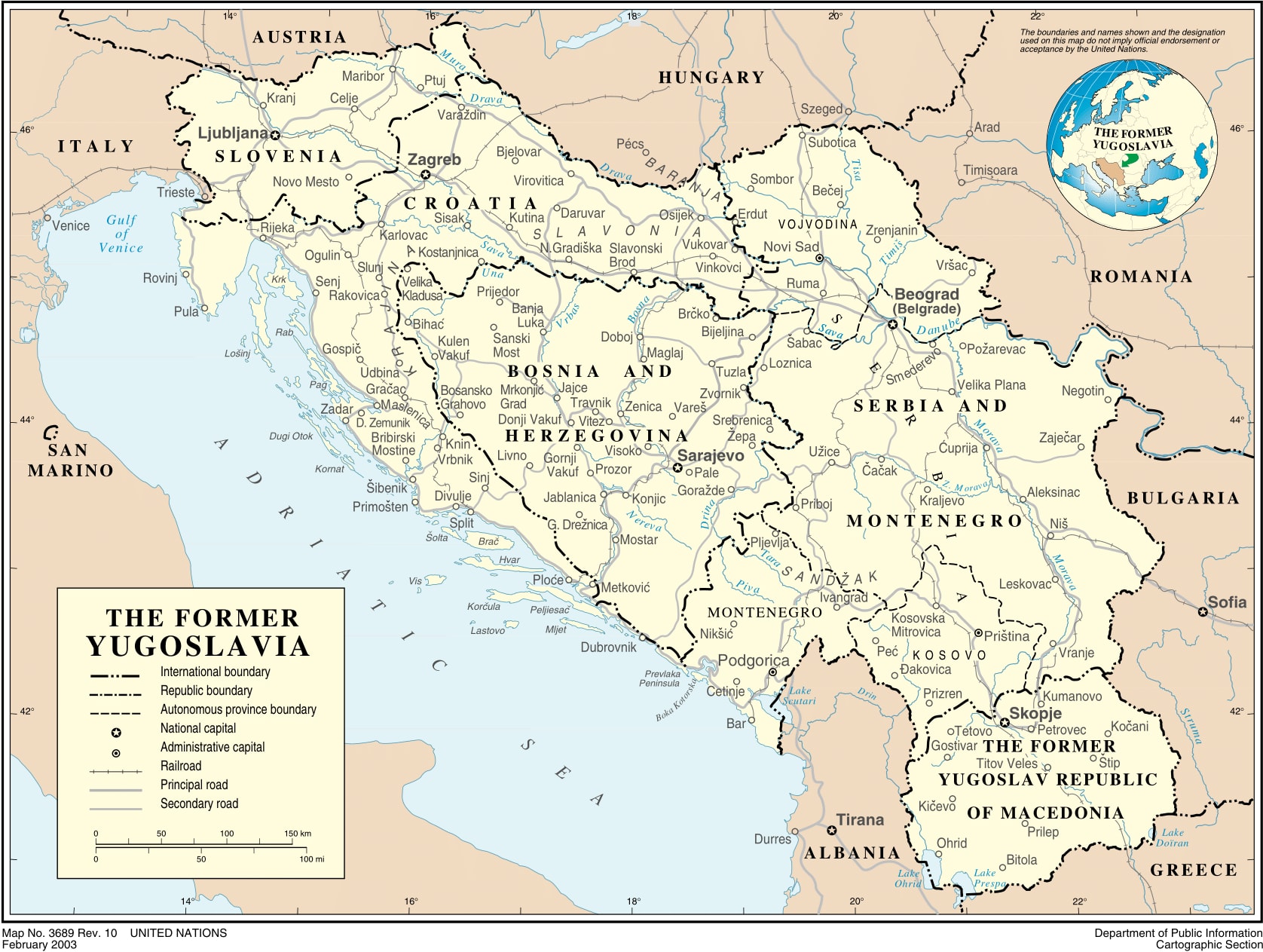
Nationalist feeling sometimes turned violent, especially when mixed with ethnic or religious hostility. That combination produced ethnic cleansing, the deliberate removal of a minority group to create an ethnically uniform region.
Ethnic cleansing is the systematic removal of an ethnic or religious group from a territory, often through violence, terror, or forced migration. It is treated as a crime against humanity under international law.
The required core for this topic is the Balkans: as Yugoslavia broke apart in the 1990s, new nationalisms led to war and genocide.
Examples of Postwar Ethnic Cleansing
- Bosnian Muslims (1992-1995): As Yugoslavia disintegrated, Bosnian Serb forces carried out ethnic cleansing and genocide against Bosnian Muslims (Bosniaks), most notoriously at Srebrenica.
- Albanian Muslims of Kosovo (1998-1999): Albanian Muslims in Kosovo were targeted by Serbian forces in another campaign of ethnic cleansing, which drew international intervention.
The table below organizes the Balkan atrocities that anchor this topic. The Holocaust belongs to Unit 8 and is shown here only as earlier context for comparison, not as part of the postwar 1945-to-present focus.
| Event | Perpetrators | Victims | Region | Time Period |
|---|---|---|---|---|
| Ethnic cleansing of Bosnian Muslims | Bosnian Serb forces | Bosnian Muslims (Bosniaks) | Bosnia and Herzegovina | 1992-1995 |
| Kosovo conflict | Serbian forces | Albanian Muslims | Kosovo | 1998-1999 |
| Holocaust (earlier context, Unit 8) | Nazi Germany | Jews, Roma, and others | Central and Eastern Europe | 1941-1945 |
International Response
During the 1990s, the United Nations and NATO took more active roles in humanitarian intervention in the Balkans. The International Criminal Tribunal for the former Yugoslavia (ICTY) was created to prosecute war crimes committed during these conflicts. This response is a strong example to cite when you discuss effects of these atrocities.
How to Use This on the AP European History Exam
Free Response
When a prompt asks about causes and effects of mass atrocities, lead with the required claim: new nationalisms in central and eastern Europe produced war and genocide in the Balkans. Then back it with specific evidence like atrocities against Bosnian Muslims and the targeting of Albanian Muslims in Kosovo. Naming the ICTY and NATO intervention gives you concrete effects.
Causation
Build a clear chain: the collapse of multiethnic states (especially Yugoslavia) plus rising ethnic nationalism led to violence, ethnic cleansing, and eventually international intervention. Avoid listing events with no link between them.
Continuity and Change
This topic pairs well with the Holocaust from Unit 8. You can argue continuity in how ethnic and religious identity was weaponized, and change in how the international community responded more directly by the 1990s.
Comparison
Compare separatist movements that stayed mostly political with those that turned violent. For example, contrast peaceful or negotiated outcomes with armed campaigns. This shows you understand that causes and effects varied.
Common Trap
Do not assume every nationalist or separatist movement led to genocide. Many were political struggles for autonomy. Keep the violent cases (the Balkans) separate from the broader, often nonviolent push for self-government.
Common Misconceptions
- Misconception: Nationalism and separatism are the same thing.Actually: Nationalism and separatism are not the same thing. Nationalism builds shared identity within a nation; separatism tries to break away and form a new state. Mixing these up weakens your analysis.
- Misconception: Ethnic cleansing is always the same as genocide.Actually: Ethnic cleansing is not always the same as genocide. Ethnic cleansing focuses on removing a group from a territory. It can include genocide, as in Bosnia, but the terms are not interchangeable.
- Misconception: The Holocaust is the focus of the post-1945 topic.Actually: The post-1945 focus is the Balkans, not the Holocaust. The Holocaust is Unit 8 content. For this topic, your required evidence comes from postwar ethnic conflict, especially in the former Yugoslavia.
- Misconception: Postwar Europe was simply peaceful.Actually: Postwar Europe was not simply peaceful. Even with moves toward unity and cooperation, nationalist and separatist movements and ethnic violence kept disrupting that peace.
- Misconception: International intervention was strong right after WWII.Actually: International intervention came late and was uneven. The UN, NATO, and the ICTY became more active mainly in the 1990s, so do not assume strong global enforcement existed right after WWII.
Related AP European History Guides
Practice Questions for 9.5
1 of 10
In the 1990s, Bosnian Serb forces systematically removed Bosnian Muslims from mixed communities, destroyed their cultural landmarks, and forced survivors into refugee camps. This process most directly illustrates which of the following concepts?
A.
Ethnic cleansing as a deliberate strategy to create ethnically homogeneous territories
B.
Nationalist consolidation of state power through military conquest
C.
Separatist movements seeking independence from a larger political entity
D.
Religious persecution motivated by doctrinal differences between Christian denominations
Vocabulary
The following words are mentioned explicitly in the AP® course framework for this topic.Term | Definition |
|---|---|
ethnic cleansing | The forced removal or extermination of an ethnic group from a territory, often involving violence, displacement, and systematic persecution. |
ethnic conflict | Violent or political tensions between different ethnic or cultural groups, often rooted in competition for resources, power, or recognition. |
Genocide | The deliberate and systematic destruction of a national, ethnic, racial, or religious group. |
mass atrocities | Large-scale violent acts committed against civilian populations, often involving systematic killing, torture, or other severe human rights violations. |
nationalist movements | Political movements driven by the desire of people sharing a common identity, language, or culture to establish independent nation-states or assert national sovereignty. |
separatist movements | Political movements seeking to withdraw a region or group from an existing state to form an independent nation or autonomous region. |
Frequently Asked Questions
What is AP Euro Topic 9.5 about?
AP Euro Topic 9.5 focuses on how nationalist and separatist movements, ethnic conflict, and ethnic cleansing disrupted Europe after World War II. The required core is explaining the causes and effects of mass atrocities from 1945 to the present, especially war and genocide in the Balkans.
Why did nationalism cause conflict in postwar Europe?
Postwar nationalism caused conflict when ethnic, religious, or regional groups sought autonomy, independence, or control over territory inside existing states. In multiethnic areas, especially as Yugoslavia broke apart, competing national identities contributed to war, ethnic cleansing, and international intervention.
What is the difference between nationalism and separatism?
Nationalism emphasizes shared identity and unity within a nation, while separatism seeks to break away from an existing state to form a new political unit or gain greater autonomy. AP Euro questions may ask you to compare movements that remained mostly political with movements that became armed conflicts.
What is ethnic cleansing in AP European History?
Ethnic cleansing is the systematic removal of an ethnic or religious group from a territory, often through forced migration, terror, and violence. In Topic 9.5, the required examples include ethnic cleansing of Bosnian Muslims and Albanian Muslims of Kosovo during the breakup of Yugoslavia.
What examples should I know for AP Euro 9.5?
The most important examples are the Balkans after the breakup of Yugoslavia, especially Bosnian Muslims and Albanian Muslims of Kosovo. Other illustrative examples include Ireland, Chechnya, the Basque movement, and Flemish separatism, but the Balkans are the strongest evidence for mass atrocities.
How should I use this topic on the AP Euro exam?
Use Topic 9.5 for causation, continuity and change, and comparison arguments. A strong answer links the collapse of multiethnic states and rising ethnic nationalism to ethnic cleansing, war, genocide in the Balkans, and responses such as NATO intervention or the International Criminal Tribunal for the former Yugoslavia.