1.2 Italian Renaissance

🇪🇺AP European History Unit 1 Review
1.2 Italian Renaissance
🇪🇺 AP European History
The Italian Renaissance was a cultural and intellectual revival that started in Italy's wealthy city-states and revived ancient Greek and Roman ideas. Humanists like Petrarch promoted new ways of studying classical texts, and these ideas spread secularism, individualism, and civic humanism while shaping art, education, and politics.
Why This Matters for the AP European History Exam
This topic is the foundation of Unit 1 and the starting point for the whole course timeline (roughly 1450 onward). When you analyze the Renaissance, you practice explaining cause and effect (how the revival of classical texts produced new values and art) and continuity and change (how Italy moved away from a purely medieval worldview without abandoning religion).
You can use this content to:
- Support causation arguments about why new ideas emerged and spread.
- Compare the Italian Renaissance with the Northern Renaissance in later topics.
- Analyze primary sources like paintings or political writings for humanist and secular values.
- Build evidence for arguments about how culture connects to politics and power.
Key Takeaways
- Italian humanists, including Petrarch, revived classical literature and created new methods for studying ancient texts (philology). Some promoted secularism and individualism.
- The humanist revival of Greek and Roman texts, spread by the printing press, challenged the institutional power of universities and the Catholic Church and shifted education toward classical texts and new methods of inquiry.
- Admiration for Greek and Roman political institutions fueled civic humanism in the Italian city-states and produced secular models for individual and political behavior.
- Rulers and popes commissioned art and architecture in classical styles, using naturalism and the new technique of geometric perspective to boost their prestige.
- Wealthy city-states and patrons (like the Medici in Florence) funded much of this artistic and intellectual activity.
- Renaissance ideas did not erase Christianity; they shifted focus toward human potential and worldly concerns.
What Is the Italian Renaissance?
The Italian Renaissance was a period of cultural, artistic, and intellectual revival that began in Italy in the 14th century and continued into the early modern era. It is best understood as a revival of classical Greek and Roman ideas that reshaped how Europeans thought about learning, art, religion, and political life.
Why Did the Renaissance Begin in Italy?
A few conditions made Italy the starting point:
- Trade and location: Italy's position in the Mediterranean made its city-states centers of trade and contact with other cultures, which helped reintroduce ancient texts and ideas to Europe.
- Wealthy city-states and patronage: Prosperous cities like Florence, Venice, and Milan had the money to fund artists and scholars. Wealthy families such as the Medici in Florence acted as patrons of the arts and learning.
- Access to classical texts: A revival of ancient Greek and Roman works gave scholars new material to study and new approaches for analyzing it.
The printing press, invented in the 1450s, later helped spread Renaissance ideas beyond Italy. That printing story is the focus of a separate topic, but it matters here because it accelerated how far humanist texts traveled.
Humanism
Humanism was the central intellectual movement of the Renaissance. It emphasized the study of classical texts and a focus on human potential, moving away from an education centered mainly on religious doctrine.
Key features of humanism:
- Revival of classical learning: Scholars studied ancient Greek and Roman authors, shifting education away from a primary focus on theological writings.
- Philology: Humanists developed new methods for carefully analyzing and correcting ancient texts.
- Secularism: Some humanists gave more attention to worldly concerns, not only religious ones.
- Individualism: Some emphasized personal achievement and human capability.
- New methods of inquiry: The movement encouraged critical thinking and new approaches to knowledge.
Key Humanist Figures
- Petrarch: Often called the "Father of Humanism," he promoted a revival of classical literature and the study of ancient Latin texts.
- Lorenzo Valla, Marsilio Ficino, and Pico della Mirandola: Humanists who advanced classical scholarship and ideas about human dignity and potential.
- Leonardo Bruni and Leon Battista Alberti: Figures associated with reviving Greek and Roman texts and civic humanist ideas.
Civic Humanism and Secular Models for Behavior
Admiration for Greek and Roman political institutions supported civic humanism in the Italian city-states, which connected classical ideas to active participation in public life. Several writers produced secular models for individual and political behavior:
- Niccolo Machiavelli: Wrote The Prince, focusing on practical and sometimes ruthless political leadership.
- Baldassare Castiglione: Wrote about the ideal courtier and proper conduct.
- Francesco Guicciardini: A historian and political thinker who analyzed politics in a realistic way.
How Did Humanism Challenge the Catholic Church?
The humanist revival of Greek and Roman texts, spread by the printing press, challenged the institutional power of universities and the Catholic Church. It shifted education away from a primary focus on theological writings toward classical texts and new methods of scientific inquiry. By emphasizing classical learning and careful analysis of texts, humanism encouraged people to study sources directly and think critically about authority.
Keep the chronology accurate: these shifts created intellectual conditions that later contributed to the Protestant Reformation, but the Reformation itself is a Unit 2 development, not part of the Italian Renaissance.
The Impact of the Italian Renaissance
Political and Intellectual Effects
- Civic humanism in the city-states: Classical political ideas shaped how people thought about citizenship and public life in cities like Florence.
- Secular political thought: Writers like Machiavelli produced political models based on observation and practicality rather than only religious teaching.
- Education shifted: The focus moved toward classical texts and new methods of inquiry, which challenged the older authority of universities and the Church.
Cultural and Artistic Developments

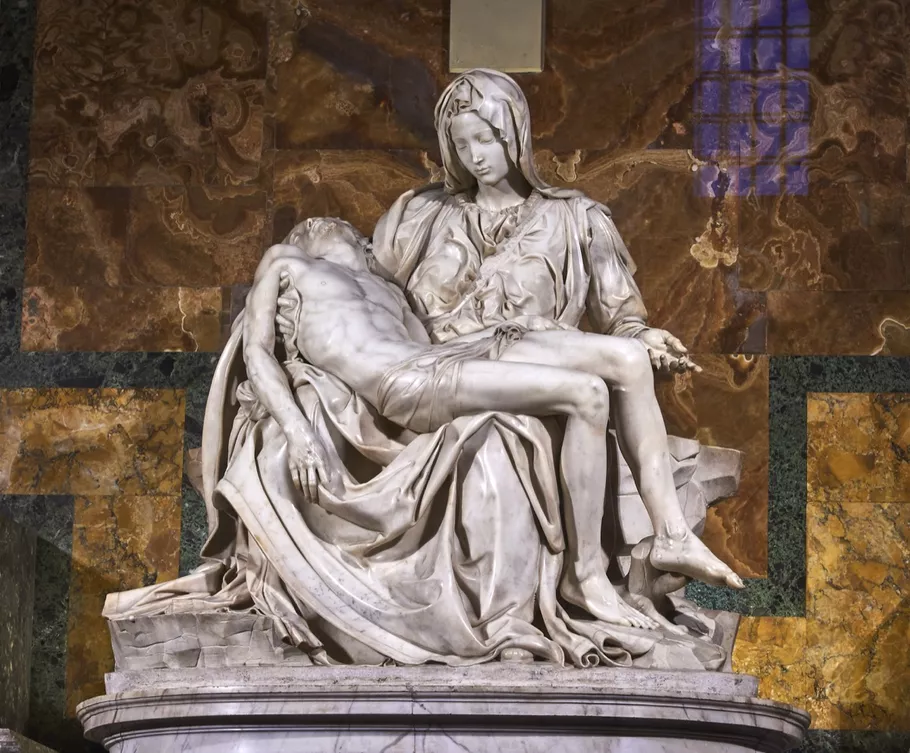
Renaissance art reflected humanist values and classical influence:
- Classical styles: Rulers and popes commissioned paintings and architecture based on Greek and Roman models to enhance their prestige.
- Naturalism: Art became more lifelike and realistic, paying close attention to the human figure and everyday detail.
- Geometric perspective: This newly invented technique added depth and proportion to paintings.
- Patronage: Wealthy families and church leaders funded artists and architects.
Painters and architects connected to this period include Michelangelo, Donatello, Raphael, Andrea Palladio, Leon Battista Alberti, and Filippo Brunelleschi.
Religious Impact
The Renaissance did not end Christianity. Instead, it shifted attention toward human potential and worldly affairs while encouraging people to study and interpret texts more directly. This change in focus helped set intellectual conditions that mattered for later religious debates.
How to Use This on the AP European History Exam
Using Sources Effectively
When you see a Renaissance painting, building, or excerpt, look for humanist signals: realistic human figures (naturalism), classical styles and themes, geometric perspective, and a focus on human potential. For written sources, identify whether the author promotes secularism, individualism, or civic humanism.
Causation
Be ready to explain how the revival of classical texts caused new values in society and religion. A strong chain looks like this: revived Greek and Roman texts plus new philological methods led to humanist scholarship, which spread (helped by the printing press) and challenged the authority of universities and the Church.
Continuity and Change
Show what changed (education moved toward classical texts, art used naturalism and perspective, secular political models appeared) and what stayed the same (Christianity remained central and patronage often came from popes and rulers).
Common Trap
Do not push Renaissance ideas straight into the Protestant Reformation. The humanist challenge to Church authority is real, but the Reformation belongs to Unit 2. Keep your timeline clean and explain it as a later effect, not part of the Italian Renaissance itself.
Common Misconceptions
- The Renaissance was anti-religious. It was not. Many humanists were religious, and popes were major patrons of Renaissance art. The shift was toward human potential and worldly concerns, not away from Christianity.
- Humanism only meant "caring about people." In this context, humanism specifically means reviving and studying classical Greek and Roman texts and using new methods to analyze them.
- The printing press started the Italian Renaissance. The Renaissance began before the press. The press (from the 1450s) helped spread Renaissance ideas, but it did not start the movement.
- Machiavelli was just describing evil rulers. The Prince offers a secular, practical model of political behavior based on how power actually works, which fits the Renaissance interest in classical and realistic models.
- Renaissance art was random or purely decorative. Rulers and popes commissioned art and architecture to boost their prestige, so art often served political and religious goals.
- All Italian humanists believed the same thing. Humanists shared interests in classical learning, but they emphasized different ideas, from civic humanism to human dignity to realistic political thought.
Related AP European History Guides
Vocabulary
The following words are mentioned explicitly in the AP® course framework for this topic.Term | Definition |
|---|---|
civic humanist culture | A Renaissance intellectual movement in Italian city-states that applied classical Greek and Roman political ideas to contemporary civic life and governance. |
classical texts | Ancient Greek and Roman literary, philosophical, and scientific works that were recovered and studied during the Renaissance, influencing European intellectual and cultural development. |
geometric perspective | A mathematical technique in Renaissance art that creates the illusion of three-dimensional space on a two-dimensional surface through systematic use of vanishing points and proportional lines. |
Humanist revival | The Renaissance movement that recovered and studied Greek and Roman classical texts, emphasizing human potential and secular knowledge. |
humanists | Renaissance scholars who focused on studying classical texts, literature, and philosophy to understand human nature and society. |
individualism | An emphasis on the importance of individual human potential, achievement, and personal development. |
naturalism | An artistic technique developed during the Renaissance that aimed to represent subjects with realistic detail and accurate observation of the natural world. |
philological approaches | Methods of textual analysis and interpretation used to study and understand the meaning and authenticity of ancient texts. |
printing press | A mechanical device invented in the 1450s that enabled the mass production and dissemination of printed texts, revolutionizing the spread of ideas in Europe. |
Renaissance | A cultural and intellectual movement from the 14th-17th centuries that challenged traditional ideas about education and women's roles in society. |
secular models | Non-religious frameworks for understanding individual behavior and political organization developed during the Renaissance. |
secularism | An intellectual perspective that emphasizes worldly concerns and human experience rather than religious or spiritual matters. |
Frequently Asked Questions
What was the Italian Renaissance?
The Italian Renaissance was a cultural and intellectual revival that began in Italy and drew on ancient Greek and Roman ideas to reshape art, education, politics, and views of human potential.
Why did the Renaissance begin in Italy?
It began in Italy because wealthy city-states, Mediterranean trade, patronage, and access to classical texts gave scholars and artists the resources to revive Greek and Roman learning.
What is humanism in the Italian Renaissance?
Humanism was an intellectual movement focused on classical texts, human potential, philology, and worldly concerns. It shifted education away from a purely theological focus.
How did classical revival affect education and the Catholic Church?
The revival of Greek and Roman texts, especially as printing spread, challenged the authority of universities and the Catholic Church by promoting classical learning and new methods of inquiry.
What are civic humanism, secularism, and individualism?
Civic humanism connected classical political ideas to public service, secularism emphasized worldly concerns, and individualism highlighted personal achievement and human capability.
How did Renaissance art and architecture show classical influence?
Renaissance artists and architects used naturalism, geometric perspective, classical styles, and ancient models to create works that projected learning, prestige, and human-centered beauty.