
🇪🇺AP European History Unit 9 Review
9.14 20th- and 21st-Century Culture, Arts, and Demographic Trends
9.14 20th- and 21st-Century Culture, Arts, and Demographic Trends
Unit & Topic Study Guides
Unit 1 – Renaissance and Exploration
Unit 2 – Age of Reformation
Unit 3 – Absolutism and Constitutionalism
Unit 4 – Scientific, Philosophical, and Political Developments
Unit 5 – Conflict, Crisis, and Reaction in the Late 18th Century
Unit 6 – Industrialization and Its Effects
Unit 7 – 19th Century Perspectives and Political Developments
Unit 8 – 20th Century Global Conflicts
Unit 9 – Cold War and Contemporary Europe
AP European History Exam
Historical Thinking Skills
Subject Guides
Exam Skills
Thematic Guides
The DBQ
Frequently Asked Questions

After 1945, European culture moved away from confidence in reason and progress toward questioning truth, meaning, and authority. Existentialism and postmodernism reshaped thought, the arts embraced experimentation and growing American influence, religion adapted through events like the Second Vatican Council, and demographic shifts like the baby boom fueled consumer culture and new civil rights movements.
Why This Matters for the AP European History Exam
This topic supports the cultural and intellectual side of Unit 9, which together with the rest of the unit carries real weight on the exam. You will use it to explain change over time in European thought and culture, to connect war and economic shifts to new ideas, and to support arguments with specific cultural and demographic evidence.
It works well for causation (war and depression leading to new philosophies), continuity and change (how art, religion, and family life shifted), and argument-building in free-response writing. You can also expect culture, the arts, and social movements to show up as evidence in multiple-choice source sets.

Key Takeaways
- World war and economic depression shook faith in science and reason, fueling existentialism and later postmodernism after 1945.
- 20th-century arts were defined by experimentation, self-expression, subjectivity, and rising American influence in both elite and popular culture.
- Organized religion stayed relevant despite secularism, with mixed Christian responses to totalitarianism and reform through the Second Vatican Council.
- Postwar economic recovery created consumer culture, more disposable income, and new domestic comforts.
- The baby boom, often encouraged by government policy, reshaped Europe's population.
- New civil rights, women's, and gay and lesbian movements, plus the revolts of 1968, challenged old values and pushed for expanded rights.
Quick Reference
| Era | Dominant Philosophy | Key Ideas |
|---|---|---|
| Renaissance (1350–1600) | Humanism | Emphasis on human potential, classical learning, dignity |
| Enlightenment (1600–1800) | Rationalism | Faith in reason, science, progress, and universal truths |
| Industrial Age (1800–1900) | Positivism, Liberalism | Belief in scientific advancement, liberal democracy |
| Modernism (1900–1945) | Nihilism, Psychoanalysis | Disillusionment after WWI; focus on the subconscious |
| Post-WWII (1945–1980s) | Existentialism, Structuralism | Crisis of meaning; rejection of absolute truths |
| Postmodern Era (1980s–Present) | Postmodernism | Truth as subjective, rejection of metanarratives |
| Innovation | Impact on Daily Life | |
| ------------------------ | --------------------------------------------- | |
| Television | Spread culture, entertainment, and news | |
| Synthetic fibers | Made clothing more affordable and accessible |
From Reason to Doubt: The Shift in European Thought
The traumas of two world wars, the Holocaust, and the atomic bomb weakened the older confidence in science and human reason. People asked hard questions about meaning, identity, and whether progress was even real. Out of that doubt came two major intellectual movements.
Existentialism
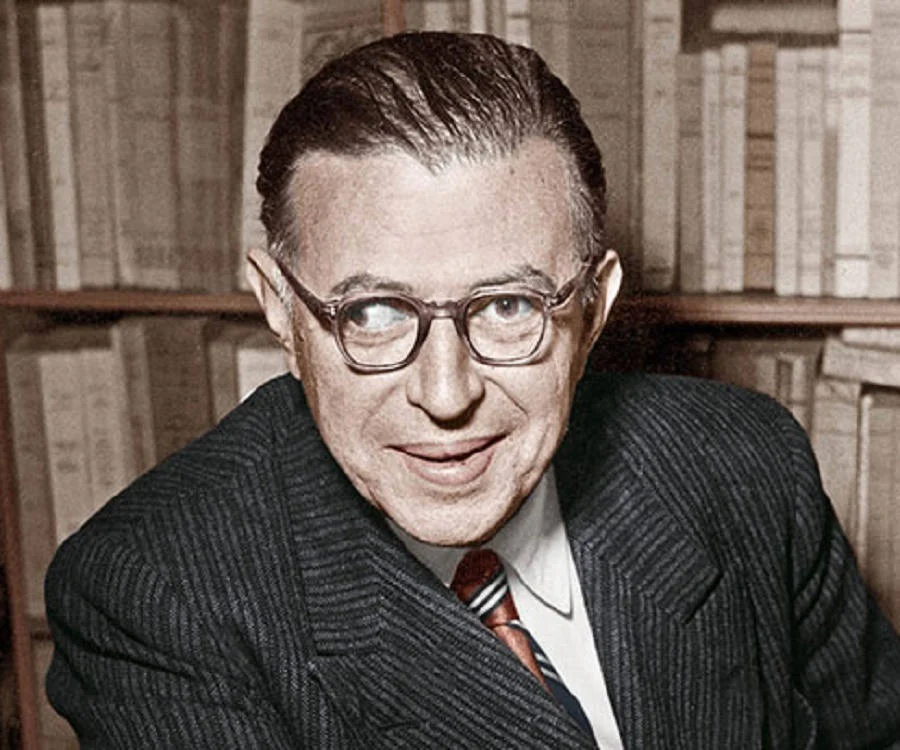
Existentialism focused on individual freedom, personal responsibility, and the idea that life has no built-in meaning, so people must create their own. Common themes include alienation, anxiety, absurdity, and the weight of choice.
- Jean-Paul Sartre (France): Argued that existence precedes essence, meaning humans define themselves through their actions.
"Man is nothing else but what he makes of himself." - Jean-Paul Sartre
Sartre is a named example for this topic, so he is strong evidence to cite. Thinkers like Nietzsche and Camus are useful background for existentialist ideas, but treat them as helpful context rather than required content for this specific topic.
Postmodernism

Postmodernism developed later in the 20th century and rejected grand narratives of progress and universal truth. It emphasized that truth can be fragmented and subjective and that meaning is shaped by language and power. The key point for AP European History is that postmodernism grew out of the loss of confidence caused by war and depression.
Cultural and Artistic Experimentation
The 20th-century arts broke sharply with older aesthetic standards. Artists explored the subconscious and subjective states and satirized Western society and its values. American influence grew in both high art and popular culture.
New Movements in Visual Arts, Architecture, and Music

These are named examples you can use as evidence:
- Visual arts: Cubism, Futurism, Dadaism, Surrealism, Abstract Expressionism, Pop Art
- Architecture: Bauhaus, Modernism, Postmodernism
- Music: Igor Stravinsky, Arnold Schoenberg, Richard Strauss
Writers Who Challenged Convention
Writers questioned Western values and tackled controversial social and political issues. Named examples include:
- Franz Kafka: Wrote about alienation and bureaucratic absurdity.
- James Joyce: Pushed literary form in new directions.
- Erich Maria Remarque: Addressed the experience of war.
- Virginia Woolf: Explored gender, identity, and consciousness.
- Jean-Paul Sartre: Connected existentialist ideas to literature.
Religion and Secularization
Even as secularism spread, organized religion stayed part of European social and cultural life. The challenges of totalitarianism and communism in central and eastern Europe brought mixed responses from the Christian churches.
Christian Responses to Totalitarianism
Named examples include:
- Dietrich Bonhoeffer and Martin Niemöller: Protestant pastors who resisted Nazism.
- Pope John Paul II: A prominent critic of communism connected to resistance in Poland.
- Solidarity: The Polish movement linked to that resistance.
The Second Vatican Council
Reform in the Catholic Church found expression in the Second Vatican Council, which redefined the church's doctrine and practices and started to redefine its relations with other religious communities. This is a strong example of religion adapting to rapid social change.
Demographic Trends, Consumer Culture, and Social Movements
Postwar recovery changed daily life and family patterns across Europe.
Baby Boom and Population Policy
With economic recovery after World War II, birth rates rose dramatically in what became known as the baby boom. Governments often promoted population growth. Named policy examples include neonatalism and childcare facilities.
Consumer Culture
Mass production, new food technologies, and industrial efficiency increased disposable income and created a consumer culture. Greater domestic comforts became available to more people, including electricity, indoor plumbing, plastics, and synthetic fibers.
Social Movements and the Revolts of 1968
New voices pushed for expanded civil rights. Various movements, including women's movements, other political and social movements, and gay and lesbian movements, worked for change, sometimes winning their goals and sometimes facing strong opposition. Intellectuals and youth reacted against perceived bourgeois materialism and decadence, most significantly in the revolts of 1968.
How to Use This on the AP European History Exam
Free Response
When a prompt asks about cultural or intellectual change after 1945, tie specific evidence to a clear cause. For example, link the trauma of war and depression to the rise of existentialism and postmodernism, or connect economic recovery to consumer culture and the baby boom. Use named figures and movements as specific evidence rather than vague references to "modern art" or "new ideas."
Continuity and Change
Show both sides. Religion continued to matter even as secularism spread. The arts kept experimenting across the century, but the specific movements and the growing American influence marked real change. Strong responses name what stayed the same and what shifted.
Using Sources Effectively
In multiple-choice source sets, expect paintings, manifestos, religious statements, or writings about consumer society and protest. Use the time period and the movement's goals to read the source's point of view, such as a Dadaist work mocking traditional values or a 1968 protest text rejecting materialism.
Common Trap
Do not turn every artist or thinker into required content. Cite named examples for this topic confidently, and label broader figures as supporting context so your essay stays accurate.
Common Misconceptions
- Secularism did not erase religion. Organized religion stayed influential in social and cultural life, and the Catholic Church actively reformed through the Second Vatican Council.
- Existentialism and postmodernism are not the same thing. Existentialism centers on individual freedom and creating meaning, while postmodernism rejects universal truth and grand narratives of progress.
- The baby boom was not only a private family trend. Governments often actively encouraged higher birth rates through policy.
- Consumer culture was more than shopping. It grew from mass production, new food technologies, and industrial efficiency that raised disposable income and brought new domestic comforts to everyday life.
- The arts were not just "weird for the sake of it." Movements like Dadaism and Surrealism deliberately challenged aesthetic standards, explored the subconscious, and satirized Western values.
- American influence mattered. Postwar culture was shaped by rising United States influence in both elite and popular culture, not by European trends alone.
Related AP European History Guides
Vocabulary
The following words are mentioned explicitly in the AP® course framework for this topic.Term | Definition |
|---|---|
Abstract Expressionism | A mid-20th-century art movement emphasizing spontaneous, gestural abstraction and the artist's emotional expression through non-representational forms. |
baby boom | A dramatic increase in birth rates following World War II, often promoted by government policies to encourage population growth. |
Bauhaus | An influential early 20th-century architectural and design movement that combined modernist aesthetics with functional design principles. |
civil rights movements | Organized social and political movements, including women's movements, gay and lesbian movements, and others, that worked to expand individual rights and freedoms. |
consumer culture | A society organized around the production and consumption of goods and services, enabled by mass production, new technologies, and increased disposable income, featuring domestic comforts like electricity, indoor plumbing, and synthetic materials. |
Cubism | An early 20th-century visual art movement that radically shifted aesthetic standards by depicting objects from multiple perspectives simultaneously. |
Dadaism | An early 20th-century artistic movement characterized by absurdity, irrationality, and anti-art sentiment, often satirizing Western society and its values. |
existentialism | A philosophical movement emphasizing individual existence, freedom, and responsibility, which gained prominence in post-1945 Europe as a response to the failures of science and reason during world wars and economic depression. |
Futurism | An early 20th-century artistic movement that celebrated technology, speed, and violence while rejecting traditional aesthetic values. |
modernism | An intellectual and cultural movement in the late 19th century characterized by rejection of objective knowledge and emphasis on relativism in values. |
Pop Art | A mid-20th-century artistic movement that incorporated popular culture, mass media, and consumer goods as subjects, often satirizing Western materialism and commercial culture. |
postmodernism | A cultural and artistic movement that emerged after 1945, characterized by skepticism toward grand narratives and traditional aesthetic standards, often questioning the values and assumptions of modernism. |
revolts of 1968 | A series of widespread student and youth protests across Europe and the world against perceived bourgeois materialism, decadence, and establishment values. |
Second Vatican Council | A major reform of the Catholic Church (1962-1965) that redefined church doctrine and practices and began to redefine its relations with other religious communities. |
Surrealism | A 20th-century artistic movement that explored the subconscious and subjective states through dreamlike imagery and irrational juxtapositions. |
Frequently Asked Questions
What was the Second Vatican Council?
The Second Vatican Council, also called Vatican II, was a Catholic Church council from 1962 to 1965 that reformed church practices and redefined relations with other religious communities.
Why does Vatican II matter for AP European History?
Vatican II is evidence that organized religion adapted to social and cultural change after World War II, even as secularism spread across Europe.
What is existentialism in AP Euro?
Existentialism emphasized individual freedom, responsibility, alienation, and the need to create meaning in a world without built-in meaning. Jean-Paul Sartre is a key example.
What is postmodernism?
Postmodernism rejected universal truths and grand narratives of progress. In AP Euro, connect it to the loss of confidence caused by war, depression, and social upheaval.
What was the baby boom in postwar Europe?
The baby boom was the rise in birth rates after World War II, encouraged in some places by government policies and connected to economic recovery and changing family life.
How should I use AP Euro 9.14 on the exam?
Use this topic as evidence for cultural and demographic change after 1945. Specific examples like existentialism, Pop Art, Vatican II, consumer culture, and 1968 protests make stronger arguments than vague references to modern culture.