
Key Principles and Approaches in Language Teaching
Language teaching has shifted dramatically over the past few decades. Older methods focused heavily on memorizing grammar rules and translating sentences, while newer approaches prioritize real-world communication and practical skills. Understanding these different methods matters because language policy decisions often hinge on which approach gets adopted in schools, and why.
Principles of Language Teaching
Each of these methods reflects a different theory about how people best learn languages. You don't need to memorize every detail, but you should understand what makes each one distinct.
Communicative Language Teaching (CLT) emphasizes meaningful communication using authentic materials. Rather than drilling grammar in isolation, CLT integrates all four language skills (speaking, listening, reading, writing) into activities that mirror real conversations.
Task-Based Language Teaching (TBLT) takes this further by organizing lessons around real-world tasks like ordering food, making reservations, or solving a problem collaboratively. The focus is on fluency over accuracy: getting the message across matters more than perfect grammar.
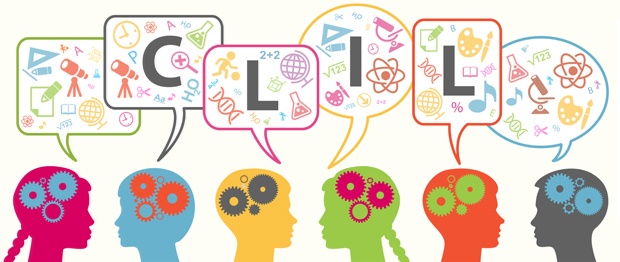
Content and Language Integrated Learning (CLIL) teaches academic subject content through a foreign language. A student might learn history in Spanish, for example, picking up both historical knowledge and language skills simultaneously.
The Natural Approach is grounded in Stephen Krashen's work. It stresses comprehensible input, meaning learners should be exposed to language they can mostly understand, with just enough new material to stretch them. Learners are allowed a "silent period" where they absorb language before being expected to produce it.
Total Physical Response (TPR) connects physical movement with language learning. A teacher might give commands ("stand up," "touch your nose") and students respond with actions before they're asked to speak. Think of games like Simon Says.
The Audio-Lingual Method focuses on oral skills through repetitive drills and pattern practice. Students repeat phrases and sentences until they become automatic. This was popular in the mid-20th century but has fallen out of favor for being too mechanical.
The Grammar-Translation Method is the oldest approach on this list. It prioritizes reading and writing, with heavy emphasis on grammatical rules and translating literary texts. You'll still see it used in some contexts, but it does little to develop speaking or listening skills.

How Linguistics Informs Teaching Methodologies
Different branches of linguistics map directly onto different aspects of language instruction:
- Phonology informs pronunciation teaching. Minimal pairs exercises (e.g., distinguishing "ship" from "sheep") help learners hear and produce sound contrasts.
- Morphology guides vocabulary instruction by helping learners understand word formation. Knowing that the prefix un- means "not" lets you decode dozens of new words.
- Syntax shapes grammar instruction and sentence-level exercises like sentence combining or diagramming.
- Semantics supports vocabulary teaching strategies, especially for idiomatic expressions that can't be understood word by word. Context-based learning is key here.
- Pragmatics addresses how language is used in social context. This includes teaching politeness strategies, turn-taking, and other cultural norms that vary across languages.
- Second Language Acquisition (SLA) theories inform the bigger picture: curriculum design and the selection of teaching approaches. Krashen's Input Hypothesis, for instance, directly inspired the Natural Approach described above.
Strategies and Technology in Language Teaching
Effectiveness of Teaching Strategies
Not every strategy works equally well for every learner. Effective teaching matches the approach to the learner's age, proficiency level, and learning preferences.
Age-specific strategies:
- Young learners benefit from TPR, songs, and games that keep them physically and emotionally engaged.
- Adult learners tend to respond better to task-based learning and explicit grammar instruction, since they can handle abstract explanations.
Learning style-based approaches:
- Visual learners engage with images, diagrams, and videos.
- Auditory learners benefit from podcasts, audio materials, and discussions.
- Kinesthetic learners thrive with role-play and hands-on activities.
Proficiency-level strategies:
- Beginners need simplified input and scaffolding (structured support that's gradually removed as skills develop).
- Intermediate learners can work with authentic materials and peer interaction.
- Advanced learners tackle academic language and complex analytical tasks.
Differentiated instruction adapts materials for mixed-ability classes, providing multiple options for how students complete tasks so that stronger and weaker learners can work in the same classroom.
Strategies for specific language skills:
- Reading: skimming for main ideas, scanning for specific details, extensive reading for fluency
- Writing: process writing (drafting, revising, editing), peer editing
- Listening: pre-listening activities to activate background knowledge, note-taking strategies
- Speaking: information gap activities (where each partner has different pieces of information), structured discussions
Technology's Impact on Language Education
Technology hasn't replaced classroom instruction, but it has expanded what's possible. Here are the major categories:
- Computer-Assisted Language Learning (CALL) covers online platforms and interactive software like Duolingo and Rosetta Stone. These provide structured practice but vary widely in quality.
- Mobile-Assisted Language Learning (MALL) uses smartphone apps for on-the-go practice. Apps like HelloTalk and Tandem connect learners with native speakers for authentic conversation.
- Virtual and Augmented Reality creates immersive language experiences. Virtual field trips (through tools like Google Expeditions) can provide cultural exposure that's otherwise impossible in a classroom.
- Social media facilitates language exchange through platforms where learners interact with native speakers in authentic, low-pressure settings.
- Adaptive learning technologies personalize learning paths based on individual performance, using AI-driven feedback to target each learner's weak spots. Babbel and Busuu are common examples.
- The flipped classroom approach assigns video lectures or readings as homework, freeing up class time for interactive practice and conversation.
- Online collaboration tools like Zoom and Google Docs enable virtual language exchanges and collaborative writing across distances.
The key takeaway with technology is that it works best as a complement to human instruction, not a replacement. Apps can drill vocabulary effectively, but they can't replicate the pragmatic, social dimensions of real conversation.