8.2 Mental Models and Imagery

🤔Cognitive Psychology Unit 8 Review
8.2 Mental Models and Imagery
🤔 Cognitive Psychology
Mental Models in Cognitive Processing
What Mental Models Are
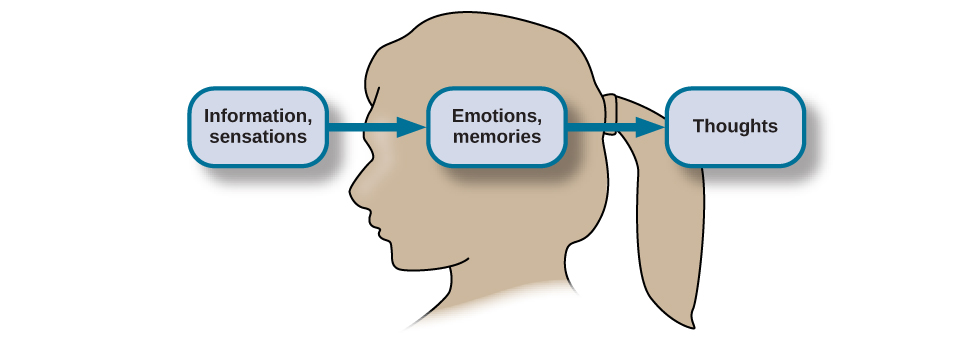
A mental model is an internal representation of how something works in the external world. You build these models constantly, often without realizing it. Your mental model of how traffic flows at an intersection, how your professor grades essays, or how gravity affects a thrown ball all simplify complex systems into something your mind can work with.
Mental models serve several core functions:
- Guiding perception by directing attention toward what your model predicts is relevant
- Facilitating problem-solving by framing what the problem even is
- Enabling prediction so you can anticipate what happens next
- Influencing memory by shaping what gets encoded and how it's retrieved
These models are dynamic. They evolve as you gain experience and encounter new information. A first-year medical student's mental model of the cardiovascular system looks very different from a cardiologist's, not because the system changed, but because the model got refined through years of learning.
The catch: mental models can be incomplete or flat-out wrong. They're built from personal experience, cultural beliefs, and prior instruction, so they carry biases. Your existing model shapes how you interpret new information, which can lead to confirmation bias (favoring information that fits your model) or stereotype-driven processing (filtering social information through inaccurate group-level models). When a model is deeply entrenched, updating it can require what Kuhn called a paradigm shift, a wholesale restructuring rather than a minor tweak.

Mental Models for Problem-Solving
Mental models form the foundation of problem-solving because they determine how you frame the problem in the first place. The model you bring to a situation dictates which information seems relevant and which strategies feel appropriate.
Three reasoning strategies show how models get applied:
- Analogical reasoning maps a familiar model onto a new situation. A physics student might use their understanding of water flow to reason about electrical circuits. This works well when the analogy is structurally sound, but breaks down when surface similarities mask deeper differences.
- Deductive reasoning draws specific conclusions from the rules within an existing model. If your model says "all mammals are warm-blooded" and you know a whale is a mammal, you conclude the whale is warm-blooded.
- Inductive reasoning builds new models from observed patterns. Noticing that every metal you've tested conducts electricity leads you to form a general model about metals and conductivity. This is the logic behind the scientific method.
Accurate models lead to effective solutions. Inaccurate ones create persistent errors. Research on expert vs. novice problem-solving shows this clearly: experts in physics categorize problems by deep structural principles (conservation of energy, Newton's second law), while novices categorize by surface features (inclined plane problems, pulley problems). The expert's richer model leads to better strategies.
Problem-solving also feeds back into model quality. Each time you solve a problem, the outcome either confirms or challenges your model, creating an iterative refinement cycle.
Mental Imagery in Cognitive Psychology
Characteristics of Mental Imagery
Mental imagery is the internal representation of perceptual experiences without direct sensory input. You can "see" a friend's face, "hear" a familiar song, or "feel" the texture of sandpaper, all in your mind.
Key properties of mental imagery:
- Modality-specific. Visual imagery activates regions of the visual cortex that overlap with areas used during actual seeing. Auditory imagery similarly engages auditory processing areas. This is strong evidence that imagery isn't purely abstract; it shares neural machinery with perception.
- Manipulable. You can mentally rotate objects, zoom in on details, or transform images. Shepard and Metzler's classic mental rotation experiments showed that the time it takes to compare two rotated shapes increases linearly with the angle of rotation, suggesting people actually "rotate" the image in their mind.
- Variable across individuals. Some people experience vivid, detailed imagery; others experience very little. At the extreme, aphantasia describes the near-complete inability to generate voluntary mental images.
- Driven by both top-down and bottom-up processes. Your expectations and goals shape what you imagine (top-down), but imagery can also be triggered by external stimuli like descriptions or partial cues (bottom-up).
Effectiveness of Models and Imagery
Mental imagery and mental models have practical applications across many domains:
- Learning and memory. Mnemonic techniques like the method of loci (placing items to remember at locations along a familiar mental route) and the pegword system (associating items with rhyming number-word pairs) exploit imagery to boost recall.
- Problem-solving. Mental simulation lets you "run" potential solutions before acting. Einstein famously used thought experiments, like imagining riding alongside a beam of light, to develop insights about relativity.
- Spatial reasoning. Cognitive maps support navigation and spatial tasks. Imagery underlies your ability to give someone directions or rearrange furniture in your head before moving anything.
- Decision-making. Chess players visualize sequences of moves and their consequences. Scenario planning in business and military contexts relies on mentally simulating possible futures.
- Skill acquisition. Mental practice, where athletes or musicians visualize performing a skill, produces measurable performance gains. It doesn't replace physical practice, but it activates overlapping motor planning regions and strengthens relevant neural pathways.
There are real limitations. Individual differences in imagery vividness mean these techniques don't work equally well for everyone. And because mental models can be inaccurate, mentally simulating a flawed model just rehearses the wrong answer.
Researchers measure imagery through both subjective reports (questionnaires like the VVIQ, the Vividness of Visual Imagery Questionnaire) and objective measures (reaction times in mental rotation tasks, fMRI activation patterns during imagery). Combining these approaches gives a more complete picture of how imagery operates.
See Fiveable more often in Google
Mark Fiveable as a preferred source and Google is more likely to show you our guides in Top Stories, with a "preferred" badge in AI Mode and AI Overviews.