9.4 Radioisotopes and their uses in medicine and research

⏱️General Chemistry II Unit 9 Review
9.4 Radioisotopes and their uses in medicine and research
⏱️ General Chemistry II
Radioisotopes are unstable atoms that emit radiation as they decay toward a more stable nuclear configuration. Because they behave chemically just like their stable counterparts but can be detected through their radiation, they've become essential tools in medicine, biological research, environmental science, and archaeological dating.
Radioisotopes

Top images from around the web for Properties of radioisotopes
Radioactive Decay | Chemistry: Atoms First View original
Is this image relevant?
Radioactive decay - Wikipedia View original
Is this image relevant?
Radioactive Decay | Chemistry: Atoms First View original
Is this image relevant?
Radioactive decay - Wikipedia View original
Is this image relevant?
Properties of radioisotopes
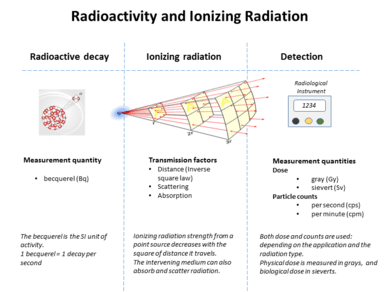
A radioisotope is any isotope whose nucleus is unstable and undergoes radioactive decay. During decay, the nucleus emits one or more forms of ionizing radiation:
- Alpha particles (helium nuclei, )
- Beta particles (electrons or positrons)
- Gamma rays (high-energy photons)
Each radioisotope has a characteristic half-life, the time it takes for half of a sample to decay. Half-lives range enormously: has a half-life of about 6 hours, while has a half-life of 5,730 years. This predictable decay rate is what makes radioisotopes so useful for both medical applications and dating techniques.
A key point: radioisotopes are chemically identical to the stable isotopes of the same element. Radioactive behaves in the body exactly like stable , getting absorbed by the thyroid gland in the same way. The difference is that the radioactive version announces its location by emitting detectable radiation, which is what makes it useful as a tracer.
Radioisotopes in medical applications
Diagnostic Imaging
Radioisotopes are widely used as tracers in medical imaging. A radiopharmaceutical (a drug containing a radioisotope) is introduced into the body, where it accumulates in a targeted organ or tissue. The radiation it emits is then detected by an imaging device to build a picture of internal structures.
Two major imaging techniques rely on radioisotopes:
- Positron Emission Tomography (PET): Uses positron-emitting isotopes like fluorine-18 () and carbon-11 () to visualize metabolic activity. is often attached to a glucose analog (FDG), so areas with high metabolic rates, like tumors, light up on the scan.
- Single-Photon Emission Computed Tomography (SPECT): Uses gamma-emitting isotopes like technetium-99m () and iodine-123 () to image specific organs. is the most commonly used radioisotope in medicine, partly because its 6-hour half-life is long enough for imaging but short enough to limit radiation exposure.
Radiation Therapy
Radioisotopes also treat disease by delivering targeted radiation to destroy abnormal cells while minimizing damage to surrounding healthy tissue:
- Iodine-131 () treats thyroid cancer. Because the thyroid naturally absorbs iodine, concentrates in thyroid tissue and delivers a localized dose of beta radiation to malignant cells.
- Yttrium-90 () treats liver cancer through radioembolization, a procedure where tiny radioactive microspheres are injected into the blood vessels feeding the tumor, delivering high-dose radiation directly to it.

Radioisotopes as research tracers
The ability to track a specific atom through a chemical or biological process makes radioisotopes invaluable in research. Because the radioisotope behaves chemically like the stable version, it follows the same pathways, but you can detect exactly where it goes.
Biological and biochemical research:
- Carbon-14 () traces carbon through metabolic pathways like photosynthesis and cellular respiration. This is how Melvin Calvin mapped the steps of the Calvin cycle.
- Phosphorus-32 () labels nucleotides to study DNA replication and cell division.
- Tritium () labels molecules to investigate drug metabolism and protein synthesis.
Radiolabeling is the general technique of attaching a radioisotope to a molecule of interest so its distribution and fate can be tracked through a system.
Environmental research:
- Cesium-137 () and strontium-90 () are used to assess the spread and impact of nuclear fallout through ecosystems and food chains.
- Tritium () traces water movement through groundwater systems and ocean circulation patterns.
Dating techniques:
Radioisotopes with long half-lives enable the dating of geological and archaeological samples. Radiocarbon dating uses (half-life of 5,730 years) for organic materials up to roughly 50,000 years old. Potassium-argon dating uses the decay of to to date much older geological formations, on the scale of millions to billions of years.
Safety in radioisotope handling
Working with radioisotopes requires strict safety protocols to minimize exposure to ionizing radiation. The core principles follow the ALARA framework: keep exposure As Low As Reasonably Achievable.
Practical safety measures:
- Shielding: Lead barriers, leaded glass, and fume hoods contain radioactive emissions. The type of shielding depends on the radiation type (a sheet of paper stops alpha particles, but gamma rays require dense materials like lead).
- Personal protective equipment (PPE): Lab coats, gloves, and dosimeters (devices that measure cumulative radiation exposure) are standard for anyone handling radioisotopes.
- Monitoring: Geiger counters and other detection instruments regularly check radiation levels and surface contamination in the work area.
- Waste disposal: Radioactive waste must be stored, treated, and disposed of according to established protocols to prevent environmental contamination.
Regulatory oversight:
- In the United States, the Nuclear Regulatory Commission (NRC) licenses and regulates all radioisotope use.
- Institutions must obtain appropriate licenses and follow guidelines for storage, handling, and disposal.
- Personnel must complete comprehensive training and receive authorization before working with radioactive materials.
- Regular inspections and audits verify compliance with safety regulations.
See Fiveable more often in Google
Mark Fiveable as a preferred source and Google is more likely to show you our guides in Top Stories, with a "preferred" badge in AI Mode and AI Overviews.