5.2 Taxonomy and Natural History

🧑🏽🔬History of Science Unit 5 Review
5.2 Taxonomy and Natural History
🧑🏽🔬 History of Science
Linnaeus's Contributions to Taxonomy
Development of Modern Taxonomy
Carl Linnaeus, a Swedish botanist, physician, and zoologist, is widely considered the "father of modern taxonomy." Before Linnaeus, naming conventions for organisms were inconsistent and often unwieldy, with some species described by long Latin phrases that varied from one scholar to the next. Linnaeus changed that by developing a comprehensive system for classifying organisms based on shared physical characteristics, particularly the number and arrangement of reproductive parts (stamens and pistils in plants).
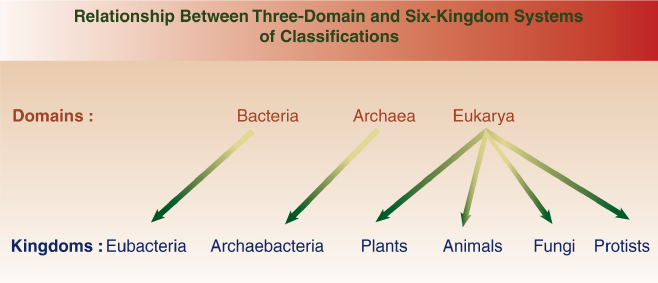
His system organized life into a nested hierarchy of categories: kingdom, class, order, genus, and species. This made it far easier for scientists across different countries to identify, study, and communicate about the same organism without confusion. The system has been significantly expanded and refined since Linnaeus's time (with additions like phylum and family), but its core logic remains the foundation of modern taxonomy.
Introduction of Binomial Nomenclature
One of Linnaeus's most lasting contributions was binomial nomenclature, a standardized two-part naming system for every species. Each name consists of the genus (capitalized) followed by the specific epithet (lowercase), both italicized: Homo sapiens, Canis lupus, Rosa canina.
Before this system, a single species might go by different names in different regions or languages. Binomial nomenclature gave scientists a universal shorthand that cut through that ambiguity. Linnaeus formalized this approach in his 1735 work Systema Naturae, which went through twelve editions during his lifetime, each one substantially expanded. By the landmark tenth edition (1758), it had become the foundational reference for biological naming and hierarchical classification. Biologists today still treat that tenth edition as the starting point for zoological nomenclature.
Advancements in Natural History during the Enlightenment
Shift Towards an Empirical, Evidence-Based Approach
During the 17th and 18th centuries, the study of natural history underwent a major transformation. Rather than relying on inherited authorities or scripture-based accounts of the natural world, Enlightenment naturalists increasingly insisted on direct observation and systematic evidence.
The microscope was a key tool in this shift. Antonie van Leeuwenhoek used single-lens microscopes of his own design to reveal an entire world invisible to the naked eye, discovering what he called "animalcules," including bacteria, protozoa, and sperm cells. Robert Hooke's Micrographia (1665) had already demonstrated the power of microscopy by illustrating the cellular structure of cork and the compound eyes of insects. Together, these discoveries pushed naturalists to classify organisms based on structural details rather than folklore or assumed purpose.
Development of Competing Classification Systems
The Enlightenment produced rival approaches to classification, and the tension between them sharpened how naturalists thought about the natural world. Linnaeus organized organisms primarily by shared physical traits, grouping plants by counting their stamens and pistils. Georges-Louis Leclerc, Comte de Buffon, took a fundamentally different approach. Buffon emphasized geography, environment, and reproduction in understanding species, and he was openly skeptical of rigid classification schemes, arguing that nature didn't sort itself into neat boxes.
His massive Histoire Naturelle (36 volumes published in his lifetime, with additional volumes appearing posthumously) attempted to describe the entire natural world and raised early questions about whether species could change over time. Buffon noted, for instance, that similar environments on different continents produced different species, an observation that challenged simple, static classification.
These rival frameworks pushed naturalists to think more carefully about what made a good classification system and what the relationships between organisms actually meant. Alexander von Humboldt traveled extensively through the Americas from 1799 to 1804, collecting specimens and mapping the distribution of species across different climates and altitudes. His work helped establish biogeography as a field by showing that plant and animal distribution followed patterns tied to climate, elevation, and geography rather than appearing randomly across the globe.
Global Exploration and Natural History
Impact of the Age of Exploration
European voyages of exploration, stretching from the 15th through the 18th centuries, flooded Europe with specimens of previously unknown plants, animals, and ecosystems. James Cook's three Pacific voyages (1768–1779) brought back detailed descriptions and preserved samples of species from the Pacific Islands, Australia, New Zealand, and beyond. The naturalists aboard these expeditions, such as Joseph Banks and Daniel Solander on Cook's first voyage, collected thousands of plant specimens and produced detailed illustrations. Exotic finds like orchids, birds of paradise, and unfamiliar marine life sparked intense public and scientific interest in the diversity of life on Earth.
Each voyage generated collections that needed to be named, described, and fit into existing classification systems. This created both an opportunity and a problem for taxonomy.
Challenges and Advancements in Taxonomy
The sheer volume of new species overwhelmed older, simpler classification frameworks. Naturalists were forced to develop more comprehensive and flexible taxonomic systems to accommodate the flood of new organisms. The discovery of species that didn't fit neatly into existing categories also raised deeper questions: Why were certain species found only in certain places? Why did some distant species resemble each other while nearby ones looked completely different?
These questions contributed to early evolutionary thinking. Jean-Baptiste Lamarck proposed that organisms changed over time through the use and disuse of organs and the inheritance of acquired characteristics. While his mechanism was wrong, his insistence that species were not fixed was an important step toward later evolutionary theory. Global exploration also fostered international scientific collaboration, as specimens and correspondence flowed between naturalists, universities, and royal academies across Europe. Comparative anatomy emerged as a distinct field, with figures like Georges Cuvier systematically studying how the structures of different organisms related to one another and using anatomical evidence to identify fossil species.
Museums and Collections in Natural History
Preservation and Study of Specimens
Museums, botanical gardens, and natural history collections became essential infrastructure for Enlightenment science. They served as centralized repositories where specimens collected from around the globe could be preserved, compared, and studied side by side. Preservation techniques like herbarium sheets (dried, pressed plant specimens mounted on paper) and early taxidermy allowed scientists to examine organisms long after collection, even if the original habitat or population had changed.
These collections also provided a historical record of biodiversity. Over time, scientists could use them to track changes in species distribution and abundance, making them valuable not just for classification but for understanding ecological change.
Educational and Collaborative Roles
Beyond research, these institutions played a significant role in public education. The British Museum (founded 1753) and the Muséum national d'Histoire naturelle in Paris (reorganized in 1793) both opened their collections to the public, introducing broader audiences to the natural world and helping build support for scientific exploration. Botanical gardens like the Royal Botanic Gardens at Kew maintained living collections of plants from diverse climates, allowing direct study of plant diversity, ecology, and adaptation.
Museums and gardens also fostered collaboration among researchers by providing shared spaces and resources. Scientists from different institutions and countries could exchange specimens, compare findings, and refine classification systems together. This collaborative culture was a defining feature of Enlightenment natural history and helped accelerate the pace of discovery.
See Fiveable more often in Google
Mark Fiveable as a preferred source and Google is more likely to show you our guides in Top Stories, with a "preferred" badge in AI Mode and AI Overviews.