8.5 Closing Arguments
Updated August 2024Fiveable Content Team

🪜Civil Procedure Unit 8 Review
8.5 Closing Arguments
Closing arguments are the final act in a trial's dramatic sequence. They give attorneys one last chance to sway the jury before deliberation begins. This crucial phase lets lawyers tie evidence together, apply the law, and make a compelling case for their side.
In this high-stakes moment, attorneys must balance persuasion with ethics. They can't introduce new evidence or attack opposing counsel. Instead, they use storytelling, visual aids, and rhetorical devices to leave a lasting impression on the jury's minds.
Purpose and Structure of Closing Arguments
Final Opportunity for Case Summary and Persuasion
- Closing arguments serve as the final opportunity for attorneys to summarize their case and persuade the jury or judge before deliberation begins
- Attorneys present a logical progression in their closing arguments including
- Brief introduction sets the tone for the argument
- Summary of key evidence highlights the strongest points
- Application of law to facts demonstrates how the evidence supports the legal claim
- Refutation of opposing arguments addresses weaknesses in the other side's case
- Compelling conclusion reinforces the main points and calls for a favorable verdict
- Time limitations apply to closing arguments with each side typically allotted equal time (usually 30-60 minutes)
- Order of closing arguments follows a specific sequence
- Plaintiff or prosecution presents first
- Defendant follows with their closing argument
- Plaintiff or prosecution may have an opportunity for rebuttal
Ethical Considerations and Limitations
- Attorneys must adhere to ethical guidelines during closing arguments
- Ethical restrictions prohibit
- Introducing new evidence not presented during the trial
- Making personal attacks on opposing counsel
- Expressing personal opinions about the credibility of witnesses
- Misrepresenting facts or evidence presented in court
- Objections can be raised if an attorney violates these ethical guidelines
- Judge may intervene to address improper statements or arguments
Elements of Effective Closing Arguments
Thematic and Rhetorical Strategies
- Clear and concise theme ties together the main points of the case and resonates with the jury or judge
- Strategic use of rhetorical devices enhances persuasiveness and memorability
- Repetition reinforces key points (repetition of a phrase like "beyond a reasonable doubt")
- Analogies help jurors understand complex concepts (comparing DNA evidence to a unique fingerprint)
- Rhetorical questions engage the jury's critical thinking (asking "Would a guilty person behave this way?")
- Effective incorporation of key evidence and testimony supports the argument
- Reference specific exhibits or witness statements (Expert testimony from Dr. Smith confirming the defendant's alibi)
- Connect evidence to legal elements of the case (surveillance footage proving the defendant's presence at the crime scene)
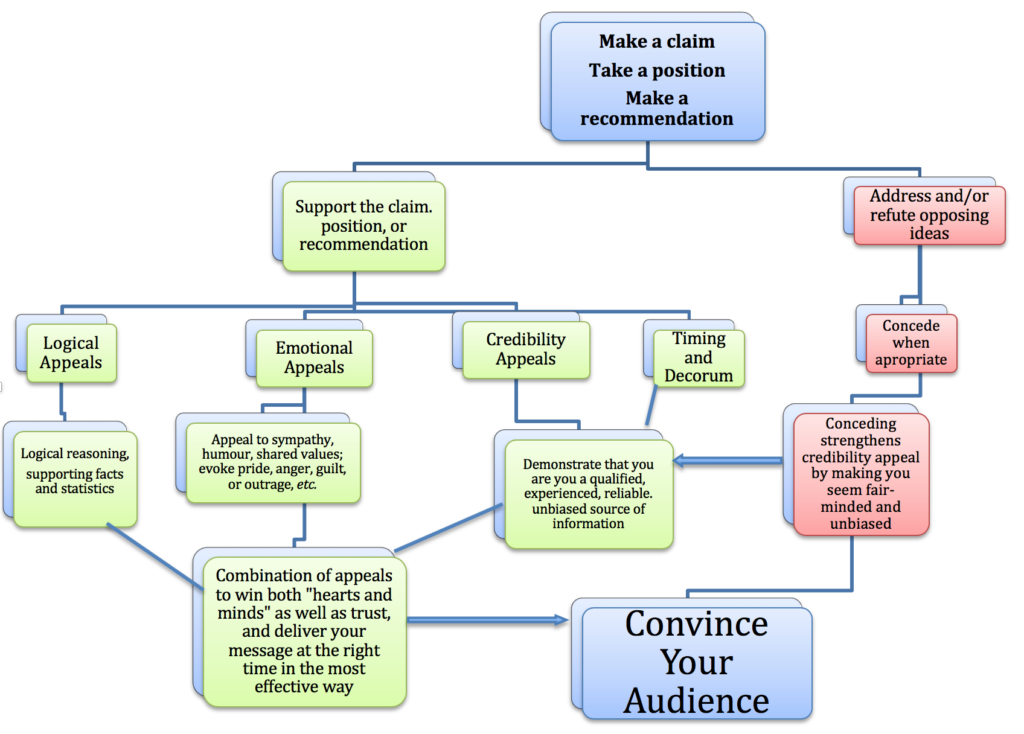
Balancing Logic and Emotion
- Emotional appeal balanced with logical reasoning engages both the hearts and minds of the jurors or judge
- Emotional appeal might highlight the impact on the victim or defendant's family
- Logical reasoning focuses on the facts and evidence presented during the trial
- Addressing and refuting the opposing side's strongest arguments while reinforcing the strengths of one's own case
- Anticipate counterarguments and prepare rebuttals
- Highlight inconsistencies or weaknesses in the opposing side's evidence
- Strong call to action outlines the desired outcome and motivates decision-makers
- Clearly state the verdict or judgment sought
- Emphasize the importance of the jury's role in delivering justice
Persuasion Strategies in Closing Arguments
Narrative Techniques and Visual Aids
- Storytelling techniques create a compelling narrative helping jurors understand and remember key aspects of the case
- Chronological retelling of events
- Character development of key witnesses or parties
- Visual aids reinforce important points and enhance comprehension
- Charts and graphs illustrate complex data (timeline of events)
- Diagrams explain technical concepts (accident reconstruction diagram)
- Multimedia presentations combine text, images, and audio for maximum impact
Psychological and Communication Tactics
- Employing the primacy and recency effect emphasizes crucial information at the beginning and end of the closing argument
- Open with a powerful statement or question
- Conclude with a memorable call to action
- Addressing potential weaknesses in the case proactively minimizes their impact and maintains credibility with the jury
- Acknowledge and explain any inconsistencies in witness testimony
- Provide context for potentially damaging evidence
- Tailoring language and examples resonates with specific demographics and backgrounds of jury members
- Use relatable analogies (comparing a complex business deal to planning a family vacation)
- Avoid jargon or technical terms that may confuse jurors
- Utilizing body language, tone of voice, and pacing enhances the delivery and impact of the closing argument
- Maintain eye contact with jurors
- Use gestures to emphasize key points
- Vary speech patterns to maintain interest and highlight important information
- Framing the case in terms of broader principles of justice or societal values appeals to the jury's sense of duty and fairness
- Connect the case to fundamental rights or values (right to privacy, public safety)
- Emphasize the jury's role in upholding justice and setting important precedents
Plaintiff vs Defendant Closing Arguments
Burden of Proof and Evidentiary Focus
- Plaintiff's closing argument focuses on proving their case by a preponderance of the evidence in civil cases or beyond a reasonable doubt in criminal cases
- Systematically address each element of the legal claim
- Highlight the strongest evidence supporting each element
- Defendant's argument aims to create reasonable doubt or demonstrate a lack of sufficient evidence
- Identify gaps or inconsistencies in the plaintiff's evidence
- Emphasize alternative explanations for the evidence presented
Emotional vs Logical Appeals
- Plaintiffs often emphasize emotional appeals and the harm suffered by their client
- Describe the impact of the defendant's actions on the plaintiff's life
- Use vivid language to evoke empathy from the jury
- Defendants may focus more on logical arguments and challenging the credibility of the plaintiff's evidence
- Analyze inconsistencies in witness testimony
- Question the reliability of physical evidence or expert opinions
Strategic Advantages and Disadvantages
- Plaintiff's closing argument has the advantage of primacy (going first) and the opportunity for rebuttal
- Set the tone for the jury's consideration of the case
- Address new points raised in the defendant's closing during rebuttal
- Defendant's argument benefits from recency (going last before deliberation)
- Leave a lasting impression on the jury
- Directly challenge the plaintiff's arguments without fear of rebuttal
- Plaintiffs typically structure their argument around each element of their claim demonstrating how they have met the burden of proof
- Organize the closing argument according to the legal elements of the case
- Connect specific evidence to each required element
- Defendants may focus on attacking specific weaknesses in the plaintiff's case
- Concentrate on the weakest aspects of the plaintiff's argument
- Propose alternative interpretations of key evidence
- Plaintiff's closing often includes a specific request for damages or a desired outcome
- Clearly state the amount of compensation sought in civil cases
- Emphasize the appropriate punishment in criminal cases
- Defendant's argument may focus on mitigating potential damages or arguing for a complete dismissal of the case
- Propose alternative, less severe outcomes if liability is found
- Argue for acquittal or case dismissal based on insufficient evidence
See Fiveable more often in Google
Mark Fiveable as a preferred source and Google is more likely to show you our guides in Top Stories, with a "preferred" badge in AI Mode and AI Overviews.