5.4 Behavioral Approaches to Policy Design

🫘Intro to Public Policy Unit 5 Review
5.4 Behavioral Approaches to Policy Design
🫘 Intro to Public Policy
Behavioral Economics in Policy Design

Top images from around the web for Key Concepts and Insights
Frontiers | Models of Cognition and Their Applications in Behavioral Economics: A Conceptual ... View original
Is this image relevant?
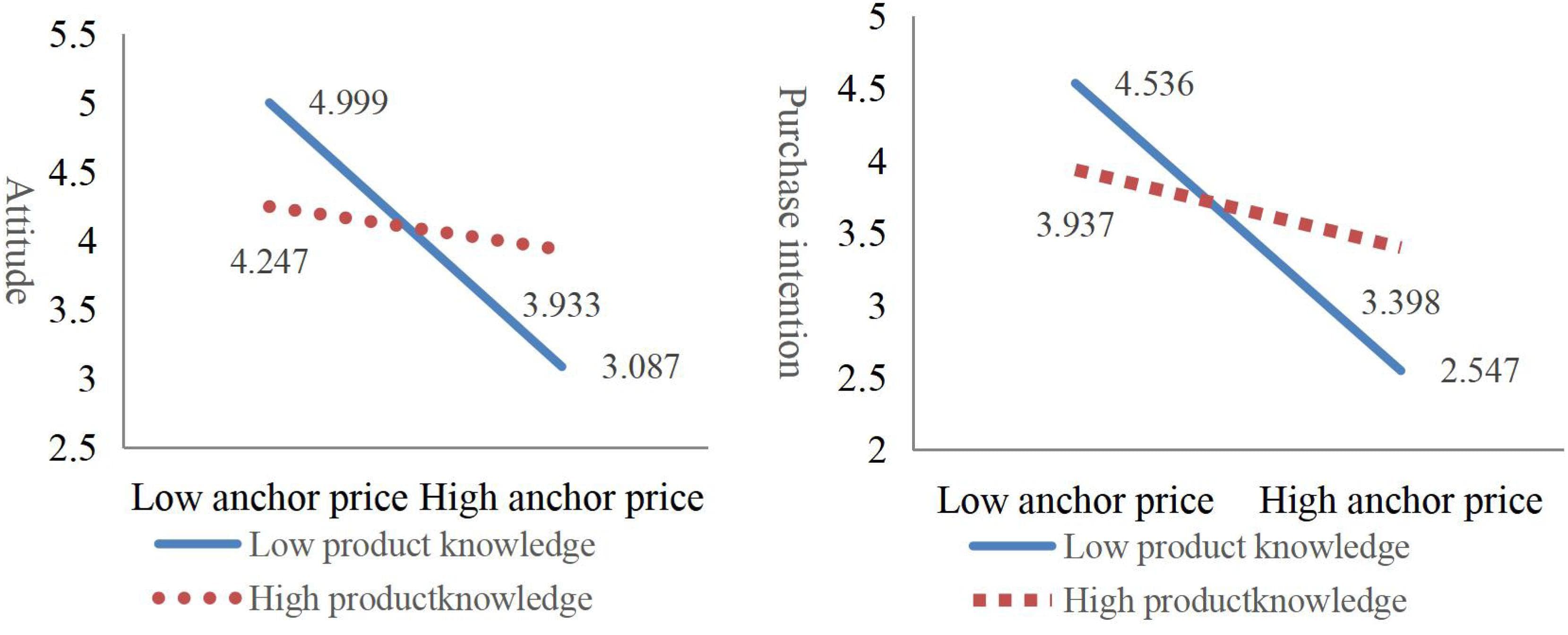
Frontiers | Influence of the Framing Effect, Anchoring Effect, and Knowledge on Consumers ... View original
Is this image relevant?
Frontiers | Influence of Loss Aversion and Income Effect on Consumer Food Choice for Food Safety ... View original
Is this image relevant?
Frontiers | Models of Cognition and Their Applications in Behavioral Economics: A Conceptual ... View original
Is this image relevant?
Frontiers | Influence of the Framing Effect, Anchoring Effect, and Knowledge on Consumers ... View original
Is this image relevant?
Key Concepts and Insights
Traditional economic models assume people are rational actors who weigh all available information before making decisions. Behavioral economics challenges that assumption. It draws on psychology and economics to study how people actually decide, and the answer is: often imperfectly, using mental shortcuts and gut feelings.
Several core concepts from behavioral economics show up repeatedly in policy design:
- Bounded rationality: People have limited time, attention, and brainpower. Instead of optimizing every decision, they rely on mental shortcuts called heuristics to get to "good enough" answers.
- Loss aversion: Losing something feels roughly twice as painful as gaining the same thing feels good. This is why people cling to what they already have (a related idea called the endowment effect).
- Framing effects: How a choice is presented changes what people pick. Describing a surgery as having a "90% survival rate" versus a "10% mortality rate" leads to different decisions, even though the information is identical.
- Anchoring: The first number you see acts as a mental reference point. If a suggested donation amount starts at $100, people tend to give more than if it starts at $20.
- Availability heuristic: People overestimate the likelihood of events that come to mind easily. Plane crashes feel more common than they are because they're vivid and memorable.
Policymakers can use these insights in several ways: leveraging or counteracting cognitive biases, simplifying complex choices, changing default options, providing timely feedback, and using social comparisons to shape behavior.
Empirical Methods and Applications
Behavioral policy isn't just theory. Randomized controlled trials (RCTs) and field experiments are increasingly used to test whether behaviorally-informed interventions actually work in real-world settings before scaling them up.
Some well-known applications include:
- Automatic enrollment in retirement savings plans: When employees are enrolled by default (rather than having to opt in), participation rates jump dramatically. One widely cited study found participation rose from around 49% to 86%.
- Social norm feedback on energy bills: Companies like Opower print comparisons showing how a household's energy use stacks up against their neighbors'. This simple nudge has been shown to reduce energy consumption by about 2%.
- Simplified government benefit applications: Reducing paperwork and streamlining forms increases the number of eligible people who actually claim benefits, because it lowers the cognitive burden of applying.
- Graphic warnings on cigarette packaging: Vivid images of health consequences make the risks of smoking more emotionally salient, which discourages use more effectively than text-only warnings.
Nudging in Public Policy

Defining Nudges and Choice Architecture
A nudge is a change to how choices are presented (the choice architecture) that steers people toward better decisions without banning any options or significantly changing economic incentives. The key distinction: people remain free to choose differently.
Classic nudges include:
- Default options: Setting organ donation or retirement savings as the default, so people participate unless they actively opt out
- Social norm information: Showing households how their energy use compares to neighbors'
- Simplified processes: Making government benefit applications shorter and easier to complete
- Prominent reminders: Sending text messages about upcoming deadlines or overdue payments
Nudges tend to be small and low-cost, yet they can produce meaningful results across health, finance, education, energy, and regulatory compliance. That combination of low cost and measurable impact is a big part of their appeal to policymakers.
Debates and Critiques
Not everyone is enthusiastic about nudging. The debate breaks down along a few lines:
Critics raise several concerns:
- Nudges can feel paternalistic or manipulative, especially when people don't realize their choices are being shaped.
- They may not address root causes. A nudge that gets people to eat healthier in a cafeteria doesn't fix food deserts or poverty.
- Behavior changes from nudges can fade over time, raising questions about long-term sustainability.
Proponents counter that:
- Well-designed nudges help people make decisions that align with their own stated goals, like saving more for retirement.
- Unlike mandates or bans, nudges preserve freedom of choice.
- Nudges can be made transparent, with clear explanations of what's being done and why.
Ethical Considerations of Behavioral Interventions

Frameworks and Principles
Using behavioral insights in policy raises a fundamental question: how much should the government shape individual choices, even gently?
The most influential framework here is libertarian paternalism, developed by Richard Thaler and Cass Sunstein. The core idea is that policymakers can steer people toward better outcomes (as judged by the people themselves) while still preserving freedom of choice. Under this framework, nudges should help people achieve their own goals, not impose the government's vision of a good life. And people should always be able to opt out easily.
Ethical guidelines for behavioral interventions generally emphasize three principles:
- Transparency: The public should know when nudges are being used and what they're designed to do.
- Rigorous evaluation: Interventions should be tested with strong evidence before being scaled.
- Proportionality: The nudge should be proportional to the problem it's trying to solve and grounded in solid evidence.
Risks and Limitations
Even with good intentions, behavioral interventions carry real risks:
- Exploitation of vulnerabilities: Nudges work because of cognitive biases. That same mechanism could be used to serve the interests of the institution doing the nudging rather than the people being nudged.
- Equity concerns: Nudges may affect different groups differently. A default that works well for most people might disadvantage low-income populations or people with less access to information.
- Crowding out deeper reform: If policymakers rely too heavily on nudges, they might avoid tackling harder structural problems like inequality, inadequate infrastructure, or weak institutions.
Responsible use of behavioral interventions requires ongoing monitoring, evaluation of unintended consequences, and attention to whether the public finds them acceptable.
Effectiveness of Behavioral Approaches in Policy
Case Studies and Examples
Several governments have built dedicated teams to apply and test behavioral insights:
The UK's Behavioural Insights Team (BIT), established in 2010, has run numerous RCTs, including:
- Personalized text message reminders that increased on-time tax payments
- Simplified job application forms that improved outcomes for job seekers
- Social norm feedback sent to physicians showing their antibiotic prescribing rates compared to peers, which reduced overprescription
The US Office of Evaluation Sciences (OES) has partnered with federal agencies to test interventions such as:
- Increasing enrollment in health insurance plans through clearer communications
- Promoting energy conservation in public housing
- Improving the clarity and effectiveness of government letters and notices
Beyond these teams, behavioral approaches have shown results in several other domains:
- Retirement savings: Automatic enrollment in 401(k) plans has become one of the most cited success stories in behavioral policy.
- College enrollment: Simplified financial aid applications (like streamlined FAFSA forms) and timely reminders about deadlines have boosted college enrollment and persistence, particularly among low-income students.
- Healthy eating: Rearranging cafeteria layouts so fruits and vegetables are placed at eye level increases their selection.
- Environmental policy: Default enrollment in green energy plans and loss-framed messaging about water waste have both shown promise in encouraging conservation.
Lessons and Limitations
These case studies show genuine potential, but they also reveal important boundaries:
- Context matters: A nudge that works in one setting may not transfer to another. The target population, the type of decision, and the available policy tools all affect results.
- Nudges are complements, not replacements: Behavioral strategies work best alongside traditional tools like regulation, financial incentives, and information campaigns. They're rarely sufficient on their own for complex problems.
- Long-term effects are uncertain: Many nudge studies measure short-term outcomes. More research is needed on whether behavior changes persist, scale effectively, and avoid unintended consequences.
- Transparency and accountability remain essential: Public trust in behavioral interventions depends on openness about how they work and willingness to stop using them if evidence shows they're ineffective or harmful.
See Fiveable more often in Google
Mark Fiveable as a preferred source and Google is more likely to show you our guides in Top Stories, with a "preferred" badge in AI Mode and AI Overviews.