12.1 Elements of Defamation: Libel and Slander
Updated July 2024Fiveable Content Team

🤕Torts Unit 12 Review
12.1 Elements of Defamation: Libel and Slander
🤕 Torts
Unit 12 – Defamation and Privacy Torts
Defamation can seriously harm a person's reputation through false statements. It comes in two forms: libel (written) and slander (spoken). To win a defamation case, you must prove the statement was false, about you, published to others, and caused damage.
The level of fault required depends on whether you're a public or private figure. Public figures face a higher bar, needing to show "actual malice." True statements, no matter how embarrassing, can't be defamatory. Opinions are also protected by free speech rights.
Defamation: Libel and Slander
Definition of defamation
- False statement that harms a person's reputation or standing in the community
- Causes others to think less of the person
- Deters others from associating with the person
- Injures the person's business, trade, or profession
- Two main forms of defamation
- Libel: written or published defamation (newspapers, books, online posts)
- Slander: spoken defamation (speeches, interviews, conversations)
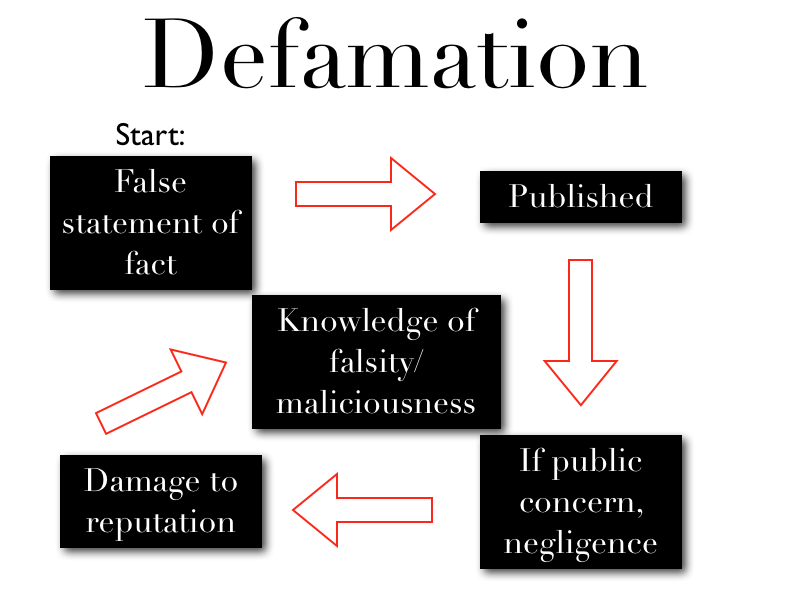
Elements of defamation claims
- False statement of fact
- Statement must be objectively untrue
- Opinions are protected speech under the First Amendment (cannot be basis for defamation)
- Statement must be "of and concerning" the plaintiff
- Reasonable reader or listener would understand the statement refers to the plaintiff
- Does not need to mention plaintiff by name if there are other identifying details
- Publication to a third party
- Defamatory statement must be communicated to at least one person other than the plaintiff
- Can be through any medium (spoken words, written text, images, gestures)
- Damages
- Plaintiff must show the false statement harmed their reputation
- Can be actual economic losses (lost job, declined business) or emotional distress and humiliation
- Fault
- Level of fault required depends on the plaintiff's status
- Private figures must prove at least negligence (failure to exercise reasonable care)
- Public figures must prove actual malice (knowledge the statement was false or reckless disregard for the truth)
False statements in defamation
- Statement must be objectively false
- True statements, even if embarrassing or unflattering, cannot be defamatory
- Fact vs. opinion distinction is critical
- Opinions are protected by the First Amendment right to free speech
- Courts look at specificity of the language, verifiability, and context to determine if a statement is fact or opinion
- Substantial truth doctrine
- Minor inaccuracies do not make a true statement false
- Statement is not defamatory if the "gist" or "sting" of it is true
- Protects against liability for insignificant errors (wrong date, misspelled name)
Publication in defamation context
- Publication means communicating the defamatory statement to a third party
- The person who originates the statement is the "publisher" and can be liable
- Those who repeat or redistribute the statement can also be liable as "republishers"
- Single publication rule
- Treats a single edition of a publication (book, newspaper, magazine) as one publication
- Statute of limitations for libel runs from the date of first publication, not each copy sold
- Intermediary liability
- Bookstores and libraries generally not liable for defamatory content unless they know about it
- Online intermediaries have broad immunity under Section 230 of the Communications Decency Act
- Social media platforms and websites not treated as "publishers" of user-generated content
See Fiveable more often in Google
Mark Fiveable as a preferred source and Google is more likely to show you our guides in Top Stories, with a "preferred" badge in AI Mode and AI Overviews.