11.6 Superconductivity and Meissner Effect

🌀Principles of Physics III Unit 11 Review
11.6 Superconductivity and Meissner Effect
🌀 Principles of Physics III
Superconductivity and its properties
Superconductivity is a state in which certain materials lose all electrical resistance below a specific temperature. This zero-resistance state enables persistent currents and perfect diamagnetism, with direct applications in MRI machines, particle accelerators, and magnetic levitation systems.

Top images from around the web for Zero resistance and critical temperature
9.6 Superconductors – University Physics Volume 2 View original
Is this image relevant?
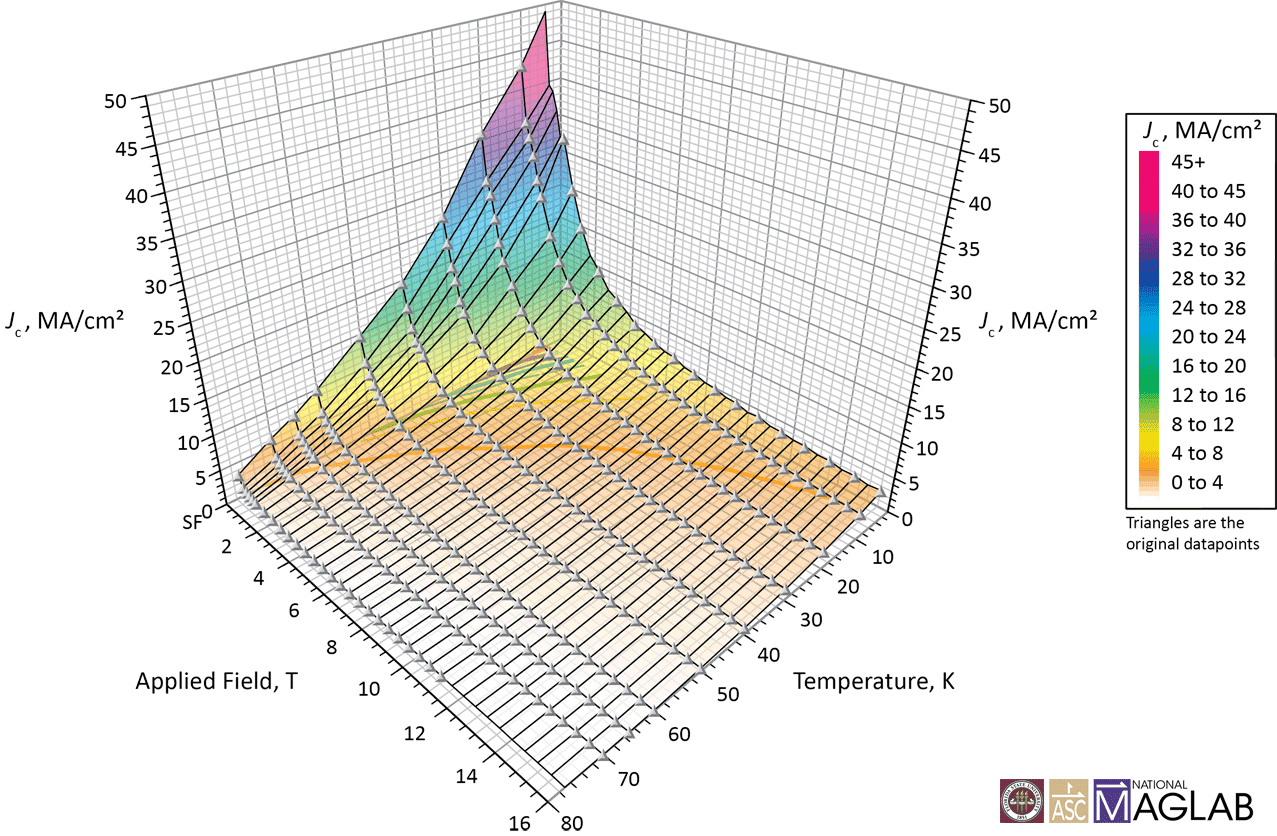
Critical current comparison charts | scaling spreadsheet | Applied Superconductivity Center View original
Is this image relevant?
High-temperature Superconductors | Physics View original
Is this image relevant?
9.6 Superconductors – University Physics Volume 2 View original
Is this image relevant?
Critical current comparison charts | scaling spreadsheet | Applied Superconductivity Center View original
Is this image relevant?
Zero resistance and critical temperature
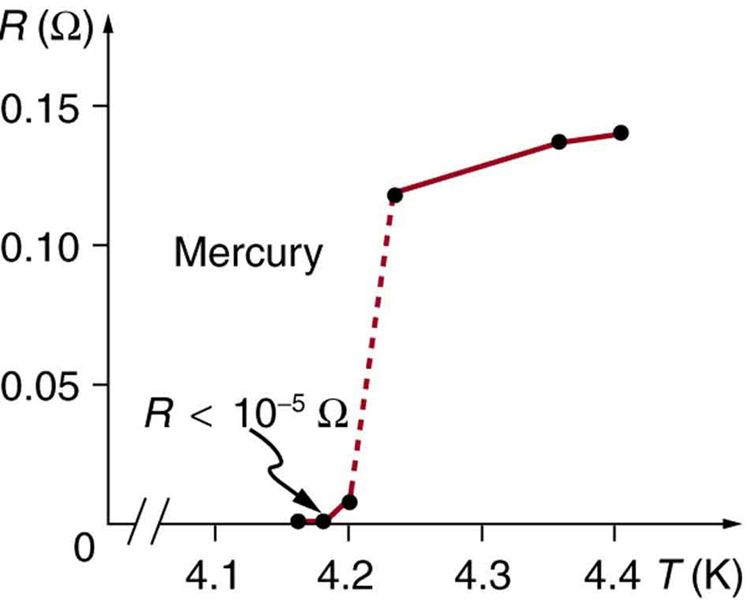
Every superconductor has a critical temperature () below which its electrical resistance drops to exactly zero. This isn't just "very low" resistance; it's genuinely zero. A current started in a superconducting loop will circulate indefinitely with no energy input.
Different materials have very different critical temperatures:
- Mercury (the first superconductor discovered):
- YBCO (a high-temperature ceramic superconductor):
The practical payoff of zero resistance is huge. Persistent currents in superconducting coils can generate extremely strong, stable magnetic fields. This is exactly how MRI machines produce the fields needed to image soft tissue inside the body.
Magnetic field expulsion and classification
Superconductors don't just conduct perfectly; they also exhibit perfect diamagnetism, known as the Meissner effect. A superconductor actively expels all magnetic flux from its interior when cooled below .
This is a distinct thermodynamic property, not just a consequence of zero resistance. A hypothetical "perfect conductor" (zero resistance but no Meissner effect) would trap whatever magnetic field was present when it became perfectly conducting. A true superconductor, by contrast, expels a pre-existing field during the transition. That distinction matters.
Superconductors fall into two categories based on how they respond to increasing magnetic fields:
- Type I superconductors undergo a sharp, complete transition from superconducting to normal at a single critical field . Examples: lead, mercury, tin.
- Type II superconductors have two critical fields. Below , they show a full Meissner effect. Between and , they enter a mixed state (also called the vortex state) where magnetic flux partially penetrates in quantized tubes called fluxons. Above , superconductivity is destroyed. Examples: niobium-titanium alloys, YBCO.
Type II superconductors are far more useful in practice because their upper critical fields can be extremely high, allowing them to sustain superconductivity in the intense fields needed for magnets and accelerators.
Macroscopic quantum phenomena
Superconductivity is fundamentally a quantum mechanical state that manifests at macroscopic scales. The electrons form a single coherent quantum state, which leads to effects you can actually measure in the lab:
- Flux quantization: The magnetic flux threading a superconducting loop can only take on discrete values that are integer multiples of the flux quantum . The factor of (rather than ) reflects the fact that the charge carriers are Cooper pairs.
- Josephson effect: When two superconductors are separated by a thin insulating barrier (a Josephson junction), Cooper pairs can tunnel across the barrier. This produces a supercurrent that depends on the phase difference between the two superconductors.
These phenomena aren't just curiosities. SQUIDs (Superconducting Quantum Interference Devices) exploit the Josephson effect to detect magnetic fields as small as , making them the most sensitive magnetometers available.
The Meissner effect in superconductors
Mechanism and characteristics
When a material transitions into the superconducting state, supercurrents spontaneously arise on its surface. These surface currents generate a magnetic field that exactly cancels any applied field inside the bulk of the superconductor, resulting in in the interior.
The cancellation isn't perfectly abrupt at the surface. The applied field actually decays exponentially over a characteristic length scale called the London penetration depth (), which is typically on the order of tens to hundreds of nanometers. The London equation describing this decay is:
where is the depth from the surface.
For Type II superconductors, the complete Meissner effect holds only below the lower critical field . Above , magnetic flux penetrates in quantized vortices (fluxons), each carrying one flux quantum . These vortices form a regular lattice structure called an Abrikosov vortex lattice.
Applications and implications
The Meissner effect is what makes superconductor levitation possible. Place a superconductor above a strong permanent magnet (or vice versa), and the expelled field creates a repulsive force that supports the superconductor's weight. This is stable levitation, not the unstable equilibrium you'd get with ordinary diamagnets.
Practical applications stemming from the Meissner effect include:
- Magnetic levitation for transport: Maglev trains use superconducting magnets for frictionless, high-speed travel.
- Energy storage: Superconducting magnetic energy storage (SMES) and flywheel systems exploit the lossless current flow and magnetic suspension.
- Magnetic shielding: Superconducting enclosures can screen sensitive instruments from external magnetic noise far more effectively than conventional shielding.
BCS theory of superconductivity
Cooper pair formation and condensation
BCS theory (Bardeen, Cooper, and Schrieffer, 1957) provides the microscopic explanation for conventional superconductivity. The central idea involves three steps:
- An electron moving through the lattice attracts nearby positive ions slightly toward it, creating a region of enhanced positive charge density.
- A second electron, with opposite momentum and spin, is attracted to this positive charge distortion. The net effect is an attractive interaction between the two electrons, mediated by quantized lattice vibrations called phonons.
- This phonon-mediated attraction binds the two electrons into a Cooper pair. The binding energy is small (on the order of ), which is why superconductivity only survives at low temperatures where thermal energy can't break the pairs apart.
Cooper pairs have integer spin (they're composite bosons), so they aren't subject to the Pauli exclusion principle. All the Cooper pairs can condense into the same quantum ground state, forming a coherent macroscopic wavefunction. Because every pair occupies the same state, scattering one pair would require scattering all of them simultaneously. This collective behavior is what produces zero resistance.
BCS theory also predicts a superconducting energy gap in the excitation spectrum. To break a Cooper pair, you need to supply at least of energy. This gap protects the superconducting state against small thermal fluctuations and perturbations.

Predictions and limitations
BCS theory successfully accounts for several key experimental observations:
- Isotope effect: depends on the isotopic mass of the lattice ions as (with for many conventional superconductors). This confirms the role of phonons, since heavier ions vibrate at lower frequencies.
- Temperature dependence of the critical magnetic field and the energy gap.
- Specific heat jump at , consistent with a second-order phase transition.
However, BCS theory does not explain high-temperature superconductors such as the cuprates (e.g., YBCO) or iron-based superconductors. These materials have critical temperatures far above what phonon-mediated pairing can easily account for, and the pairing mechanism remains an active area of research. Various proposals exist (spin fluctuations, for instance), but no single theory has achieved the same consensus that BCS enjoys for conventional superconductors.
Applications and limitations of superconductors
Current and potential applications
- MRI and NMR magnets: Superconducting coils (typically NbTi or ) produce the strong, stable fields (1.5 T to 12+ T) required for medical imaging and spectroscopy.
- Particle accelerators: The Large Hadron Collider at CERN uses over 1,200 superconducting dipole magnets cooled to 1.9 K to bend proton beams around its 27 km ring.
- SQUIDs: Used in biomagnetism (detecting the tiny magnetic fields from brain activity), geological surveys, and fundamental physics experiments.
- Superconducting power cables: Carry large currents with zero resistive loss, useful for dense urban power grids where conventional cables face space and heat constraints.
- Quantum computing: Superconducting qubits (such as transmon qubits) are one of the leading platforms for quantum processors, taking advantage of low dissipation and long coherence times.
- Maglev trains: Japan's SCMaglev system uses superconducting magnets to achieve speeds above 600 km/h.
- Fault current limiters: Superconducting elements that instantly transition to the resistive state during a fault, limiting damaging surge currents in power systems.
Challenges and limitations
- Cryogenic cooling: Reaching and maintaining temperatures below requires expensive refrigeration. Even "high-temperature" superconductors need liquid nitrogen (77 K), which adds cost and complexity.
- Mechanical brittleness: Many high- ceramics (like YBCO) are brittle and difficult to form into flexible wires or tapes. Specialized fabrication techniques (e.g., coated conductor on metal substrates) are needed.
- Wire fabrication: Producing long, uniform lengths of superconducting wire with consistently high critical current density remains a manufacturing challenge.
- Material cost: Some superconductors require rare earth elements (yttrium, barium) or expensive processing, limiting scalability.
- Room-temperature superconductivity: Despite occasional claims, a confirmed, ambient-pressure room-temperature superconductor has not yet been achieved. Finding one would transform energy infrastructure, but it remains an open problem.
- Scaling: Moving superconducting technologies from laboratory demonstrations to widespread commercial deployment involves engineering challenges in thermal management, reliability, and cost reduction.
See Fiveable more often in Google
Mark Fiveable as a preferred source and Google is more likely to show you our guides in Top Stories, with a "preferred" badge in AI Mode and AI Overviews.