11.4 Free Electron Model and Band Theory

🌀Principles of Physics III Unit 11 Review
11.4 Free Electron Model and Band Theory
🌀 Principles of Physics III
Assumptions and Limitations of the Free Electron Model
The free electron model treats conduction electrons in a metal as a gas of non-interacting particles moving freely through a uniform potential. Think of it like billiard balls bouncing around inside a box: the electrons don't "see" the ions in the lattice or each other. The only boundaries they encounter are the surfaces of the metal, modeled as infinite potential barriers (a particle-in-a-box setup, scaled to three dimensions).
This simplification works surprisingly well for certain properties:
- It correctly predicts electrical conductivity and thermal conductivity in metals.
- It accounts for the linear electronic contribution to heat capacity at low temperatures.

Top images from around the web for Key Assumptions of the Free Electron Model
Free Electron Model of Metals – University Physics Volume 3 View original
Is this image relevant?
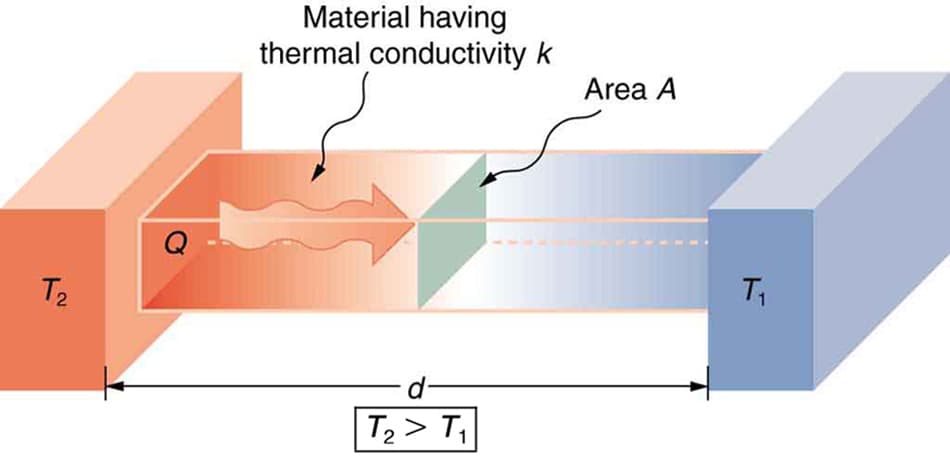
5.10 Conduction – Douglas College Physics 1207 View original
Is this image relevant?
Conduction | Physics View original
Is this image relevant?
Free Electron Model of Metals – University Physics Volume 3 View original
Is this image relevant?
5.10 Conduction – Douglas College Physics 1207 View original
Is this image relevant?
Where the Model Breaks Down
Despite those successes, the free electron model has serious blind spots:
- It cannot distinguish metals from insulators. Since it ignores the lattice entirely, it has no mechanism to produce band gaps.
- It fails to explain many magnetic properties, such as why some materials are diamagnetic and others paramagnetic.
- It breaks down for tightly bound (core) electrons that don't behave like a free gas at all.
- It becomes inaccurate whenever electron-electron interactions are significant, which the non-interacting assumption simply discards.
These limitations are exactly why we need band theory: it reintroduces the periodic lattice potential that the free electron model threw away.
Energy Levels and Density of States for Free Electrons
Quantum Mechanical Description
To find the allowed energies for free electrons in a metal, you solve the Schrödinger equation for a particle confined to a three-dimensional box of side length . The boundary conditions quantize the allowed energies into discrete levels labeled by three quantum numbers :
Each combination of corresponds to a point in k-space (momentum space), where the electron's wavevector is . For a macroscopic solid with enormous numbers of electrons, these points are so densely packed that the allowed states form a near-continuum. Periodic boundary conditions are typically applied to simplify the math for large systems.

Density of States and Fermi Energy
The density of states tells you how many electron states are available per unit energy interval. You derive it by counting the number of k-space states inside a thin spherical shell of radius and thickness , then converting from to using the free-electron dispersion relation .
The result for a 3D system is:
This means there are very few states near and progressively more at higher energies.
The Fermi energy is the energy of the highest occupied state at absolute zero (). At , every state below is filled and every state above it is empty. At finite temperatures, the Fermi-Dirac distribution governs occupancy:
This smears the sharp cutoff at into a smooth transition. Only electrons within roughly of are thermally excited, which is why metals have a small electronic heat capacity even though they contain vast numbers of conduction electrons.
Energy Bands in Crystalline Materials
Formation of Energy Bands
When isolated atoms are brought together to form a crystal, their discrete energy levels broaden into bands of closely spaced levels. This happens because the atomic orbitals on neighboring atoms overlap and split, much like how two coupled pendulums develop two distinct oscillation frequencies instead of one.
The periodic potential of the crystal lattice creates allowed energy bands separated by forbidden gaps where no electron states exist. Two complementary models describe this:
- The nearly-free electron model starts from free electrons and treats the lattice potential as a weak perturbation. It shows that band gaps open up at the boundaries of Brillouin zones in k-space.
- The tight-binding model starts from isolated atomic orbitals and adds the effect of hopping between neighboring atoms. It naturally produces bands whose width depends on the strength of orbital overlap.
Bloch's theorem underpins both approaches. It states that electron wavefunctions in a periodic potential take the form of a plane wave modulated by a function with the same periodicity as the lattice:
Here is the crystal momentum, and the band structure is typically plotted as vs. along high-symmetry directions in the Brillouin zone (labeled , , , etc.).

Characteristics of Energy Bands
- Band width depends on how strongly neighboring atoms interact. Stronger overlap produces wider bands.
- Crystal structure (FCC, BCC, etc.) affects the shape and symmetry of the bands.
- Band gaps are energy ranges with zero available states. The size of the gap is the single most important factor in determining a material's electrical behavior.
Conductors, Insulators, and Semiconductors: Band Theory
Band Structure and Electrical Properties
Band theory classifies materials into three categories based on their band structure:
- Conductors (metals): The highest occupied band is only partially filled, or the valence band overlaps with the conduction band. Electrons near the Fermi level can easily gain small amounts of energy and move through the material, giving high electrical conductivity.
- Insulators: A large band gap (typically > 4 eV) separates a completely filled valence band from an empty conduction band. At room temperature, thermal energy ( eV) is far too small to excite electrons across this gap, so virtually no conduction occurs.
- Semiconductors: The band gap is smaller (typically < 4 eV; for silicon it's about 1.1 eV). Thermal energy or light can excite a meaningful number of electrons from the valence band into the conduction band, allowing moderate conductivity that increases with temperature.
Fermi Level and Material Behavior
Where the Fermi level sits relative to the bands tells you a lot:
- In conductors, the Fermi level lies inside a partially filled band, so there are always electrons available for conduction.
- In insulators and intrinsic semiconductors, the Fermi level sits in the middle of the band gap, far from any available states.
Doping is the deliberate introduction of impurity atoms into a semiconductor to shift its properties:
- n-type doping (e.g., adding phosphorus to silicon) introduces donor levels just below the conduction band, providing extra electrons. The Fermi level shifts upward toward the conduction band.
- p-type doping (e.g., adding boron to silicon) introduces acceptor levels just above the valence band, creating holes. The Fermi level shifts downward toward the valence band.
Temperature affects conductors and semiconductors in opposite ways. In conductors, increasing temperature causes more lattice vibrations (phonons) that scatter electrons, so resistance increases. In semiconductors, higher temperature excites more electrons across the gap, so conductivity increases despite the added scattering. This contrasting temperature dependence is one of the clearest experimental signatures distinguishing the two material classes.
See Fiveable more often in Google
Mark Fiveable as a preferred source and Google is more likely to show you our guides in Top Stories, with a "preferred" badge in AI Mode and AI Overviews.