
♻️AP Environmental Science
1. A temperate deciduous forest ecosystem in the northeastern United States experiences distinct seasonal changes. During autumn, trees shed their leaves, creating a layer of leaf litter on the forest floor. Decomposers such as fungi and bacteria break down this organic matter, releasing nutrients back into the soil. Scientists studied the relationship between temperature and decomposition rates, as well as the flow of energy through different trophic levels in this ecosystem.
Describe one way that primary producers in a temperate deciduous forest acquire and convert solar energy.
Based on the information provided, explain how decomposers contribute to the availability of nitrogen for primary producers in the forest ecosystem.
Figure 1. Standing Biomass by Trophic Level in a Temperate Deciduous Forest (kg/m²)
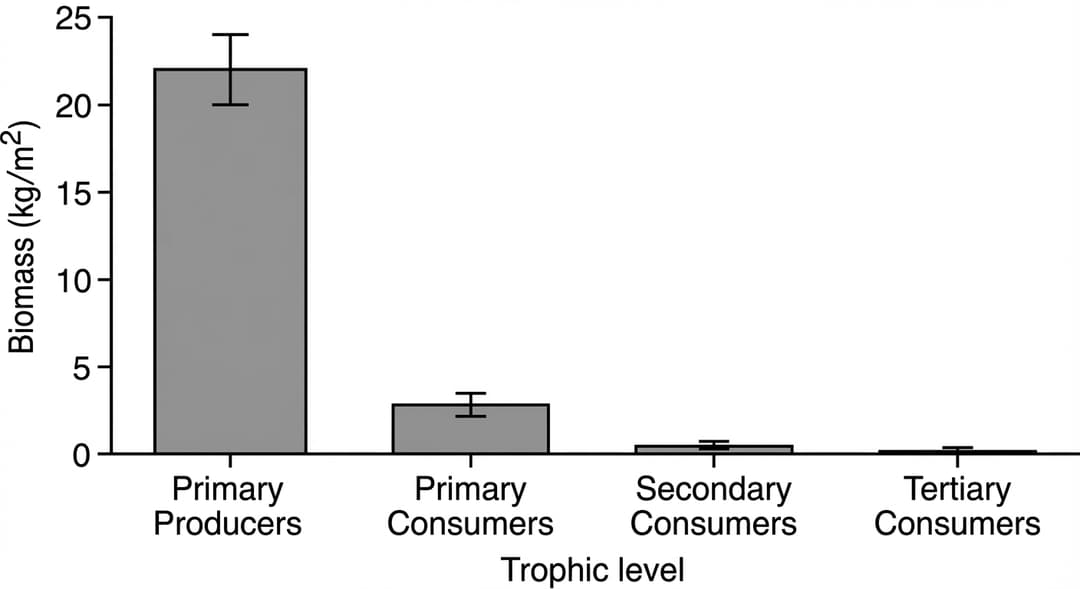
Based on the data in Figure 1, identify the biomass of secondary consumers in kg/m².
Figure 2. Temperature and Rate of Leaf Litter Decomposition (% mass loss per month)
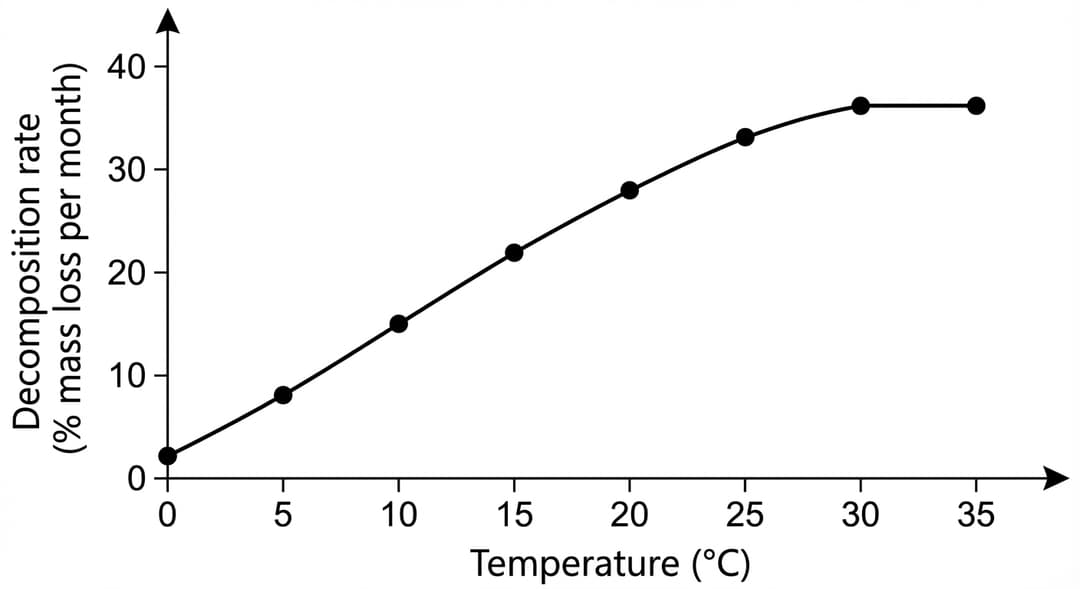
Based on the data in Figure 2, describe the relationship between temperature and the rate of leaf litter decomposition.
Scientists hypothesized that approximately 10% of energy is transferred from primary producers to primary consumers. Describe how the data in Figure 1 could be used to evaluate this hypothesis.
Decomposition rates affect nutrient cycling in forest ecosystems. A group of students wanted to investigate factors that influence decomposition. They collected fresh leaf litter from oak trees and placed equal masses (50 grams) of leaves into mesh bags. They buried 15 bags in an undisturbed forest area and 15 bags in a recently logged area. After 6 months, students retrieved the bags, dried the remaining leaf material, and measured the mass loss to determine decomposition rate.
Identify the independent variable in the students' investigation.
Identify one environmental variable that should be held constant between the two sites to ensure a valid comparison.
Site | Species A (Millipede) | Species B (Earthworm) | Species C (Beetle) | Species D (Springtail) | Species E (Centipede) | Species F (Mite) |
|---|---|---|---|---|---|---|
Undisturbed forest | X | X | X | X | X | X |
Logged area | X | X |
The students also investigated soil invertebrate diversity at both sites. The data from their investigation are shown in the table. An 'X' indicates that the species was present at that site.
Explain why higher biodiversity of decomposer organisms in the undisturbed forest would lead to more efficient nutrient cycling compared to the logged area.
Explain one reason why species richness differs between the undisturbed forest and the logged area.
Describe one effect that increased temperatures could have on the carbon cycle in this forest ecosystem, based on the relationship shown in Figure 2. Climate change is causing average temperatures to increase in temperate deciduous forests.
