2.5 Acoustic Phenomena and Applications

🌀Principles of Physics III Unit 2 Review
2.5 Acoustic Phenomena and Applications
🌀 Principles of Physics III
Sound Reflection, Refraction, and Diffraction
Sound waves reflect, bend, and spread as they interact with different media and obstacles. These three behaviors explain everyday experiences like echoes, the way sound carries over water, and why you can hear someone talking around a corner.

Top images from around the web for Principles of Sound Wave Behavior
Sound Interference and Resonance: Standing Waves in Air Columns | Physics View original
Is this image relevant?
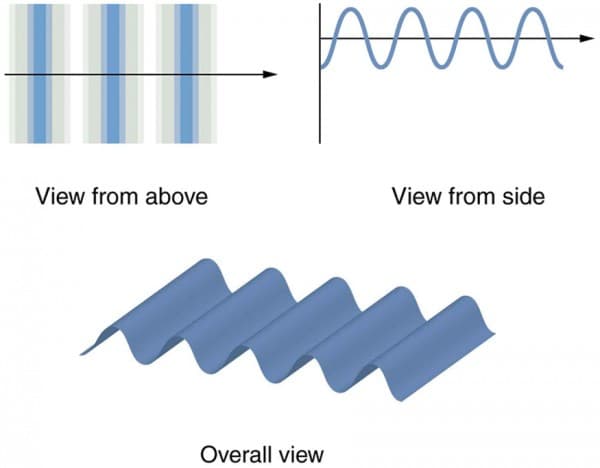
Huygens’s Principle: Diffraction | Physics View original
Is this image relevant?
27.2 Huygens’s Principle: Diffraction – College Physics View original
Is this image relevant?
Sound Interference and Resonance: Standing Waves in Air Columns | Physics View original
Is this image relevant?
Huygens’s Principle: Diffraction | Physics View original
Is this image relevant?
Principles of Sound Wave Behavior
Reflection occurs when sound waves hit a boundary between two media and bounce back. It follows the law of reflection: the angle of incidence equals the angle of reflection. This produces echoes (reflections off distant surfaces) and reverberation (many overlapping reflections in an enclosed space).
Refraction is the bending of sound waves as they pass between media of different densities. When the medium changes, the wave's speed changes, and that speed change causes the wave to shift direction. Sound travels faster in denser media like water (~1480 m/s) compared to air (~343 m/s), which is why refraction effects are especially noticeable at air-water boundaries.
Diffraction happens when sound waves encounter obstacles or pass through openings. The waves bend around edges and spread out after passing through apertures. This is why you can hear sound around corners or through a partially open door.
Factors Influencing Sound Wave Interactions
The principle of superposition says that when two or more sound waves overlap, their displacements add together at every point. This produces:
- Constructive interference when waves are in phase, amplifying the result
- Destructive interference when waves are out of phase, reducing or canceling the sound
Superposition explains beats (periodic rises and falls in loudness when two close frequencies overlap) and is the basis for noise cancellation technology.
Frequency and wavelength determine how sound interacts with objects:
- Higher-frequency sounds have shorter wavelengths and reflect more easily off small objects
- Lower-frequency sounds have longer wavelengths and diffract more readily around obstacles
This is why you can hear bass through walls more easily than treble.
Surface material also matters. Hard, smooth surfaces (tile, concrete) reflect sound efficiently. Soft, porous surfaces (carpet, acoustic foam) absorb sound energy and reduce reflections.
Acoustic Phenomena in Various Environments
Echoes are distinct reflections that reach the listener at least 0.1 seconds after the original sound. At the speed of sound in air, that means the reflecting surface needs to be roughly 17 meters away. Animals like bats and dolphins use echolocation, emitting sounds and interpreting the returning echoes to navigate and hunt.
Sound focusing happens when curved surfaces or density gradients concentrate sound energy. Concave surfaces can reflect sound waves toward a focal point, which is the principle behind whispering galleries (like the one in St. Paul's Cathedral). Temperature gradients in the atmosphere can also bend sound waves, creating situations where distant sounds become unexpectedly audible.
Sound shadows form behind large obstacles where sound waves are blocked or only partially diffracted. Highway sound barriers exploit this effect, creating a shadow zone of reduced noise on the residential side.
Resonance, Standing Waves, and Interference
Resonance in Acoustic Systems
Resonance occurs when a system is driven at its natural frequency, causing the amplitude of vibration to increase dramatically. A small periodic force, applied at the right frequency, can build up large oscillations over time.
The natural frequency of a system depends on its physical properties and boundary conditions:
- For a vibrating string: length, tension, and linear mass density
- For an air column: length and whether the ends are open or closed
Resonance shows up in musical instruments (a guitar body amplifying string vibrations), room acoustics (certain frequencies booming in a small room due to room modes), and even large structures (bridges and buildings can resonate if driven at the right frequency).

Standing Waves and Harmonics
Standing waves form when two waves of the same frequency travel in opposite directions and superpose. Instead of propagating, the resulting pattern has fixed nodes (points of zero displacement) and antinodes (points of maximum displacement).
Every standing wave system has a fundamental frequency, the lowest frequency that produces a standing wave. Higher resonant frequencies are called harmonics and occur at integer multiples of the fundamental.
Standing wave patterns are central to how instruments work:
- String instruments produce their fundamental and overtones from standing waves on the string. Fretting a guitar string changes its effective length, shifting the fundamental frequency.
- Wind instruments create standing waves in air columns. Whether the tube is open at both ends or closed at one end determines which harmonics are present.
The harmonic series also explains timbre. Two instruments can play the same note (same fundamental frequency) but sound different because they produce different relative strengths of overtones.
Interference Patterns in Sound Waves
When two sound waves meet, the result depends on their phase relationship. If crests align with crests, you get constructive interference and a louder sound. If crests align with troughs, you get destructive interference and reduced sound.
Beats are a specific interference effect. When two tones with slightly different frequencies overlap, the combined sound pulses in loudness at a rate equal to the difference in frequencies. For example, a 440 Hz tone and a 442 Hz tone together produce 2 beats per second. Musicians use this to tune instruments: when the beats disappear, the frequencies match.
Interference principles are applied in several technologies:
- Active noise cancellation (headphones, HVAC systems) generates an anti-phase signal to destructively interfere with unwanted noise
- Ultrasound imaging and sonar use interference patterns in reflected waves to construct images
- Acoustic holography manipulates interference to shape and direct sound fields
Applications of Acoustic Principles
Musical Instruments and Sound Production
Acoustic principles govern how every instrument category produces sound:
- String instruments (guitars, violins) rely on standing waves on a vibrating string, with a resonant body that amplifies the sound
- Wind instruments (flutes, trumpets) use standing waves in air columns; the player controls pitch by changing the effective column length
- Percussion instruments (drums, cymbals) produce sound through vibrating membranes or plates, with more complex vibration modes than strings or air columns
The fundamental frequency sets the perceived pitch. The relative strengths of the overtones above it create the instrument's unique timbre. A clarinet and an oboe playing the same note sound different because their overtone profiles differ.
Electronic synthesizers replicate these principles digitally. Oscillators generate fundamental frequencies, while filters shape the harmonic content and envelopes control how amplitude changes over time.
Architectural Acoustics and Room Design
Designing a space for good sound means balancing reflection, absorption, and diffusion:
- Concert halls aim to enhance natural acoustics for unamplified performances. Reverberation time (how long sound lingers after the source stops) is carefully tuned, typically around 1.5 to 2.0 seconds for orchestral music.
- Recording studios need tightly controlled environments with minimal unwanted reflections.
- Lecture halls prioritize speech intelligibility, which means shorter reverberation times and strong early reflections directed toward the audience.
Acoustic treatment uses three main tools:
- Absorbers (acoustic panels, carpets, curtains) reduce reflections and shorten reverberation
- Diffusers (irregularly shaped surfaces) scatter sound evenly throughout a space rather than creating focused reflections
- Helmholtz resonators target specific problematic frequencies by trapping and dissipating their energy

Noise Control and Acoustic Engineering
Noise control strategies fall into three categories based on where in the sound path you intervene:
- Source control reduces noise at its origin (quieter machinery, engine mufflers, vibration isolation mounts)
- Path control blocks or absorbs sound along its transmission route (sound barriers, wall insulation, enclosures around noisy equipment)
- Receiver control protects the listener directly (earplugs, earmuffs, sound masking systems that add background noise to improve speech privacy)
Active noise control is a more sophisticated approach. A microphone picks up the unwanted sound, a processor generates an anti-phase signal, and a speaker emits it. The destructive interference reduces the perceived noise. This technology is used in headphones, vehicle cabins, and HVAC ductwork.
Acoustic Imaging and Sensing Technologies
Ultrasound imaging sends high-frequency sound pulses (typically 1–20 MHz) into a medium and analyzes the reflected waves. In medicine, this enables prenatal imaging and echocardiography without ionizing radiation. In engineering, ultrasound detects internal flaws in materials without cutting them open (non-destructive testing).
Sonar applies the same reflection principle underwater. Active sonar emits a pulse and listens for the echo; passive sonar just listens. Applications range from seafloor mapping and submarine detection to commercial fish finding.
Acoustic tomography uses the travel time of sound through large volumes of water or atmosphere to map temperature and current patterns. Since sound speed depends on temperature and density, measuring how long pulses take to travel between stations reveals the conditions along the path.
Environmental and Health Effects of Sound
Noise Pollution and Its Impacts
Noise pollution is excessive or unwanted environmental sound, and its effects go well beyond annoyance. Major sources include transportation (road traffic, aircraft), industrial activity, and urban construction.
Health effects on humans include:
- Sleep disturbance, leading to fatigue and reduced cognitive performance
- Elevated stress, with increased cortisol and activation of the sympathetic nervous system
- Cardiovascular risk, including hypertension and higher incidence of heart disease (the WHO estimates that environmental noise contributes to thousands of premature deaths annually in Europe alone)
Wildlife is also affected. Anthropogenic noise alters communication in birds, frogs, and marine mammals, masks predator or prey sounds, and can disrupt migration routes and habitat use.
Hearing Loss and Auditory Health
Prolonged exposure to loud sound damages the hair cells in the cochlea, and that damage is cumulative and irreversible.
- Temporary threshold shift (TTS): a short-term reduction in hearing sensitivity after noise exposure, which recovers over hours or days
- Permanent threshold shift (PTS): irreversible hearing loss from chronic exposure or sudden acoustic trauma
Noise-induced hearing loss (NIHL) is one of the most common occupational hazards, particularly in manufacturing, construction, and the music/entertainment industry. Sustained exposure above 85 dB (roughly the level of heavy city traffic) is considered hazardous. Hearing conservation programs, including regular audiometric testing and personal protective equipment (earplugs, earmuffs), are essential in high-risk workplaces.
Non-Auditory Health Effects of Noise
Beyond hearing damage, chronic noise exposure triggers broader physiological and psychological effects:
- Stress responses: sustained cortisol elevation can impair immune function and metabolic regulation over time
- Cognitive impairment: noisy environments reduce concentration, productivity, and memory performance. Studies consistently show that children in schools near airports or highways perform worse on reading and memory tasks.
- Social and behavioral effects: noise makes communication harder, increases irritability, and has been linked to reduced prosocial behavior in urban settings
Acoustic Ecology and Environmental Management
Acoustic ecology studies the relationship between organisms and their sonic environment. It treats the soundscape as an ecological factor, examining how natural and human-made sounds shape animal behavior, biodiversity, and ecosystem health.
Noise management strategies in urban planning include:
- Using green spaces and urban forests as natural sound buffers
- Traffic management measures (speed limits, road surface choices) to reduce vehicular noise
- Building codes that require sound insulation in walls, windows, and HVAC systems
Acoustic monitoring uses long-term soundscape recordings to track ecosystem health and noise pollution trends. Changes in the diversity or timing of biological sounds can signal shifts in species populations or habitat quality.
Regulatory frameworks set noise limits for different activities and times of day. Environmental impact assessments increasingly include acoustic factors, and international standards (such as the ISO 1996 series) provide standardized methods for measuring and evaluating environmental noise.
See Fiveable more often in Google
Mark Fiveable as a preferred source and Google is more likely to show you our guides in Top Stories, with a "preferred" badge in AI Mode and AI Overviews.