
Adjective Declensions
Strong vs. Weak Adjective Declensions
Old English adjectives follow one of two declension patterns depending on context. The choice between them is straightforward:
- Strong declension: used when the adjective stands on its own, without a preceding determiner (no demonstrative, possessive, or article before it). The strong endings closely resemble those found on strong nouns like stān, dæg, and word.
- Weak declension: used when the adjective is preceded by a determiner. The weak endings resemble those of weak nouns like nama, ēage, and tunge.
Think of it this way: if a determiner is already doing the work of specifying the noun (like sē "the/that"), the adjective can take simpler, weaker endings. Without a determiner, the adjective itself carries more grammatical information, so it needs the fuller strong endings.

Adjective Declension Patterns
Every adjective must agree with the noun it modifies in three ways: case (nominative, accusative, genitive, dative), number (singular, plural), and gender (masculine, neuter, feminine). Using gōd ("good") as the model adjective:
Strong Declension Endings
- Masculine
- Nominative singular: -∅ (gōd)
- Accusative singular: -ne (gōdne)
- Genitive singular: -es (gōdes)
- Dative singular: -um (gōdum)
- Neuter
- Nominative and accusative singular: -∅ (gōd)
- Genitive singular: -es (gōdes)
- Dative singular: -um (gōdum)
- Feminine
- Nominative singular: -u/-∅ (gōdu/gōd)
- Accusative singular: -e (gōde)
- Genitive singular: -re (gōdre)
- Dative singular: -re (gōdre)
- Plural (all genders)
- Nominative and accusative: -e (gōde)
- Genitive: -ra (gōdra)
- Dative: -um (gōdum)
Notice that masculine and neuter share genitive and dative singular endings. The feminine stands apart with its distinctive -re ending in the genitive and dative singular. In the plural, all three genders merge into one set of endings.
Weak Declension Endings
- Masculine
- Nominative singular: -a (gōda)
- Accusative, genitive, dative singular: -an (gōdan)
- Neuter
- Nominative and accusative singular: -e (gōde)
- Genitive and dative singular: -an (gōdan)
- Feminine
- Nominative and accusative singular: -e (gōde)
- Genitive and dative singular: -an (gōdan)
- Plural (all genders)
- Nominative and accusative: -an (gōdan)
- Genitive: -ena/-ra (gōdena/gōdra)
- Dative: -um (gōdum)
The weak declension is much more uniform. The ending -an does most of the heavy lifting across cases and genders. The only places you really need to pay attention are the nominative singular forms, where masculine (-a), neuter (-e), and feminine (-e) still differ slightly.
Adjective Comparison
Comparative and Superlative Adjectives
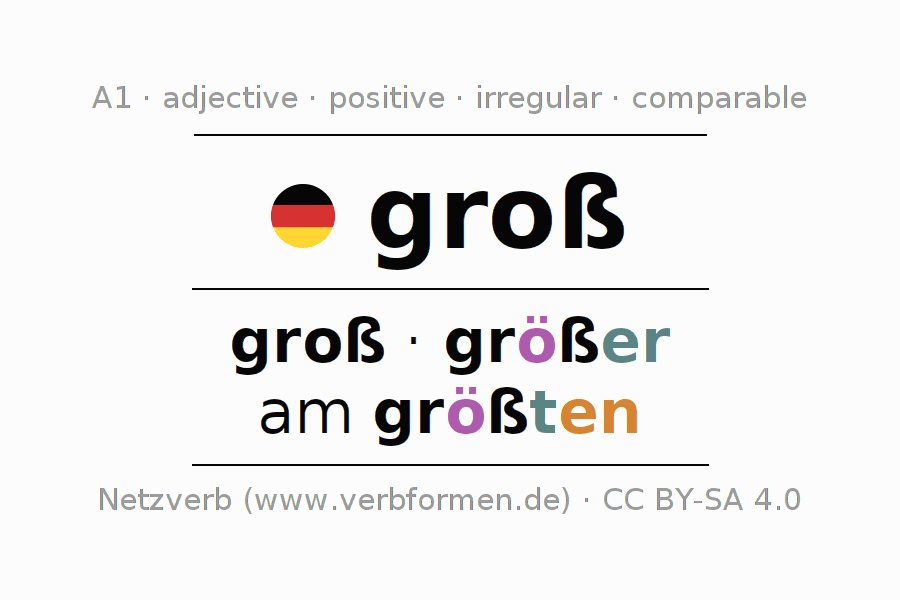
Old English forms comparatives and superlatives with suffixes, much like Modern English old/older/oldest.
Regular comparison:
- Comparative: add -ra to the stem → eald ("old") becomes ealdra ("older")
- Superlative: add -ost or -est to the stem → eald becomes ealdost ("oldest")
Irregular comparison: Some common adjectives change their stem vowel (similar to how Modern English has good/better/best rather than good/gooder/goodest):
- gōd ("good") → betera ("better") → betst ("best")
- micel ("great/large") → māra ("greater") → mǣst ("greatest")
- lytel ("little") → lǣssa ("less") → lǣst ("least")
These irregular forms just need to be memorized. They tend to be the most frequently used adjectives, which is why they resisted regularization.
Comparative and superlative adjectives still decline for case, number, and gender. Comparatives in -ra follow the weak declension. Superlatives can follow either strong or weak patterns, depending on whether a determiner is present.
Adjective-Noun Agreement in Old English
When you need to decline an adjective to match its noun, follow these steps:
-
Identify the noun's case, number, and gender. This comes from the noun's role in the sentence (subject = nominative, direct object = accusative, etc.).
-
Check for a determiner. Is there a demonstrative (sē, þone, þæs, etc.), possessive, or other determiner before the adjective?
- If yes → use the weak declension
- If no → use the strong declension
-
Select the correct ending from the appropriate paradigm, matching the noun's case, number, and gender.
For example: þone gōdan cyning ("the/that good king"). Here cyning is masculine, accusative, singular. The demonstrative þone is present, so you use the weak declension. The weak masculine accusative singular ending is -an, giving you gōdan.
Compare that with gōdne cyning ("a good king"), where there's no determiner. Now you use the strong declension, and the strong masculine accusative singular ending is -ne, giving you gōdne.