17.1 Religion and Government

📿World Religions Unit 17 Review
17.1 Religion and Government
📿 World Religions
continue practicing 17.1
Multiple choice
Forms of Government
Theocratic and Secular Governments
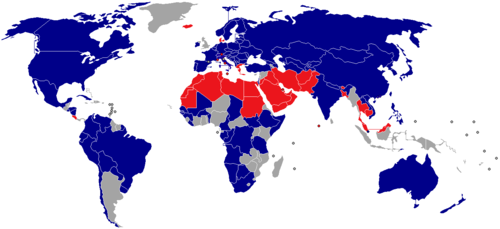
A theocracy is a form of government where a deity or divine being is recognized as the supreme civil ruler, with laws interpreted by religious authorities. Iran is the most prominent modern example: its Supreme Leader is a cleric, and legislation must be approved by a Guardian Council of religious scholars. Theocracies typically have a state religion, meaning one faith receives official status and legal privileges over all others.
On the other end of the spectrum, secularism is the principle that government and religious institutions should remain separate. Secular governments treat all religions equally under the law and don't favor or discriminate against any particular faith. The United States and France are both secular, though they practice secularism quite differently (more on that below).
Separation of Church and State
Separation of church and state is the legal and political principle that government and religious institutions should stay independent of each other. The goal is twofold: protect religious freedom and maintain the neutrality of the state in religious matters.
In countries with this separation, the government cannot:
- Establish an official religion
- Endorse or favor any particular faith
- Interfere with religious practices (as long as those practices don't violate the law)
The U.S. First Amendment is a classic example of this principle in action.
That said, the degree of separation varies significantly between countries. France practices laïcité, a strict form of secularism that limits religious expression in public institutions (for example, banning religious symbols in public schools). Germany takes a more accommodationist approach, where the state cooperates with religious communities through things like a church tax collected by the government on behalf of religious organizations. Both are considered secular, but they look very different in practice.

Religious Influence on Politics
Religious Political Parties and Lobbying
Religious political parties base their platforms on religious principles and values. They often push for laws that align with their faith and advocate for a greater role of religion in public life. Christian Democratic parties across Europe (such as Germany's CDU) blend Christian social teaching with democratic governance. Islamist parties in the Middle East, like Turkey's AKP, draw on Islamic principles to shape policy.
Religious lobbying is when religious organizations try to influence political decisions and legislation. In the United States, groups like the United States Conference of Catholic Bishops and the Family Research Council actively lobby on issues such as abortion, same-sex marriage, education policy, and social welfare. This kind of lobbying exists across many countries and religious traditions.
Religion and Political Ideology
Religion can shape broader political ideologies, not just individual policies. Some ideologies are explicitly religious in origin:
- Christian democracy applies Christian social ethics to democratic governance
- Islamic fundamentalism seeks to restructure society according to a strict reading of Islamic texts
- Hindu nationalism (Hindutva) in India ties national identity to Hindu religious and cultural heritage
Other ideologies like conservatism or liberalism may be influenced by religious values without being exclusively based on them. For instance, Liberation Theology in Latin America blended Catholic teaching with concerns about poverty and social justice, aligning with left-leaning political movements. The relationship between religion and political ideology is rarely straightforward and shifts depending on the cultural and historical context.
Religious Rights
Religious Freedom and Pluralism
Religious freedom is the right of individuals and groups to practice, worship, and express their beliefs without interference or persecution. This right is protected by many national constitutions and by international agreements, most notably Article 18 of the United Nations Universal Declaration of Human Rights.
Religious pluralism goes a step further: it's the recognition and acceptance of diverse religious beliefs and practices within a single society. Pluralistic societies allow multiple religions to coexist and actively protect the rights of religious minorities.
Governments promote pluralism in different ways. Indonesia, for example, officially recognizes six religions (Islam, Protestantism, Catholicism, Hinduism, Buddhism, and Confucianism) and requires citizens to identify with one of them. This approach guarantees a degree of recognition for multiple faiths, though critics point out it can marginalize groups outside those six.
Religious Law and Its Application
Religious law refers to legal codes derived from religious texts, traditions, or authorities. Some countries incorporate religious law into their national legal systems in varying degrees:
- Several Muslim-majority countries apply Sharia law to areas like family law, inheritance, and criminal justice. The extent varies widely, from full implementation (Saudi Arabia) to limited application in personal status matters (Egypt).
- Israel applies Halakha (Jewish religious law) in matters of marriage and divorce through rabbinical courts.
The application of religious law raises difficult questions about the balance between religious authority and individual rights, particularly around gender equality and freedom of conscience. A good example of this tension is the debate over Sharia councils in the United Kingdom, where some Muslim communities use informal religious tribunals to settle family disputes. Critics argue these councils can undermine the rights of women, while supporters see them as a legitimate expression of religious freedom within a pluralistic society.
See Fiveable more often in Google
Mark Fiveable as a preferred source and Google is more likely to show you our guides in Top Stories, with a "preferred" badge in AI Mode and AI Overviews.