13.4 Major Restoration Authors and Their Works

📜British Literature I Unit 13 Review
13.4 Major Restoration Authors and Their Works
📜 British Literature I
Major Restoration Authors and Their Works
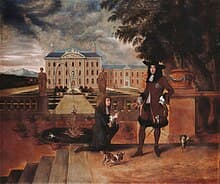
Restoration literature emerged after Charles II's return to the throne in 1660, ending over a decade of Puritan rule under Cromwell's Commonwealth. The shift was dramatic: where Puritan authorities had closed theaters and suppressed public entertainment, the Restoration reopened them and ushered in a culture of wit, satire, and social commentary. Authors like John Dryden and Aphra Behn shaped this new literary landscape, and their works reflected both the era's political turbulence and its loosened social norms.
Key themes included political satire, libertinism, and celebration of the restored monarchy. Neoclassicism and heroic couplets dominated poetry, while a new style of prose comedy took over the stage. These literary developments laid groundwork for the English novel, modern drama, and literary criticism as a discipline.

Top images from around the web for Themes and styles in Restoration literature
Sex comedy - Wikipedia View original
Is this image relevant?
Restoration literature - Wikipedia View original
Is this image relevant?
Restoration literature - Wikipedia View original
Is this image relevant?
Sex comedy - Wikipedia View original
Is this image relevant?
Restoration literature - Wikipedia View original
Is this image relevant?
Themes and Styles in Restoration Literature
Themes
Restoration writers were deeply engaged with the politics of their moment. The return of Charles II prompted works celebrating monarchical stability, like Dryden's "Astraea Redux," but also sharp political satire. Dryden's "Absalom and Achitophel" used a biblical allegory to comment on the Exclusion Crisis of 1681, turning real political figures into characters. Beyond politics, libertinism and sexual freedom became major subjects. John Wilmot, Earl of Rochester, wrote poetry that openly challenged traditional morality, as in "The Imperfect Enjoyment," which treated sexual experience with startling frankness.
Styles
- Neoclassicism valued order, restraint, and imitation of classical Greek and Roman models. Dryden's translations of Virgil are a prime example.
- Heroic couplets became the dominant verse form: rhyming pairs of iambic pentameter lines. Alexander Pope later perfected this form in "The Rape of the Lock," though Pope is technically an early 18th-century (Augustan) poet building on Restoration foundations.
- Restoration comedy emerged as a distinct dramatic genre featuring witty dialogue, sexual intrigue, and stock character types. Wycherley's "The Country Wife" and Congreve's "The Way of the World" are key examples.
Techniques
Restoration writers prized verbal wit and intellectual wordplay. Etherege's "The Man of Mode" showcases this through its clever, rapid-fire dialogue. Character types became standardized: the fop (a vain, overdressed fool), the rake (a charming libertine), and the cuckolded husband appeared across dozens of plays. Writers also used prologues and epilogues to address the audience directly, sometimes breaking the theatrical frame entirely. Behn's prologue to "The Rover," for instance, speaks to the audience about the play they're about to see, creating a metatheatrical layer.

Key Restoration Authors and Contributions
John Dryden (1631–1700)
Dryden dominated Restoration letters. He served as the first official Poet Laureate (appointed 1668) and was arguably England's most influential literary critic of the century. He pioneered heroic drama, a form blending romance and tragedy with elevated verse, as in "The Conquest of Granada" (1670–71).
His most lasting contributions were in satirical poetry. "Absalom and Achitophel" (1681) used the biblical story of King David's rebellious son to attack the Earl of Shaftesbury and the movement to exclude the Catholic Duke of York from the succession. "Mac Flecknoe" (1682) mocked his literary rival Thomas Shadwell as the heir to a kingdom of dullness. Dryden also refined the heroic couplet into a precise instrument for argument and satire, making it the dominant English verse form for the next century.
Aphra Behn (1640–1689)
Behn is widely recognized as the first Englishwoman to earn her living by writing. That fact alone makes her historically significant, but her work stands on its own merits. She wrote across genres: plays, poetry, and prose fiction.
- "The Rover" (1677), her most successful play, examines gender roles and sexual politics during carnival in Naples. Its female characters navigate a world where marriage is an economic transaction and desire is dangerous.
- "Oroonoko" (c. 1688) tells the story of an enslaved African prince in Surinam. It's one of the earliest English prose narratives to critique the institution of slavery and is often discussed as a precursor to the novel.
- "Love-Letters Between a Nobleman and His Sister" (1684–87) experimented with epistolary (letter-based) narrative across three volumes, pushing toward novel-length fiction.
Behn's willingness to write openly about desire, power, and race challenged the conventions of her time and opened doors for women writers who followed.
Samuel Pepys (1633–1703)
Pepys (pronounced "Peeps") was a naval administrator, not a professional author, but his diary (kept from 1660 to 1669) is one of the most valuable documents of the period. Written in shorthand and not intended for publication, it offers an unfiltered look at daily life in Restoration London: social customs, political gossip, theater visits, personal anxieties, and marital tensions.
The diary's greatest historical value comes from its eyewitness accounts of two catastrophic events: the Great Plague of 1665 and the Great Fire of London in 1666. Pepys recorded both with vivid, specific detail. For literary studies, the diary matters as an early model of sustained personal narrative, blending public history with private experience in ways that anticipate memoir and journalism.

Impact of Restoration on Later Literary Movements
Development of the Novel
Restoration experiments with prose narrative, especially by Behn, helped set the stage for the novel's emergence in the early 18th century. Daniel Defoe's "Robinson Crusoe" (1719) built on the Restoration interest in realistic, detailed storytelling. The epistolary form that Behn explored in "Love-Letters" was later developed fully by Samuel Richardson in "Pamela" (1740).
Evolution of Comedy
Restoration comedy's emphasis on wit and social satire created a tradition that persisted for centuries. The Comedy of Manners, which dissects upper-class behavior through clever dialogue, runs from Congreve through Sheridan's "The School for Scandal" (1777) and on to Oscar Wilde's "The Importance of Being Earnest" (1895).
Advancement of Women's Writing
Behn's professional success demonstrated that women could participate in the literary marketplace. While the path remained difficult, her example influenced later generations of female authors. Virginia Woolf famously wrote that "all women together ought to let flowers fall upon the tomb of Aphra Behn... for it was she who earned them the right to speak their minds."
Contribution to Literary Criticism
Dryden's critical essays, particularly "An Essay of Dramatic Poesy" (1668), established principles for evaluating literature that shaped English criticism for generations. He argued for clear standards of judgment rooted in classical models while also defending the merits of English drama against French. This blend of classical authority and practical criticism influenced the development of literary analysis as a formal discipline.
Impact on Poetry
Dryden's refinement of satirical verse and the heroic couplet directly influenced the Augustan poets, especially Alexander Pope and Jonathan Swift. Pope's "Essay on Criticism" (1711) and "The Dunciad" (1728) are essentially extensions of techniques Dryden pioneered, emphasizing balance, wit, and precision.
Historical Documentation
Pepys' diary became a model for personal narrative as a form of historical record. Its detailed, observational style influenced the development of non-fiction writing and journalism, showing that eyewitness accounts of everyday life could have lasting literary and historical value.
See Fiveable more often in Google
Mark Fiveable as a preferred source and Google is more likely to show you our guides in Top Stories, with a "preferred" badge in AI Mode and AI Overviews.