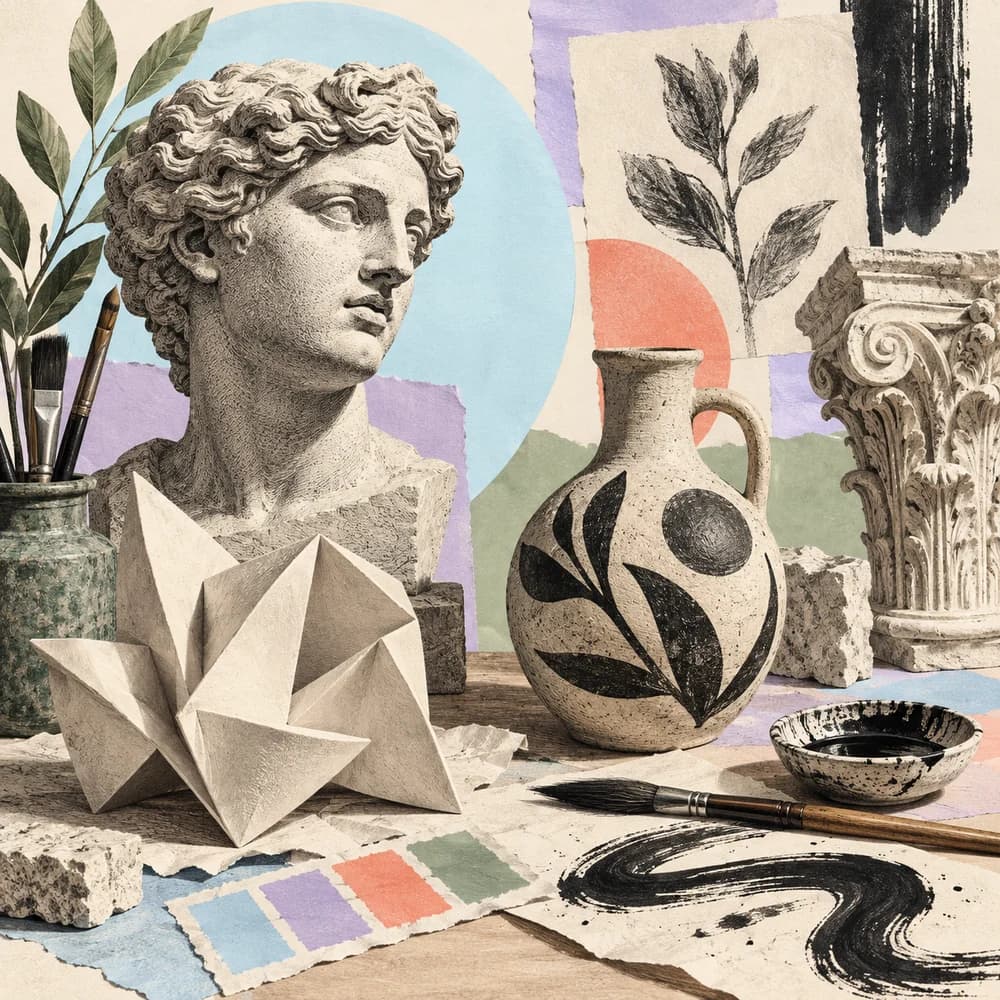
Portfolio analysis in AP Art & Design is a crucial process for evaluating and refining your artistic work. It involves examining your collection of pieces to identify strengths, weaknesses, and areas for growth, helping you develop a cohesive body of work that showcases your unique style and vision. Through this analysis, you'll learn to critically assess your art, curate your best pieces, and present them effectively. You'll also gain insights into your artistic journey, set goals for improvement, and avoid common pitfalls, ultimately creating a portfolio that truly represents your skills and creative voice.
What topics are covered in AP Art History Unit 3 (Early Europe and Colonial Americas)?
Unit 3, “Early Europe and Colonial Americas,” walks through major works, styles, and cultural contexts from roughly the late medieval period through the colonial era in the Americas. Expect Gothic and Renaissance art in Europe. Learn about religious iconography, patronage, and shifts in portraiture and architecture. The unit also covers artistic exchange during colonization — including Indigenous responses and syncretic forms. Be ready to identify representative works, their materials and techniques, dates, patrons, and the historical context that shapes their meaning. Think about how art reflects social, religious, and political forces of the period. For the official scope and learning objectives, consult the AP Art History Course and Exam Description on the College Board site.
Where can I find an AP Art Unit 3 PDF or unit 3 AP Art History review PDF?
Yes — Quizlet has curated flashcard sets you can use for quick review (for example: https://quizlet.com/181833550/ap-art-history-unit-3-early-europe-and-colonial-americas-flash-cards/). For the authoritative course outline and unit descriptions, download the official AP Art History Course and Exam Description from the College Board (https://apcentral.collegeboard.org/media/pdf/ap-art-and-design-course-and-exam-description.pdf). Use the CED as your syllabus and roadmap, then supplement with those Quizlet sets or classroom materials for targeted recall and quick drills.
How much of the AP Art History exam is Unit 3?
There’s no fixed public percentage per unit in the College Board materials. The AP Art History exam is organized around learning objectives and themes rather than strict percentages per unit. That means Unit 3’s topics (Early Europe and Colonial Americas) will show up as part of the exam’s overall distribution of time periods and regions. Use the College Board’s Course and Exam Description as the authoritative guide for what each unit covers. To get a sense of how often particular content appears, look at released questions and practice exams from the College Board.
What are the most important Unit 3 AP Art History artworks I should know?
Focus on works that demonstrate major developments in Early Europe and the Colonial Americas. Study Gothic cathedrals and stained glass. Know key Renaissance paintings and altarpieces — think Giotto, Masaccio, and Raphael. Learn Northern Renaissance and Baroque examples (for instance Bosch, Bruegel, Caravaggio). For the colonial era, pay attention to mission churches, mestizo portraiture, and Indigenous responses that show cultural exchange and syncretism. For each piece, know title/artist (if applicable), materials and technique, date, patronage/context, and why it matters. Start with the CED’s recommended examples, then expand using your class list or review sets.
How should I study for AP Art History Unit 3 — best study strategies and resources?
Study Unit 3 by mixing content review with hands-on skills practice. Memorize the basics: title, artist, date, materials. Summarize context and patronage for each work. Practice compare-and-contrast prompts — focus on style, function, and cultural influences. Make flashcards (physical or digital) for fast recall. Annotate high-quality images to note composition, technique, and iconography. Write short paragraph explanations that link individual works to broader themes. Use the College Board CED for official scope and sample prompts, and supplement with targeted flashcard sets or classroom resources for timed drills and exam-style practice.
Are there answer keys or practice answers for AP Art Unit 3 progress check MCQ?
Short answer: no—the College Board doesn’t publish official multiple-choice answer keys for their unit progress-check MCQs, although you can download free-response scoring guidelines and sample FRQ responses from College Board. If you need practice MCQs with answers and explanations, use Fiveable’s practice question bank (https://library.fiveable.me/practice/art-design) and the Unit 3 study guide (https://library.fiveable.me/ap-art-design/unit-3). Those resources include step-by-step explanations and cheatsheets that show why answers are correct and how Unit 3 topics (presentation, documentation, portfolio prep) map to question types. If your teacher gave you a specific, teacher-made progress check, ask them for the answer key—official College Board MCQ keys for progress checks aren’t publicly released. For better practice, time yourself on sets and review explanations to target weak spots.
What's the hardest part of AP Art History Unit 3?
You’ll probably find the toughest part is meeting the Sustained Investigation and documentation requirements—see the unit guide (https://library.fiveable.me/ap-art-design/unit-3). Many students struggle to develop a clear, focused inquiry that ties a series of works together, then to show steady progress and meaningful reflection in their written evidence. Balancing strong visual practice—well-lit, high-quality images and clear technical skill—with written components like process descriptions, contextual research, and artist intent is where most points are won or lost. Submission logistics can also bite you: formatting images, labeling works correctly, and following College Board upload rules. Practical tips: pick a tight investigation question early, keep a running process log or sketchbook, document every step, and save files with consistent names. Fiveable’s cheatsheets and cram videos at the unit URL break the portfolio requirements into manageable steps.
Where can I find Unit 3 AP Art History Quizlet sets?
Try searching Quizlet for sets titled “AP Art Unit 3” or use this specific set (https://quizlet.com/181833550/ap-art-history-unit-3-early-europe-and-colonial-americas-flash-cards/). Quizlet hosts lots of user-made flashcard and study sets for AP Art topics, but quality varies—always cross-check facts with the Course and Exam Description (CED) or official materials. Look for sets labeled to match the CED’s Present unit (topics 3.1–3.4). For a more structured, CED-aligned review and practice (including unit-specific guides and practice questions), check Fiveable’s Unit 3 study guide (https://library.fiveable.me/ap-art-design/unit-3) and Fiveable’s practice bank (https://library.fiveable.me/practice/art-design). Ask your teacher which sets they recommend if you want classroom-aligned flashcards.