---
title: "AP African American Studies SAQ: Format, Scoring, Strategy"
description: "The AP African American Studies SAQ section: 3 questions in 40 minutes, 18% of your score. Get the format, task verbs, worked examples, and timing strategy."
canonical: "https://fiveable.me/ap-african-american-studies/ap-african-american-studies-exam/ap-african-american-studies-saq/study-guide/ap-african-american-studies-saq"
type: "study-guide"
subject: "AP African American Studies"
unit: "AP African American Studies Exam"
lastUpdated: "2026-08-11"
---
# AP African American Studies SAQ: Format, Scoring, Strategy
## Summary
The AP African American Studies SAQ section: 3 questions in 40 minutes, 18% of your score. Get the format, task verbs, worked examples, and timing strategy.
## Guide
## Overview
The [AP African American Studies](/ap-african-american-studies "fv-autolink") SAQ section gives you 3 short-answer questions in 40 minutes, worth 18% of your total exam score. Two questions are source-based (one built around a text, one around a visual source like art, a photograph, or architecture) and one is a thematic question with no source at all. Each question has three or four lettered parts, and each part asks for a short, focused answer of just a few sentences.
SAQs sit in Section II of the exam alongside the [DBQ](/ap-african-american-studies/ap-african-american-studies-exam/ap-african-american-studies-dbq/study-guide/ap-african-american-studies-dbq), and the whole exam is digital. Unlike an essay, an SAQ doesn't need a thesis, an intro, or a conclusion. It tests whether you can answer a precise question with precise knowledge. That makes this section very learnable: know the task verbs, know your examples, and the points are there for the taking.
## SAQ Format and Scoring: What to Expect
The SAQ section is 3 questions, 40 minutes, 18% of your score. Here's the full picture:
| Feature | Details |
|---|---|
| Number of questions | 3 short-answer questions |
| Time | 40 minutes (about 13 minutes per question) |
| Weight | 18% of your AP exam score |
| Question 1 type | Source-based, visual source (art, photos, maps, structures) |
| Question 2 type | Source-based, text source (speeches, letters, scholarly excerpts) |
| Question 3 type | No source; broad thematic concept spanning multiple units |
| Parts per question | 3 or 4 lettered parts (A, B, C, sometimes D) |
| Format | Typed responses on the fully digital exam |
A few structural details that shape how you should prepare:
- One of the two source-based questions uses a **required course source**, something you studied directly in class. The other uses a source connected to course content that you have **not** seen before. So expect one familiar source and one new one.
- Every source-based question includes at least one part that asks directly about the source, at least one part that moves beyond the source to related course content, and at least one part that asks you to make thematic, chronological, or multidisciplinary connections across the course.
- The no-source question asks for specific examples tied to a recurring theme, and at least one part will ask you to explain causality, contextualize, compare, explain continuity or change over time, or explain significance.
Each lettered part is scored on its own. You either earn the point for that part or you don't, and a shaky part (C) never drags down a strong part (A). That's why you should write something for every part of every question. Readers reward precision over eloquence: a plain, direct answer that does exactly what the task verb asks scores full credit, while a beautifully written paragraph that answers a different question scores zero.
## Task Verbs: The Words That Decide Your Score
The single most important skill on AP African American Studies SAQs is matching your answer to the task verb. Each verb defines what a complete answer looks like, and the exam is unforgiving about the distinctions.
**Identify** means point to something specific. "The structure shown is [Great Zimbabwe](/ap-african-american-studies/key-terms/great-zimbabwe "fv-autolink")'s [conical tower](/ap-african-american-studies/unit-1/8-culture-and-trade-in-southern-and-east-africa/study-guide/q0WeVcoci4TI7Fuq "fv-autolink")" is identification. You don't explain why it matters yet. You just show you recognize what's in front of you.
**Describe** means characterize with specific detail. "Wells-Barnett's speech condemns [lynching](/ap-african-american-studies/key-terms/lynching "fv-autolink") by connecting it to the broader dismantling of African American [citizenship rights](/ap-african-american-studies/key-terms/citizenship-rights "fv-autolink") after Reconstruction" goes beyond naming. It tells the reader what the thing is like.
**Explain** demands causation, reasoning, or analysis of a relationship. "[The Great Migration](/ap-african-american-studies/unit-3/16-the-great-migration/study-guide/svjt3P3WJXeyqr7E "fv-autolink") transformed Northern cities because rural Southern African Americans brought distinct cultural practices, established new institutions, and shifted urban demographics" shows cause and effect, not just facts.
**Compare** requires explicitly discussing similarities or differences. "While both [Mali](/ap-african-american-studies/unit-1/5-the-sudanic-empires-ghana-mali-and-songhai/study-guide/9Z0Xy4gouUYuqDCS "fv-autolink") and Great Zimbabwe accumulated wealth through trade, Mali's power centered on controlling trans-Saharan routes while Great Zimbabwe leveraged its position between inland resources and coastal markets" puts two things side by side and names the difference.
If a part says "explain" and you only identify, you earn zero, even if your fact is correct. Reread the verb before you write every part.
## How to Answer AP African American Studies SAQs, Step by Step
Forty minutes for three questions gives you roughly 13 minutes per question. That's enough time to think and write carefully, but none to waste. Here's a rhythm that works.
### Minutes 1-3: Read the source and all parts before writing
###### Image source: Marion Post Wolcott / Public domain
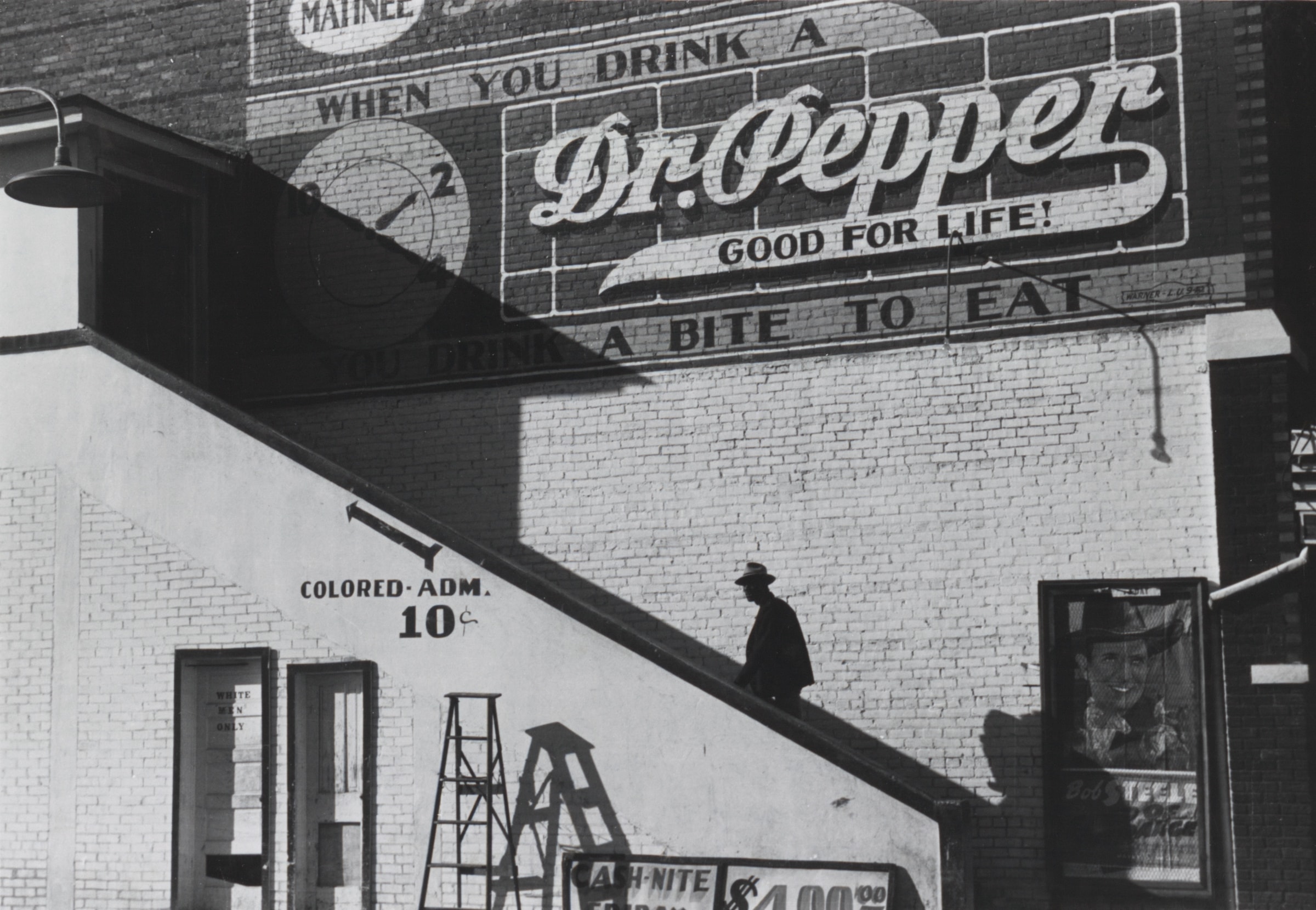
For source-based questions, examine the source first. For a visual, look at everything, not just the main subject: backgrounds, text, symbols, who's present and who's absent. A photo of a "Colored Waiting Room" sign isn't just about [segregation](/ap-african-american-studies/unit-3/10-hbcu-black-greek-letter-organizations-and-black-education/study-guide/kP0Y57GAauhTajQD "fv-autolink"); the sign's placement and the building's condition tell their own story. For a text, read for voice, audience, and purpose. Who's speaking, to whom, and why now? When Ida B. Wells-Barnett addresses a Boston audience about Southern lynching in 1893, she isn't just sharing information. She's mobilizing Northern allies, and that rhetorical context often answers the "purpose" or "significance" part for you.
Then read every part of the question before answering any of them. Parts often build on each other, and knowing where the question is headed keeps you from spending your best evidence on part (A) when part (C) needs it.
For the no-source question, use these first minutes to brainstorm examples. Jot down two or three candidates per part and pick the most specific one.
### Minutes 4-11: Write in order, one tight answer per part
Work through the parts in order, since (B) often builds on (A). A reliable structure for each task type (this is strategy, not an official formula):
- For "identify": state the specific answer directly. No preamble.
- For "describe": one sentence naming the key characteristic, plus one specific supporting detail.
- For "explain": a claim about the relationship or cause, specific evidence, and a brief line on why it matters.
Keep each part to a few sentences. Don't write practice sentences in your head; once you know your point, start typing. Elaborate prose doesn't earn extra points, and clear, direct sentences that answer the question score full credit.
### Minutes 12-13: Check completeness
Did you answer every part? Did you use specific examples (proper nouns, dates, named events)? Did you actually do what the task verb asked? Quick fixes here save real points.
If you're running behind, remember that each part is scored separately. A strong (A) and (B) with a rushed (C) beats a perfect (A) with a blank (C). Always complete something for every part.
## Worked Example: The Wells-Barnett Text-Source SAQ
Here's an actual sample question from the College Board, built on an excerpt from Ida B. Wells-Barnett's 1893 speech "Lynch Law in All its Phases," which argues that Southern states had destroyed African Americans' constitutional rights and that "the rule of the mob is absolute."
The question asks:
> (A) Describe the broader historical context of Wells-Barnett's speech.
> (B) Describe one piece of evidence Wells-Barnett provides in her speech to support her claim that Southern states were destroying the rights of African Americans.
> (C) Describe a strategy used by African Americans in the late nineteenth and early twentieth century to promote racial uplift.
> (D) Explain how the discriminatory practices described in the speech were challenged by African American activists in the second half of the twentieth century.
Notice how the parts map onto the question design. Part (B) lives inside the source: you must point to something Wells-Barnett actually says, like discriminatory school laws, labor lien laws, or mob violence going unprosecuted. Part (A) zooms out to context: a strong answer situates the speech in the post-Reconstruction era, with the rise of Jim Crow laws, disenfranchisement, and lynching after federal troops withdrew from the South. Parts (C) and (D) leave the source entirely and test course content across time: racial uplift strategies like Black women's club organizing or [Booker T. Washington](/ap-african-american-studies/key-terms/booker-t-washington "fv-autolink")'s institution-building for (C), and mid-century activism like the legal campaign behind *[Brown v. Board of Education](/ap-african-american-studies/key-terms/brown-v-board-of-education "fv-autolink")* or the Montgomery Bus Boycott for (D).
That's the pattern to internalize for any source-based SAQ. One part is in the source, one part is around the source, and at least one part connects across the course timeline.
For the no-source question, specificity is everything. The sample thematic question asks for a [freedom](/ap-african-american-studies/unit-2/21-legacies-of-resistance-in-african-american-art-and-photography/study-guide/i6dgSRQeJckJJ4Qe "fv-autolink") movement or practice influenced by the idea of the [African diaspora](/ap-african-american-studies/unit-1/10-kinship-and-political-leadership/study-guide/I9sMNWD3zKVtGvyH "fv-autolink"). "African Americans resisted slavery" earns nothing. "The Stono Rebellion of 1739 demonstrated enslaved Africans' willingness to use armed resistance, drawing on military knowledge from the Kingdom of Kongo" earns the point because it names a specific event, a date, and a concrete diasporic connection. Then make the link explicit: "This shows diaspora influence because..." Never assume the reader sees why your example fits.
## Common Mistakes
- **Answering the wrong task verb.** Explaining when asked to describe, or identifying when asked to explain, is the most common way to lose points. Reread the verb in each part right before you write, and deliver exactly what it asks.
- **Being vague.** "African Americans faced discrimination" scores zero. "African Americans faced legally mandated segregation through Jim Crow laws separating schools, transportation, and public accommodations" scores. Include proper nouns, dates, and named events every time.
- **Ignoring the source.** On source-based questions, generic answers that could apply to any document don't earn the source-analysis parts. Quote or reference a specific detail, phrase, or visual element from the stimulus.
- **[Mixing](/ap-african-american-studies/unit-4/17-evolution-of-african-american-music/study-guide/6C9VmdCuTlY85vin "fv-autolink") up time periods.** If a part asks about the colonial era and you cite the Montgomery Bus Boycott, the point is gone. Build mental categories for each era's characteristic events, figures, and patterns, and check that your example matches the dates in the prompt.
- **Writing mini-essays.** SAQs don't need a thesis, intro, or conclusion, and extra length earns nothing. A few direct sentences per part is the target; spend saved time on the parts you haven't answered yet.
- **Leaving parts blank.** Each part is scored independently, so a rushed attempt at part (D) can still earn a point while a blank guarantees zero. Write something for every lettered part.
## Practice and Next Steps
The fastest way to improve at SAQs is timed reps with feedback. Set a 13-minute timer, answer one full question, then check whether each part actually did what its task verb demanded. You can get instant scoring on your written responses with [Fiveable's FRQ practice tool](/ap-african-american-studies/frq-practice), and work through real released prompts in the [past exam questions](/ap-african-american-studies/past-exams) collection.
Once SAQs feel comfortable, round out Section II with the [DBQ study guide](/ap-african-american-studies/ap-african-american-studies-exam/ap-african-american-studies-dbq/study-guide/ap-african-american-studies-dbq), and see how the whole test fits together on the [AP African American Studies exam page](/ap-african-american-studies/ap-african-american-studies-exam). When you're ready to simulate test day, take a [full-length practice exam](/ap-african-american-studies/practice-exam) under timed conditions and use the [AP score calculator](/ap-african-american-studies/ap-score-calculator) to see how your SAQ points translate into a final score.
## FAQs
### How many SAQs are on the AP African American Studies exam?
There are 3 short-answer questions, and you get 40 minutes for all of them, about 13 minutes each. Two are source-based (one text source, one visual source) and one is a thematic question with no source. The SAQ section counts for 18% of your total exam score.
### How are AP African American Studies SAQs scored?
Each lettered part of an SAQ is scored independently. You either earn the point for that part or you don't, so a weak answer on one part never hurts a strong answer on another. Readers reward precision: a direct answer that does exactly what the task verb asks (identify, describe, explain, compare) earns credit, while a polished answer to the wrong question earns nothing.
### Do AP African American Studies SAQs need a thesis?
No. SAQs don't need a thesis, an introduction, or a conclusion, and extra length earns no extra points. Each part needs just a few direct sentences that do exactly what the task verb asks, backed by a specific example like a named event, person, or date. Save the thesis writing for the [DBQ](/ap-african-american-studies/ap-african-american-studies-exam/ap-african-american-studies-dbq/study-guide/ap-african-american-studies-dbq).
### What kinds of sources appear on AP African American Studies SAQs?
One SAQ uses a text source (like a speech, letter, or scholarly excerpt) and one uses a visual source (like art, a photograph, a map, or architecture). One of these two questions is built on a required course source you studied in class; the other uses a source related to course content that you haven't seen before. The third SAQ has no source and asks about a broad theme spanning multiple units.
### How do I practice AP African American Studies SAQs?
Do timed reps: set a 13-minute timer per question, answer all parts, then check that each part matched its task verb and used a specific, dated example. You can practice with instant feedback using [Fiveable's FRQ practice tool](/ap-african-american-studies/frq-practice) and work through released prompts from past exams. Focusing your review on task verbs and era-specific examples pays off fastest.
## About This Document
Canonical Fiveable pages are available as Markdown at the same path plus `.md`.
- [llms.txt](https://fiveable.me/llms.txt): index of Fiveable's sections and URL patterns
- [llms-full.txt](https://fiveable.me/llms-full.txt): complete subject and unit listing
- [MCP server](https://fiveable.me/mcp): call Fiveable as tools instead of fetching pages (`https://fiveable.me/api/mcp`)
## Structured Data
```json
{"@context":"https://schema.org","@type":"FAQPage","inLanguage":"en","mainEntity":[{"@type":"Question","@id":"https://fiveable.me/ap-african-american-studies/ap-african-american-studies-exam/ap-african-american-studies-saq/study-guide/ap-african-american-studies-saq#how-many-saqs-are-on-the-ap-african-american-studies-exam","name":"How many SAQs are on the AP African American Studies exam?","acceptedAnswer":{"@type":"Answer","text":"There are 3 short-answer questions, and you get 40 minutes for all of them, about 13 minutes each. Two are source-based (one text source, one visual source) and one is a thematic question with no source. The SAQ section counts for 18% of your total exam score."}},{"@type":"Question","@id":"https://fiveable.me/ap-african-american-studies/ap-african-american-studies-exam/ap-african-american-studies-saq/study-guide/ap-african-american-studies-saq#how-are-ap-african-american-studies-saqs-scored","name":"How are AP African American Studies SAQs scored?","acceptedAnswer":{"@type":"Answer","text":"Each lettered part of an SAQ is scored independently. You either earn the point for that part or you don't, so a weak answer on one part never hurts a strong answer on another. Readers reward precision: a direct answer that does exactly what the task verb asks (identify, describe, explain, compare) earns credit, while a polished answer to the wrong question earns nothing."}},{"@type":"Question","@id":"https://fiveable.me/ap-african-american-studies/ap-african-american-studies-exam/ap-african-american-studies-saq/study-guide/ap-african-american-studies-saq#do-ap-african-american-studies-saqs-need-a-thesis","name":"Do AP African American Studies SAQs need a thesis?","acceptedAnswer":{"@type":"Answer","text":"No. SAQs don't need a thesis, an introduction, or a conclusion, and extra length earns no extra points. Each part needs just a few direct sentences that do exactly what the task verb asks, backed by a specific example like a named event, person, or date. Save the thesis writing for the DBQ."}},{"@type":"Question","@id":"https://fiveable.me/ap-african-american-studies/ap-african-american-studies-exam/ap-african-american-studies-saq/study-guide/ap-african-american-studies-saq#what-kinds-of-sources-appear-on-ap-african-american-studies-saqs","name":"What kinds of sources appear on AP African American Studies SAQs?","acceptedAnswer":{"@type":"Answer","text":"One SAQ uses a text source (like a speech, letter, or scholarly excerpt) and one uses a visual source (like art, a photograph, a map, or architecture). One of these two questions is built on a required course source you studied in class; the other uses a source related to course content that you haven't seen before. The third SAQ has no source and asks about a broad theme spanning multiple units."}},{"@type":"Question","@id":"https://fiveable.me/ap-african-american-studies/ap-african-american-studies-exam/ap-african-american-studies-saq/study-guide/ap-african-american-studies-saq#how-do-i-practice-ap-african-american-studies-saqs","name":"How do I practice AP African American Studies SAQs?","acceptedAnswer":{"@type":"Answer","text":"Do timed reps: set a 13-minute timer per question, answer all parts, then check that each part matched its task verb and used a specific, dated example. You can practice with instant feedback using Fiveable's FRQ practice tool and work through released prompts from past exams. Focusing your review on task verbs and era-specific examples pays off fastest."}}]}
```